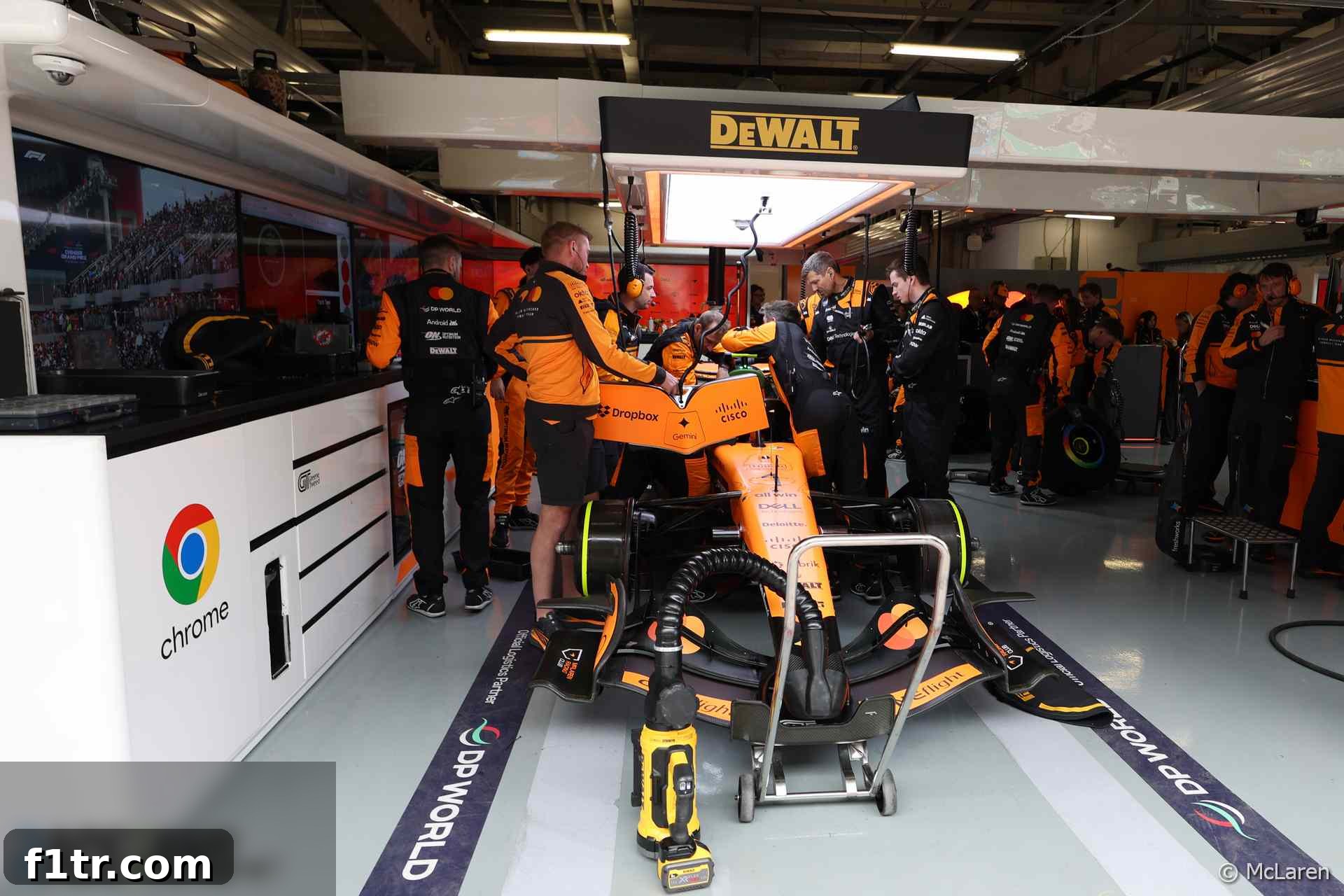
In a stunning and deeply frustrating turn of events at the Chinese Grand Prix, McLaren Racing faced an unprecedented challenge as both its drivers, Lando Norris and Oscar Piastri, were unable to start the race. Team principal Andrea Stella confirmed that both cars suffered critical power unit issues, forcing a double pre-race retirement that sent shockwaves through the paddock and left fans bewildered. This incident marked a rare and somber day for the Woking-based outfit, highlighting the intricate complexities and high stakes of Formula 1 engineering. The double DNF before the lights even went out cast a long shadow over McLaren’s aspirations for a strong showing in Shanghai, setting the stage for an intense period of investigation and recovery into the reliability of their Mercedes power units. The unexpected mechanical failures forced a last-minute withdrawal, preventing both Norris and Piastri from contending for crucial championship points.
McLaren’s Unprecedented Pre-Race Double Retirement at Chinese Grand Prix
The Chinese Grand Prix promised an exhilarating spectacle of speed and strategy, but for McLaren, the weekend culminated in an unforeseen and disheartening non-start for both of their promising talents. The team’s meticulously prepared MCL38s, piloted by the dynamic duo of Lando Norris and Oscar Piastri, were grounded in the garage due to a pair of distinct yet related power unit anomalies. This unforeseen setback not only robbed Norris and Piastri of the opportunity to compete but also underscored the brutal reality that even the most advanced machinery in motorsport is susceptible to critical failures. The team principal, Andrea Stella, articulated the palpable disappointment within the McLaren camp, emphasizing the inherent frustration of traveling to a global event only to be sidelined before the action truly begins. The incident became an instant talking point, raising immediate questions about power unit reliability and the immense pressures on Formula 1’s elite engine suppliers. Such a complete failure to even begin the Grand Prix is a stark reminder of the fine margins and extreme technical demands that define modern Formula 1.
Lando Norris’s Car: A Pre-Race Reconnaissance Nightmare
The drama began unfolding with Lando Norris’s car even before the customary pre-race reconnaissance lap, a crucial moment for drivers to get a feel for track conditions and tire performance. As Norris prepared to leave the pit lane, McLaren engineers detected a severe and unresolvable problem on the electrical side of his Mercedes power unit. Andrea Stella elaborated on the nature of the issue, explaining, “We saw that there were problems with the electrical side of the power unit. We couldn’t communicate with this component.” This critical lack of communication indicated a fundamental flaw within the sophisticated electronic systems controlling the engine, rendering a vital power unit component unresponsive and making the car unsafe and inoperable for competition. The team immediately sprang into action, deploying every available resource and engineer in a desperate bid to rectify the fault under the immense pressure of the ticking clock.
Engineers attempted various troubleshooting methods, including intricate reprogramming of the control units and replacing peripheral parts in a desperate bid to avoid a full power unit change – a procedure that would be far too time-consuming to complete before the imminent race start. Every possible avenue was explored, from software diagnostics to hardware swaps, but to no avail. Despite their intensive efforts and the relentless pressure of the looming race start, McLaren’s dedicated mechanics were unable to restore full functionality to Norris’s power unit. Stella candidly admitted, “We tried to rectify the problem, we tried to change as many parts as possible without having to change that part specifically, because it would take a long time and we couldn’t have made it to the start of the race. We reprogrammed, but there was no way to fix the problem and Lando’s car was simply not in condition to leave the garage.” The devastating sight of Norris’s car remaining stubbornly in the garage as other competitors headed to the grid was a stark visual representation of the team’s predicament and a profound disappointment for the young British driver and his legion of fans worldwide, who had eagerly anticipated his performance.
Oscar Piastri’s Car: Grid Failure and a Twisted Coincidence
Just as the team was grappling with the disheartening situation surrounding Lando Norris’s vehicle, a second, equally troubling issue emerged with Oscar Piastri’s car. Unlike Norris’s vehicle, Piastri’s McLaren was initially able to make it to the grid without any apparent hitches, offering a momentary, albeit false, sense of relief. This brief respite, however, was short-lived. Once positioned in his designated grid slot, ready for the formation lap, Piastri’s car suffered a similar terminal failure, refusing to fire up for the race start. The atmosphere in the McLaren pit wall shifted from concern to outright alarm as the realization dawned that both cars were facing a potentially similar, race-ending crisis. Andrea Stella swiftly confirmed that the fault involved the same critical power unit component – specifically, the electrical side – as seen on Norris’s car, although he clarified that the nature of the problem was distinctly different, making the situation even more perplexing.
“On Oscar’s side, the car was able to go to the grid with no issues at all, but once on the grid the car wouldn’t fire up again,” Stella recounted, highlighting the cruel irony of the situation. “It was in a similar manner to Lando’s, but actually on Oscar’s side it was easier to diagnose the problem. It appears to be a problem with the same power unit component on the electrical side, but a problem of a different nature.” This revelation complicated the immediate diagnosis, suggesting that while the problematic hardware component was identical in both instances, the specific failure mechanism or the underlying cause differed between the two cars. The uncharacteristic occurrence of two such critical, race-ending power unit failures on the very same type of component, albeit with varied symptoms, within the confines of the same Grand Prix weekend, immediately raised alarms across the entire Formula 1 paddock. This unique and unfortunate event underscored the gravity of the situation for McLaren and their engine supplier, Mercedes High Performance Powertrains (HPP), demanding an urgent and thorough investigation.
Andrea Stella’s Leadership: Addressing Disappointment and Uncharacteristic Failures
Andrea Stella, McLaren’s team principal, known for his calm, analytical approach and pragmatic leadership, did not mince words when describing the profound sentiment pervading the team. “Obviously it’s a disappointing day, quite frustrating because we go racing to be on-track and today we saw two McLarens in the garage while the other cars were racing,” he stated, articulating the collective dismay and the profound sense of missed opportunity. He openly acknowledged the exceptional and uncharacteristic nature of having two terminal problems virtually simultaneously on the same critical component, particularly one residing on the highly complex electrical side of the power unit. Stella stressed the paramount importance of unity and collaboration in the face of such adversity, declaring, “Like I’ve said to everyone in the team and to HPP, we go as one team. And as one team we will face this disappointing day and we will make sure that it doesn’t happen again in the future.” This powerful message of solidarity and shared responsibility highlighted McLaren’s collaborative spirit and their unwavering determination to overcome this significant and unexpected setback together with their engine partner.
The McLaren team principal further emphasized the immediate steps that would be undertaken, stating that a comprehensive review and forensic analysis would be conducted in close collaboration with Mercedes HPP. This joint investigation is absolutely crucial for thoroughly uncovering the intricate root causes of these double failures and subsequently implementing robust preventive measures to safeguard against any recurrence. The incident serves as a stark reminder of the intricate partnership dynamic between chassis constructors and engine suppliers in modern Formula 1, where the performance, and crucially, the reliability of both elements are inextricably linked and must function seamlessly. Stella’s steady leadership in this challenging moment aimed to instill confidence within the team, reassuring staff and stakeholders, while transparently addressing the severity of the issue with the media and the global fanbase. His measured response demonstrated a clear commitment to learning from the incident and emerging stronger, embodying the resilience expected from a top-tier Formula 1 outfit.
The Quest for the Root Cause: Data, Inspection, and the HPP Partnership
Identifying the precise and ultimate root cause of such complex technical failures is a painstaking and often lengthy process, requiring meticulous investigation. Stella admitted that while the immediate symptoms and functional problems were understood, the underlying reasons for these failures remained elusive. “At the moment these issues are understood in terms of what the problem is, but they are not fully understood in the terms of the root cause,” he explained. The initial layers of data analysis, derived from telemetry and on-board diagnostics, along with superficial external inspections of the components, proved insufficient to pinpoint the exact origin of the faults. This therefore necessitates a far more intrusive, detailed, and hands-on examination, which goes beyond superficial observation.
“This will require physical inspection, because from the data we had available and from a superficial external inspection, there’s nothing that is pointing at a specific, more detailed root cause compared to generically saying that the problem is in a certain area,” Stella elaborated. The cars and their problematic power unit components will be meticulously scrutinized by a combined team of McLaren and Mercedes HPP engineers. This process will likely involve carefully dismantling the power units and their electrical subsystems to visually inspect internal elements for any manufacturing defects, signs of stress, wear, or other anomalies that could have led to the failures. This collaborative effort with Mercedes HPP is paramount, given that the critical power unit hardware and its core electrical systems are designed, developed, and supplied by HPP, and therefore are not under McLaren’s direct design or manufacturing control.
Stella firmly stated McLaren’s reliance on their engine partner for such integral components: “This is an area of the car which is not under McLaren’s control so we rely entirely on what is reported by HPP and we trust completely their report.” This statement not only clarifies the distinct division of responsibility but also underscores the deep-seated trust inherent in the long-standing and successful technical partnership between McLaren and Mercedes. The initial assessment from HPP engineers suggested that the two problems, despite affecting the same component type, were fundamentally of a different nature. This led Stella to initially believe it was a “coincidence that they happened at the same time, at the same Grand Prix, and they were both of a terminal nature.” However, with the pragmatism typical of a seasoned F1 professional, he also left room for further findings, adding, “Once we go a little bit deeper, we will be able to have a more comprehensive assessment and see if there’s anything that was actually on the McLaren side.” This open-minded approach ensures all possibilities are thoroughly explored to prevent any future occurrences.
Implications for McLaren and the F1 Season
The double non-start at the Chinese Grand Prix represents a significant blow to McLaren’s aspirations for the current Formula 1 season, both in the Constructors’ and Drivers’ Championships. Reliability is a foundational cornerstone of success in modern F1, and to suffer such critical failures before a race even begins is highly damaging, not only in terms of lost championship points but also for team morale and public perception. Lando Norris and Oscar Piastri, both highly competitive drivers with genuine podium potential, lost invaluable opportunities to score points, which could prove costly in the tightly contested constructors’ championship battle against formidable rivals. This incident also raises broader questions about the overall reliability of the Mercedes power unit, a factor that could potentially impact other Mercedes-powered teams as well, although crucially, no other customer team reported similar issues on the day, suggesting a possible specific integration or batch-related problem unique to McLaren.
Beyond the immediate points loss, such high-profile failures can have a profound psychological impact on a team, shaking confidence and creating an atmosphere of uncertainty. The rigorous and relentless schedule of Formula 1 leaves little time for protracted reflection or dwelling on past misfortunes, demanding immediate solutions, unwavering focus, and a forward-looking mindset. McLaren’s ability to swiftly diagnose the precise root causes, work effectively and collaboratively with HPP, and then implement robust preventative measures will be a crucial test of their operational resilience and technical prowess. Fans, media, and rival teams alike will be watching closely to see how the team responds in the upcoming races. The overriding focus will be on ensuring these “uncharacteristic” issues are truly isolated incidents and not indicative of a deeper, systemic problem within the power unit itself or its specific integration with the MCL38 chassis. The team’s unwavering commitment to avoiding future recurrences is not just a statement of intent but an absolute imperative for their competitive ambitions and reputation as a front-running Formula 1 constructor.
Looking Ahead: Resilience and Recovery for McLaren Racing
Despite the profound disappointment and immediate setback experienced at the Chinese Grand Prix, McLaren Racing remains a formidable force in Formula 1, consistently known for its exceptional resilience, robust operational procedures, and inherent ability to bounce back from adversity. Andrea Stella’s emphasis on “one team” working together, encompassing both McLaren personnel and experts from Mercedes HPP, highlights the deeply collaborative and unified effort required to navigate such complex technical challenges in the high-stakes environment of F1. The coming weeks will be absolutely critical as engineers from both organizations delve deep into the failed components, meticulously analyzing every available data point, conducting intricate laboratory tests, and performing meticulous physical inspections to unearth the precise mechanisms and ultimate root causes behind these unexpected power unit failures. The transparency with which Stella addressed the media also reinforces the team’s commitment to accountability, thoroughness, and open communication during a difficult period.
The incident serves as a stark and powerful reminder of the razor-thin margins and immense technical challenges that are an intrinsic part of Formula 1. While the Chinese Grand Prix weekend ended in an anticlimactic and frustrating manner for McLaren, their focus will now shift entirely and relentlessly to immediate prevention and optimal performance for the next race on the calendar. The objective is unequivocally clear: to ensure that both Lando Norris and Oscar Piastri are back on track, competing fiercely at the sharp end of the grid, without any recurrence of these debilitating reliability concerns. The Formula 1 season is a marathon, not a sprint, and every team inevitably faces hurdles and unforeseen obstacles; how McLaren responds to this particular setback, both technically and psychologically, will undoubtedly define a significant chapter of their 2024 campaign. The entire motorsport world will be keenly observing their recovery, a testament to their enduring spirit, dedication to engineering excellence, and unwavering pursuit of success in the pinnacle of motorsport.