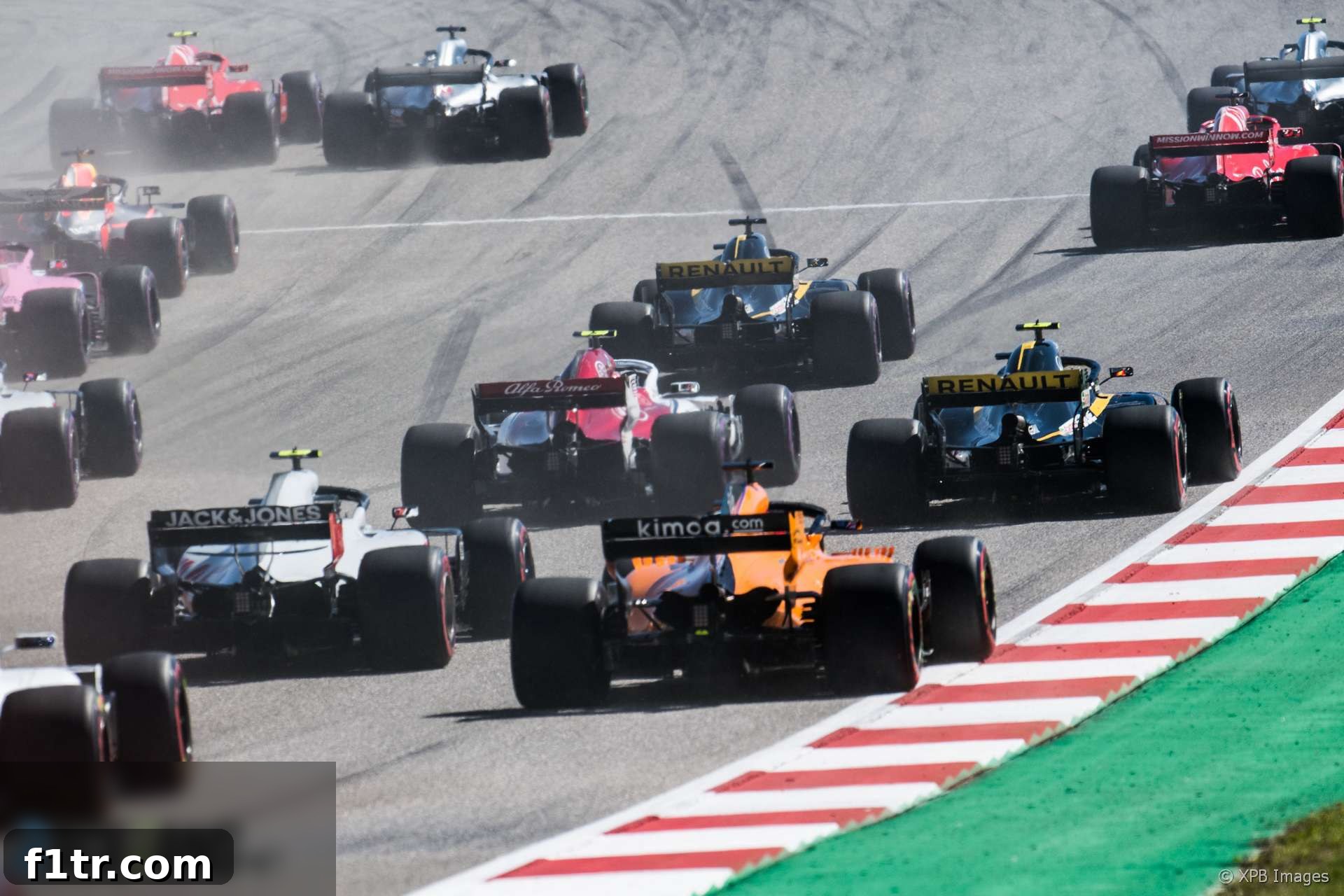
Formula 1, often dubbed the pinnacle of motorsport, finds itself at a crucial juncture regarding the expansion of its competitive grid. FIA President Jean Todt has openly expressed his desire to see more teams participate in the sport, a sentiment that aligns with many fans’ hopes for a more diverse and competitive championship. However, this ambition is met with significant apprehension and outright resistance from the existing ten teams, whose concerns largely revolve around financial implications and the potential dilution of prize money.
Advert | Become a Supporter & go ad-free
Advertisement Placeholder
For the third consecutive year, Formula 1 commenced its new season with a consistent lineup of just ten teams. This stability, while ensuring a high level of competition among the current contenders, has also prompted calls for expansion to inject fresh blood and foster greater innovation within the paddock. In a recent interview, Todt articulated his long-standing view on the matter, emphasizing the ongoing discussions surrounding the sport’s future structure.
The FIA President’s Vision for an Expanded Grid
Jean Todt’s advocacy for a larger Formula 1 grid is rooted in a vision for a healthier, more dynamic championship. “It’s always a long debate,” Todt acknowledged, referring to the ongoing conversations about the sport’s direction. He highlighted the current stability of the ten existing teams but quickly moved to the broader picture. The looming renewal of the Concorde Agreement beyond 2020 serves as the primary backdrop for these discussions, allowing all stakeholders – the FIA, the commercial rights holder Liberty Media, and the teams – to re-evaluate the foundational principles of the sport.
Todt firmly believes that “it would be better to have 12 teams.” This increase, he argues, could lead to a more vibrant grid, potentially fostering new rivalries, offering more opportunities for talented drivers, and broadening the sport’s global appeal. A larger pool of teams could also encourage diverse technical approaches, pushing the boundaries of innovation and making the racing itself more unpredictable and exciting for spectators worldwide. More teams would mean more cars on track, increasing the spectacle and the chances of dramatic moments throughout a race weekend.
The Sticking Point: Financial Distribution and Team Resistance
While the vision of a larger grid holds appeal, the practicalities are where the current teams’ resistance becomes evident. As Todt himself noted, “If you speak about that to the actual team principals they are not very happy about that because of course it will change financial distribution, so it will be different for them.” This highlights the core of the conflict: the financial pie of Formula 1 is significant, and its distribution is a fiercely guarded aspect for the established outfits.
Introducing two or more new teams into the existing structure would inevitably mean that the prize money and other financial benefits currently distributed among ten entities would need to be shared among twelve or more. For teams operating on tight budgets, where every million is critical for development and survival, this dilution of revenue is a major deterrent. Formula 1 is an incredibly expensive sport, with development costs, logistical overheads, and personnel salaries accumulating rapidly. Any reduction in income could severely impact their competitiveness and long-term viability, especially for those in the midfield or at the back of the grid.
Moreover, concerns extend beyond just prize money. There are discussions around paddock space, logistical challenges, and the overall infrastructure required to support a larger number of teams at each Grand Prix. The existing teams have invested heavily over decades to establish their positions, and they are wary of changes that could undermine their investments or compromise the carefully balanced ecosystem of the sport.
The Critical Role of the Concorde Agreement
The discussions surrounding grid expansion are inextricably linked to the ongoing negotiations for the next Concorde Agreement. This confidential document outlines the commercial terms between the FIA, Formula 1 (Liberty Media), and the competing teams, governing everything from technical regulations and sporting rules to commercial rights and prize money distribution. Its renewal beyond 2020 presents a unique opportunity to reshape the sport’s future, but also creates a battleground for competing interests.
The Concorde Agreement acts as the constitution of Formula 1, ensuring stability and defining the roles and responsibilities of all parties. Any significant changes, such as altering the number of teams, would necessitate careful negotiation and agreement from all signatories. This agreement also typically includes provisions for new team entries, often involving substantial entry fees designed to compensate existing teams for the dilution of their share. The terms of this agreement will ultimately determine whether Todt’s vision for an expanded grid can be realized, and under what conditions. The dialogue is complex, involving intricate financial models, sporting considerations, and political maneuvering.
Liberty Media’s Perspective: Balancing Quality and Quantity
Interestingly, it appears that Formula One Management (FOM), led by Liberty Media, largely concurs with the idea of expanding the grid. Todt indicated this alignment, stating, “At the end of the day the most important is not so much the number of teams it’s the quality of the team and the quality of the show. So that’s something we do fully agree together with Formula 1, with Chase Carey, with his team and we are working very closely together.”
This emphasis on “quality” is crucial. While more teams could potentially lead to a more exciting championship, Liberty Media’s primary objective is to enhance the overall entertainment value and commercial appeal of Formula 1. A larger grid consisting of underfunded or uncompetitive teams would do little to achieve this. Instead, they would likely seek new entrants that bring strong financial backing, technical expertise, and a genuine commitment to competing at the highest level. A new team that can genuinely challenge the existing order, or at least provide strong midfield competition, would add significant value to the F1 spectacle, attracting new fans and sponsors alike.
Liberty Media is focused on growing the sport’s global footprint and ensuring its long-term health. A vibrant, competitive grid with credible teams is paramount to this strategy. Therefore, any expansion would likely come with strict criteria for new applicants, ensuring they meet the high standards expected of a Formula 1 constructor, both on and off the track.
The Unyielding Challenge of Financial Sustainability
While the prospect of new teams is debated, the current financial landscape of Formula 1 presents a formidable barrier to entry. Alfa Romeo team principal Frederic Vasseur, a vocal proponent for financial reform, has previously stated that F1’s current financial model is “unsustainable” for more than half the grid. His assessment underscores the immense economic pressures faced by even established teams, let alone aspiring new entrants.
Vasseur highlighted the difficulty for any new entity to join the sport under present conditions. “The situation to take over this kind of company today is… I don’t want to say unrealistic, because you will always find someone able to do it, but it’s challenging.” This “challenging” environment stems from several factors: the initial entry fee (which has historically been substantial), the astronomical costs of developing a competitive car, the ongoing operational expenses for a global racing calendar, and the need for significant capital investment in facilities and personnel. Even for a well-funded new team, the road to competitiveness is long and fraught with financial peril.
The sport’s current financial structure heavily favors the top teams, who benefit from larger historical payments and a greater share of the prize money due to their consistent high performance. This creates a vicious cycle, making it harder for new teams to break into the elite, thus perpetuating the competitive imbalance. For expansion to be truly successful, it might necessitate more fundamental changes to the financial model, such as a more equitable prize money distribution system, a stricter budget cap, or financial incentives specifically designed to attract and support new entrants in their formative years.
Advert | Become a RaceFans supporter andgo ad-free
Advertisement Placeholder
The Future Landscape: Paths to Grid Expansion
The debate over Formula 1 grid expansion is far from settled, representing a critical crossroads for the sport’s future trajectory. While the financial implications are undeniable for existing teams, the potential benefits of a larger, more diverse grid – increased competition, greater innovation, and enhanced fan engagement – cannot be overlooked. The success of any expansion will hinge on a delicate balance between commercial imperatives, sporting integrity, and the financial health of all participating teams.
Potential solutions could include a tiered prize money structure that incentivizes new entrants without penalizing established teams excessively, or a revised Concorde Agreement that includes clearer pathways and support mechanisms for aspiring teams. Historically, Formula 1 has seen grids fluctuate significantly, with larger fields in previous decades often leading to a greater variety of car designs and team dynamics. As the sport looks to solidify its global appeal, finding a sustainable model for expansion will be key. The ongoing discussions will undoubtedly shape the competitive landscape of Formula 1 for years to come, influencing whether the sport embraces a broader roster of contenders or maintains its current, tightly guarded ten-team structure.
Related Articles & Insights: Navigating the Future of F1
- Understanding the Impact of New F1 Technical Regulations on Team Budgets
- The Concorde Agreement: A Deep Dive into F1’s Governing Document
- Financial Stability in F1: Challenges and Proposed Solutions for Teams
- Exploring Potential New Entrants and Their Prospects in Formula 1
- A Historical Perspective on Formula 1 Grid Sizes and Their Evolution
Browse more articles on the future of Formula 1