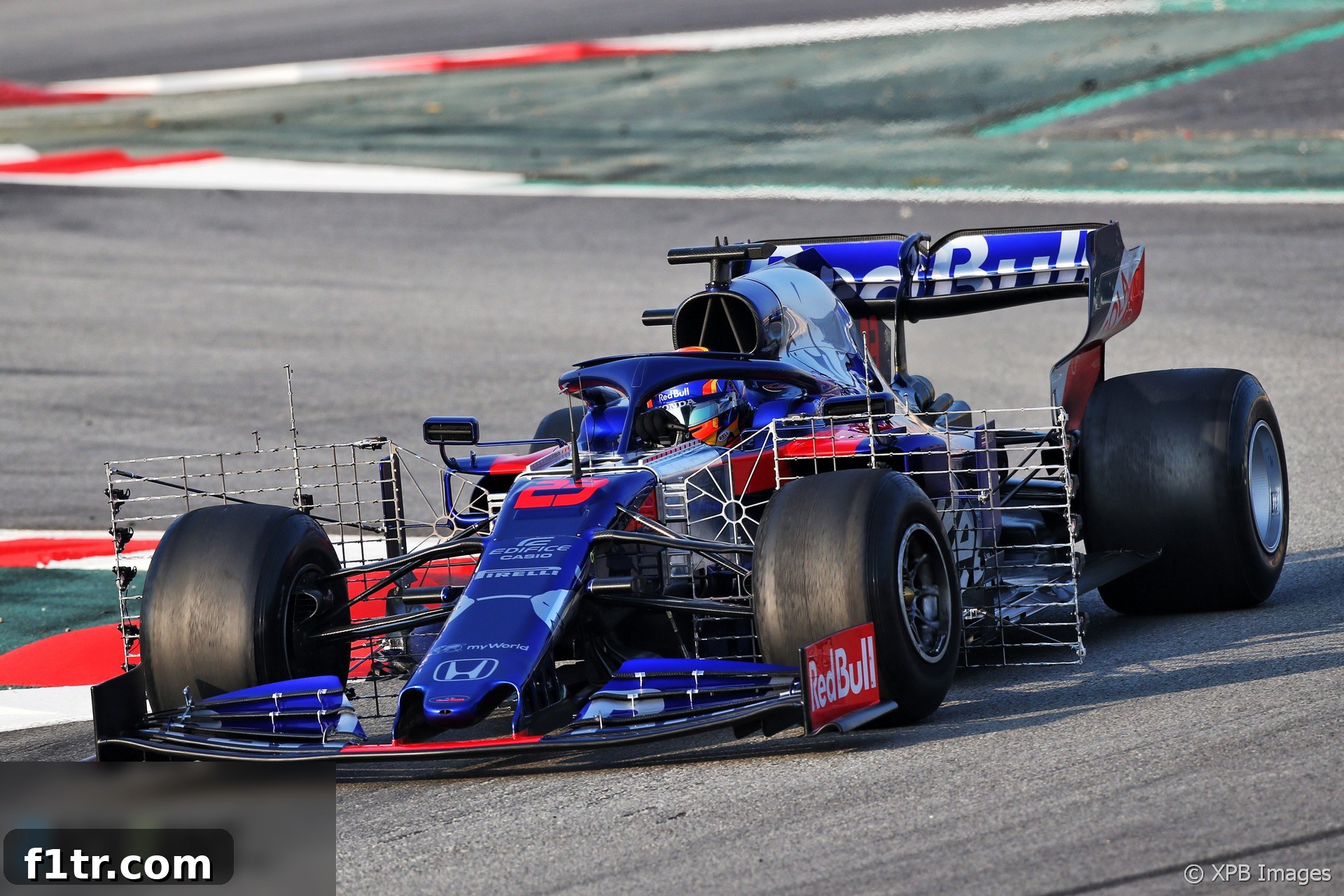
As the curtains rose on the fourth day of Formula 1 pre-season testing at Circuit de Barcelona-Catalunya, the paddock was buzzing with anticipation. Teams and drivers continued their relentless pursuit of performance and reliability, gathering crucial data ahead of the 2019 F1 season opener. This pivotal morning session provided further insights into the pecking order and the developmental progress of the ten teams, with several outfits showcasing notable improvements and intriguing strategic plays.
Toro Rosso Takes Center Stage with Alexander Albon’s Pace
Toro Rosso once again demonstrated impressive early form, picking up exactly where they left off on the previous day. Rookie sensation Alexander Albon spearheaded their charge, setting the fastest time of the morning session and eclipsing his teammate’s previous benchmark. Albon clocked a remarkable 1’17.637, a full six hundredths of a second faster than Daniil Kvyat’s best from yesterday. This dominant display by the STR14, powered by Honda, sent a clear message to their midfield rivals. Albon’s performance wasn’t just about raw speed; he completed a solid 44 laps on the Pirelli C5 compound, signifying a strong blend of pace and consistent running. For a team often seen as a proving ground for Red Bull, Toro Rosso’s early pace suggests they could be genuine contenders for points finishes from the outset of the season, benefiting significantly from their improved power unit partnership.
Renault Shows Promising Speed with Daniel Ricciardo
More than half of the teams on the grid managed to improve on their previous times today, indicating a collective step forward in understanding their new machinery. Among the most eye-catching improvements was that of Renault, with their star signing Daniel Ricciardo slotting into second-fastest. The Australian driver, settling into his new team, posted a highly competitive time of 1’17.785. This strong showing with the RS19 suggests that Renault’s ambitious targets for the 2019 season are not just rhetoric, but backed by genuine performance. Ricciardo’s ability to extract such pace early in the testing process bodes well for the French manufacturer, highlighting both the driver’s adaptability and the team’s progress in developing a competitive chassis. While testing times are notoriously difficult to interpret, Ricciardo’s consistent presence at the sharp end of the leaderboard is an encouraging sign for the Enstone-based squad and its quest to close the gap to the top three.
Mercedes and Hamilton Focus on Long Runs
Reigning champions Mercedes, with Lewis Hamilton behind the wheel of the W10, maintained their characteristic quiet efficiency. While not topping the timing charts, Hamilton was just under two-tenths of a second slower than Ricciardo, registering a best time of 1’17.977. More importantly, the Silver Arrows completed a significant 58 laps on the C4 compound, demonstrating their focus on understanding the car’s behavior over longer stints and gathering critical data on tire degradation. Mercedes’ approach often involves prioritizing reliability and race simulation over headline-grabbing lap times during testing. Their consistent running, even if not P1, still reinforces their status as a formidable force, meticulously refining their package before the intensity of the race season begins. Hamilton’s feedback will be crucial in fine-tuning the W10 for what promises to be a challenging championship battle.
Ferrari’s Charles Leclerc Logs Impressive Mileage Amidst Minor Incident
Over at Ferrari, young talent Charles Leclerc continued to impress, further lowering Ferrari’s best time of the day to a 1’18.046. The Monegasque driver also stood out for covering the largest individual mileage of any driver during the morning session, managing an exceptional 75 laps in the SF90. This high lap count is invaluable for Ferrari, allowing them to thoroughly evaluate the car’s performance, durability, and various setup configurations. However, Leclerc’s session wasn’t entirely without drama, as he did lose some front bodywork from his SF90 and briefly went off at Turn 5. This minor incident, while quickly rectified, serves as a reminder of the fine margins and extreme forces at play during F1 testing, even for the most experienced drivers and meticulously engineered machinery. Despite the small setback, Ferrari’s overall pace and reliability continue to paint a picture of a strong contender for the 2019 title.
Haas Recovers from Electrical Glitches
Haas endured a troublesome day yesterday with persistent electronic problems, but the fourth day of testing brought welcome relief. The American squad suffered no apparent repeat of those issues, allowing Romain Grosjean to put in a solid performance. Grosjean set the sixth-fastest time, signaling that the VF-19 has underlying potential once its teething problems are resolved. This return to consistent running is crucial for Haas, a team that often punches above its weight. Their ability to quickly diagnose and rectify technical issues highlights their operational efficiency. The team will be keen to convert this recovered reliability into sustained performance throughout the remainder of testing and into the competitive season, aiming to consolidate their position as a leading midfield team.
Lando Norris’s Brief Scare and McLaren’s Resilience
Lando Norris, the highly anticipated rookie for McLaren, was responsible for the morning session’s only red flag. Shortly after testing began, Norris went off at Turn 5, coming to a stop in a gravel trap. Thankfully, his MCL34 remained undamaged, allowing him to resume lapping soon afterwards. This minor excursion is a common occurrence in testing as drivers push the limits of their new cars and explore track boundaries. McLaren’s quick recovery and Norris’s ability to get back on track swiftly demonstrate the team’s operational readiness and the robust design of the MCL34. Despite the brief interruption, McLaren has shown encouraging signs of progress throughout pre-season testing, aiming to leave behind the struggles of previous years and climb back towards the front of the grid.
Williams Begins Serious Running Amidst Challenges
Having only joined the test yesterday due to delays in car production, Williams finally managed their first serious running with the FW42. Veteran driver Robert Kubica, making his much-anticipated return to Formula 1, put in a commendable 48 laps on the chassis. For his early runs, the FW42 was adorned with a large array of flow-detection sensors, highlighting the team’s desperate need to gather aerodynamic data after their late start. Kubica, the last of this year’s race drivers to take part in testing, also experienced a brief spin at one point – an understandable moment as he reacclimatizes to competitive F1 machinery and pushes the limits of an unproven car. Williams faces an uphill battle, but every lap and every piece of data collected is vital for their development. Their focus remains firmly on understanding the FW42 and making up for lost time, rather than chasing outright lap times.
Understanding the Tire Compounds and Testing Dynamics
The morning session also underscored the critical role of Pirelli’s diverse range of tire compounds. Drivers utilized various specifications, from the softest C5 (used by Albon and Ricciardo for their fastest laps) to the harder C2 (used by Kubica). The C5 compound offers maximum grip for single-lap performance but degrades faster, while C3 and C4 compounds represent a balance of speed and durability, often favored for race simulations. The choice of tire compound significantly influences lap times and strategic planning, making direct comparisons between teams challenging. Ultimately, pre-season testing is not just about raw pace; it’s a meticulous process of validating simulations, understanding aerodynamic flows, optimizing setups, and ensuring engine and gearbox reliability. Teams often run different fuel loads and engine modes, leading to the well-known “sandbagging” phenomenon, where true performance is deliberately masked. Therefore, while the timesheets offer a glimpse, the real picture will only become clear once the lights go out in Melbourne.
2019 F1 Testing Day Four Morning Times: A Snapshot
The provisional timing sheet from the morning session provides a valuable snapshot of performance and activity:
| Pos. | Car number | Driver | Team | Model | Best time | Gap | Laps | Tyres |
|---|---|---|---|---|---|---|---|---|
| 1 | 23 | Alexander Albon | Toro Rosso | STR14 | 1’17.637 | 44 | C5 | |
| 2 | 3 | Daniel Ricciardo | Renault | RS19 | 1’17.785 | 0.148 | 34 | C5 |
| 3 | 44 | Lewis Hamilton | Mercedes | W10 | 1’17.977 | 0.340 | 58 | C4 |
| 4 | 16 | Charles Leclerc | Ferrari | SF90 | 1’18.046 | 0.409 | 75 | C3 |
| 5 | 99 | Antonio Giovinazzi | Alfa Romeo | C38 | 1’18.511 | 0.874 | 56 | C3 |
| 6 | 8 | Romain Grosjean | Haas | VF-19 | 1’18.563 | 0.926 | 64 | C3 |
| 7 | 10 | Pierre Gasly | Red Bull | RB15 | 1’19.495 | 1.858 | 52 | C3 |
| 8 | 4 | Lando Norris | McLaren | MCL34 | 1’19.543 | 1.906 | 48 | C3 |
| 9 | 18 | Lance Stroll | Racing Point | RP19 | 1’20.026 | 2.389 | 41 | C3 |
| 10 | 88 | Robert Kubica | Williams | FW42 | 1’21.542 | 3.905 | 48 | C2 |
As the fourth day of testing progresses into the afternoon session, teams will continue to push the boundaries of their 2019 challengers. The diverse range of performances and incidents observed this morning underscores the dynamic and unpredictable nature of pre-season preparations. While Toro Rosso, Renault, and Ferrari showcased impressive pace, and Mercedes focused on consistent running, the challenges faced by Williams highlight the intense competitive landscape of Formula 1. The data gathered today will be meticulously analyzed, guiding further development as the countdown to the Australian Grand Prix continues, promising an exhilarating start to the 2019 F1 season.
More from the 2019 F1 season
- Crying in the Melbourne car park at 2019 grand prix was my career low – Ocon
- McLaren Racing reports reduced £71 million loss in 2019
- Kvyat: Hockenheim podium last year was “my biggest achievement” so far
- How the FIA’s new encrypted fuel flow meter targets Ferrari’s suspected ‘aliasing’ trick
- “He smashed my office door”: 23 must-see moments from ‘Drive to Survive’ season two
Browse all 2019 F1 season articles