Daniel Ricciardo’s “Shithouse” Penalty: Unpacking the Red Flag Violation at the 2018 Australian Grand Prix
Daniel Ricciardo, a vibrant and popular figure in Formula 1, found himself embroiled in controversy at the very start of the 2018 F1 season. His outspoken frustration over a “shithouse” penalty, which imposed a three-place grid drop just before the crucial first qualifying session of the season, quickly became a major talking point. This incident, occurring at his home race, the Australian Grand Prix, cast a shadow over his weekend even before the competitive action truly began.
The Infraction: What Happened During Friday Practice?
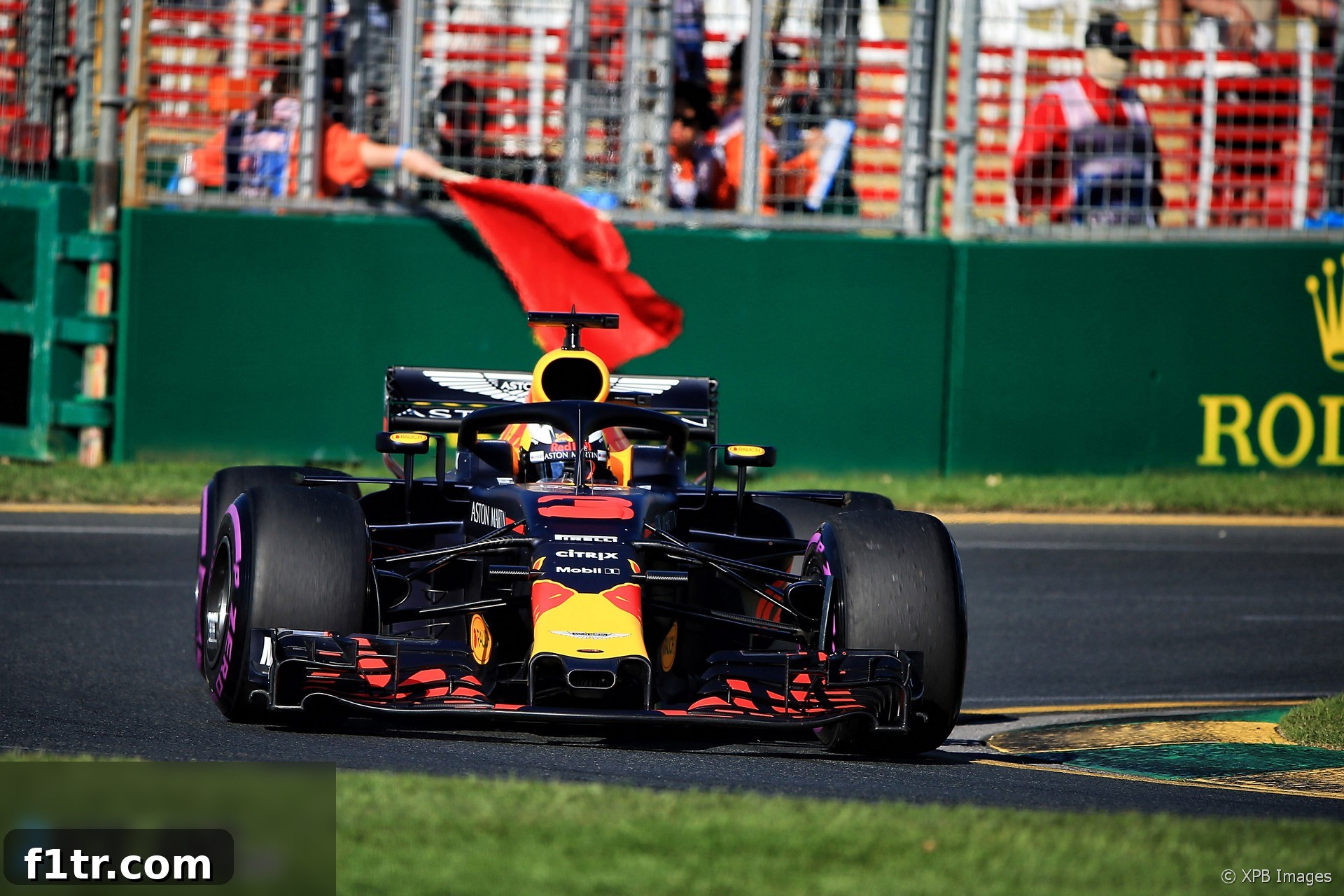
The penalty stemmed from a seemingly straightforward violation of the sporting regulations during Friday’s second practice session. As the session was underway, a red flag was deployed, signaling a significant incident on track requiring immediate cessation of high-speed running. At that precise moment, Ricciardo was engaged in a critical qualifying simulation run, pushing his car to its limits in preparation for Saturday’s showdown.
The core of the issue was that Ricciardo, despite acknowledging the red flag, did not slow down sufficiently according to the precise parameters set by the FIA. The rules mandate a specific deceleration protocol under red flag conditions to ensure the safety of all personnel and drivers. While the Red Bull driver did reduce his speed, the stewards’ report highlighted that it wasn’t enough to meet the stringent requirements.
When summoned to face the stewards the following day, Ricciardo was candid and upfront, offering no excuses. “I walked in there and said I understand I was too fast, I wasn’t making excuses. I knew I had to get a penalty of some sort,” he openly admitted. This transparency showed a recognition of his error, yet his acceptance of a penalty didn’t quell his deeper dissatisfaction with its severity.
Ricciardo’s Outcry: Why the Penalty Felt Unfair
Despite his admission of guilt regarding the speed infraction, Ricciardo was deeply dismayed by the specific sanction levied against him: a three-place grid penalty. His argument centered on the flexibility he believed the stewards possessed. “The guideline is a grid penalty but that’s just a guideline,” Ricciardo stated, emphasizing that other, less punitive options were available. “There’s reprimands, there’s fines, there’s other things they could have done.”
Ricciardo also articulated his perspective on the nature of the danger. He reasoned that had he been speeding through an actual hazardous incident, such as “a car upside down in the gravel,” a severe penalty would be justified. However, in this particular instance, the red flag was triggered by a cable on the track – a danger he didn’t even pass directly. “I didn’t pass the incident and the incident was a cable. So I thought they could’ve been more lenient before the season started,” he argued, suggesting that the context of the incident warranted a softer approach, especially at the inaugural race of a new season.
On the face of it, Ricciardo’s plea garnered considerable sympathy. The stewards’ report confirmed he reduced his speed by a significant 175 kph and was “consistently and significantly slower in the final three turns.” These details indicated a clear intention to comply with the rules, even if his execution fell short of the absolute requirement. Crucially, he stood to gain no competitive advantage by driving too quickly in a red flag scenario, leading many to conclude that it was an innocent, albeit significant, mistake.
Understanding the FIA Regulations: Charlie Whiting’s Explanation
Despite the sympathetic view of Ricciardo’s intent, the FIA’s stance, as articulated by the then-race director Charlie Whiting, was unequivocal: a rule had been broken, and the safety protocols were non-negotiable. Whiting clarified that there was “no grey area” concerning the violation, highlighting the absolute nature of safety regulations in Formula 1.
Whiting explained that drivers are provided with precise targets for speed reduction during red flag periods. The rules stipulate that a driver “must be positive [above the minimum time]” at least once in every marshalling sector around the track. With approximately 20 light panels and 20 marshalling sectors, compliance is monitored continuously and meticulously. “Daniel by his own admission made a mistake. He was being told to stay positive, he thought it was positive, but it seems he was just on the wrong side of the line. He thought he was positive but in fact he was negative,” Whiting detailed, pinpointing the precise nature of the error – a misjudgment against the strict time delta.
The crucial point from the FIA’s perspective is that a red flag signifies a situation deemed serious enough to halt a session entirely. While Ricciardo correctly pointed out that the specific danger (a cable) was not directly in his path, drivers are not in a position to assess the severity or location of an incident at the moment a red flag is shown. The rule’s purpose is to enforce an immediate and comprehensive reduction in speed across the entire track, mitigating potential unknown dangers. Driving too quickly under such circumstances, as the stewards noted, was potentially “extremely serious,” regardless of the driver’s intent or the specific nature of the original incident.
Intent vs. Enforcement: An Innocent Mistake with Serious Implications?
The core of the debate surrounding Ricciardo’s penalty lies in the tension between the driver’s innocent intent and the FIA’s strict enforcement of safety regulations. On one hand, it was evident that Ricciardo had not been attempting to gain a competitive advantage. His significant deceleration and honest admission suggested a genuine mistake rather than deliberate defiance. The stewards themselves clearly acknowledged this lack of malicious intent, which likely played a role in the final decision.
In fact, the penalty issued to Ricciardo was notably more lenient than several penalties handed out in the previous year for speeding under yellow flags. In those instances, drivers were found to have deliberately failed to back off sufficiently, often in pursuit of a faster lap time. This distinction between an accidental overspeeding under red flag conditions and a deliberate disregard for yellow flag warnings highlights the nuances the stewards must consider when applying the rules.
However, the absolute nature of safety rules dictates that intent, while a mitigating factor, cannot entirely negate a violation. The danger posed by a car not slowing down enough during a full-course stoppage is immense, irrespective of whether the driver meant to transgress. The integrity of the safety system relies on every driver adhering to the rules without exception, ensuring that every corner of the track becomes safe when the red flag flies.
Precedent and Severity: Comparing Red Flag to Yellow Flag Violations
To fully grasp the context of Ricciardo’s penalty, it’s useful to compare it with similar infractions from the 2017 season, particularly those involving speeding under yellow flags. The table below details four such incidents, each resulting in a five-place grid drop or a significant in-race penalty:
| Driver | Race | Session | Penalty | Stewards’ notes |
|---|---|---|---|---|
| Romain Grosjean | China | Qualifying | Five-place grid drop | “The driver attempted to set a meaningful lap time after passing through a double waved yellow marshalling sector.” |
| Jolyon Palmer | China | Qualifying | Five-place grid drop | “The driver attempted to set a meaningful lap time after passing through a double waved yellow marshalling sector.” |
| Felipe Massa | Belgium | Third practice | Five-place grid drop | “The driver made no attempt to significantly reduce his speed in the area of the double waved yellow flags.” |
| Kimi Raikkonen | Belgium | Race | Ten-second stop-go penalty | “The driver made no attempt to significantly reduce his speed in the area of the double waved yellow flags.” |
As evident from the stewards’ notes, these yellow flag violations were characterized by drivers either “attempting to set a meaningful lap time” or making “no attempt to significantly reduce speed.” These clearly indicate deliberate actions aimed at minimizing time loss, even at the expense of safety in a localized hazard zone. In contrast, Ricciardo’s red flag violation, while serious, was perceived as an unintentional miscalculation of the required speed delta, occurring across the entire circuit.
Ricciardo himself felt his penalty should have been even more lenient. “I’m sure even if they’d given me a reprimand no driver would have gone up and said ‘are you guys crazy, he deserves a grid penalty’,” he quipped, suggesting a consensus among drivers that his error did not warrant such a harsh punishment. However, one could argue that speeding under a red flag, which implies a complete stoppage and a potentially generalized danger across the track, is arguably more serious than speeding past a yellow flag, which denotes a localized hazard. This would place his infraction above trivialities like missing the national anthem ceremony, for which he received a reprimand in the previous year.
Considering the precedents, a three-place grid drop for an accidental red flag violation, compared to a five-place drop for deliberate yellow flag speeding, appears to be a balanced, if strict, judgment. It reflects the serious nature of the red flag rule while acknowledging the absence of intent to gain an unfair advantage.
The Cost of the Penalty: Ricciardo’s Home Race Outcome
The impact of this penalty on Daniel Ricciardo’s home race was undeniably significant. Starting three places lower than he would have otherwise, he had an uphill battle from the outset. After a hard-fought race on Sunday, Ricciardo crossed the finish line in fourth position, a mere 0.76 seconds shy of claiming a coveted podium spot. The bitter irony was not lost on him. “Luckily we weren’t at my home race,” Ricciardo quipped after qualifying, a statement that hindsight rendered darkly humorous, as it was indeed his home race where the penalty could have had the most personal and tangible impact.
The fine margin by which he missed the podium led to widespread speculation: could those three grid places have made the crucial difference? Starting higher up the order might have allowed him to avoid traffic, optimize strategy, or simply gain track position that would have been impossible to overcome. For a driver yearning for a home podium, this penalty potentially robbed him of a cherished moment in front of his adoring Australian fans, making the “shithouse” label feel even more poignant.
Lessons Learned: F1 Safety, Rules, and the Driver’s Dilemma
Daniel Ricciardo’s “shithouse” penalty at the 2018 Australian Grand Prix serves as a compelling case study in Formula 1’s unwavering commitment to safety, even when it clashes with a driver’s perception of fairness. The incident highlighted the absolute nature of safety regulations, where adherence to precise metrics, like speed deltas under red flags, supersedes intent or the perceived minimal danger of a particular incident. While Ricciardo’s honesty and lack of malice were evident, the FIA’s responsibility to maintain a robust safety framework for all participants meant that a penalty was unavoidable.
This event reinforced the message that drivers must be meticulously aware of and comply with every safety directive, irrespective of the pressure to perform or the specific circumstances of a red flag. It set a firm tone for the 2018 season, reminding everyone that rules, especially those pertaining to safety, are to be followed to the letter. Ultimately, the incident underscored the delicate balance F1 must strike between passionate competition, strict governance, and the paramount importance of safety in a sport that constantly pushes the boundaries of human and mechanical performance.
Quotes: Dieter Rencken
Go ad-free for just £1 per month>> Find out more and sign up
2018 F1 season
- F1 feared “death knell” for Drive to Survive after Ferrari and Mercedes snub
- McLaren staff told us we were “totally crazy” to take Honda engines in 2018 – Tost
- ‘It doesn’t matter if we start last’: How Red Bull’s junior team aided Honda’s leap forward
- Honda’s jet division helped F1 engineers solve power unit problem
- McLaren Racing losses rise after Honda split
Browse all 2018 F1 season articles