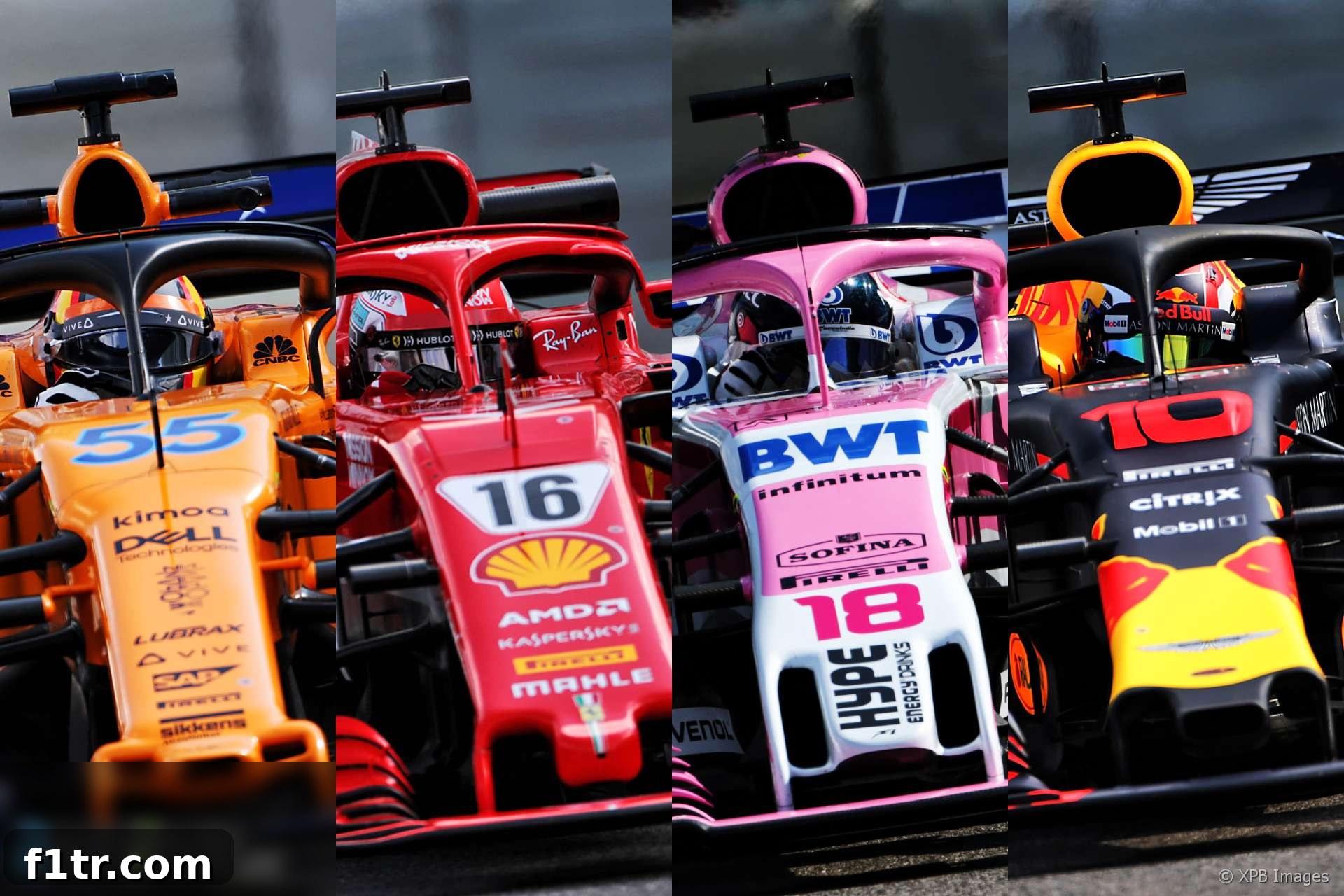
The engines are primed, the pit stops rehearsed, and all twenty drivers have now settled into their cockpits, ready to ignite the 2019 F1 season. This year, Formula 1’s annual game of musical chairs proved to be more energetic and unpredictable than ever, marked by a cascade of significant developments that profoundly reshaped the grid.
The ripples of change originated from two monumental announcements within the driver market, setting off a chain reaction that would see an unprecedented level of roster adjustments across multiple teams.
Advert | Become a Supporter & go ad-free
The Great Shake-Up: Unpacking the Thrilling 2019 F1 Driver Market
The Daniel Ricciardo Earthquake and Its Aftershocks
The most seismic event of the 2019 F1 driver market was undoubtedly Daniel Ricciardo’s unexpected departure from Red Bull. This bombshell, first revealed by RaceFans at the beginning of the summer break, sent shockwaves through the paddock. Ricciardo, a charismatic race-winner perceived as a future champion, chose to leave a top team for a midfield contender, Renault, seeking a fresh challenge and perhaps a less Max Verstappen-centric environment. His decision created a coveted vacancy at Red Bull Racing and triggered a series of events that would leave several drivers’ careers hanging in the balance.
The Unfortunate Predicament of Esteban Ocon
Ricciardo’s move proved to be a disaster for the highly-rated young talent, Esteban Ocon. Throughout the initial stages of the driver market, Ocon appeared destined for a seat at either Renault or McLaren. However, Ricciardo’s defection to Renault closed that door, and the subsequent reshuffle saw Carlos Sainz Jnr. – the driver Ricciardo displaced at Renault – secure the McLaren drive. Adding insult to injury, Ocon’s existing team, Force India, faced administration and was eventually purchased by a consortium led by Lawrence Stroll, father of Lance Stroll. This acquisition ultimately sealed Ocon’s fate, condemning him to a season on the sidelines as the team understandably prioritized their new benefactor’s son. It was a cruel blow for a driver widely considered to be one of the sport’s brightest prospects, forced to watch from the sidelines due to circumstances beyond his control.
Red Bull’s Internal Solution: Pierre Gasly’s Rapid Ascent
True to their established philosophy, Red Bull looked inward to fill the void left by Ricciardo. They promoted Pierre Gasly, a driver who, remarkably, wasn’t even on the Formula 1 grid at the beginning of the previous season despite having just won the GP2 (now F2) title. Gasly’s meteoric rise saw him earn a rapid promotion to the senior team after an impressive debut season with Toro Rosso. This upward trajectory showcased Red Bull’s faith in their junior driver program but also placed immense pressure on Gasly to perform alongside the formidable Max Verstappen.
A Changing of the Guard: Williams and Toro Rosso Overhaul Their Line-ups
Ricciardo’s move and the subsequent domino effect left two prominent teams, Williams and Toro Rosso, each with a vacancy for the 2019 season. There was a time when teams preferred to retain at least one driver to ensure continuity, but this sentiment appears to have faded, as both teams chose to replace their other drivers as well. In fact, an unprecedented four teams headed into the new season with completely new driver line-ups, signaling a profound shift in the competitive landscape.
Williams’ Fresh Start: Russell and Kubica
Williams, facing significant performance challenges, opted not to retain Sergey Sirotkin for the 2019 F1 season. Instead, they secured a long-term deal with Mercedes junior driver and reigning F2 champion, George Russell. Russell’s arrival was seen as a shrewd move, bringing highly-touted talent and a strong connection to Mercedes Power Units, essential for the team’s future. Interestingly, Esteban Ocon had also been considered, but his preference for a one-year arrangement – hoping for a shot at Valtteri Bottas’s Mercedes seat in 2020 – did not align with Williams’ desire for a longer commitment from their young talent.
The second FW42 seat was filled by one of the most heartwarming stories in Formula 1 history: the fairytale return of Robert Kubica. After suffering horrific injuries in a rally crash in 2011 that nearly cost him his arm and career, Kubica embarked on an arduous journey of recovery and rehabilitation. His unwavering determination and an impressive display of resilience facilitated his return to the pinnacle of motorsport, significantly aided by the backing of Polish oil company PKN Orlen. Kubica’s comeback was not merely a personal triumph but an inspiring testament to human spirit, capturing the imagination of fans worldwide.
Toro Rosso’s Dynamic Duo: Albon and Kvyat
Toro Rosso, Red Bull’s sister team and proving ground for young talent, decided not to exercise their option on Brendon Hartley, whose performance hadn’t fully convinced the team. The news of his replacement, however, remained unconfirmed to him until late in the off-season. Alexander Albon, a promising talent from Formula 2, was finally confirmed to replace Hartley, marking his long-awaited F1 debut. In a truly remarkable turn of events, Daniil Kvyat was called back to the team for an unprecedented third stint. Kvyat’s journey through F1 had been a rollercoaster of promotions, demotions, and a period away from the sport. His return to Toro Rosso was a testament to his persistence and speed, positioning him to become the team’s longest-serving driver by the end of the 2019 season.
Advert | Become a RaceFans supporter andgo ad-free
McLaren’s Youthful Ambition: The Post-Alonso Era
The landscape at McLaren also underwent a significant transformation. Carlos Sainz Jr.’s move ensured the team replaced one Spaniard with another, filling the void left by Fernando Alonso. Alonso, a two-time world champion, finally decided he had endured enough of treading water in the midfield with an uncompetitive car. His departure from Formula 1 allowed him to pursue other motorsport challenges, as RaceFans revealed, with his sights set on races like the Daytona 24 Hours, ultimately aiming for the Triple Crown of motorsport.
Stoffel Vandoorne, despite showing flashes of potential, ultimately failed to secure a third season with the Woking-based outfit. He was replaced by the highly-rated British sensation, Lando Norris. The 19-year-old Norris may not have replicated Vandoorne’s dominant GP2 (now F2) title win, but he certainly arrived in F1 with a sparkling junior career resume, boasting a significant collection of championship silverware. His promotion underscored McLaren’s commitment to nurturing young talent and building for a brighter future.
Sauber’s Strategic Evolution: Ferrari’s Influence and Raikkonen’s Return
Finally, Sauber, operating with increased backing from Ferrari and transitioning into the Alfa Romeo Racing identity, also presented a completely new line-up for the 2019 F1 season. This transformation was largely influenced by Ferrari’s strategic preferences, particularly the vision of its late CEO, Sergio Marchionne, who championed the promotion of Charles Leclerc.
Charles Leclerc’s Ascent to Ferrari
Charles Leclerc, after an incredibly impressive rookie season at Sauber, was elevated to the prestigious Ferrari team, taking the place of Kimi Raikkonen. Leclerc’s rapid rise was a testament to his raw speed, maturity, and undeniable talent, making him one of the most exciting prospects in recent memory. His move to Ferrari was widely anticipated and hailed as a sign of the Scuderia’s investment in future talent.
Kimi Raikkonen’s Surprising Homecoming
In a move that caught many by surprise, Kimi Raikkonen, the 2007 world champion, agreed terms to move in the opposite direction, signing a two-year deal with Sauber – the very team that brought him into Formula 1 almost two decades prior. Raikkonen’s unexpected return to his roots allowed him to continue racing into his fifth decade, bringing invaluable experience, a calm demeanor, and a loyal fan base to the blossoming Alfa Romeo team. Crucially, Raikkonen was not taking up a “Ferrari seat” per se, but rather directly replacing Marcus Ericsson, who subsequently moved to IndyCar. This move highlighted Raikkonen’s enduring passion for racing and his desire to contribute to a growing project.
Filling the other seat at Alfa Romeo Racing was Antonio Giovinazzi, who finally secured his first full-season shot in a Formula 1 car. Having served as a Ferrari reserve driver and made sporadic appearances, Giovinazzi’s promotion represented a significant opportunity to prove himself on the world stage, fulfilling a long-held dream for the Italian driver.
Pillars of Stability: Mercedes and Haas
Amidst this whirlwind of driver market activity, only two teams remained untouched by the reshuffle: Mercedes and Haas. Both teams entered their third consecutive season with the same driver pairing, providing a stark contrast to the widespread changes across the grid. Mercedes, with their dominant pairing of Lewis Hamilton and Valtteri Bottas, prioritized consistency and a proven winning formula. Haas, meanwhile, maintained faith in Romain Grosjean and Kevin Magnussen, valuing stability and the established working relationship within their team structure.
The Unprecedented Driver Market Shake-Up of 2019
With only eight drivers remaining in the same seats at the beginning of the 2019 F1 season as they were 12 months prior, this represented the most significant upheaval we had seen in the F1 driver market since 2010, a year when only six drivers were unchanged from one season to the next. The scale of these changes promised a truly fresh and unpredictable season ahead, with new team dynamics, refreshed rivalries, and numerous drivers eager to prove their worth in new environments. This extensive restructuring guaranteed that the 2019 Formula 1 season would be remembered not just for the on-track action, but for the dramatic pre-season ballet of seats, talents, and ambitions.
Advert | Become a RaceFans supporter andgo ad-free
Related Articles: 2019 F1 Season Insights
- Crying in the Melbourne car park at 2019 grand prix was my career low – Ocon
- McLaren Racing reports reduced £71 million loss in 2019
- Kvyat: Hockenheim podium last year was “my biggest achievement” so far
- How the FIA’s new encrypted fuel flow meter targets Ferrari’s suspected ‘aliasing’ trick
- “He smashed my office door”: 23 must-see moments from ‘Drive to Survive’ season two
Browse all 2019 F1 season articles