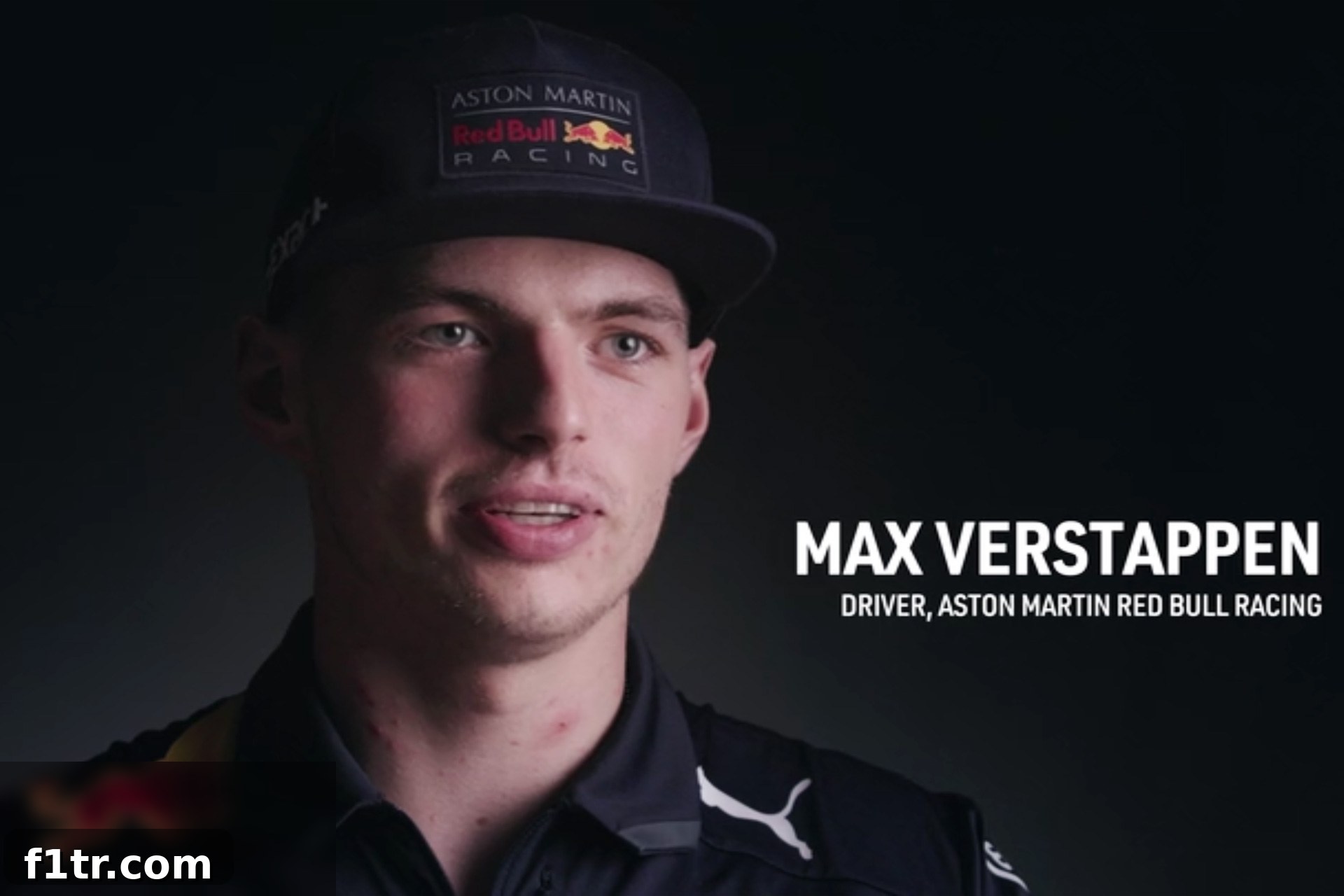
The exhilarating surge in Formula 1’s popularity, particularly within the United States, has often been attributed to the phenomenal success of the Netflix docu-series, “Drive to Survive.” This captivating show has undeniably played a pivotal role in drawing massive crowds to events like the United States Grand Prix at the Circuit of the Americas (COTA), introducing a new generation of fans to the high-octane world of F1. However, despite its widespread acclaim and palpable “Drive to Survive effect,” the series has also faced its share of criticism, notably from one of the sport’s most prominent figures: Max Verstappen.
Since its inception in 2019, “Drive to Survive” has been lauded for transforming Formula 1’s image and reach. Yet, not everyone involved in the sport holds the same complimentary view of the Netflix production. Ahead of a recent Grand Prix weekend, Max Verstappen, the reigning World Champion and a central figure in modern F1, candidly revealed his decision to cease cooperation with the program makers after its very first season. His reason was clear and unwavering: he felt his portrayal in the series, which chronicled the events of the 2018 championship, was fundamentally inaccurate and sensationalized.
Max Verstappen’s Critique of “Drive to Survive”
Verstappen acknowledged the strategic importance of the series, especially for growing the sport’s footprint in North America. “I understand that it needs to be done, especially to boost the popularity here in North America just to get people a bit more of an insight about Formula 1 because normally you don’t really get that,” he stated. This recognition highlights a nuanced perspective, where the commercial benefits of the show are clear, yet its methodology sparks significant concern for the drivers themselves.
However, his personal experience as a participant diverged sharply from this understanding. Verstappen voiced strong objections to the way his interviews were used, expressing a feeling of manipulation. “From my side, as a driver, I don’t like to be a part of it because you do interviews and you don’t know what it’s going to be used for,” he explained. He recounted an instance from his first season of participation: “For example, in my first year I gave interviews but, of course, when I watched the series I know when I said these things and then they use it on a different kind of footage, they would fake a lot of stuff.”
This accusation of “faking stuff” lies at the heart of Verstappen’s discontent. He perceives the show as prioritizing drama over factual accuracy, manufacturing narratives that don’t genuinely exist within the paddock. “For me that – as a driver, I don’t look at it as a fan – I think that’s not correct. But I understand as a Netflix show, they want to make it more dramatic for people and make it look like this epic kind of battle,” Verstappen elaborated. He further criticized the creation of artificial rivalries: “Where sometimes they faked a few like rivalries or whatever which, they don’t really exist.” This pursuit of heightened entertainment, he argues, distorts the true essence of the sport and the personalities within it.
The Dutch driver’s resolution was definitive: “So I decided to not be a part of it and I didn’t give any interviews after that anymore, really, just because then there is nothing to show. There is nothing they can fake about you.” His decision underscores a deep-seated desire to control his own narrative and prevent his words and actions from being recontextualized for dramatic effect. Verstappen had previously voiced his displeasure, stating that the program did not show “the real me” and that producers would “always position you in a way they want, so whatever you say, they will try to make you look reckless or trying to make you… whatever fits the story of the series.”
The Genesis of Discontent: “Drive to Survive” Season One
“Drive to Survive” emerged as one of the key broadcasting innovations introduced by Liberty Media following its acquisition of Formula 1 in 2017. The ambition was to pull back the curtain on the sport, offering an unprecedented look behind the scenes. However, its inaugural season faced challenges, as top title contenders Ferrari and Mercedes initially declined to grant producers full access to their teams. This decision was eventually reversed for subsequent seasons, but its impact on Season One was profound.
With Ferrari and Mercedes largely off-limits, Red Bull Racing became a central focus of the first season. As the only race-winning team to grant full access in 2018, the spotlight shone intensely on its drivers, Daniel Ricciardo and Max Verstappen. Ricciardo, known for his charismatic personality and infectious grin, was portrayed with distinct sympathy, often serving as the emotional anchor of the season. In contrast, Verstappen was treated less sympathetically, a disparity highlighted in reviews of the season.
The narrative arc of Season One heavily revolved around Ricciardo’s surprising decision to leave Red Bull at the end of 2018, with the show subtly suggesting that his evolving relationship with Verstappen was a contributing factor. The series also emphasized Red Bull’s clear ambition for Verstappen to become the youngest world champion, even while team principal Christian Horner publicly denied this focus to Ricciardo’s father, adding another layer of perceived tension.
Key Moments of Contention
Verstappen and Ricciardo were prominently featured in the third episode, aptly titled ‘Redemption.’ This episode delved into their highly publicized collision at the Azerbaijan Grand Prix, a flashpoint that damaged both their race and their relationship. Ricciardo’s voiceover, declaring “I was made to feel guilty” over a slow-motion shot of an unsmiling Verstappen, unmistakably framed the narrative. The episode then shifted to Ricciardo’s subsequent victory in Monaco, contrasted sharply with Verstappen’s own misfortune after crashing his car during practice.
While many of Verstappen’s interview segments in this episode seemed relatively innocuous, one particular soundbite stood out. He described his intense frustration after his Monaco crash, feeling compelled to vent his anger on the Red Bull Energy Station motorhome. “I should have won that race,” he told the Netflix crew. “Seeing the whole team happy, it’s hard, because you’re standing there, you have to try and smile and be happy because the whole team is happy but for me it was definitely the worst moment and I was really not happy. I could literally break down the whole Energy Station by myself.” This quote, while perhaps genuine, was used to underline his fiery temperament.
Verstappen reappeared extensively in the final episode, ‘Crossing the Line,’ which contained more contentious moments. This episode covered his collision with Esteban Ocon at the Brazilian Grand Prix, an incident that cost him victory and handed it to Lewis Hamilton. The post-race confrontation, where Verstappen shoved Ocon in the pits, led to an FIA punishment and was widely reported. “He was being a pussy,” Verstappen was quoted saying at the time, reflecting his raw emotions.
What “Drive to Survive” added to this already dramatic incident was an overheard conversation between Verstappen and Ricciardo at the subsequent Abu Dhabi season finale. In this candid moment, Verstappen explained his intense reaction: “I said at one point he should understand my reaction after. If he could hear what he said to me on the scales because he basically started laughing at me and then he was like ‘I was faster than you, I wanted to overtake you’. He didn’t even like apologise for the crash. That triggered me to push him.” This snippet provided an intimate, unvarnished insight into his mindset, potentially reinforcing a particular image.
The Abu Dhabi race also saw Verstappen finish ahead of Ricciardo, aided by a strategic pit stop that benefited him over his outgoing teammate. The voiceover described Ricciardo as being “shafted” by the team in his final race alongside Verstappen, further fueling the narrative of a strained intra-team dynamic. The season concluded with a montage teasing the next season, featuring new drivers and team changes. A sequence of quick shots of Charles Leclerc, Pierre Gasly (Verstappen’s incoming team mate at the time), George Russell, Carlos Sainz Jnr and Lance Stroll introducing themselves was followed by a clip of Verstappen boldly stating: “To be honest, I don’t think they are even close to our level.” He then added in another cut, “No hard feelings, I’m just looking ahead to the ones we have to beat,” amidst shots of other drivers. This highly edited sequence, juxtaposing his confidence with other drivers, could easily be interpreted as an intentional effort to position him as arrogant or overly aggressive.
Verstappen’s Unwavering Stance and Broader Implications
While Verstappen hasn’t publicly specified every instance of misrepresentation, his overall dissatisfaction remains clear. He declined to elaborate further on his criticism when asked, but made it unequivocally known that his view of “Drive to Survive” has not softened since he stopped providing interviews. He expressed particular frustration with the reuse of old footage and interviews, citing the repetitive use of his angry reaction to a power unit failure during the Austrian Grand Prix in a later season. “The last season, I don’t know how many times we switch it back to Austria in terms of footage,” he remarked. “And then things which had been said in previous years they still use in the last season.”
This practice, he argues, further contributes to an artificial narrative, recontextualizing past emotions for current storylines. “So as a driver I don’t like it. I’m anyway not really just really a dramatic ‘show’ kind of person. I just want facts and real things to happen,” Verstappen affirmed. His preference for authenticity over fabricated drama underpins his refusal to participate, even while acknowledging the show’s appeal to new fans. “But like I said, I understand as a fan perspective and trying to make it more attractive that they do these kind of things. But that’s not for me. I prefer not to be a part of it.”
Interestingly, Verstappen has shown willingness to cooperate with other documentary makers, such as Fernando Alonso has done with Amazon Prime for a more personal profile. This suggests his objection isn’t to documentaries per se, but to the specific editorial approach of “Drive to Survive,” where he perceives a lack of control over his image. This highlights a crucial distinction between a direct athlete profile, where the subject often has greater input, and a broader docu-series aiming for collective drama.
While Verstappen’s stance is firm, many of his rivals do not share similar concerns. When questioned about the accusations of fakery, drivers like Lando Norris offered more positive accounts. “I’m fine with it, you can choose a lot of things which almost go in and don’t go in,” Norris stated, suggesting that other drivers feel they retain a certain level of agency over their portrayal. This divergence in experience underscores the subjective nature of participation and perception.
The Enduring “Drive to Survive” Legacy and F1’s Future
The undeniable success and immense popularity of “Drive to Survive” are beyond dispute, particularly its transformative effect on Formula 1’s presence in the crucial US market. It has brought millions of new eyes to the sport, cultivating a vibrant, younger, and more diverse fan base. Yet, Verstappen is not alone in his criticisms; a segment of long-time F1 fans have also voiced concerns about what they view as the show’s attempts to manufacture rivalries and sensationalize events that might otherwise be mundane. These criticisms, however, have not dampened the show’s global appeal or F1’s continued growth.
The significant consequence of this situation is the loss of direct cooperation from Formula 1’s most popular driver and current championship leader, Max Verstappen, who is widely seen as the benchmark for future generations of F1 competitors. While this is certainly an undesirable outcome for the Netflix series, it is unlikely to diminish its overall success or Verstappen’s visibility. He will not disappear from future seasons of “Drive to Survive,” just as he hasn’t from the previous two. The program makers will continue to receive abundant material featuring him directly from FOM (Formula One Management), including his numerous mandatory media appearances, onboard footage, and race radio communications.
Ultimately, the stands at the Circuit of the Americas remain packed, new races are being added to the F1 calendar in America, and the sport’s global reach continues to expand. While the relationship between Max Verstappen and “Drive to Survive” may be fraught with creative tension, both entities appear to be thriving independently. The Netflix series has carved out its niche as a powerful marketing tool for F1, while Verstappen continues to cement his legacy as one of the sport’s all-time greats, even without directly contributing to its most famous docu-series. This dynamic reflects a modern challenge in sports entertainment: balancing authentic portrayal with the demands of captivating storytelling for a global audience.
2021 F1 Season Insights
- Masi ‘basically gifted the championship’ to Verstappen says 2021 FIA steward Sullivan
- Las Vegas race backers looking to extend F1 deal beyond 2025
- Why Mercedes put ‘a reminder of joy and pain’ on display in their factory lobby
- Verdict on error in GT race suggests Mercedes would have lost 2021 Abu Dhabi GP appeal
- Title ‘stolen’ from Mercedes made us ‘underdogs people cheer for’ – Wolff
Browse all 2021 F1 season articles