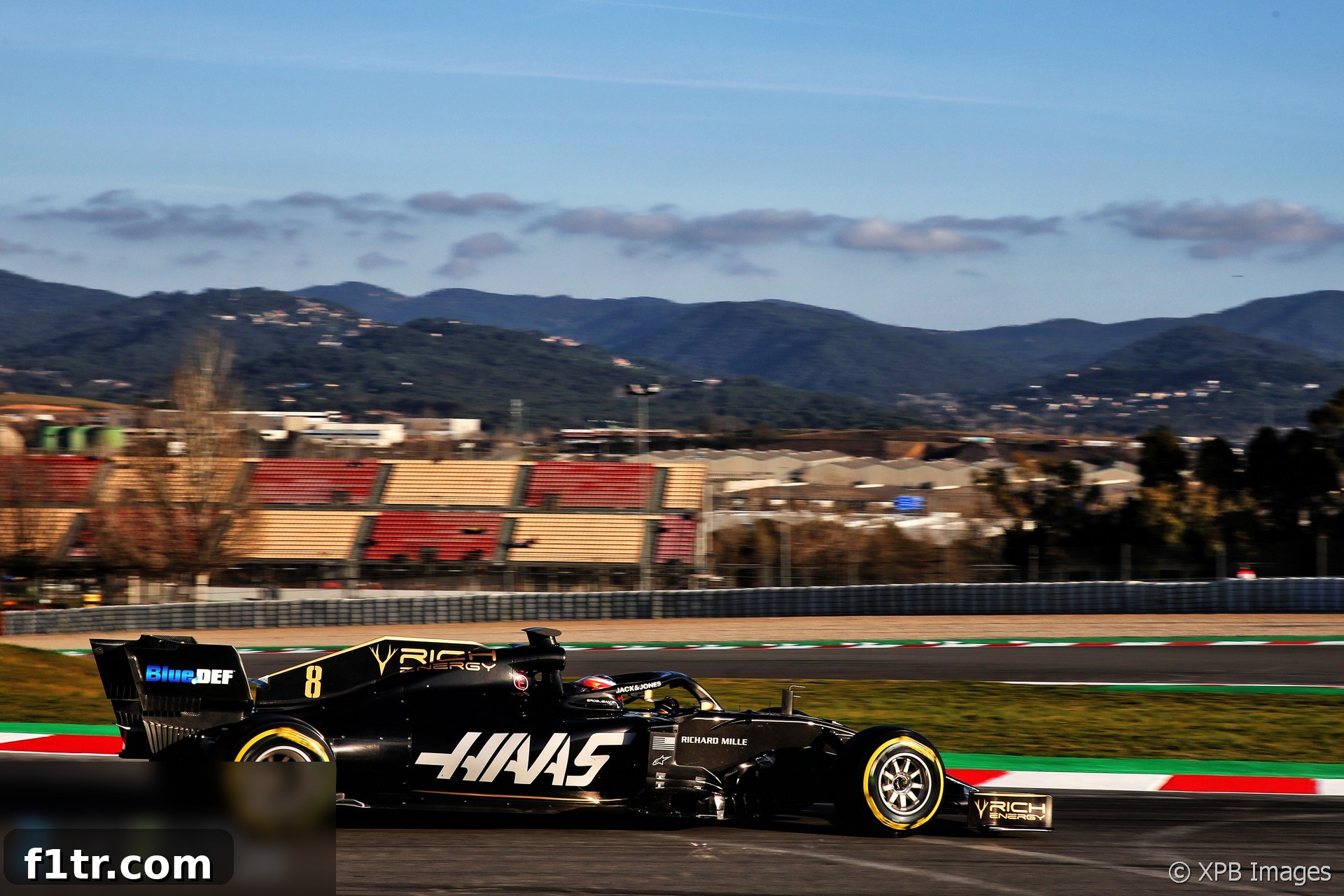
The Haas Formula 1 team has openly acknowledged a significant challenge: their VF-19 car demonstrates blistering speed over a single qualifying lap but consistently struggles to maintain competitive pace during longer race stints. This stark contrast in performance has been a defining, and often frustrating, characteristic of their 2019 season thus far.
Advert | Become a Supporter & go ad-free
This performance disparity has been starkly highlighted by their race results. Despite an impeccable record of getting at least one VF-19 into Q3 in every qualifying session, the team has managed to secure only a single points finish in the initial races. This underperformance on Sundays, following promising Saturdays, has left both the team and its drivers perplexed.
For instance, Kevin Magnussen expressed his immense satisfaction with the car’s qualifying performance in Melbourne, securing a strong grid position. However, just three races into the season, he candidly admitted his inability to comprehend their “frustrating” race pace, articulating a sentiment shared by many within the team. The VF-19 simply isn’t performing as expected when it matters most – during the Grand Prix itself.
The team’s internal analysis has pointed directly to the 2019-specification Pirelli tyres as the primary culprit. While several teams have grappled with the intricacies of the new tyre compounds and their associated regulatory changes, Haas’s specific issue appears to be particularly unique to their car’s characteristics. Rather than a general handling problem, the core of their struggle seems to revolve around tyre temperatures – specifically, the inability to keep them within their optimal operating window during race conditions.
Guenther Steiner, the candid team principal, responded to inquiries about the multifaceted nature of the problem, stating, “It’s a combination of everything. You cannot put it down to [just] vehicle dynamics. It’s aero, it’s everything, brake cooling… there are a lot of things going on we cannot identify because otherwise it would be easy.” This highlights the complexity of modern F1 car performance, where numerous interconnected systems contribute to the overall behaviour.
Intriguingly, this critical issue did not manifest during pre-season testing, despite the team conducting extensive long runs in the often-cold temperatures of the Circuit de Catalunya. This anomaly is largely attributed to the nature of the Barcelona track. With its predominant layout of medium-to-high speed corners, combined with a significant long straight, the tyres were consistently loaded through the turns. This constant loading generated sufficient energy to keep the tyre temperatures elevated, effectively masking the underlying problem that would later emerge on other circuit types.
As the Formula 1 season progressed and the calendar presented a wider mix of circuit characteristics, Haas found themselves in a growing predicament. Approaching the Baku City Circuit, a track renowned for its exceptionally long straights and a distinct lack of high-speed corners, the team’s concerns understandably heightened. Steiner’s apprehension was palpable: “I’m not finding excuses, I’m just readying myself for the disappointment. I hope we find something before Baku, but it is a race track we cannot get energy into the tyre.” This stark admission underscored the severity of their challenge on circuits that do not naturally promote tyre heating.
NB. Race pace calculated as an average over green flag running in each race
F1 Tyres in 2019: Understanding the Challenge
Diagnosing the root cause of Haas’s tyre woes is one thing, but devising an effective solution is proving to be a far more complex endeavour. The issue could stem from a single area or, more likely, a confluence of several factors, making pinpointing a fix particularly challenging for the engineering team.
Pirelli, as the sole tyre supplier for Formula 1, introduced revised tyre specifications over the winter break. These changes were largely driven by the ever-increasing cornering speeds of modern F1 cars, which had led to issues like blistering in previous seasons. However, these technical tweaks, while addressing some problems, inadvertently introduced potential downsides for certain teams.
A key change involved all five dry-weather tyre compounds switching to the thin-gauge rubber, a specification previously used in only three events the prior year. This thinner tread was designed to mitigate overheating in faster corners, which had been a significant contributor to blistering. While this modification benefits top teams, whose cars generate immense cornering loads and thus excessive tyre temperatures, it acts as a double-edged sword for teams like Haas with comparatively less cornering load. The reduced deformation of the thinner rubber generates less internal heat, resulting in lower operating temperatures – precisely the opposite of what Haas needs.
Further complicating the issue, a regulatory mandate for 2019 dictates that all five tyre compounds share the exact same internal construction. This rigid rule limits Pirelli’s ability to tailor each tyre construction to optimally suit its specific compound, potentially compromising the warm-up characteristics across the range. Additionally, new regulations reduced the maximum temperature for rear tyre blankets by 20°C compared to the previous year. This means that when a car leaves the pit lane, its rear tyres are considerably further from their ideal working temperature, making the initial warm-up phase even more critical and challenging for teams to manage.
Advert | Become a RaceFans supporter andgo ad-free
Strategies for Managing Tyre Temperature in F1
The mechanisms by which a Formula 1 car generates and maintains heat within its tyres are diverse and interconnected. Understanding these sources is crucial for optimizing performance and preventing issues like those faced by Haas.
**Aerodynamics** represent the most immediate and impactful source of tyre energy. Greater downforce, generated by the car’s intricate aerodynamic surfaces, translates into increased vertical load through medium and fast corners. This vertical force allows the car to carry higher speeds through turns. Crucially, this increased vertical and lateral load imposes more energy onto the tyres, causing them to flex and deform, thereby generating heat and keeping them within their optimal temperature window. Conversely, if a car lacks sufficient downforce to keep the tyre firmly pressed against the track surface, the tyre will slide. While sliding also generates heat, this is typically an uncontrolled and detrimental form of heating that leads to localized overheating and rapid degradation, rather than beneficial temperature generation.
In slower corners, the emphasis shifts more towards **mechanical grip**. This grip is primarily derived from the car’s suspension geometry and overall mechanical setup. A well-tuned suspension system ensures that the tyres maintain optimal contact with the track, allowing for efficient force transfer. This mechanical grip, working in conjunction with available downforce, helps keep the tyres in their desired operating range. Again, insufficient mechanical grip will lead to excessive tyre sliding, which, as noted, heats the tyre inefficiently and can quickly push it beyond its peak performance window.
Another critical factor in tyre temperature management is the **transfer of heat from the brakes**. Modern F1 cars feature highly sophisticated brake ducts that can be configured in various ways. These ducts are not solely for cooling the carbon brakes but also play a vital role in channelling heat from the incredibly hot brake assemblies into the wheel and, subsequently, into the tyre. The ability to precisely tune this heat transfer mechanism is a key aspect of a car’s setup for specific tracks and prevailing conditions. Engineers must find the delicate balance of keeping the brakes hot enough to perform effectively while simultaneously conducting the right amount of heat into the tyres to bring them up to, and maintain, their ideal working temperature.
Unpacking the Root Cause of Haas’s Performance Discrepancy
Synthesizing these elements, we can construct a clearer picture of Haas’s qualifying brilliance versus their race-day struggles. In qualifying, the car benefits significantly from several factors. The tyres are pre-heated in tyre blankets to close to their optimal temperature before the car leaves the pits. A warm-up lap, often combined with the engine’s higher-power “party mode,” allows the driver to aggressively load the tyres, quickly bringing them into their peak performance window. The Haas VF-19 is demonstrably fast in these conditions, as evidenced by its frequent position as “best of the rest” behind the sport’s top three teams. This indicates that the car inherently possesses strong aerodynamic and mechanical grip when the tyres are working correctly.
However, the race scenario unfolds quite differently. As soon as the pit crew removes the blankets on the grid, the tyre temperatures begin an inexorable decline. Even with the warm-up lap before the start, the beneficial effect of pre-heating quickly dissipates. The 2019 thin-gauge tyre tread exacerbates this problem. The design, intended to prevent blistering, results in less internal movement and deformation within the tyre. Coupled with the generally slower pace of a race lap compared to a qualifying flyer – due to fuel load, traffic management, and tyre conservation – the tyre is not loaded as effectively. Consequently, insufficient energy is generated to counteract the natural cooling effects.
On tracks characterized by long straights and a predominance of slow-speed turns, the problem intensifies. These circuits offer fewer opportunities for the high lateral G-forces that generate significant tyre heat. The tyres continue to suffer from this lack of energy input and steadily lose temperature. As the race progresses and the tyre wears, the situation can paradoxically worsen. While tread movement typically creates self-heating, if the tyre is already too cold, this effect is diminished, leading to a “vicious circle.” Once the critical heat has been lost, there is very little a driver can do to recover the situation. Pushing harder to generate more heat becomes counterproductive, as the lack of temperature prevents the car from generating the necessary grip to go fast, creating a feedback loop of underperformance. The only immediate, but unsustainable, option is to switch to fresh tyres that have just come off the blankets, rich with tread and stored heat.
Historically, teams often face a trade-off: cars that excel in qualifying tend to work the tyres aggressively, leading to high degradation in the race. Conversely, cars that struggle in qualifying might manage their tyres better over a race distance. Haas presents a unique challenge, as their car works the tyres exceptionally well in qualifying but then appears to *under-use* them in the race, leading to temperature loss rather than overheating degradation. This means there isn’t a simple setup compromise that can be made to balance qualifying prowess with race performance; the problem lies deeper in how the car interacts with the tyres across different performance envelopes.
While all Formula 1 teams navigate this delicate balancing act, Haas is demonstrably struggling with it more acutely than their rivals. They are actively working to understand the problem, but this complex diagnosis requires significant time and resources, even with the testing opportunities available, such as the post-Bahrain Grand Prix test. The fact that the tyres can be warmed effectively for qualifying, allowing the car to be quick and demonstrate its inherent aero and mechanical grip, is crucial. The paradox is that in the race, the car is slower, not due to overheating from excessive sliding, but because the tyres are *losing* temperature. This suggests the issue isn’t a fundamental lack of grip in fast or slow corners but rather a systemic problem with temperature retention. Ideally, Haas could simply add significantly more downforce to run with similar tyre loadings as the top three teams. However, achieving such a substantial aerodynamic gain is a long-term developmental goal for any team and is unlikely to offer a quick or easy solution to their immediate tyre temperature issues.
Go ad-free for just £1 per month>> Find out more and sign up
While adding marginal improvements in aerodynamic or mechanical grip is always beneficial, it may not directly resolve Haas’s core tyre temperature problem. Insights from race engineers outside of F1 circles suggest that the VF-19’s characteristically stiff setup could be a contributing factor. A stiff car setup often enhances single-lap qualifying performance, as a highly skilled driver can manage the trickier, more responsive handling for a brief, maximum-effort lap. However, sustaining this aggressive driving style and managing a twitchy car over a full race distance, with varying fuel loads and tyre wear, presents a far greater challenge and can hinder consistent tyre management.
It is important to note that a stiff setup is not adopted solely for single-lap performance. It is often a consequence of other critical design parameters, most likely related to aerodynamics. If a car’s aerodynamic performance is highly sensitive to changes in ride height, then the car must be made stiffer to minimize body roll and vertical movement. This rigidity ensures the aerodynamic surfaces operate within their optimal range, maintaining peak downforce. Crucially, contrary to persistently inaccurate accusations, the VF-19’s aerodynamics are very much the proprietary work of the Haas team, completely unrelated to its technical partner, Ferrari. Therefore, if the car’s aero is indeed sensitive to ride height, this is a distinct Haas problem, and its resolution lies entirely within their engineering capabilities, even if it proves to be a major and longer-term development project rather than a swift fix.
While Haas does procure its suspension components from Ferrari, this does not imply that the team sets up these components in the exact same manner as the Scuderia. Haas retains the autonomy to experiment with softer spring and damper settings to achieve the desired mechanical setup that might better suit their unique tyre temperature requirements. If Haas engineers determine that trialling a softer setup is warranted, it is entirely within their rights to pursue such a direction.
If the solution isn’t simply about adding more grip, another promising avenue, particularly for the low-energy tracks that exacerbate their problem, could involve manipulating brake blanking. Perhaps there is a need for greater heat transfer from the brakes into the tyres during the race, even if this causes some additional heat management challenges in qualifying. However, a significant hurdle arises here: Haas purchases its brakes and associated ducting from Ferrari. This arrangement means that the brake cooling system is not an area the Haas team has historically developed in-house, severely limiting their immediate ability to innovate or modify it for their specific needs.
This situation perfectly illustrates one of the inherent challenges of the “listed parts” approach that defines the Haas-Ferrari technical partnership. If the brake cooling options supplied by Ferrari do not precisely meet Haas’s unique requirements for tyre temperature management, they are left facing a critical performance deficit. Haas has two main options: either embark on their own costly and time-consuming brake duct development program from scratch, or, more realistically, persuade Ferrari to introduce additional, more tailored brake duct options into their supplied parts catalogue. While possible given their combined resources, this is certainly not a solution that can be implemented and tested between consecutive race weekends.
Advert | Become a RaceFans supporter andgo ad-free
When Can Haas Expect a Resolution?
The speed with which Haas can accurately identify and effectively resolve the root cause of their tyre temperature conundrum is complicated by two interconnected factors. Haas operates a unique business model in Formula 1, outsourcing parts production to the maximum extent permitted by regulations. This strategy allows them to maintain a comparatively smaller staff – indeed, they boast the lowest headcount of any F1 team on the grid.
The critical question then arises: will this lean operational structure compromise their ability to swiftly develop a bespoke technical solution? Guenther Steiner remains optimistic but realistic: “It’s not the amount, it’s always the quality of the people. If you have got the quality and the quantity for sure you’re better. I think we can overcome it, we overcame a lot of things, we just need to work hard on it. After Bahrain we stayed there testing, found what the issues was but after Bahrain we didn’t have any time to actually react to it because the test was finished on Wednesday so we need to see what we can come up now.” His comments underscore the challenge of limited turnaround time between races, even after identifying issues in testing.
Haas has faced similar obstacles in the past. In their formative seasons, the team grappled with persistent brake problems. Because they did not develop their braking setup in-house, they lacked the deep, nuanced understanding of the system that Ferrari, its supplier, possessed. This meant they couldn’t simply outsource the problem-solving; they had to elevate their own internal understanding and dedicate resources to address the issue themselves.
The current tyre temperature situation presents an analogous challenge for Haas. While a breakthrough before the upcoming Azerbaijan Grand Prix appears unlikely, the racing calendar offers some potential relief. Several of the tracks following Baku are expected to be far better suited to the VF-19’s characteristics, providing the team with crucial breathing room and a window to further diagnose and resolve the underlying causes of their performance inconsistency.
Steiner, for example, expressed confidence that the Spanish Grand Prix in Barcelona will not present the same issues. “We didn’t have the problem there in winter and it was pretty cold so why should it come back? I cannot foresee that one,” he reasoned, referencing the pre-season testing experience.
This leaves Baku as a significant, short-term stumbling block. When pressed on his expectations for the team’s performance at a venue where long straights and tight, slow corners could once again expose their core problem, Steiner adopted a pragmatic stance: “I don’t know. I can tell you when we get there. We will work hard and try to do the best and get something prepared. But to tell you if we have got something or not I cannot commit. We will just see in Baku.” This candid uncertainty reflects the immense complexity of their current technical predicament and the relentless pressure of Formula 1’s unforgiving schedule.
F1 Technology and Innovation Insights
- McLaren, Red Bull and Ferrari bring rear corner updates to Imola
- Ferrari, McLaren and Red Bull bring upgrades again for Saudi Arabian Grand Prix
- McLaren introduce major floor upgrade for Norris’ car at Mexican Grand Prix
- McLaren, Mercedes and Red Bull detail upgrade packages for United States GP
- Red Bull remove engine cover ‘cannons’ in major RB20 update – but they may return
Browse all F1 technology articles