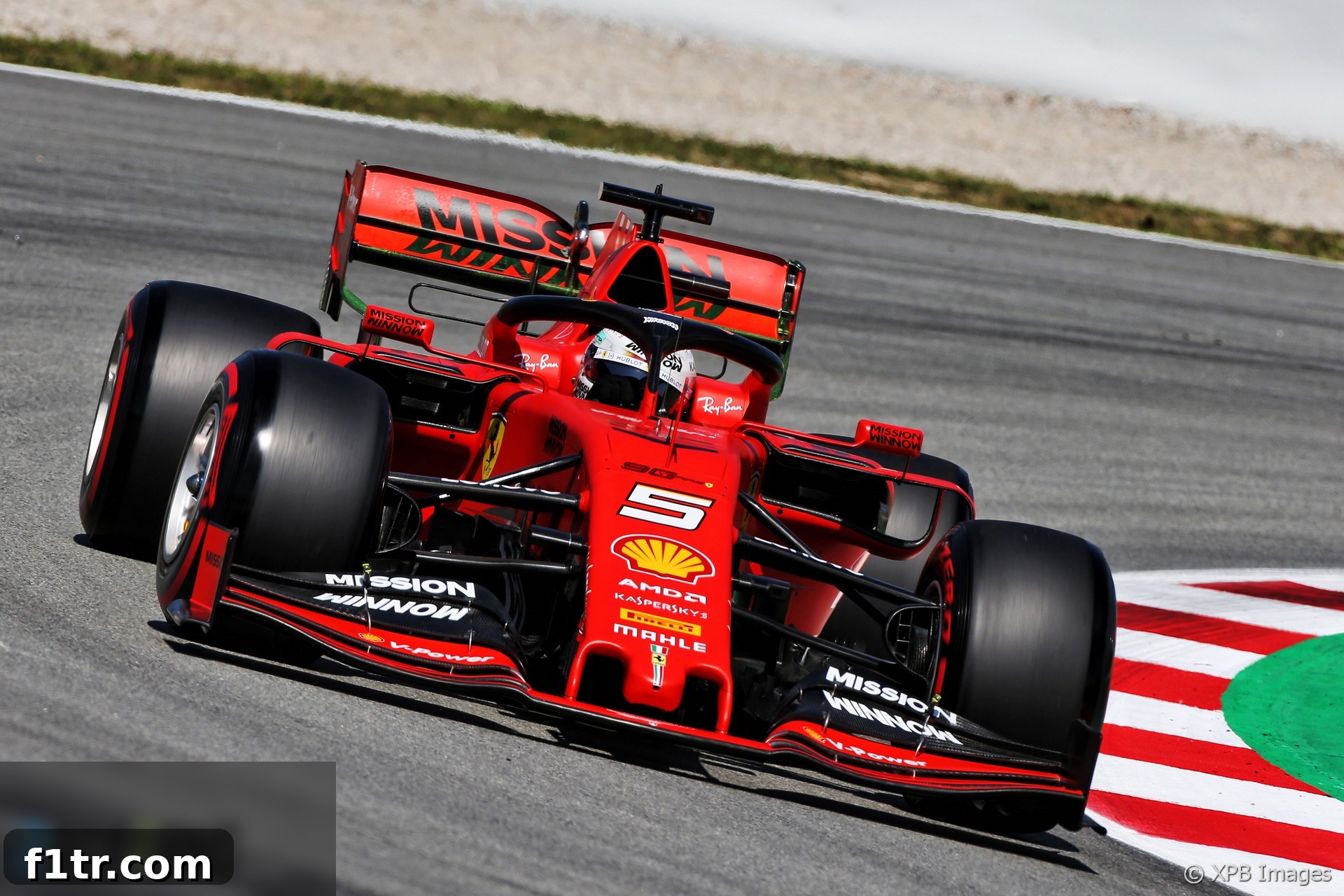
Scuderia Ferrari, a formidable name in Formula 1, has strategically advanced the introduction of its ‘spec two’ power unit for the 2019 season. This proactive measure, confirmed by team principal Mattia Binotto, aims to significantly bolster the performance of both Sebastian Vettel and Charles Leclerc without incurring grid penalties for exceeding the season’s engine allocation. The decision underscores Ferrari’s relentless pursuit of championship success and their agile response to early-season challenges, particularly following an underwhelming performance at the Australian Grand Prix.
Advert | Become a Supporter & go ad-free
The early deployment of the upgraded power unit marks a pivotal moment in Ferrari’s 2019 campaign. Typically, teams introduce their second engine specification later in the season, often around the Canadian or British Grands Prix, allowing for extensive development and testing. However, Ferrari chose to debut this crucial component at the fifth race of the season, a move that deviates from conventional timelines but signals an aggressive development push. In the fiercely competitive world of Formula 1, where every fraction of a second counts, optimizing power unit performance is paramount, and Ferrari’s decision reflects their urgency to close the gap on their rivals.
Formula 1 regulations are stringent when it comes to power unit components. Each driver is permitted a limited number of elements for the entire 21-race championship: three Internal Combustion Engines (ICE), three Turbochargers (TC), three Motor Generator Units-Heat (MGU-H), two Energy Stores (ES), two Control Electronics (CE), and two Motor Generator Units-Kinetic (MGU-K). Exceeding these allowances results in grid penalties, which can severely impact a driver’s race weekend. For instance, the first time a driver uses an additional component, they typically receive a five-place grid penalty. Subsequent changes often incur ten-place penalties, and using an entirely new power unit beyond the allowance can lead to starting from the back of the grid. These penalties are not just theoretical; they can derail a team’s strategy and championship aspirations.
Despite the early introduction, Mattia Binotto adamantly stated that Ferrari is “not planning” to exceed the allocation of three engines per driver for the season. This assurance is crucial, as incurring grid penalties could severely undermine the benefits of any performance upgrade. Binotto further clarified, “The early introduction does not mean that we cannot still use P1 in some races, that can be an option.” This statement suggests a flexible strategy where the team might deploy the older ‘spec one’ engine for practice sessions or even certain races that are less demanding on the power unit, thereby preserving the lifespan of the newer, more powerful ‘spec two’ unit. Such strategic management of components is vital in a long and grueling F1 season, showcasing Ferrari’s detailed planning and commitment to meticulous resource allocation.
The original plan was to unveil the new engine specification at the 2019 Canadian Grand Prix, approximately four weeks after its actual debut. Binotto explained that the decision to bring forward both the engine upgrade and other aerodynamic developments was a direct response to their disappointing start to the season, particularly the performance in Melbourne. “Having started the season in Melbourne we recognised that somehow we may have been late on our performance compared to our competitors,” Binotto admitted. The Australian Grand Prix had highlighted a clear performance deficit compared to Mercedes-AMG, prompting Ferrari to accelerate their development timeline across various critical areas of the car. This candid acknowledgment of their early struggles underscores the pressure on a team like Ferrari, where anything less than championship contention is often deemed insufficient.
Accelerating a development schedule in Formula 1 is no small feat. It requires immense dedication, coordination, and often, significant overtime from engineers and factory staff. Binotto elaborated on the intensity of these efforts: “We tried simply to push on all the main items where we were already planning developments and we were simply looking for opportunities and anticipating some of the problems.” This proactive approach had already manifested with an aerodynamic package introduced earlier than planned at the Baku street circuit. The power unit upgrade represented another significant milestone in this accelerated development drive. “You simply achieve that by trying maybe sometimes to shortcut or to intensify the activity. I have to say that the people back at Maranello, we intensified our activities and we are working still very hard. That’s what we need to do at the moment,” Binotto stressed, crediting the tireless work of the team at their Maranello base for making these rapid improvements possible.
The F1 power unit is a complex marvel of engineering, comprising several interlinked components, each subject to its own usage limits. At the time of the ‘spec two’ introduction, Ferrari and Charles Leclerc (and implicitly Sebastian Vettel) were running on their second of three Internal Combustion Engines, Turbochargers, and MGU-H units. They were also utilizing their second of two sets of Control Electronics and MGU-K units. Crucially, they were still on their original Energy Store. This intricate balance of component usage highlights the strategic challenges faced by teams. While some parts can be replaced without immediate penalty if within allocation, others carry higher stakes. The early introduction of the ICE, TC, and MGU-H meant careful management would be required for the remaining parts of the season to avoid penalties, especially for the more limited ES, CE, and MGU-K.
Advert | Become a RaceFans supporter andgo ad-free
The 2019 Formula 1 season presented a particularly challenging landscape for Ferrari. Despite showing strong pace in pre-season testing, suggesting they might have the fastest car, the early races, especially the Australian Grand Prix, revealed a significant gap to Mercedes. This created immediate pressure on the team to perform and deliver results for their passionate Tifosi. The decision to bring forward such a critical upgrade like the power unit demonstrates Ferrari’s determination not to cede any ground in the championship battle. It was a calculated risk, balancing the immediate need for improved performance against the long-term risk of potential engine penalties. The gamble was that the performance gain would be significant enough to justify the accelerated development and the increased pressure on component longevity.
The implications of this move extended beyond just the technical aspects. For drivers like Sebastian Vettel and Charles Leclerc, a more powerful and reliable engine provides a significant boost, allowing them to extract more performance from the car and compete more effectively against their rivals. For Leclerc, in his debut season with the senior Ferrari team, having competitive machinery was vital for building confidence and demonstrating his potential. For Vettel, a multi-world champion, the upgrade was crucial for his championship aspirations and for reaffirming his position as the team’s lead driver. The collective effort at Maranello to deliver these upgrades under immense pressure underscored the famous “Ferrari spirit” – a relentless drive for excellence and a never-say-die attitude in the face of adversity. This strategic power unit upgrade, therefore, was not merely a technical adjustment but a comprehensive statement of intent from Scuderia Ferrari, signaling their unwavering commitment to fight for the 2019 Formula 1 World Championship.
2019 F1 season
- Crying in the Melbourne car park at 2019 grand prix was my career low – Ocon
- McLaren Racing reports reduced £71 million loss in 2019
- Kvyat: Hockenheim podium last year was “my biggest achievement” so far
- How the FIA’s new encrypted fuel flow meter targets Ferrari’s suspected ‘aliasing’ trick
- “He smashed my office door”: 23 must-see moments from ‘Drive to Survive’ season two
Browse all 2019 F1 season articles