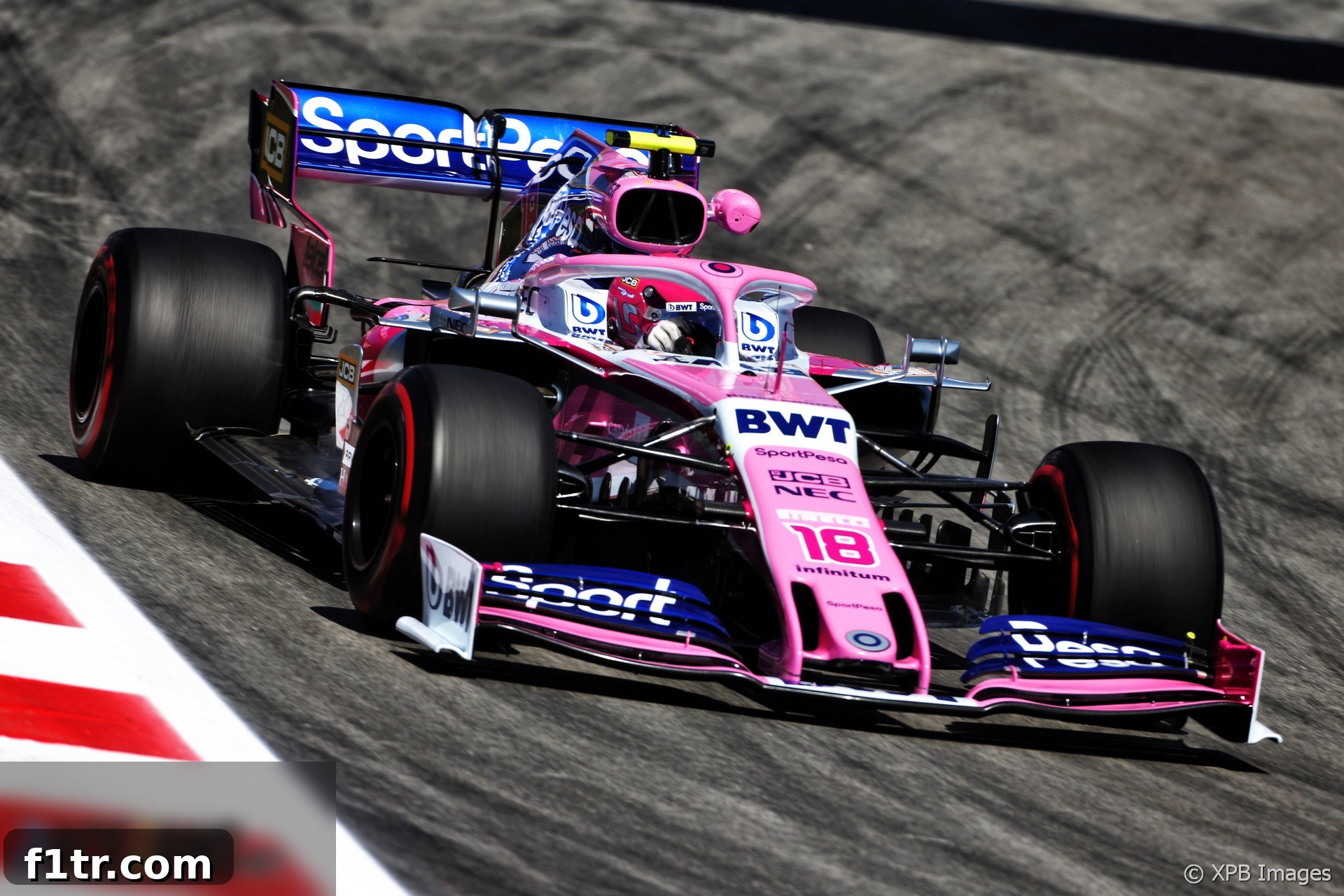
Racing Point Pushes Ahead with Key 2019 F1 Upgrades Despite Lance Stroll’s FP1 Setback
The high-stakes world of Formula 1 demands relentless innovation and continuous improvement. For Racing Point, the 2019 F1 season was a pivotal year, marking a new era under fresh ownership and an ambitious drive to climb the competitive ladder. A crucial part of this journey involved significant car upgrades, meticulously designed to boost performance and consolidate their position in the fiercely competitive midfield. However, the initial deployment of these vital enhancements at a critical race weekend faced an immediate challenge when driver Lance Stroll suffered a costly crash during the first practice session (FP1), severely damaging several of the newly installed components on his RP19 chassis. This incident not only curtailed valuable track time but also presented the team with an urgent repair and assessment task, highlighting the thin margins and inherent risks in F1 development.
Navigating the Aftermath: Stroll’s Crash and Immediate Repairs
Stroll’s incident in FP1 was more than just a momentary lapse; it struck at the heart of Racing Point’s carefully planned upgrade deployment. Andrew Green, the team’s esteemed Technical Director, quickly confirmed the extent of the damage. The newly introduced front suspension and a significant portion of the front floor, key elements of the aerodynamic package designed to enhance downforce and stability, bore the brunt of the impact. In Formula 1, every component is engineered with extreme precision, and damage to brand-new parts can be particularly frustrating, especially when they are intended for crucial data gathering and performance validation.
Despite the initial setback, the rapid response of the Racing Point mechanics and engineering team was commendable. They successfully managed to replace the new specification suspension parts in time for the second practice session (FP2). This immediate turnaround allowed Stroll to return to the track, albeit with a partially compromised package. However, the intricate front floor, a more complex aerodynamic component often requiring specialized manufacturing or fitting processes, could not be replaced as swiftly. Its arrival was anticipated later that evening, leaving Stroll to run FP2 without the full complement of the intended upgrade, a critical limitation for comprehensive evaluation of the new package’s complete impact on car performance.
The Crucial Role of Practice Sessions in F1 Development
Practice sessions are the lifeblood of Formula 1 development. They are the only opportunities for teams to gather real-world data on track, validate simulator findings, and fine-tune car setups for optimal performance. For Racing Point, bringing their first major upgrade package of the 2019 F1 season to the circuit was an event laden with anticipation. Such upgrades are the culmination of thousands of hours of design, simulation, and manufacturing, all aimed at extracting marginal gains that can translate into significant competitive advantages. Stroll’s crash, by severely limiting the data accumulation from his car, effectively halved the team’s immediate ability to understand the new package’s performance envelope. This reduction in data points meant a less complete picture for engineers, potentially delaying the optimization process and impacting the team’s overall performance for the remainder of the race weekend.
Andrew Green’s Assessment: Early Insights and Data Challenges
Technical Director Andrew Green provided an initial assessment, noting that “Nothing jumped out as being unexpected” from the limited data collected. While this sounds reassuring, it underscores the preliminary nature of the findings. The true challenge lay in the disparity between the two cars. Only Sergio Perez’s car was able to run with the complete updated package in FP2, providing the team’s sole reliable source of information on the full upgrade’s performance characteristics. Stroll’s car, despite its new suspension, lacked the updated front floor, meaning any data from his vehicle would only offer a partial understanding of the package’s overall impact and optimal setup.
Green emphasized the critical hours following practice, stating, “We’ll know in the next three or four hours what it’s doing and how it’s performing.” This highlights the intensive data analysis process F1 teams undertake. Engineers pour over telemetry, lap times, sector performance, tire wear, and driver feedback to synthesize a comprehensive understanding of the car’s behavior. With only one car providing a full data set, the pressure on Perez and his engineering crew was immense to extract maximum information, making every lap count. This situation demanded meticulous attention to detail and a swift analytical turnaround to ensure the team could make informed decisions for qualifying and the race, maximizing their competitive edge.
The Paradox of Progress: Rapid Development vs. Spare Parts Inventory
One of the most intriguing aspects of Racing Point’s evolution under its new ownership has been the dramatic increase in its development pace. Green confirmed that the team is now able to upgrade its car “more quickly” than before. This newfound agility is a direct result of the enhanced financial backing and restructured operations following the acquisition by Lawrence Stroll’s consortium. Previously, as Force India, the team was renowned for punching above its weight with limited resources. Now, with a more robust budget and expanded infrastructure, Racing Point could accelerate the design, production, and implementation of new parts, a vital capability in the relentless arms race of modern F1.
However, this accelerated development brings with it a unique challenge: the availability of spare parts. While resources have improved, Green explained a paradox: “The parts we’ve got are all out of date because we’re updating the car so quickly now.” This isn’t a sign of poor resource management, but rather a testament to the aggressive development philosophy. In an environment where every week might see a new iteration of a complex aerodynamic component or mechanical part, older specifications quickly become redundant. Consequently, maintaining a large stock of spares for the very latest specification becomes incredibly difficult and economically inefficient, as those parts might be superseded before they even see action on the track. Stroll’s crash brought this inherent tension between rapid progress and logistical challenges into sharp focus, demanding rapid on-the-spot solutions rather than relying on an extensive spare parts inventory for older specifications.
Racing Point’s Strategic Ascent in the F1 Midfield
The 2019 F1 season was fiercely contested, particularly in the midfield. Teams like McLaren, Renault, Haas, and Alfa Romeo were all vying for crucial championship points, making every tenth of a second gained through development absolutely critical. For Racing Point, a team in transition, consolidating its position and showing clear signs of progress was paramount. Major upgrade packages like the one introduced were not just about improving lap times; they were about sending a clear signal – both internally to boost morale and externally to competitors – that the team was serious about its long-term ambitions and had the capability and resources to deliver on them.
The incident with Stroll’s car, while inconvenient and potentially costly, served as a stark reminder of the fragile balance between pushing the limits of performance and ensuring reliability and operational efficiency. F1 teams constantly walk this tightrope, and the ability to recover quickly from setbacks, as Racing Point demonstrated, is a hallmark of a well-drilled and resilient F1 outfit. The data gathered from Perez’s car, combined with the eventual restoration of Stroll’s fully upgraded chassis, would be instrumental in determining the true effectiveness of the new package and guiding the team’s development trajectory for the remainder of the season. The insights derived from this weekend would not only influence immediate race strategy but also feed into the longer-term design philosophies for future iterations of the F1 car, underscoring the continuous cycle of learning and adaptation inherent in Formula 1.
The Road Ahead: Optimisation and Future Development
As the race weekend progressed, Racing Point faced the intricate challenge of optimizing a partially evaluated upgrade package. The limited data from FP1 and FP2 meant that setup choices for qualifying and the race would be made with less certainty than ideal. This situation often requires engineers and drivers to rely more heavily on experience and intuition, alongside the available telemetry. The goal would be to maximize the potential of the new parts while simultaneously minimizing any instability or unforeseen issues that might arise from their incomplete understanding. Every setup change, every wing adjustment, becomes a calculated risk in such circumstances, underscoring the pressure on the team to perform.
Looking beyond this immediate challenge, the incident also provided valuable lessons for Racing Point’s ongoing development programme. The ability to quickly manufacture and deliver complex spare parts for the latest specification remains a key logistical hurdle, even for well-funded teams. Investing in robust supply chains, advanced manufacturing techniques, and contingency plans for such scenarios is crucial for sustained performance in Formula 1. Ultimately, Lance Stroll’s FP1 crash, while a momentary setback, became a testament to Racing Point’s resilience and its ambitious trajectory in the highly competitive arena of Formula 1. It underscored that in F1, progress is not a straight line, but a continuous series of adaptations, learning, and overcoming obstacles on the relentless pursuit of speed and championship success.