The Controversial Comeback: Tobacco-Linked Brands Resurface in Formula 1 Sponsorship
For decades, the vibrant world of Formula 1 racing was synonymous with the powerful imagery and vast financial backing of tobacco brands. From the iconic red and white of Marlboro to the striking blue of Camel, these brands fueled an era of unprecedented spending and innovation in the sport. However, legislative pressures, particularly in the mid-2000s, led to a near-total eradication of visible tobacco advertising from team liveries. Yet, in a fascinating twist, recent developments suggest a sophisticated return of tobacco-linked entities to the F1 grid, pushing the boundaries of marketing regulations and sparking renewed debate.
Last year, Ferrari, through its long-time partner Philip Morris International (PMI), unveiled the enigmatic ‘Mission Winnow’ brand. This initiative quickly drew scrutiny, appearing prominently on the Scuderia’s cars. Hot on its heels, McLaren announced a similar collaboration with British American Tobacco (BAT), set to feature on its MCL34 car. These moves highlight a growing trend where the ingenuity once reserved for car designers is now being applied to legal and marketing strategies, meticulously navigating the letter of the law rather than its spirit.
A Pioneering Legacy: Tobacco’s Enduring Influence on F1’s History
It’s a lesser-known fact that tobacco sponsorship graced the Formula 1 grid even before the advent of aerodynamic wings. The first recorded instance dates back to the 1968 South African Grand Prix on January 1st, featuring the local Gunston brand on John Love’s privateer Brabham. This predates F1’s rudimentary aero devices, which debuted later that year at the Monaco Grand Prix. This early entry set the stage for a relationship that would profoundly shape the sport.
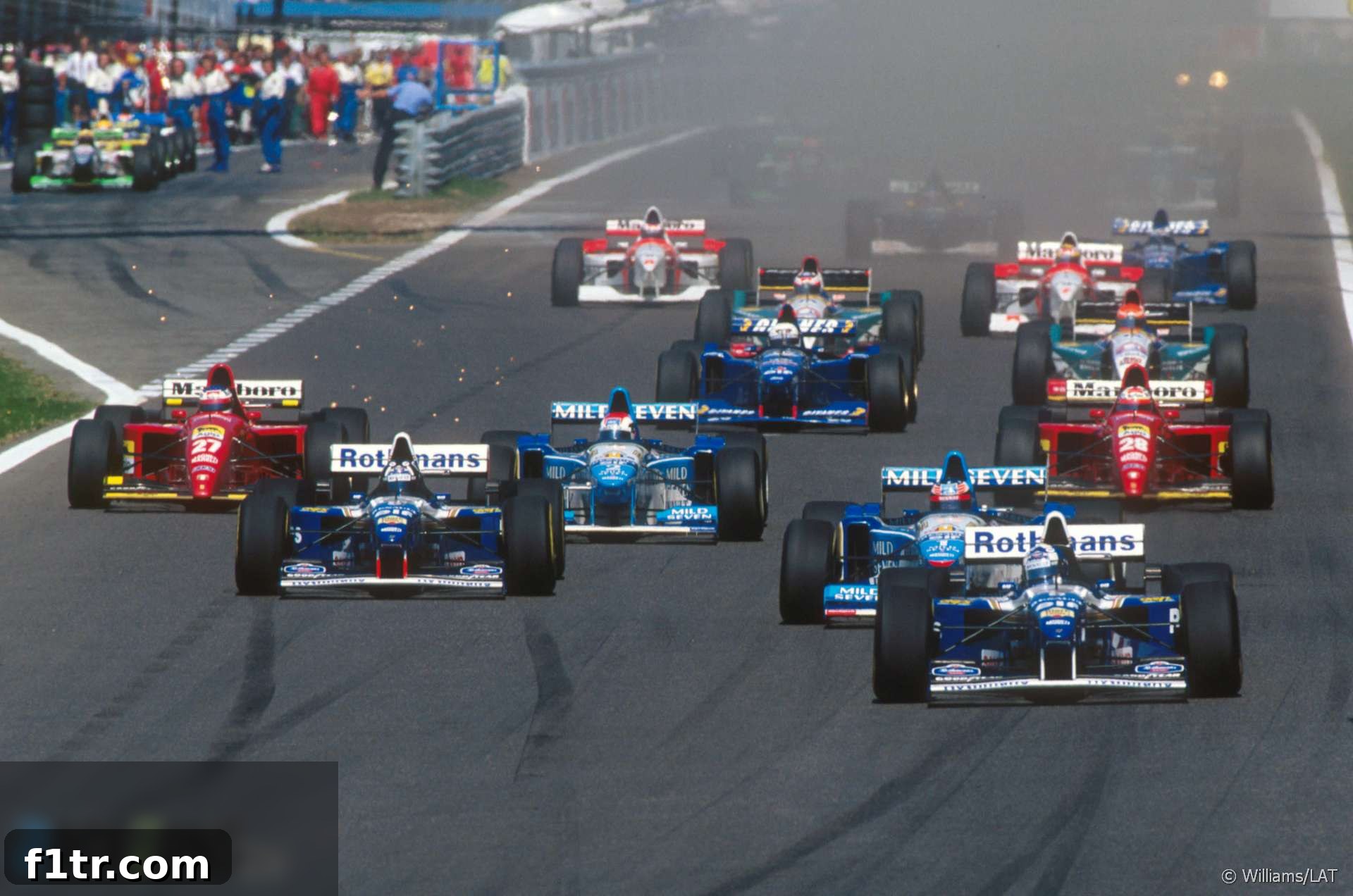
Once tobacco money flowed into F1, there was no turning back. The sport embarked on an unparalleled spending spree, funded by a diverse array of tobacco brands, from 555 to Lucky Strike, West, and Camel. These companies were eager to invest ever-increasing sums to promote their products to F1’s rapidly expanding live and television audiences. Budgets exploded, leading many to argue that nicotine, rather than petrol, became the true fuel of the sport’s commercial growth and competitive intensity.
Marlboro, perhaps the most iconic tobacco sponsor, played a pivotal role in F1’s landscape. It facilitated Ron Dennis’s Project 4 outfit acquiring a struggling McLaren and famously covered Ferrari’s drivers’ wages before fully committing to the Scuderia as Jean Todt’s ambitions became clear. Not to be outdone, McLaren later secured sponsorship from West, transforming its distinctive day-glo cars into the instantly recognizable Silver Arrows.
Williams, too, leveraged its Camel stipend to achieve greatness, culminating in the creation of the FW14B – widely considered one of F1’s most technically advanced cars. Mild Seven’s backing propelled Michael Schumacher to his two Benetton world titles. The visible presence of tobacco sponsorship on a world champion lasted until Fernando Alonso’s victory in 2006, marking the end of an era for overt branding.
The ultimate expression of F1 as a tobacco marketing platform arrived in late 1998, when British American Tobacco announced an ambitious plan: anticipating looming global bans on tobacco sponsorship, it would fund a complete, turn-key operation in Brackley. This new team, British American Racing (BAR), controversially intended to enter two cars under different tobacco liveries – one in 555 colors and the other in Lucky Strike livery. F1’s complex regulations ultimately forced the team to run identical branding, often separated by a zipper, reflecting the growing regulatory scrutiny. Despite its lavish backing, BAR famously failed to score a single point in its debut year. However, its strategic sale – first to Honda, then Brawn, and finally Mercedes-Benz – demonstrated the long-term planning behind these investments, evolving the team into the dominant force it is today.
Navigating the Ban: FIA’s Resistance and Creative Evasion Tactics
Before the comprehensive bans took full effect, motorsport, and F1 in particular, significantly benefited by defying politically correct trends, becoming one of the few sporting genres still willing to accept tobacco money. The FIA, then under the leadership of Max Mosley, metaphorically took up arms against the European Union, vigorously advocating for motorsport’s interests and seeking to delay impending EU tobacco bans. This period was marked by intense lobbying and legal challenges.
An excerpt from a letter Mosley addressed to David Byrne, the EU’s then-Commissioner for Health and Consumer Protection, sheds light on the FIA’s stance. Originating from a dispute after the Belgian Grand Prix was cancelled over a ban on Marlboro’s title sponsorship, the letter stated: “The FIA would rather devote its scarce resources to promoting road safety and maintaining our legitimate role as sporting regulator [than fighting team sponsors over earlier anti-tobacco legislation tabled by Byrne].” This statement encapsulates the difficult position the FIA found itself in, balancing its regulatory role with the economic realities of the sport.
F1 became so dependent on nicotine funding that some teams and promoters knowingly transgressed local laws in certain territories. The paltry fines levied – often paid in advance – were insignificant compared to the massive contributions from their tobacco benefactors. This demonstrated the immense financial leverage tobacco companies held over the sport.
To circumvent advertising bans, tobacco companies and teams devised increasingly creative activities. BAR’s high-speed land record runs, aiming for 400 km/h, served as a prime example of indirect brand promotion. F1 car launches evolved into lavish global spectacles, designed to capture worldwide television audiences rather than merely catering to a few journalists. These events, showcasing the cutting-edge technology and glamour of F1, offered an indirect platform for sponsors even without explicit logos.
Although David Byrne accelerated the EU’s effective ban date by 18 months to July 2005, various legal challenges created confusion. The FIA eventually settled on its own deadline of end-2006. For 18 months, F1 operated in a legal limbo, but thereafter, it largely aligned with EU legislation, which made it an offense to broadcast pictures of logos or trademarks, regardless of their origin. This effectively closed the “loophole” of racing with “dark liveries” in, say, Asian countries to broadcast logos to less stringent regions, through threats of hefty legal action against team executives, tobacco barons, and broadcasters. This era saw the emergence of ‘barcode’ liveries and clever visual allusions, particularly on Ferrari cars, designed to evoke Marlboro without explicitly displaying its name.
While most teams adhered to the legal guidelines, Ferrari, until mid-2008, continued to push the legislative limits. They displayed Marlboro logos in certain non-European countries, even when footage was broadcast into the EU. Subsequently, a series of white barcode-like designs, bearing an uncanny resemblance to the brand’s pyramid trademark, appeared until 2010, when flying “Scuderia Ferrari” logos finally erased all direct visual traces of Marlboro. Despite the removal of overt branding, Philip Morris International, Marlboro’s owner, continued to fund Ferrari, reportedly to the tune of $100 million per annum. This substantial investment granted PMI access to Ferrari for promotions and hospitality targeting the tobacco trade and retail outlets – a clear indication of the partnership’s enduring value. For hard-nosed board members to shell out a sum that has since totaled over a billion dollars, there must be compelling business reasons.
In a related anecdote, a Shell executive once quipped that their forecourts probably earned more money from cigarettes than from petrol, highlighting the pervasive commercial reach of tobacco products. In a clever act of reverse psychology, some Marlboro packs in countries where laws permitted printing on cigarette packaging began depicting likenesses of Ferrari F1 cars. After all, plain red racing cars were not subject to the same regulations.
The New Frontier: Mission Winnow and “A Better Tomorrow”
This subtle relationship persisted until last year’s Japanese Grand Prix, where PMI announced its ‘Mission Winnow’ initiative. Presented as a corporate exercise, its stated aim is to “ensure that one day all smokers quit cigarettes and switch to better alternatives.” Skeptics quickly highlighted the phonetic similarity of “Winnow” to “Win Now,” especially when Ferrari and Kimi Räikkönen delivered a race victory shortly after in the USA. While the cars were entered throughout the year under “Scuderia Ferrari,” a significant change occurred with the publication of the FIA’s revised entry list, officially designating the team as “Scuderia Ferrari Mission Winnow.”
Almost immediately, this drew attention from regulatory bodies. The Department of Health in the State of Victoria, host of the Australian Grand Prix, initiated investigations into whether Mission Winnow functions as a promotional vehicle for tobacco products, despite PMI’s denials. PMI maintains that Mission Winnow is a corporate initiative promoting scientific innovation and a smoke-free future, not a specific tobacco product.
PMI has since been joined in similar denials by British American Tobacco (BAT), McLaren’s newly announced primary sponsor. BAT declared it would have an “on-car and off-car presence throughout the season, at all times in line with applicable regulation and legislation.” Reports indicate that McLaren’s car will feature BAT’s “new-to-world and thought-leading ‘A Better Tomorrow’ platform.” Both PMI and BAT produce smoke-free – and in some cases, electronic – nicotine products. Crucially, these specific products are generally not intended to be marketed directly on F1 cars. Instead, the focus is on promoting the broader concept of switching to healthier consumption habits and lifestyles. The key word here, of course, is “healthier,” not “healthy,” leaving room for interpretation. The core argument from these companies is: how can offering a healthier alternative to what has legally been consumed by millions be deemed illegal?
Legal Frameworks and Ethical Dilemmas
Naturally, some will argue that the marketing of any form of nicotine substance is inherently immoral. However, a counter-argument posits that non-smokers are unlikely to start using e-cigarettes – whether marketed via corporate slogans on race cars or not – and that nicotine consumption is no longer glamorized as it was during the era of full-blown cigarette advertising. The intent, according to the companies, is to engage with existing adult smokers about potentially less harmful alternatives, rather than to recruit new users.
A significant question arises: when, if ever, will PMI or BAT (or other tobacco conglomerates that are likely to follow this trend into F1) begin directly promoting their specific smoke-free products on F1 cars? The probable answer is “never,” at least not while current EU bans encompass such products. The FIA’s 2006 anti-tobacco resolution explicitly committed to adhering strictly to EU laws and World Health Organisation guidelines.
The relevant EU legislation, promulgated in 2003 with effect from July 31, 2005, acknowledges varying Member State laws but asserts that comprehensive tobacco control falls within directives concerning cross-border effects, such as broadcast and media activities. Crucially, the following definitions apply:
- a) “tobacco products” means all products intended to be smoked, sniffed, sucked, or chewed, insofar as they are made, even partly, of tobacco.
- b) “advertising” means any form of commercial communications with the aim or direct or indirect effect of promoting a tobacco product.
- c) “sponsorship” means any form of public or private contribution to any event, activity, or individual with the aim or direct or indirect effect of promoting a tobacco product.
While this legislation applies to all forms of tobacco products – including, by definition, vaping, e-cigarettes, and related products – it notably makes no mention of outlawing the mission statements of tobacco companies or their corporate jargon. This distinction is precisely what PMI and BAT’s legal teams exploit. It appears they have meticulously identified and leveraged a legal loophole, focusing on corporate identity and vision rather than direct product promotion.
While Brexit may eventually mean that EU laws no longer prevail within the United Kingdom after the transition period, it’s unlikely the UK government will quickly soften its anti-tobacco legislation. Therefore, it’s a safe bet that similar provisions will continue to apply to the cross-border nature of F1, especially for the British teams that constitute a significant portion of the grid.
However, jurisdictions outside the EU, such as Australia, may interpret these matters differently. Phil Branagan, a Melbourne-based motorsport editor with local knowledge, pondered the issue: “I do not really understand. [Mission Winnow] is not a brand; you can’t walk into a shop [here] and buy anything by that name, so why would it be banned in Australia? It will be interesting to see what happens from here. Not sure what they can do with the existing legislation; does it potentially blank out a brand no one has ever heard of, and [one] which has a somewhat tenuous link to tobacco?” This perspective highlights the ambiguity and challenges in applying existing legislation to novel corporate branding initiatives.
Controversy, Parallels, and the Future of F1 Sponsorship
Another pertinent question is how teams themselves feel about an issue that is sure to generate controversy, regardless of its legal standing. Given that most teams have, at some point, accepted sponsorship from controversial products – whether alcohol or energy drinks (which were once banned in France) – they may not have a strong moral high ground. As an old saying goes, “Any controversy is better for F1 than none at all,” implying that increased media attention, even negative, can still benefit the sport’s profile.
The topic of alcohol sponsorship provides a useful comparison. Brands like Heineken strategically integrate social awareness slogans into their F1 advertising, such as “If you drink, never drive,” often accompanied by a visual warning. Alcohol is not (yet?) subject to the same stringent laws as tobacco products, so its marketing is legal in most countries. Where forbidden, it is primarily due to religious rather than health reasons. Johnnie Walker trackside and on-car sponsorship deals, or Williams’s now-defunct Martini livery, are legal within F1’s European host countries, with the notable exception of France. However, even with alcohol, the applicable EU directive imposes restrictions:
- a) it may not be aimed specifically at minors or, in particular, depict minors consuming these beverages;
- b) it shall not link the consumption of alcohol to enhanced physical performance or to driving.
Heineken’s slogan exemplifies how a brand can market an alcohol product while fully complying with EU law, a model that tobacco-linked companies may be attempting to emulate with their corporate messaging.
While numerous moral arguments can be made against these latest initiatives from PMI and BAT, the undeniable fact is that, under pressure, brands reinvent themselves to survive. One only needs to look at the extensive social media campaigns pushed out by these same brands as they legally circumvent traditional advertising restrictions. For tobacco-linked companies, Formula 1 remains just another potent platform, albeit one passionately followed by hundreds of millions of fans globally. It offers unparalleled visibility and an association with high performance and innovation that is invaluable.
In a sport constantly evolving, with pending changes to F1’s future aerodynamic regulations, it’s a remarkable thought that such corporate sloganeering by tobacco houses may well outlive F1’s iconic aerodynamic wings. This strategic return highlights the enduring power of brand association and the relentless pursuit of visibility, even in the face of strict global prohibitions. It underscores the complex interplay between sports, commerce, law, and public health in the modern era.