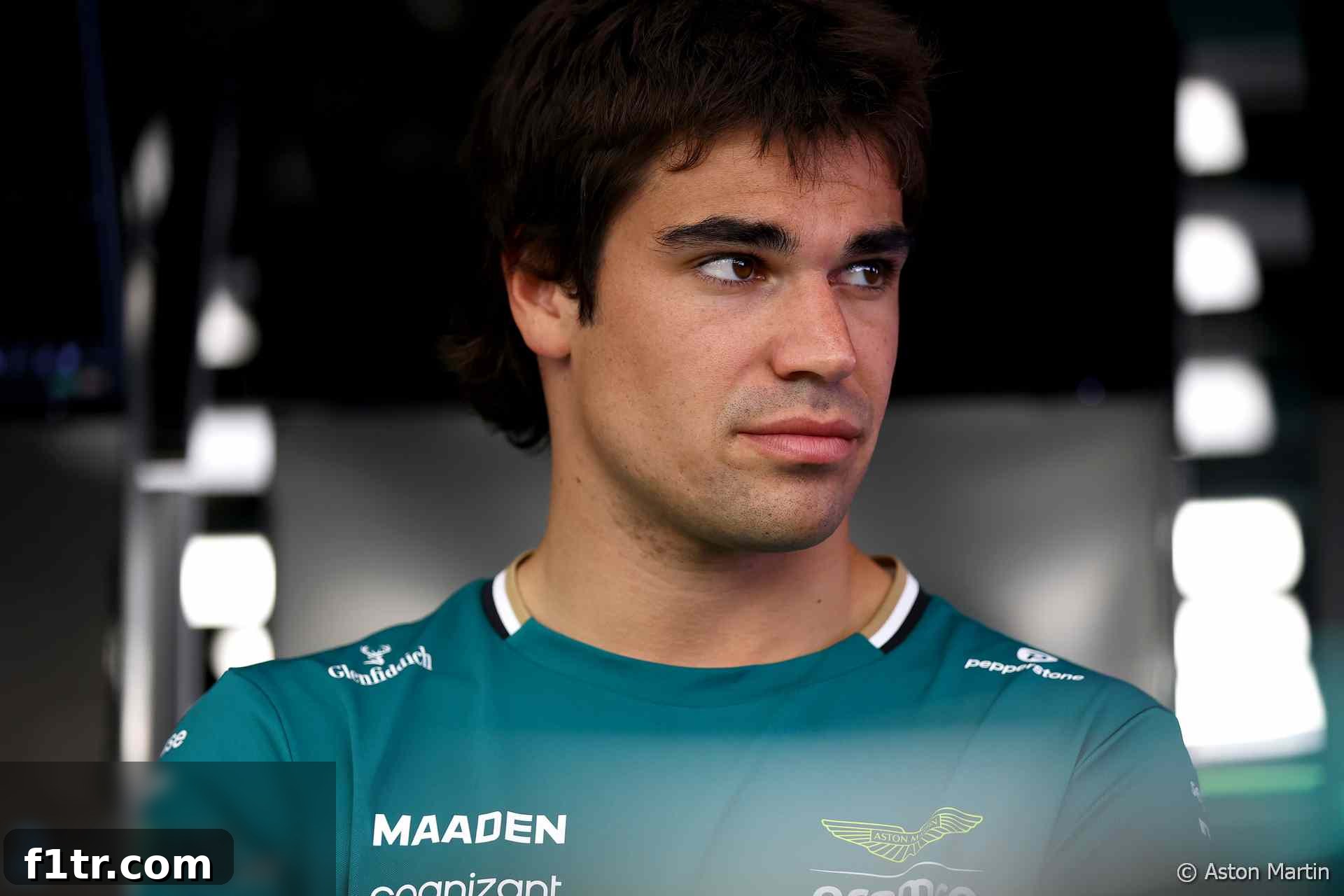
The highly anticipated Spanish Grand Prix saw an unexpected turn of events as Aston Martin driver Lance Stroll was forced to withdraw, casting a shadow over the team’s weekend efforts. The Fédération Internationale de l’Automobile (FIA) has since provided detailed clarity on the circumstances leading to this significant decision, highlighting both the driver’s medical condition and a procedural misstep by the Aston Martin F1 team. This incident not only deprived Stroll of a chance to compete but also resulted in a formal warning for his team, underscoring the FIA’s unwavering commitment to regulatory adherence and sporting integrity in Formula 1.
Advert | Become a Supporter & go ad-free
The drama began unfolding after Saturday’s qualifying session, where Stroll, having been eliminated in the second round (Q2), failed to report to the mandatory FIA scales for weighing. This procedure is a fundamental aspect of the sport, designed to ensure that both the driver and their equipment meet specific weight regulations crucial for maintaining competitive fairness. Such a breach typically triggers an immediate inquiry, and indeed, the stewards promptly summoned Stroll to a hearing to explain his non-compliance. However, in an unusual turn of events, the Canadian driver also failed to attend this summons, further escalating the procedural breach.
The Unforeseen Withdrawal: A Detailed Account of Events
The stewards’ initial attempts to address the missed weigh-in and subsequent non-attendance at the hearing were met with a lack of immediate explanation, creating an atmosphere of uncertainty. It was only later that Aston Martin officially announced Stroll’s withdrawal from the Spanish Grand Prix due to severe pain in his right wrist. This was not a new injury, but a flare-up of a pre-existing condition stemming from a cycling accident in early 2023, which had necessitated surgery and a gruelling recovery period just before the start of that season.
Upon receiving Aston Martin’s explanation, the stewards acknowledged and accepted Stroll’s medical reason for his inability to comply with the post-qualifying weighing procedure. The health and safety of a driver are, understandably, paramount. However, while the underlying cause for Stroll’s absence was deemed legitimate, the manner in which the situation was handled by the team drew criticism. The stewards pointed out a significant delay in Aston Martin’s communication, stating that the team should have informed the relevant FIA delegates of Stroll’s condition much more promptly. This lapse in protocol led to Aston Martin being issued a formal warning, a measure designed to reinforce the critical importance of timely communication within the strict regulatory framework of Formula 1.
FIA Regulations and the Critical Role of Driver Weighing
The FIA’s stance on regulatory compliance, especially regarding weighing procedures, is unequivocal. As the stewards themselves emphasized, “The weighing procedures are a fundamental element of the regulations designed to ensure sporting fairness and equity. They need to be complied with strictly. Failure to do so could result in serious consequence[s] including a disqualification.” This statement highlights the integrity of the sport and the level playing field it strives to maintain. Driver weight, in combination with the car’s weight, is meticulously regulated to prevent any team from gaining an unfair advantage. A lighter driver-car combination could potentially lead to performance benefits, which is why strict adherence to these rules is non-negotiable.
In Stroll’s specific case, the imposition of severe penalties, such as disqualification from the Spanish Grand Prix, was ultimately rendered unnecessary due to his voluntary withdrawal from the race. The stewards found themselves in a unique position where the driver’s medical condition superseded the immediate need for punitive action regarding the weighing infraction itself. Nevertheless, the procedural breach concerning communication remained a significant point of concern for the governing body, leading to the formal warning for Aston Martin.
Advert | Become a RaceFans supporter andgo ad-free
The core of the warning stemmed from the principle that even in unexpected medical emergencies, established communication channels with the FIA must be activated without delay. “Given the importance of the weighing procedure,” the stewards articulated, “the team ought to have immediately informed the relevant FIA delegates of the situation so that the appropriate assistance could have been rendered and any required observation of the driver could have been carried out with the benefit of the FIA team.” This underlines the FIA’s need to have full oversight and the ability to offer support, or verify circumstances, should a driver be medically compromised.
Lance Stroll’s Persistent Wrist Injury: A Recurring Challenge
Lance Stroll’s medical history became a central point of discussion. His right wrist injury, sustained during a cycling accident in 2023, had already caused significant concern. The accident occurred just weeks before the start of the 2023 season, forcing Stroll to undergo surgery and race with lingering discomfort and even metal screws still in place in his wrist. His miraculous recovery and participation in the season opener were widely praised, but it was clear that the injury was substantial and potentially prone to re-aggravation.
The recurrence of severe pain during the Spanish Grand Prix weekend, forcing his withdrawal, brought back into focus the demanding physical toll Formula 1 takes on its drivers. Despite making no mention of the pain over team radio during qualifying, which saw him secure 14th on the grid, the intensity of his discomfort post-session clearly necessitated urgent medical attention. This incident underscores the fine line F1 drivers walk between pushing their physical limits and managing chronic or recurring injuries. The presence of residual hardware from previous surgeries can sometimes contribute to ongoing issues, especially under the immense G-forces and vibrations experienced in an F1 car.
Aston Martin’s Formal Warning: A Question of Protocol
The sequence of events surrounding the stewards’ inquiry painted a clear picture of the communication breakdown. The stewards reported summoning Stroll for a hearing at 17:45, only to be informed that he was medically unfit to attend. The hearing was then postponed. That evening, Aston Martin confirmed the gravity of the situation, informing the FIA that Stroll would be withdrawing from the race due to his medical condition. Despite the withdrawal, the stewards proceeded with the hearing on race day morning, speaking with a team representative. Stroll himself was unable to attend based on medical advice.
Advert | Become a RaceFans supporter andgo ad-free
During this deferred hearing, the team presented two crucial documents: a medical report detailing the driver’s condition and a letter from Stroll himself. In his letter, the driver explained that his failure to immediately attend the weigh-in was directly due to the onset of severe pain, necessitating urgent medical attention. He clarified that he had attended the weigh-in area and even the media pen as soon as he was physically able to do so, before proceeding directly to the medical centre for further evaluation and treatment. The subsequent medical report corroborated his account, confirming a legitimate medical condition affecting his right hand and wrist. Further tests solidified the diagnosis, leading to medical advice for Stroll to rest and abstain from driving. It was based on this conclusive medical evidence that Aston Martin formally withdrew car 18, citing the driver’s unfitness due to injury.
Impact on the Spanish Grand Prix and Aston Martin’s Strategy
The withdrawal of Lance Stroll meant that Aston Martin would only field one car for the Spanish Grand Prix: that of his highly experienced teammate, Fernando Alonso. This situation presents several disadvantages for a Formula 1 team. Running a single car severely limits the data gathering opportunities during the race, which is crucial for understanding tyre performance, aerodynamics, and overall car behaviour under race conditions. Furthermore, it restricts strategic flexibility, as the team cannot utilize two cars to cover different tyre strategies or react to unforeseen race events. From a championship perspective, it also halves the potential points-scoring opportunities for the weekend, a significant blow in the highly competitive constructors’ championship.
According to Formula 1 regulations, once a driver has participated in qualifying, they cannot be replaced for the Grand Prix itself. This rule ensures fairness and prevents teams from substituting drivers for strategic reasons after the grid has been set. Consequently, Aston Martin had no option but to race with a single car, highlighting the absolute necessity for driver fitness and readiness throughout every stage of a Grand Prix weekend.
The Demanding World of Formula 1: Driver Fitness and Safety
This incident serves as a poignant reminder of the extreme physical demands placed upon Formula 1 drivers. The forces exerted on their bodies during high-speed cornering, braking, and acceleration are immense, requiring peak physical conditioning and resilience. Even seemingly minor injuries can be exacerbated by these conditions, rendering a driver incapable of safely and effectively controlling a modern F1 car. The Stroll case underscores the delicate balance between a driver’s desire to compete and the paramount importance of their long-term health and safety. It also highlights the robust medical and regulatory oversight provided by the FIA to manage such critical situations, ensuring that driver welfare is always at the forefront, even while enforcing strict sporting rules.
Miss nothing from RaceFans
Get a daily email with all our latest stories – and nothing else. No marketing, no ads. Sign up here:
2025 Spanish Grand Prix
- Verstappen: Don’t blame Spanish GP penalty for hitting Russell if I narrowly lose title
- Russell’s radio comments influenced Red Bull’s decision to let him past Verstappen
- Verstappen says he won’t make any changes to his driving to avoid a ban
- ‘No issues’ with Verstappen but ‘it’d be different if he’d taken me out’ – Russell
- Ferrari “don’t want us to talk much” about “massive” Spanish GP problems – Hamilton
Browse all 2025 Spanish Grand Prix articles