Red Bull’s Unstoppable Start: A Deep Dive into Their 2023 F1 Dominance
Following Red Bull’s emphatic performance in the initial races of the 2023 Formula 1 season, a visibly subdued Lewis Hamilton voiced a stark comparison: Red Bull, he claimed, is as far ahead of the competition as his own Mercedes team once was.
Advert | Become a Supporter & go ad-free
This is a weighty assertion, especially given Mercedes’ near-unprecedented reign when the V6 hybrid turbo regulations were introduced nine years ago. For three consecutive years, Mercedes obliterated the competition, setting a benchmark for superiority that, while perhaps not the all-time high water mark for single-team domination, certainly stands as the most one-sided contest experienced by any driver currently on the grid.
So far, we’ve only had a limited glimpse into the full potential of the Red Bull RB19 across two competitive outings this year. However, the resounding victory in last weekend’s Saudi Arabian Grand Prix in Jeddah was more than enough to shatter any lingering hopes among their rivals that the Bahrain International Circuit had merely flattered the RB19’s capabilities. With its consistent performance across different tracks, it is now widely accepted that the 2023 Formula 1 championship is Red Bull’s to lose.
Assessing the RB19’s True Pace: A Nuanced Comparison
Nevertheless, any early assessment of Red Bull’s formidable performance must come with a crucial caveat: we are yet to witness the RB19 operate across all tyre compounds and diverse track configurations. It remains plausible that an ‘outlier’ venue, such as the demanding street circuit of Singapore, could still expose a chink in their armour, much as it famously did for Mercedes during their dominant 2015 season.
Despite this, based on the limited, yet compelling, data available from the initial races, the RB19 doesn’t quite match the sheer statistical advantage displayed by the formidable Mercedes cars of 2014 to 2016 in terms of raw qualifying pace. Taking an average performance advantage over those seasons, the RB19 currently falls noticeably short of the three dominant Mercedes models.
Qualifying vs. Race Day: Where Red Bull Truly Shines
It’s important to note that this statistical comparison might slightly understate Red Bull’s true advantage. Max Verstappen, for instance, was observed lapping up to half a second quicker than his teammate Sergio Perez in Jeddah before a driveshaft failure curtailed his qualifying session. It’s highly probable he could have secured an even faster pole position time, though likely not by a margin significant enough to elevate Red Bull’s qualifying advantage to the same level as Mercedes’ peak in 2014-2016.
Advert | Become a RaceFans supporter andgo ad-free
While Red Bull’s advantage in qualifying may appear to be in the order of a few tenths of a second, their superiority truly becomes pronounced on race day. At various points last weekend, the Red Bull cars were up to a second per lap faster than their nearest competitors, particularly evident once they transitioned to the hard compound tyres in the latter half of the race. This crushing advantage, however, naturally dissipated as the tyres degraded over the long stints, showcasing an intriguing dynamic in their performance curve:
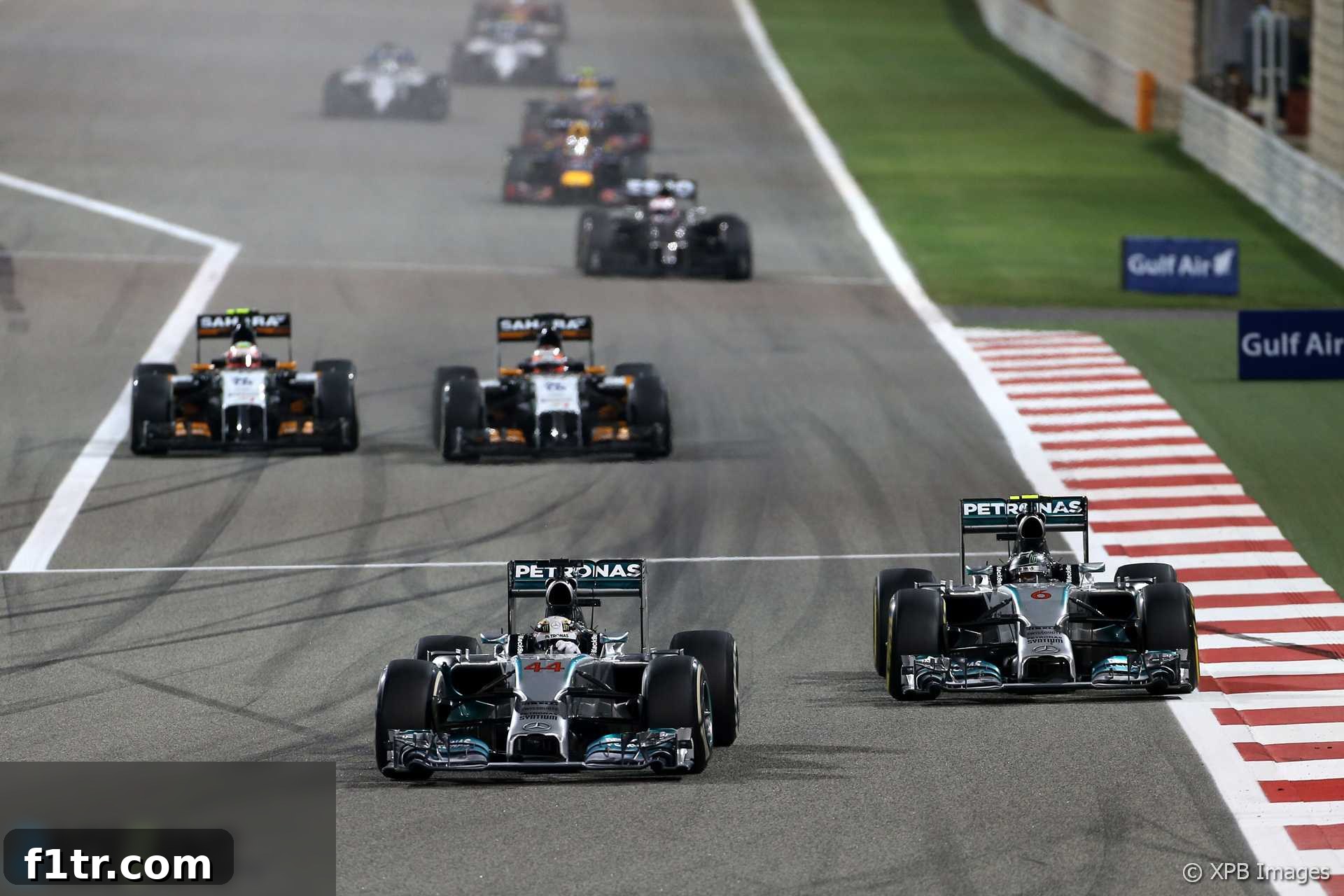
However, it is crucial to remember that Mercedes also enjoyed a significantly greater advantage in races during their years of dominance. During the second race of the V6 hybrid turbo era, held in Bahrain, Hamilton and his then-teammate Nico Rosberg engaged in an epic battle for victory. This fierce internal contest inadvertently highlighted the immense gap between them and the rest of the chasing pack, providing a dramatic demonstration of their car’s overwhelming speed.
Advert | Become a RaceFans supporter andgo ad-free
Following a late-race Safety Car period in that memorable 2014 Bahrain Grand Prix, Hamilton and Rosberg pulled away from their pursuers at an astounding rate, stretching their lead by up to 2.8 seconds per lap. This phenomenal margin is more than double the race pace advantage we observed from Red Bull in Jeddah, further emphasizing the historical context of sheer, unadulterated dominance.
Jeddah’s Heroes: Driver Milestones and Record Books
Max Verstappen’s unexpected driveshaft failure in qualifying paved the way for Sergio Perez to seize the second pole position of his career, remarkably at the very same venue where he secured his first just 12 months prior. Perez then capitalized on this prime starting position to claim his fifth career Grand Prix victory, a testament to his growing prowess and confidence within the Red Bull team.
Perez’s achievement places him in an esteemed group of drivers with five Grand Prix wins, drawing level with legendary names such as Giuseppe Farina, Keke Rosberg, Clay Regazzoni, John Watson, Michele Alboreto, and current Ferrari star Charles Leclerc. However, his pole-to-win ratio presents a striking contrast to that of Leclerc, who boasts an impressive 18 pole positions to his name, highlighting the different career trajectories and strengths of these top talents.
Red Bull’s Historic Back-to-Back One-Twos
The Jeddah result also marked Red Bull’s 24th one-two finish in Formula 1 history. What’s truly remarkable, however, is that this is only the second occasion in the team’s history that they have managed to fill the top two steps of the podium in consecutive races. The sole previous instance predates all of their World Championship successes, occurring 14 years ago when Sebastian Vettel won at Silverstone, followed by Mark Webber’s victory in the subsequent round at the Nürburgring, with the pair finishing runner-up to each other in those two races. The current dynamic saw Verstappen win in Bahrain and Perez take the victory in Saudi Arabia, a captivating reversal of positions in each instance.
Advert | Become a RaceFans supporter andgo ad-free
Despite his qualifying setback, Verstappen ensured he didn’t leave Jeddah empty-handed, claiming the bonus point for the fastest lap for the 22nd time in his illustrious career. He also equalled his longest points-scoring streak, now stretching to 21 consecutive races, a run that began at last year’s Australian Grand Prix. While impressive, this still pales in comparison to Lewis Hamilton’s monumental record of 48 consecutive points finishes.
Verstappen’s incredible charge from 15th on the grid to a second-place finish was nothing short of spectacular. Had he managed to take the victory, he would have become only the second driver in Formula 1 history to win from 15th on the grid. The only other driver to achieve this feat was Fernando Alonso, during the infamous 2008 Singapore Grand Prix, a race steeped in controversy.
Alonso’s Centurion Feat and Aston Martin’s Surge
After a somewhat chaotic back-and-forth with the stewards in Jeddah regarding a post-race penalty, Fernando Alonso’s remarkable 100th podium finish was finally confirmed. This milestone not only marked a significant personal achievement for the two-time world champion but also solidified his strong start to the season with Aston Martin. It was the first time Alonso had achieved back-to-back podium finishes since his impressive second-place results in the Italian and Singapore Grands Prix for Ferrari back in 2013, underscoring the incredible resurgence of his career and the competitiveness of the AMR23.
Join the F1 Discussion!
The 2023 Formula 1 season is already shaping up to be a fascinating chapter in the sport’s history, dominated early on by Red Bull’s formidable performance. The comparisons to past eras of supremacy, the individual driver heroics, and the evolving championship narrative provide ample talking points for every Grand Prix enthusiast.
Did you notice any other intriguing statistics, facts, or hidden gems from the Saudi Arabian Grand Prix? Perhaps a record broken, a unique strategy play, or a driver performance that caught your eye?
We’d love to hear your insights and observations! Share them with our passionate F1 community in the comments section below and let’s keep the debate going.
Support RaceFans: Drive the Future of F1 Journalism
RaceFans thrives thanks in no small part to the generous support of its dedicated readers. By contributing just £1 per month or £12 per year (or the equivalent in your local currency), you can play a crucial role in helping us cover the essential costs of creating, hosting, and continually developing RaceFans, both today and into the future.
Become a RaceFans Supporter today and enjoy an uninterrupted, ad-free browsing experience across the entire site. Learn more about the benefits and sign up using the links below:
- Become a RaceFans Supporter
- RaceFans Supporter FAQ
Explore More: 2023 Saudi Arabian Grand Prix
Delve deeper into the events and discussions surrounding the thrilling 2023 Saudi Arabian Grand Prix with these related articles:
- “Total transparency” needed over Ben Sulayem allegations – Russell
- FIA president Ben Sulayem under investigation for interfering in F1 race – report
- Two races, no points: How 2023 compares to McLaren’s worst starts to a season
- Don’t complain about Red Bull dominating F1, they deserve it – Sainz
- Alfa Romeo identify “massive debris” which ruined Bottas’ race
Browse all 2023 Saudi Arabian Grand Prix articles