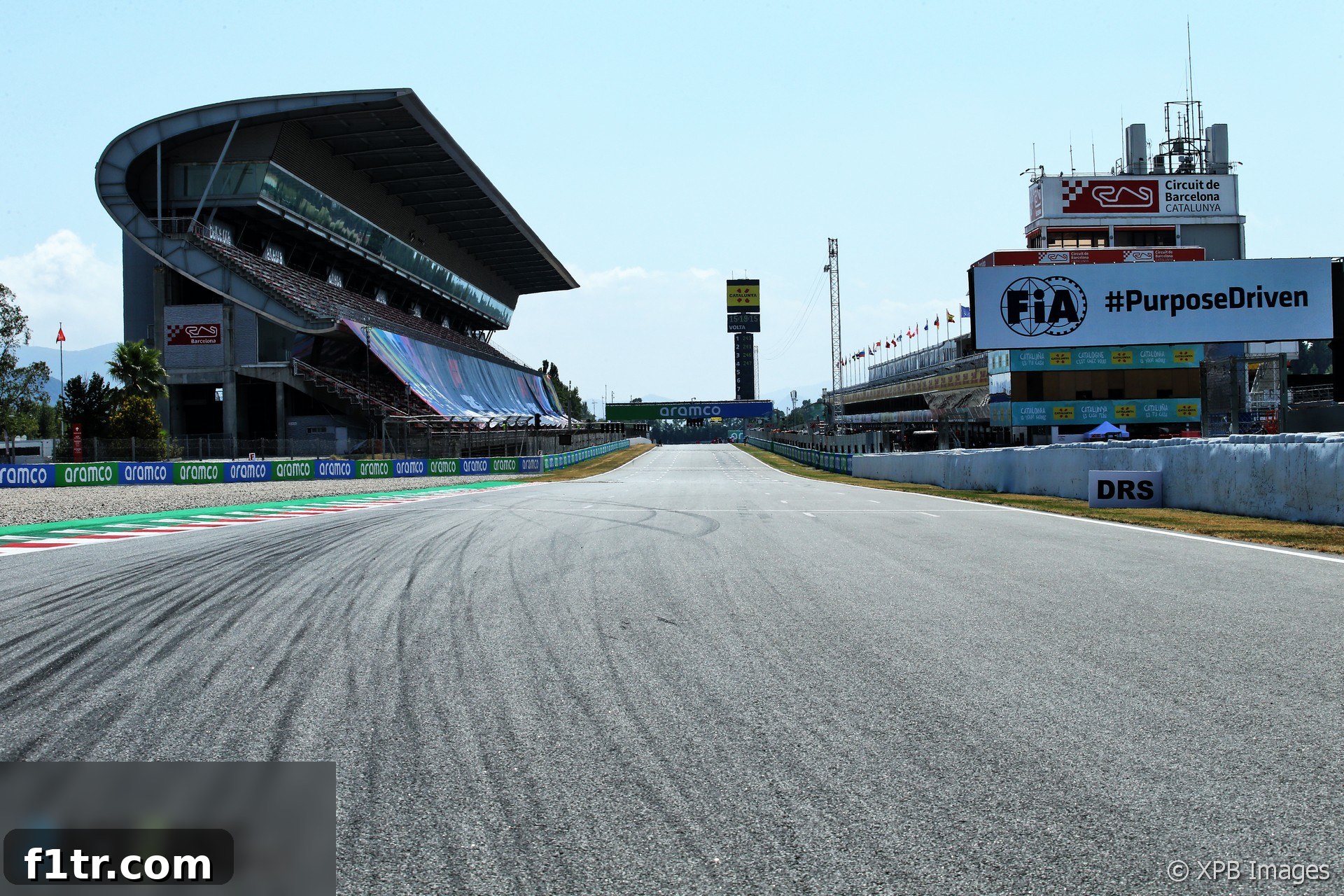
The roar of Formula 1 engines typically reverberates across the Circuit de Catalunya under the vibrant gaze of thousands of passionate fans. However, the 2020 Spanish Grand Prix, like many events in this unprecedented season, presented a starkly different scene. What should have been a bustling spectacle three months prior, with grandstands packed to capacity, instead unfolded as F1’s sixth “ghost race,” devoid of spectators. This shift, necessitated by the global pandemic, fundamentally altered the atmosphere, transforming a vibrant celebration of motorsport into a pure test of engineering and driving skill against the backdrop of an empty track.
Rescheduling the event from its traditional May slot to the scorching heart of August brought with it a significant climatic challenge. Teams and drivers arriving in Barcelona could anticipate radically different conditions compared to the usual spring race. While May typically sees temperatures ranging from a comfortable 16-22°C, August ushers in a far more intense heatwave, with temperatures commonly soaring into the 23-29°C bracket, a substantial 7°C increase. This isn’t merely an inconvenience; it represents a fundamental change in the environmental variables influencing every aspect of the race weekend, from car setup to driver endurance.
Advert | Become a Supporter & Go Ad-Free
Enhance your F1 experience. Support independent journalism and unlock exclusive content. Learn More
The Thursday before the track action commenced saw rain showers grace the Circuit de Catalunya. While this might have briefly cooled the asphalt, forecasts indicated these would be isolated occurrences, with sunny and dry conditions expected for the remainder of the three-day race weekend. Air temperatures were consistently predicted to reach the high twenties, creating a stable, albeit demanding, environment for the teams. This consistency in weather, particularly the high air and track temperatures, meant that teams could focus on refining their setups without the added complication of rapidly changing grip levels or unexpected downpours disrupting sessions.
Beyond the heat, another subtle yet potent force at the Barcelona circuit is the wind. Consistent conditions across the weekend were anticipated, with minimal variation in air temperature, cloud cover, and wind strength. However, as demonstrated at Silverstone in the preceding two weekends, sensitivity to wind can be a pivotal factor at this track, often catching drivers unaware. The Circuit de Catalunya, with its mix of high-speed corners and exposed sections, allows crosswinds to significantly impact the aerodynamic balance of the cars. Gusts can destabilize the rear of the car in fast sweeps, leading to oversteer, or push the front wide in slower corners, demanding constant micro-adjustments from the drivers and making precision braking points a moving target. This aerodynamic vulnerability under varying wind conditions adds another layer of complexity to an already challenging circuit.
Circuit de Catalunya: A Tyre Management Masterclass
The Circuit de Catalunya is notorious for its punishing demands on tyres, often serving as a critical benchmark for tyre performance and degradation. While perhaps not quite as extreme as Silverstone in its sheer energy demands, the Barcelona track still places immense stress on the rubber, particularly through its opening two sectors. The sequence of quick corners – notably Turn 3 (Curva Elf) and the fast sweep of Turn 9 (Campsa) – generates tremendous lateral forces. These sustained high-speed loads pump a considerable amount of energy into the tyre compounds, causing rapid temperature build-up and accelerating wear. Teams must find a delicate balance in their car setup, optimizing for cornering grip without cooking the tyres prematurely, a challenge amplified by the intense August heat.
For this arduous test, Pirelli strategically brought its hardest available tyre compounds: the C1 (hard), C2 (medium), and C3 (soft). This choice was particularly significant given the recent tyre failures experienced during very long stints on hard compounds at the British Grand Prix just weeks prior. The incidents at Silverstone, which raised concerns about tyre integrity under extreme conditions, prompted a cautious approach. As a direct response and a measure to mitigate similar issues, Pirelli adjusted the minimum tyre pressures for the Spanish Grand Prix. This weekend saw pressures set lower than those mandated for Silverstone: 23 psi for the front tyres and 20.5 psi for the rears, compared to 25/21 psi two weeks earlier. This reduction in pressure is designed to spread the load more evenly across the tyre contact patch, potentially reducing localized stress and heat build-up, thereby enhancing both safety and performance longevity under severe track conditions.
Despite the deployment of harder compounds and revised tyre pressures, some drivers voiced expectations that track temperatures could soar as high as 50°C under the relentless Spanish sun. This extreme heat has profound implications for tyre performance. While the race might not be dominated by tyre degradation to the same extent as last weekend, when softer rubber was in use and strategies revolved heavily around managing wear, it was still anticipated to be a significant factor. Even the hardest compounds succumb to blistering and graining when subjected to such high temperatures and continuous loading. Teams would need to meticulously monitor tyre temperatures and wear rates, integrating this data into their race strategy to determine optimal pit stop windows and manage the lifespan of their precious Pirelli rubber. The delicate dance between pushing for performance and preserving tyre life becomes a crucial determinant of success.
Driving Dynamics and Race Strategy in Barcelona’s Heat
The unique blend of challenging corners and high temperatures at Circuit de Catalunya puts not just the machinery but also the drivers to the ultimate test. Enduring high G-forces through fast corners like Turn 3 and Turn 9, combined with the relentless heat inside the cockpit, demands extraordinary physical and mental stamina. Drivers must maintain pinpoint precision, adapting their lines and inputs as tyre grip evolves throughout a stint. Overheating can lead to fatigue, impacting concentration and increasing the risk of errors, making driver management a crucial aspect of team strategy.
Race strategy at the Spanish Grand Prix often revolves around tyre management. The track’s design, coupled with high temperatures, makes a one-stop strategy incredibly difficult, often necessitating two or even three pit stops depending on degradation rates and safety car interventions. Teams must weigh the performance advantage of new tyres against the time lost in the pit lane. The choice of starting tyre, the length of each stint, and the timing of pit stops are all meticulously calculated to optimize track position. Overtaking at Circuit de Catalunya, particularly in dry conditions, is notoriously difficult, making qualifying position and strategic execution even more critical. The long main straight, followed by the heavy braking zone into Turn 1, offers the primary overtaking opportunity, but drivers must be decisive and precise.
The dynamic interplay between car setup, driver skill, and tyre management is what truly defines the challenge of the Spanish Grand Prix. Teams must meticulously calibrate downforce levels to ensure sufficient grip without generating excessive drag on the straights. Suspension settings need to be optimized for the circuit’s varied corners, ensuring both stability through fast sweeps and agility through the slower, technical sections. Furthermore, engine cooling systems are pushed to their limits in the intense heat, requiring careful attention to prevent overheating and power loss. Every decision, from aerodynamic wing settings to brake bias, has a ripple effect on tyre wear and overall race performance, making Barcelona a comprehensive examination of a team’s capabilities.
Advert | Become a RaceFans supporter andgo ad-free
Dive deeper into F1 with an ad-free experience and exclusive content. Join RaceFans Today!
For enthusiasts eager to stay abreast of the ever-evolving track conditions and strategic developments throughout each session, keeping a close eye on RaceFans Live and the official RaceFans Twitter account is essential. These platforms provide real-time updates, expert analysis, and crucial insights that paint a complete picture of the unfolding action.
Further Insights from the 2020 Spanish Grand Prix
Delve deeper into the events and narratives that shaped the 2020 Spanish Grand Prix with our extensive coverage. Explore detailed analyses and exclusive reports on key performances, significant milestones, and the ongoing discussions within the F1 paddock.
- 2020 Spanish Grand Prix Star Performers
- Hamilton’s record podium, Raikkonen’s record mileage
- F1 teams welcome ban on testing at new tracks for 2020
- Perez felt fit enough to return earlier – Szafnauer
- Bottas describes his season as “pretty bad” since the first race
Browse all 2020 Spanish Grand Prix articles