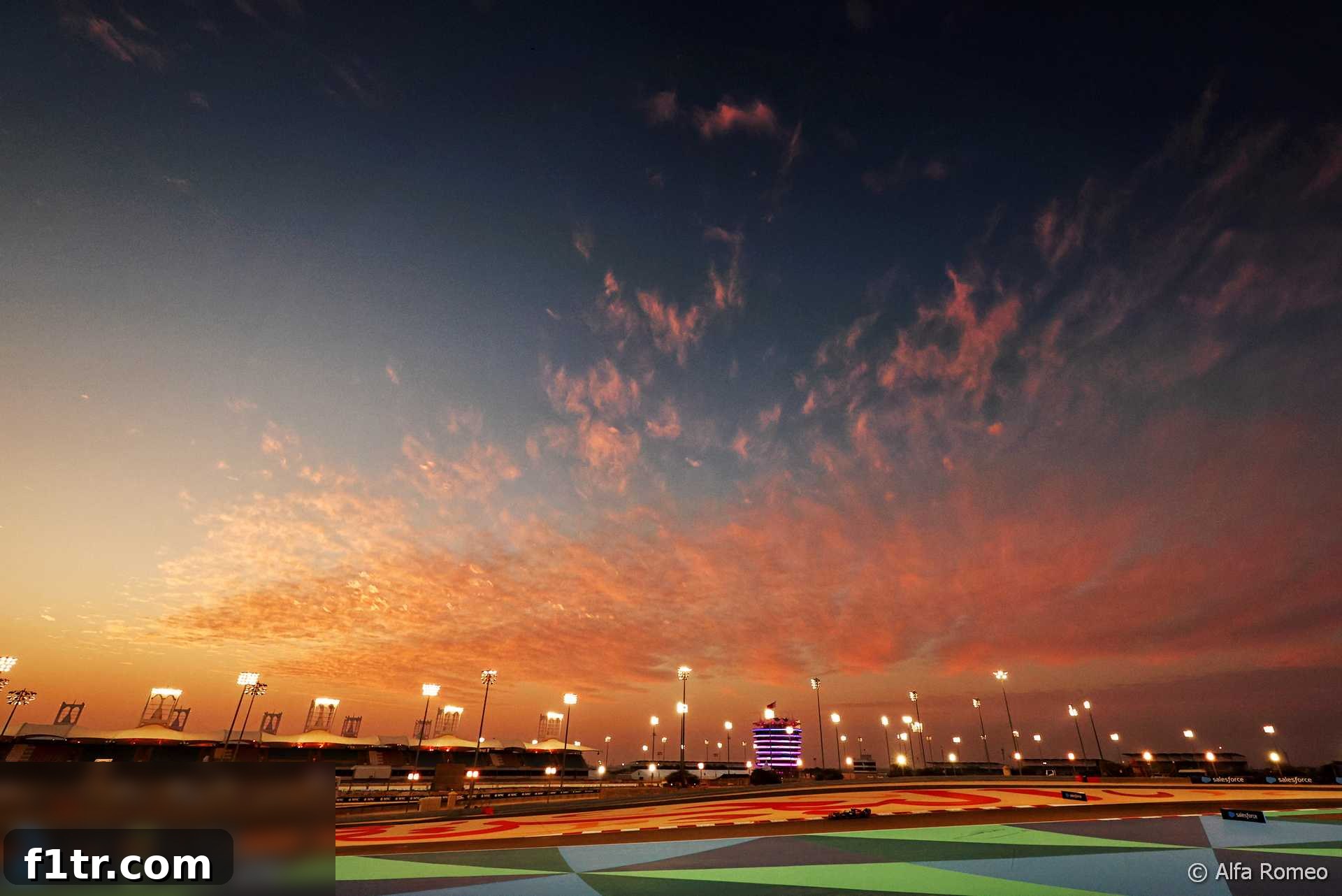
The roar of Formula 1 engines is set to return this weekend as the 2023 World Championship season ignites under the lights of the Bahrain International Circuit. Nestled in the heart of the desert, this iconic venue promises yet another weekend of dry, warm, and highly predictable weather conditions, a staple for the sport’s exhilarating season opener.
The Bahrain Grand Prix: A Predictable Start to the 2023 F1 Season
For the ardent Formula 1 fan and the strategic minds within each team, consistency is often a welcomed factor, especially when it comes to weather. The Bahrain Grand Prix offers just that. Throughout its 19 separate race weekends, the Bahrain International Circuit has never witnessed a single wet session. This remarkable streak is no mere coincidence; the island nation in the Persian Gulf is renowned for its exceedingly low annual precipitation levels, ranking among the driest countries on the planet.
Therefore, it comes as no surprise that the 2023 season curtain-raiser is projected to be entirely rain-free. With a zero percent chance of precipitation across all three days of track action – from Friday’s practice sessions to Sunday’s hotly contested race – teams can meticulously fine-tune their strategies without the unpredictable element of changing grip levels or unexpected downpours. The conditions are anticipated to mirror those experienced just a week prior during the crucial pre-season testing, ensuring that gathered data remains highly relevant and actionable.
A Closer Look at the Weekend Weather: From Practice to Podium
Teams and drivers will navigate conditions characterized by warmth, aridity, and relatively gentle wind speeds throughout the event. This stability allows for optimal car setup and driver performance, albeit demanding precise management of tire degradation and engine cooling.
Friday: Setting the Pace Under the Desert Sun
Friday, dedicated to free practice sessions, will see ambient temperatures peak around 25 degrees Celsius during the day, gradually falling to approximately 15 degrees Celsius in the evening as the sun dips below the horizon. Wind speeds are expected to hover between a gentle 5 to 15 kilometers per hour, a noticeable reduction compared to earlier in the week. These stable conditions provide the perfect canvas for teams to conduct their initial setup work, gather crucial data on tire performance across different compounds, and allow drivers to reacquaint themselves with the challenging layout of the Bahrain International Circuit.
Saturday: Qualifying Under the Stars
The intensity ramps up on Saturday, culminating in the much-anticipated qualifying session. While the daytime will once again see pleasant temperatures, qualifying itself is scheduled for the cooler evening hours. Anticipated lows of around 14 degrees Celsius during this critical session mean track temperatures will also be lower, potentially affecting tire warm-up and overall grip. However, the consistent dry conditions ensure that pure pace and driver skill will be the determining factors in securing a strong grid position, free from the complications of a damp or drying track.
Sunday: Race Day Heat and Strategic Showdowns
Race day is predicted to be the warmest point of the weekend, with temperatures soaring to a maximum of 26 degrees Celsius. Should this forecast hold true, it would mark the warmest Bahrain Grand Prix since the 2020 edition, which saw the first of two back-to-back races held at the venue. Such elevated temperatures pose significant challenges for car components and driver endurance alike. Teams will be meticulously monitoring engine temperatures, brake wear, and most critically, tire degradation, which is often exacerbated by high track temperatures. The heat will demand peak physical condition from the drivers, with hydration and focus being paramount throughout the punishing 57-lap race.
Bahrain’s F1 Evolution: From Scorching Day Races to Cool Night Spectacles
The Bahrain Grand Prix has a fascinating history of adapting to its environment. Since its inaugural race, the event has transitioned from a blistering daytime affair to the cooler, more visually stunning night race format, a change implemented in 2014. This transformation has significantly altered the dynamic of the race weekend, with this year marking the 11th time the grand prix will be contested under floodlights. This includes the unique “Outer” circuit configuration race held in 2020, affectionately dubbed the Sakhir Grand Prix.
The introduction of night racing brought a welcome reprieve for both machinery and human. When held during the day, the Bahrain Grand Prix was notoriously one of the most physically demanding races on the calendar. The 2005 Bahrain Grand Prix, for instance, is etched in F1 history as reputedly the hottest ever, with sweltering ambient temperatures reaching 42 degrees Celsius and an astonishing 57 degrees Celsius recorded on the asphalt. Fernando Alonso famously triumphed in those brutal conditions for Renault. The current night race format, with its significantly lower temperatures, offers a considerable mercy to the sophisticated new-generation cars and the athletes pushing them to their limits, allowing for more consistent performance and reducing the risk of heat-induced mechanical failures or driver fatigue.
The Strategic Chess Game: Managing Conditions in the Desert
While the predictable dry weather simplifies some aspects of race planning, it amplifies others. The consistent warmth and arid conditions present a unique set of strategic considerations for every team vying for victory.
Tyre Management: The Ever-Present Challenge
High track temperatures invariably lead to accelerated tire degradation. The abrasive nature of the Bahrain International Circuit further compounds this issue. Teams must meticulously manage their tire strategy, understanding how each compound reacts to the heat and the circuit’s demands. Finding the optimal balance between pushing for pace and preserving tire life will be crucial, often dictating pit stop windows and the number of stops required. Drivers with a smooth driving style and excellent tire sensitivity often gain a significant advantage here, skillfully extending the life of their Pirelli compounds.
Car Performance and Setup: Engineering for Endurance
The warm conditions place immense strain on a Formula 1 car’s vital systems. Engine cooling becomes a paramount concern, requiring careful airflow management and radiator efficiency. Brakes, too, are pushed to their limits under the heat, demanding robust cooling solutions to prevent fade. Furthermore, the constant threat of sand being blown onto the track from the surrounding desert can affect grip levels and necessitate continuous adjustments to aerodynamic setups to maintain stability and performance. Engineers will be striving to find a setup that maximizes downforce without excessively compromising straight-line speed or overheating critical components.
Driver Endurance and Hydration: The Human Factor
Despite the cooler evening temperatures, the cockpit of a Formula 1 car remains a hot and demanding environment. Drivers endure extreme G-forces and high temperatures for nearly two hours, requiring peak physical fitness and mental fortitude. The warm Bahranian air, even at night, adds to the challenge, making hydration a critical aspect of driver preparation and performance. Any lapse in physical condition or concentration can have immediate and severe consequences on the track.
The Bahrain International Circuit: A Stage for Modern F1
The Bahrain International Circuit itself is a formidable challenge. Its layout features a mix of long straights, heavy braking zones, and technical corners, offering ample overtaking opportunities. The track surface, constantly exposed to the desert environment, can evolve significantly throughout the weekend, affecting grip levels and necessitating continuous car adjustments. The combination of high-speed sections and slow-speed corners demands a versatile car setup and rewards drivers who can adapt quickly to changing track conditions, even in the absence of rain.
Pre-Season Testing: A Crucial Dress Rehearsal
The fact that the race weekend conditions are near-identical to those experienced during pre-season testing provides an invaluable advantage to all teams. The data gathered during testing on tire wear, fuel consumption, car balance, and cooling performance under these specific conditions can be directly translated and applied to the race weekend strategy. This eliminates a significant variable, allowing teams to arrive at the Grand Prix weekend with a more refined understanding of their car’s capabilities and how to best extract its performance.
An Electrifying Start to the Season
The consistent dry weather and the spectacular night race format contribute significantly to the overall fan experience. Spectators are guaranteed uninterrupted track action and the visually stunning spectacle of Formula 1 cars tearing through the desert under a canopy of floodlights. For millions watching worldwide, the Bahrain Grand Prix offers an exciting and reliable kick-off to what promises to be another thrilling season of Formula 1.
As the 2023 Formula 1 season officially gets underway, all eyes will be on Bahrain. The predictable yet challenging desert conditions, coupled with the strategic complexities they present, are set to deliver a captivating opening round that will undoubtedly set the tone for the championship battle ahead.
Further Insights into the 2023 F1 Season
- FIA president cleared of alleged interference in two 2023 races
- First week viewing figures for new Drive to Survive season fall again
- Max who? Drive to Survive season six prefers its favourite faces
- RaceFans’ complete 2023 season review
- The F1 drivers who pulled off the 10 biggest charges through the field in 2023
Explore More 2023 F1 Season Articles