Carlos Sainz Accuses Lewis Hamilton of ‘Cheeky’ Tactics in Abu Dhabi Grand Prix Position Exchange
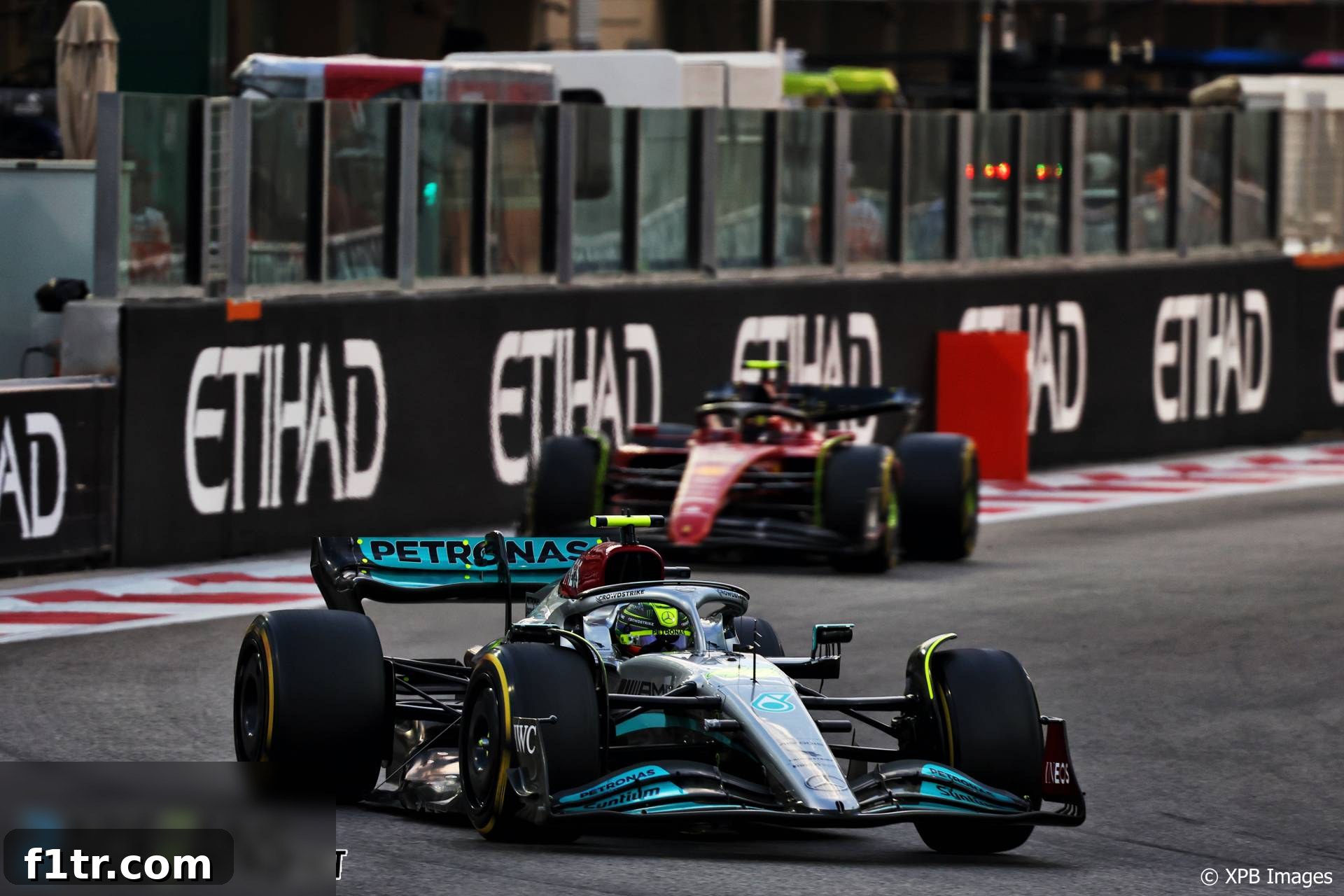
The high-stakes season finale at the Abu Dhabi Grand Prix witnessed a tense on-track skirmish between two Formula 1 giants, Carlos Sainz Jnr of Ferrari and seven-time world champion Lewis Hamilton of Mercedes. What began as a battle for track position quickly escalated into a strategic chess match, leading Sainz to accuse Hamilton of employing “cheeky” tactics during their early-race tussle. The incident, centered around a contested position exchange, sparked debate and ultimately influenced Sainz’s race strategy, highlighting the fine line between fair competition and exploiting regulatory ambiguities in elite motorsport.
The Controversial Lap One Incident and FIA Intervention
The drama unfolded in the opening laps of the Abu Dhabi Grand Prix. As drivers vied for crucial early positions, Lewis Hamilton found himself in a precarious situation after cutting the turn six chicane. This maneuver allowed the Mercedes driver to maintain his position ahead of Carlos Sainz’s Ferrari. Such an action typically necessitates the driver to yield the gained advantage by returning the position to the competitor they overtook or passed while off-track. The race stewards, represented by the FIA, swiftly intervened, instructing Mercedes that Hamilton was required to relinquish fourth place back to Sainz. This directive underscored the sport’s commitment to upholding track limits and ensuring fair play from the outset.
Hamilton duly complied with the FIA’s order, backing off at turns 10 and 11 on lap four, which allowed Sainz to regain the disputed position. However, what followed immediately after this exchange became the crux of Sainz’s frustration and subsequent accusation.
Hamilton’s Strategic Re-Pass: A “Cheeky” Maneuver?
No sooner had Sainz re-passed Hamilton than the Mercedes driver launched a counter-attack, re-passing the Ferrari on the very next lap as they approached turn nine. It was this rapid sequence of events that prompted Carlos Sainz’s “cheeky” accusation. The Spanish driver firmly believed that Hamilton’s decision to surrender the position at a specific point on the track was not merely an act of compliance, but a calculated strategic move designed to gain an immediate advantage.
Sainz articulated his grievance, stating, “Lewis jumped the chicane and he let me by, but he let me by in a cheeky way to then get my DRS and passed me again.” His words painted a clear picture of Hamilton’s alleged intent: to surrender the position just before a DRS (Drag Reduction System) activation zone. This strategic placement would enable Hamilton to immediately benefit from the DRS, providing a significant speed boost down the following straight and making it relatively easy to reclaim the position he had just given up.
Understanding the DRS Advantage
For those unfamiliar with Formula 1 mechanics, DRS is a crucial aerodynamic aid that allows a driver to open a flap on their rear wing, reducing drag and increasing top speed. It can only be activated in designated zones on the track when a driver is within one second of the car ahead at a specific detection point. By giving up the position immediately preceding such a zone, Hamilton could ensure he was within the one-second window, allowing him to deploy DRS and effectively negate the position he had just ceded. This maneuver, while technically within the bounds of the rules regarding position exchanges, is often viewed by competitors as a shrewd, albeit ethically ambiguous, exploitation of the system – hence Sainz’s “cheeky” description.
Sainz’s Race Compromised: The Cost of the Battle
The impact of this strategic exchange on Carlos Sainz’s race was significant and, in his view, detrimental. After Hamilton’s immediate re-pass, Sainz was forced to exert considerable effort and push his Ferrari harder to overtake the Mercedes once more. This intense battle, though successful in the end, came at a cost.
“I had to use a lot of my tyres to pass him back, which cost me quite a lot of race time, quite a lot of tyre usage,” Sainz explained. This accelerated tyre degradation became a critical factor, forcing him into a suboptimal race strategy. “Which probably forced me a bit into a two-stop and from there on I was on a slower two-stop and couldn’t be in the fight for P2 today.” In Formula 1, managing tyre wear is paramount. A single extra pit stop can cost a driver upwards of 20-25 seconds, significantly hindering their overall race pace and strategic options. For Sainz, this early-race skirmish fundamentally altered his ability to contend for a higher finishing position, turning what could have been a strong one-stop strategy into a compromised two-stop approach.
Acknowledging the Grey Area: Sainz’s Candid Admission
Despite his clear frustration, Carlos Sainz displayed a pragmatic understanding of the situation. In a candid admission, he confessed to having exploited similar ambiguities in the past regarding how drivers should cede positions on track. This self-awareness tempered his criticism of Hamilton, revealing the complex, often unwritten rules of engagement among elite drivers.
“I’ve used that rule or that lack of clarity before, you know, so I’m not going to criticise at all Lewis for that because I would have done something similar,” Sainz stated. This acknowledgment underscores a deeper truth within Formula 1: drivers are constantly seeking any legal advantage, pushing the boundaries of the regulations to their limits. While the spirit of the rule dictates a fair return of position, the precise method of doing so often leaves room for strategic interpretation, a gap that experienced drivers like Hamilton are adept at exploiting. Sainz’s perspective highlights that while the outcome was frustrating for him, the tactic itself is a known, if debated, part of the competitive landscape.
He elaborated on the psychological impact: “You get the position at the start with a great move on the inside into turn six, the driver decides to cut the chicane and your race is compromised from there on because you know you’re fighting a car that you probably should have been ahead from lap one. But it’s how it goes.” This sentiment captures the inherent unfairness drivers feel when an initial track limits infringement dictates subsequent strategic battles, fundamentally altering the trajectory of their race.
Beyond the Frustration: Celebrating Team Achievements
Despite the personal disappointment and strategic compromises, Carlos Sainz ultimately concluded his reflections with a pragmatic and team-focused perspective. The Abu Dhabi Grand Prix was not just about individual battles but also about securing crucial championship points for Scuderia Ferrari. The primary objective for the team heading into the final race was to ensure a strong finish in the Constructors’ Championship and to secure second place for Charles Leclerc in the Drivers’ Championship.
Sainz expressed satisfaction with the broader team achievements: “In the end we achieved second in the constructors, second in the championship for Charles [Leclerc] which was the main target this race.” This collective success helped to mitigate the sting of his individual race frustrations. “Overall good pace, good weekend in terms of pace, unfortunate about the start,” he added, acknowledging Ferrari’s strong performance throughout the weekend, marred only by the early-race incident.
The Abu Dhabi Grand Prix served as a microcosm of the intense competition and strategic depth of Formula 1. It showcased not only the raw speed and skill of the drivers but also their astute understanding of the rulebook and their willingness to exploit its nuances. While Carlos Sainz felt the sting of a “cheeky” maneuver, his experience ultimately underscored the relentless pursuit of every possible advantage that defines the pinnacle of motorsport.
Further Insights from the 2022 Abu Dhabi Grand Prix
- Norris dissatisfied with solitary podium finish: “One isn’t enough”
- Verstappen achieves most dominant title win since Vettel in 2013
- Magnussen’s experience makes him ‘positive’ ousted Schumacher can return to F1
- Overtaking still difficult at Yas Marina despite 2021 track changes, say drivers
- Depressing to consider points lost says Gasly after AlphaTauri slump to ninth
Browse all 2022 Abu Dhabi Grand Prix articles