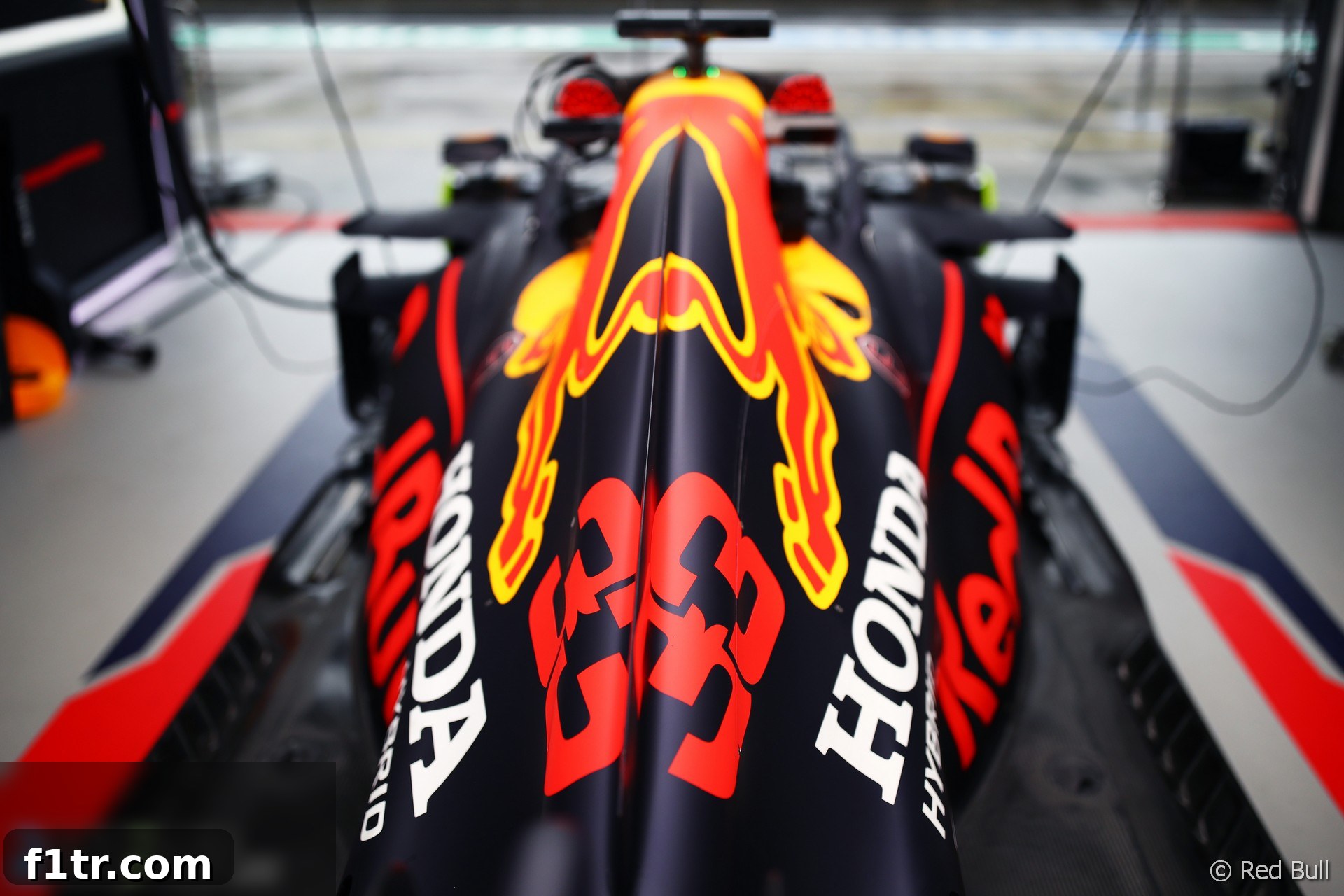
The exhilarating world of Formula 1 is often a crucible of technological innovation, strategic genius, and intense political maneuvering. At the heart of this high-stakes environment, Red Bull Racing finds itself navigating a critical juncture following Honda’s announcement to withdraw from the sport at the end of the 2021 F1 season. This seismic shift has prompted Red Bull to propose a radical solution: a freeze on Formula 1 power unit development after next year, enabling them to continue utilizing their potent Honda engines.
Red Bull’s Bold Move: Pushing for an F1 Power Unit Freeze Post-Honda Era
Honda’s impending departure casts a long shadow over both Red Bull Racing and its sister team, AlphaTauri. Having forged a successful partnership that delivered race victories and a genuine title challenge, the prospect of losing their engine supplier has compelled Red Bull to explore unconventional avenues. Rather than seeking a new, potentially less competitive, engine partner, the Austrian outfit is championing an initiative to maintain the Honda power units they currently possess. This ambitious plan hinges entirely on Formula 1’s governing bodies agreeing to a complete freeze on engine development from the conclusion of the 2021 season.
The Unforeseen Challenge: Honda’s Exit from Formula 1
The news of Honda’s withdrawal from Formula 1 by the end of the 2021 season sent shockwaves through the paddock. Citing a strategic redirection towards carbon neutrality and future mobility technologies, the Japanese manufacturer decided to conclude its involvement as a power unit supplier. For Red Bull and AlphaTauri, this created an immediate and pressing dilemma. Their current successes are inextricably linked to the performance and reliability of the Honda power unit. Losing this crucial technical partner presented the real risk of a significant competitive setback, potentially undermining their championship aspirations and long-term stability within the sport.
Historically, Red Bull has experienced turbulent periods with engine suppliers, notably during their challenging partnership with Renault. The memories of performance deficits and reliability issues are still fresh, making the prospect of relying on another manufacturer, particularly one whose development direction might not align with Red Bull’s chassis philosophy, a daunting prospect. The integrated nature of modern F1 cars, where the power unit is a fundamental part of the chassis design and aerodynamic package, means a seamless transition is rarely straightforward, and performance compromises are almost inevitable when switching suppliers.
Red Bull’s Strategic Vision: Maintaining the Honda Advantage
In response to Honda’s impending exit, Red Bull’s motorsport consultant, Helmut Marko, articulated the team’s primary objective: to continue utilizing the Honda power units. This isn’t merely about convenience; it’s a strategic move to preserve a known quantity, a proven performer that has been finely integrated into their car designs. Marko emphatically stated that this course of action is their “priority,” underscoring the team’s determination to avoid becoming a standard customer team reliant on an existing supplier’s development path.
However, this strategy comes with a significant caveat: Red Bull is only prepared to service and maintain these sophisticated engines, not develop them. The complexities of modern hybrid power units, with their intricate internal combustion engines, turbochargers, and advanced energy recovery systems (ERS), demand immense resources and specialized technical expertise for ongoing development. Red Bull acknowledges that it neither possesses nor wishes to invest in the colossal infrastructure required for such an undertaking, exemplified by Honda’s state-of-the-art technology centre in Sakura, Japan. As Marko succinctly put it, “This complex engine is difficult enough if you only take care of maintenance and assembly. But further development is not possible if you don’t have a technology centre like Sakura. We neither want to build that, nor can we finance it.” This clarifies that while Red Bull is keen to retain the hardware, they are not looking to become an independent engine manufacturer.
The Engine Freeze Proposal: Mechanics and Implications
The core of Red Bull’s proposal is a comprehensive freeze on F1 power unit regulations from the end of the 2021 season. This would mean that after the final race of that year, no further performance-enhancing development would be permitted on any engine components. Teams would be allowed to continue using their existing designs, focusing solely on reliability improvements, maintenance, and assembly. This freeze would encompass not just the internal combustion engine but also all associated hybrid components, control electronics, and ancillary systems that constitute the entire power unit package. The phrase “engine and the surrounding area” used by Marko suggests a holistic freeze to ensure competitive parity and prevent loopholes.
For Red Bull and AlphaTauri, the benefits are clear. An engine freeze would allow them to take over the existing Honda power unit intellectual property, maintain the engines in-house or through a third-party specialist, and crucially, avoid the staggering costs associated with independent engine development. It also allows them to preserve the crucial technology-sharing arrangement between Red Bull and AlphaTauri, a system that optimizes resource allocation and reduces overall spending across both teams. Without the pressure of constant development, the operational costs for running the power units would be significantly lower, aligning well with Formula 1’s broader push towards cost caps and financial sustainability.
Arguments for and Against an F1 Power Unit Freeze
The proposal of an engine freeze is not without its controversies and implications for the wider sport. There are compelling arguments both for and against such a radical change to Formula 1’s competitive framework.
Arguments in Favor:
- Competitive Stability: An engine freeze would prevent Red Bull and AlphaTauri from potentially falling behind due to a lack of a primary engine supplier, ensuring they remain competitive. This helps maintain a robust grid with strong contenders.
- Cost Reduction: For all teams, a development freeze would drastically reduce the massive R&D expenditure currently poured into engine upgrades. This aligns with F1’s long-term financial health and efforts to make the sport more affordable for participants.
- Grid Preservation: By offering a viable path for Red Bull, the freeze could help prevent a major team from facing an existential crisis or even considering withdrawal from the sport, which would be detrimental to F1’s appeal and viewership.
- Bridge to New Regulations: A freeze could act as a temporary measure, providing stability in engine performance until the next generation of F1 power unit regulations (expected around 2025/2026) comes into effect. This would allow the FIA and manufacturers more time to design genuinely innovative and sustainable new engines without current development pressures.
- Performance Convergence: Over time, freezing specifications might lead to a natural convergence in performance among different manufacturers, potentially creating closer racing and a more level playing field, albeit at a fixed performance ceiling.
Arguments Against:
- Stifling Innovation: Formula 1 prides itself on being the pinnacle of motorsport technology. An engine freeze would inherently limit innovation, preventing manufacturers from pushing boundaries and showcasing advancements, which is a key part of F1’s appeal.
- Perpetuating Performance Gaps: If one manufacturer currently holds a significant performance advantage (e.g., Mercedes), freezing the engines would cement that advantage for the duration of the freeze, making it difficult for competitors to catch up through development. This could lead to periods of dominance and less exciting racing.
- Fairness Concerns: Other manufacturers might argue it’s unfair to grant Red Bull a special dispensation to continue with a withdrawn supplier’s engine while they are committed to ongoing development and competition.
- Precedent: Approving such a freeze could set a precedent, potentially leading other teams or manufacturers to request similar concessions in the future, complicating regulatory frameworks.
- Technological Relevance: Freezing current-generation hybrid engines for too long might make F1 appear less technologically relevant, especially as the automotive industry rapidly evolves towards new forms of propulsion.
The Broader F1 Landscape: Manufacturer Reactions and Future Regulations
The success of Red Bull’s proposal hinges on the agreement of other prominent F1 engine manufacturers: Mercedes, Ferrari, and Renault. Their reactions are critical, as any unanimous decision regarding engine regulations requires their consensus or at least a majority vote within the relevant F1 commissions. Mercedes, currently holding a performance advantage, might be reluctant to freeze regulations that benefit their rivals. Ferrari and Renault, both striving to close the performance gap, could see a freeze as either a missed opportunity for development or a welcome respite from the high costs.
The political implications are immense. F1 is already moving towards a new era of financial regulations, including a budget cap, which aims to level the playing field. An engine freeze aligns with the spirit of cost reduction but conflicts with the desire for continuous technological advancement. The FIA and Formula 1 management will need to weigh these competing interests carefully, considering the long-term health and appeal of the sport. A solution that provides stability without sacrificing F1’s core identity as a technological leader will be paramount.
Discussions around the next generation of F1 power units, expected for 2025 or 2026, are already underway. These new regulations are anticipated to focus more on sustainability, simpler designs, and lower costs. An interim engine freeze could serve as a pragmatic bridge to these future rules, ensuring grid stability during a period of transition and allowing manufacturers to focus resources on the new engine formula rather than current, soon-to-be-obsolete designs.
Potential Scenarios for Red Bull
The outcome of this debate will define Red Bull’s future in Formula 1. Several scenarios could unfold:
- Freeze Approved: If the engine freeze is approved, Red Bull will acquire the Honda IP and manage the engines internally or with a technical partner. This would allow them to maintain a competitive engine package, reduce costs, and focus resources on chassis development.
- Freeze Denied, New Supplier Sought: If the freeze is not granted, Red Bull would be forced to seek a new engine supplier. Options would be limited to Mercedes, Ferrari, or Renault. Given historical rivalries and the current competitive landscape, securing a top-tier customer engine deal that ensures competitive parity would be challenging. Mercedes might be reluctant to supply a direct rival, Ferrari might prioritize its own team, and a return to Renault could reignite past tensions.
- Red Bull Reconsiders F1 Future: While highly unlikely given their significant investment and passion for the sport, a failure to secure a competitive engine solution could, in a worst-case scenario, force Red Bull to critically evaluate its long-term commitment to Formula 1. However, this is largely considered a doomsday scenario, as the team remains a cornerstone of the championship.
Conclusion: A Defining Moment for F1 and Red Bull
Red Bull’s proposal for an F1 power unit freeze is more than just a request for a lifeline; it’s a critical strategic move that could have profound implications for the future direction of Formula 1. It highlights the immense costs and technological challenges associated with modern F1 engines and the increasing difficulty for teams to secure competitive power units without direct manufacturer backing.
As the clock ticks towards the end of the 2021 season, the discussions behind closed doors among the FIA, Formula 1 management, and the engine manufacturers will be pivotal. The decision on the engine freeze will not only determine Red Bull and AlphaTauri’s immediate future but also set a precedent for how Formula 1 balances its commitment to technological advancement with the crucial need for competitive stability and financial sustainability. The outcome will undoubtedly shape the grid for years to come, promising continued drama both on and off the track.