F1 Austrian Grand Prix: Track Limits Chaos Sparks Outcry from Drivers and Fans
The 2023 Formula 1 Austrian Grand Prix descended into a regulatory quagmire, largely dominated by an unprecedented number of track limits infringements and subsequent penalties. What should have been a high-octane spectacle at the Red Bull Ring was overshadowed by a constant stream of stewards’ decisions, leading to widespread frustration among drivers, teams, and fans alike. From those who amassed multiple time penalties to a select few who managed to navigate the notoriously tricky circuit cleanly, a unanimous sentiment emerged: the situation was unacceptable and demanded immediate review before F1’s return to Spielberg next year. Many expressed a desire to see the situation fixed for future races at this iconic venue.
The sheer scale of the issue was staggering. The FIA reported over 1,200 potential track limits infringements over the course of the race weekend. This deluge of violations created a chaotic scene, both on track and in the stewards’ room, ultimately leaving many questioning the integrity and transparency of the sport’s application of its own rules. The sheer volume of infractions made it almost impossible for fans to track the real-time standings, transforming a thrilling race into a complex mathematical exercise.
Drivers Speak Out: Frustration, Confusion, and Calls for Reform
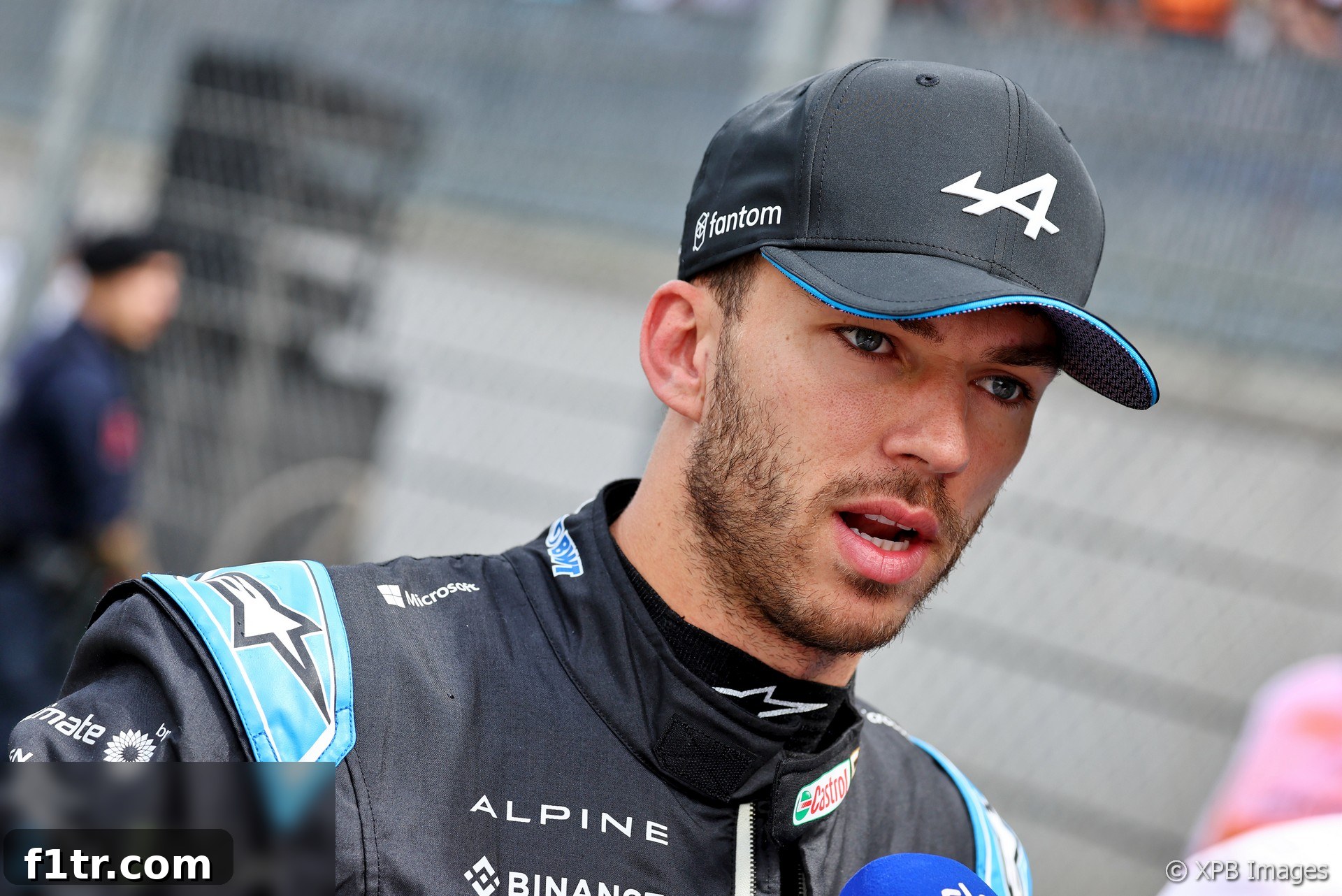
Pierre Gasly: A Plea for Common Sense
Alpine’s Pierre Gasly, who saw his ninth-place finish demoted to tenth after a 10-second track limits penalty, was vocal about the need for a more pragmatic approach to track limits enforcement. “I was chasing Fernando [Alonso], I could see him pulling away and I was like it’s worth trying and taking every risk possible,” Gasly recounted, expressing the natural instinct of a racing driver pushing the boundaries. “Unfortunately, I went once too many out of the race track for maybe one inch, which is obviously frustrating.” While acknowledging the rules as they stood for the weekend, Gasly urged a fundamental rethink, suggesting that allowing a few extra centimeters beyond the white line, where there’s no inherent advantage gained or car damage risked, would simplify matters for all involved – stewards, drivers, and the viewing public.
Gasly profoundly emphasized the confusion caused for fans, vividly describing his grandmother’s experience watching the race. “When you have 43 lap times in qualifying deleted, it just doesn’t seem right. I had my grandma [watching] in front of the TV, she didn’t understand a thing. She was like, ‘what the hell is actually going on? Lewis [Hamilton] is once P1 then two seconds later he’s P18’. It just doesn’t seem right, but we’ll see.” This anecdote perfectly encapsulates the broader sentiment that the stringent application of track limits, particularly at certain corners of the Red Bull Ring, detracts from the spectacle and makes the sport inaccessible to casual viewers. He concluded that the rule “definitely need to be reviewed” to avoid such bewildering scenarios.
Kevin Magnussen: The Quest for Natural Limits
Haas driver Kevin Magnussen echoed Gasly’s frustrations, bluntly stating that the situation at the Red Bull Ring “ruins the whole thing, ruins the fun.” He highlighted a specific design flaw at the track where the width of certain kerbs allows drivers to push beyond the white line without immediate natural consequence, only to then incur a penalty. Magnussen strongly advocated for “natural limits,” where exceeding the track boundary would automatically lead to a time loss or car damage, such as with gravel traps. He noted that with the current low-slung cars and substantial kerbs, drivers aren’t necessarily faster going over them, but the ability to ride the very edge of a second kerb makes track limits offenses seem arbitrary and counter-intuitive. Magnussen expressed optimism, however, confirming that the FIA is actively seeking a better solution for this recurring problem, emphasizing the importance of a track’s inherent design in self-policing boundaries.
Esteban Ocon: The Most Penalized Driver’s Ordeal
Alpine’s Esteban Ocon bore the brunt of the track limits crackdown, accumulating an astonishing 20 deleted lap times over the three days of the event and being hit with a total of 30 seconds of penalties in the race itself. Despite his best efforts to drive carefully and consciously avoid infringements, Ocon was left bewildered by the sheer volume of penalties. He recounted believing he had operated “all the way up to the limit, three strikes” and then actively “backed off from there” to take “more margins.” Yet, post-race scrutiny by the stewards revealed six further infringements, leading to four additional time penalties. Ocon’s experience underscores the extreme difficulty drivers faced in consistently adhering to the precise track limits, even when actively trying to be cautious. It also starkly highlighted the disconnect between a driver’s perception from inside the cockpit, where margins of inches are imperceptible at speed, and the millimeter-perfect scrutiny applied by race control through sophisticated electronic monitoring.
Yuki Tsunoda: The Feel Factor and Rule Evolution
AlphaTauri’s Yuki Tsunoda, another prolific offender with 18 lap times deleted in total, revealed a common frustration among drivers: the inability to physically feel when an infringement occurs. “I got the warning, but on some of the track limits, I didn’t feel like I was outside of the white line,” he stated, questioning whether the stewards were “being super too harsh or whatever.” This lack of sensory feedback makes it incredibly challenging for drivers, especially in high-speed corners, to judge their position with the required precision. Tsunoda suggested a return to a previous rule where the outside edge of the kerb served as the track limit, a practice that was often followed until a significant rule change at the beginning of 2022. He explained the practical advantage of this approach: “On kerbs, at least you feel first from the outside wheel. But the white line, you don’t feel any vibration, you just have to adjust it from entry.” This proposal suggests a more intuitive and driver-friendly interpretation of track boundaries that relies on tactile feedback rather than an invisible, unfeeling line. Sergio Perez of Red Bull also shared the hope that “it’s something that it can be fixed” for the subsequent year’s race.
The Enforcement Nightmare: Delays and Discrepancies
The sheer volume of track limits violations overwhelmed the FIA’s ability to apply penalties in real-time. This led to significant delays and confusion during the race, with drivers like Lewis Hamilton and Lando Norris openly questioning why their rivals appeared to go unpunished. Hamilton repeatedly sought clarification from his team, while Norris, who initially followed the Mercedes driver, echoed similar sentiments regarding his competitors: “I mean, if you go wide, you get a penalty, but somehow he didn’t get a penalty. So I’m a bit confused.” The post-race revelation of further penalties, including a second one for Hamilton, only compounded the impression of a disjointed and reactive enforcement system, further eroding confidence in the immediate race results and frustrating viewers who experienced constant shifts in the leaderboard long after the checkered flag.
Lando Norris: The Challenge of Precision at Speed
McLaren’s Lando Norris elaborated on the inherent difficulty drivers face, particularly in high-speed corners like the final two turns at the Red Bull Ring. “To stay ahead of a quicker car, who’s got DRS, you’re pushing in every single corner. You have one little snap, you have the wind changes, all of a sudden through the corner you can end up off the track.” He highlighted that penalties often arise not from deliberate attempts to gain an unfair advantage, but from momentary lapses, environmental factors, or the sheer challenge of maintaining absolute precision at racing speeds. While acknowledging that from the outside, it “makes us look a bit silly,” Norris stressed the reality of pushing the absolute limit in Formula 1. The large front wheels of modern F1 cars, which increased in size last year, also hinder drivers’ visibility of the white lines, adding another layer of complexity to an already challenging task. “It’s just very difficult,” he concluded, emphasizing the fine line between pushing and penalization.
Lance Stroll: The Mental Toll of Constant Vigilance
The constant threat of penalties took a significant mental toll on drivers throughout the gruelling 71-lap race. Aston Martin’s Lance Stroll admitted, “I was holding my breath for 35 laps, 40 I think.” After exhausting his “jokers” – his allowed infringements – in the first half of the race, Stroll found himself forced to drive more conservatively to avoid further sanctions. “I used up all my jokers in the first half of the race and I was like, ‘damn, I have to be pretty precise’,” he recalled. This illustrates how the strict enforcement compelled drivers to compromise their pace and aggressive racing style, altering the natural flow of competition and potentially diminishing the on-track action. Navigating the 71 laps of the high-speed Red Bull Ring with such unwavering precision proved to be an immense challenge, transforming parts of the race into a cautious tightrope walk rather than an all-out sprint.
Searching for Solutions: Kerbs, Gravel, and White Lines
The widespread dissatisfaction has prompted several proposals for improving track limits enforcement and ensuring a fairer, more understandable racing experience. One popular suggestion among drivers, including Tsunoda, is the reintroduction of the kerb as the definitive track limit. This approach offers drivers tactile feedback, making it easier to judge their position accurately. Historically, this was a common practice until the 2022 season, when the rules were tightened to enforce the white line as the absolute boundary.
Another frequently discussed solution is the reinstatement of gravel traps, particularly at notoriously problematic corners like the final two turns at the Red Bull Ring. While appealing in principle as a natural deterrent, Lando Norris pointed out the complexities and drawbacks. He noted that gravel traps at circuits like the Red Bull Ring serve multiple championships, including MotoGP, which has different safety requirements and design specifications. “You can’t do that everywhere because Moto GP races here, and the reason you can’t do is because of Moto GP in the last two corners. That’s where everyone got the majority of their limits,” Norris explained. Furthermore, he highlighted that even at corners where gravel already exists (e.g., Turn 4 and Turn 6 exits), drivers still incurred penalties for going marginally over the white line before hitting the gravel, showing that gravel alone doesn’t entirely eliminate the problem of precise boundary judgment. “For me, that’s silly. We should just be able to use the gravel as our limit. If you go on the gravel, we’ve messed up, we make a mistake, we get punished. You can’t do that everywhere because Moto GP races here,” Norris asserted, stressing the need for a solution that considers all users of the track.
Alfa Romeo’s Zhou Guanyu offered a more straightforward, albeit less radical, suggestion: making the white lines “bigger or thicker.” While this might seem like a minor adjustment, it could potentially offer drivers a clearer visual cue and slightly more margin for error, reducing the incidence of minute, unintentional infringements. The consensus among the paddock, however, is clear: a systemic and comprehensive change is necessary to avoid a repeat of the Austrian Grand Prix debacle, aiming for a consistent approach that balances sporting fairness with the demands of modern racing.
Impact on F1’s Image and Fan Engagement
Beyond driver frustration, the track limits controversy significantly impacted Formula 1’s image and the overall fan experience, casting a shadow over the sport’s professionalism. Both McLaren’s Oscar Piastri and Alfa Romeo’s Zhou acknowledged the negative ramifications. “It’s never fun to have to go through a race and work out who’s got penalties, and in qualifying crossing the line and then waiting for a minute to see if you’re in or out because of track limits,” Piastri articulated. This constant post-race recalculation and the uncertainty during live action diminishes the immediate thrill of racing, making it incredibly difficult for fans to follow the unfolding narrative. Zhou added that “what we did on Friday was quite bad for the TV or for the fans watching because it looks not very professional.” The spectacle of drivers having dozens of lap times deleted in qualifying and receiving multiple penalties during the race undeniably casts a shadow over the sport’s professionalism and clarity, potentially alienating both seasoned followers and new audiences.
The ‘Clean Sheet’ Drivers: A Challenging Feat
Despite the widespread issues and the immense pressure, a handful of drivers managed to keep their track limits infringements to a minimum, or even none at all. Rookie Oscar Piastri, for instance, exceeded the limits only four times, while Zhou Guanyu did so twice. Fernando Alonso, a seasoned veteran known for his precision, managed to stay remarkably clean with just three instances. George Russell, despite going violation-free throughout the entire Grand Prix, captured the essence of the challenge perfectly. While Alonso light-heartedly joked about being “very proud” of his low tally, Russell, as a Grand Prix Drivers’ Association director, admitted he “doesn’t take any pride at all in that fact,” acknowledging that “it’s so, so difficult to stay within” the Red Bull Ring’s boundaries. Their ability to stay within the lines, while commendable, highlights the sheer mental and physical discipline required, especially when the majority of the grid struggled so profoundly, underscoring the razor-thin margins at play in Formula 1.
Conclusion: A Path Forward for Formula 1
The 2023 Austrian Grand Prix served as a stark reminder that while rules are essential for fair competition, their application must also consider the practical realities of high-speed motorsport and the paramount need to maintain an engaging spectacle. The unprecedented number of penalties, the resulting confusion for fans, and the palpable frustration among drivers necessitate a comprehensive review. Whether through revised track designs that incorporate natural deterrents, clearer and more intuitive boundary definitions, or a more nuanced and real-time approach to penalty enforcement, Formula 1 must find a sustainable solution before the next visit to the Red Bull Ring. The goal should be to allow drivers to push to the absolute limit without fear of arbitrary punishment, ensuring that the focus remains on thrilling, unambiguous racing, and that the sport continues to captivate its global audience. The Red Bull Ring, a beloved venue on the F1 calendar, deserves a system that celebrates its challenge, rather than stifles it with complex and contentious regulations.
2023 Austrian Grand Prix Related Articles
- Mercedes left scratching heads by lack of performance at Austrian GP
- Verstappen’s determination to grab every point makes him a record-breaker
- Austrian GP track limits farce was avoidable like ‘IndyGate’ and Spa 2021 – Brown
- Alpine now “definitely beatable” for McLaren after upgrade – Brown
- Paddock Diary: 2023 Austrian Grand Prix
Browse all 2023 Austrian Grand Prix articles