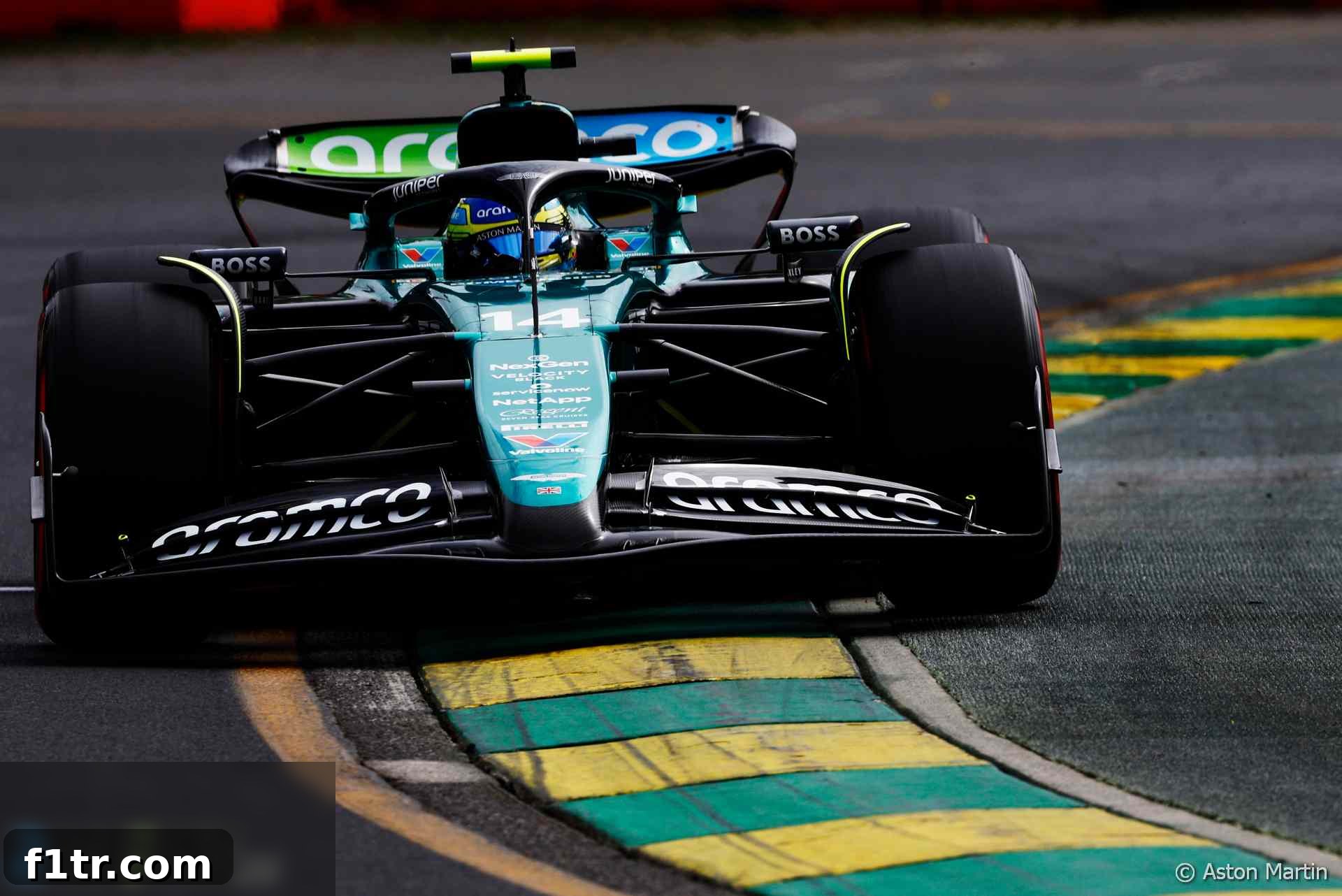
In a controversial end to the Australian Grand Prix, Aston Martin driver Fernando Alonso found himself at the center of a post-race investigation following an incident involving George Russell. Alonso initially stated he was grappling with a power unit issue in his Aston Martin AMR24 during the final laps of the race. These comments were made before race stewards handed him a 20-second time penalty, dropping him from sixth to eighth position, for what they deemed “extraordinary” driving in the moments leading up to Russell’s dramatic crash at Turn 6.
Alonso’s radio communications from the closing stages of the Grand Prix shed more light on the perplexing situation. He reported “some issues for the last 15 laps, something on the battery on the deployment,” suggesting a struggle with his car’s energy recovery and deployment systems. Intriguingly, immediately after Russell’s high-speed impact with the barrier, Alonso also reported “problems on the throttle.” This succession of reported issues fueled debate, particularly as the stewards later concluded that Alonso’s actions, and not a mechanical failure, were the primary cause of the incident.
The penalty triggered widespread discussion, with many questioning the nuanced line between tactical driving and dangerous maneuvers. Alonso’s deceleration as Russell approached, described as “extraordinary” by the stewards, became the focal point of their decision. Despite his claims of technical difficulties, the official verdict did not attribute the incident to any mechanical fault, leaving the racing world to ponder the true chain of events and the veteran driver’s intentions.
Unpacking Alonso’s Radio Communications: The Final Laps in Australia
The race narrative for Fernando Alonso and George Russell was a compelling one, characterized by strategic pitting and fluctuating track positions. Alonso initially ran behind Russell but capitalized on the first Virtual Safety Car (VSC) period, pitting strategically and emerging ahead. This move transformed a nearly four-second deficit into an almost six-second advantage over Russell, setting the stage for a tense battle in the latter half of the Grand Prix.
However, Russell’s Mercedes showed superior pace, steadily eroding Alonso’s lead. By Lap 42, Alonso had completed his final pit stop, which temporarily put Russell ahead. The Aston Martin pit wall then faced a critical strategic dilemma: would Russell attempt to complete the race on his existing tires, or would Mercedes opt for a fresh set of tires, allowing Russell to attack Alonso with renewed vigor? Mercedes chose the latter, triggering a fresh wave of pressure on the two-time world champion.
During this strategic unfolding, Alonso began to voice concerns about his car’s performance, particularly regarding the power available from his Mercedes power unit. His radio exchanges with engineer Chris Cronin revealed a driver meticulously seeking every possible advantage, even as questions about his car’s technical state began to surface.
| Lap: 42/58 ALO: 1’27.347 | |||||||||||||||||||||||||||||||||||||||||||||||||||
| Cronin | Track is all clear. Track is all clear. 17 laps to go. 17. Fernando HPP button off, HPP button off. And just the key management corners, but then good pace just in case Russell tries one stopping. | ||||||||||||||||||||||||||||||||||||||||||||||||||
| Alonso | Race situation? | ||||||||||||||||||||||||||||||||||||||||||||||||||
| Cronin | So basically Russell’s our race. If he tries to one-stop he’s currently 18 seconds ahead. I’ll keep you updated on the gap. | ||||||||||||||||||||||||||||||||||||||||||||||||||
| Lap: 43/58 ALO: 1’21.724 | |||||||||||||||||||||||||||||||||||||||||||||||||||
| Alonso | Yeah. And other threats? | ||||||||||||||||||||||||||||||||||||||||||||||||||
| Cronin | The car behind is Lance, 10 seconds back. Same strategy as us but older tyres. | ||||||||||||||||||||||||||||||||||||||||||||||||||
| Alonso | First set, what was the axle limitation on this compound? | ||||||||||||||||||||||||||||||||||||||||||||||||||
| Cronin | So it was very balanced Fernando, good balance. We’ve added the 0.3% since that first stint. | ||||||||||||||||||||||||||||||||||||||||||||||||||
| Lap: 44/58 ALO: 1’21.394 | |||||||||||||||||||||||||||||||||||||||||||||||||||
| Alonso | Gap to Russell. | ||||||||||||||||||||||||||||||||||||||||||||||||||
| Cronin | 18 seconds still, 18. Last lap Russell same lap time as us. | ||||||||||||||||||||||||||||||||||||||||||||||||||
| Alonso | Wow. | ||||||||||||||||||||||||||||||||||||||||||||||||||
As Russell made his inevitable second pit stop and rejoined the track behind Alonso, the Aston Martin driver’s focus intensified on maximizing his car’s potential. He began a series of pointed inquiries about a specific setting related to “fuel burn.” In Formula 1, “fuel burn” refers to the process by which teams can intentionally consume fuel more rapidly than usual. This is a crucial strategy, particularly towards the end of a race, as it allows cars to shed excess weight. The amount of fuel required for a race is often estimated, and various factors, such as Safety Car periods or changes in weather, can lead to a surplus. Burning off this extra fuel can marginally improve a car’s performance by reducing its overall weight, a subtle but vital advantage in a sport measured in milliseconds. Alonso’s repeated questions indicated a deep concern for his car’s performance and a desire to extract every ounce of available power as Russell relentlessly closed in.
| Lap: 45/58 ALO: 1’21.454 | |||||||||||||||||||||||||||||||||||||||||||||||||||
| Alonso | Why HPP is off? | ||||||||||||||||||||||||||||||||||||||||||||||||||
| Cronin | Russell has boxed. Should be ahead. Be ready to use energy. 2.8 seconds, three seconds ahead of Russell. | ||||||||||||||||||||||||||||||||||||||||||||||||||
| Lap: 46/58 ALO: 1’21.344 | |||||||||||||||||||||||||||||||||||||||||||||||||||
| Alonso | Why HPP is off? | ||||||||||||||||||||||||||||||||||||||||||||||||||
| Cronin | Just checking with the guys, stand by, just checking. | ||||||||||||||||||||||||||||||||||||||||||||||||||
| Cronin | Gap to Russell is three. You can put HPP button on for three laps. We’ll see. HP button on. | ||||||||||||||||||||||||||||||||||||||||||||||||||
| Lap: 47/58 ALO: 1’21.183 | |||||||||||||||||||||||||||||||||||||||||||||||||||
| Alonso | Well I will need it when he comes. So you tell me why it’s off? | ||||||||||||||||||||||||||||||||||||||||||||||||||
| Cronin | Fernando the button is just for fuel burn, yeah? That button is just fuel b- it’s not ACS. So you’ve got all the energy, you’re good. | ||||||||||||||||||||||||||||||||||||||||||||||||||
| Alonso | I have a lot more de-rating than before. So my question is, if you want to save fuel, tell me. It’s very easy. | ||||||||||||||||||||||||||||||||||||||||||||||||||
| Cronin | No, no we’re good Fernando, we’re good. All good. Just try and keep the pace up. We’ve got 11 laps to go at the end of this one. | ||||||||||||||||||||||||||||||||||||||||||||||||||
| Cronin | Russell two seconds back, 11 more laps. | ||||||||||||||||||||||||||||||||||||||||||||||||||
| Lap: 48/58 ALO: 1’21.347 | |||||||||||||||||||||||||||||||||||||||||||||||||||
| Alonso | Is there any way to have more energy when he comes? | ||||||||||||||||||||||||||||||||||||||||||||||||||
| Cronin | Negative Fernando, we’ve got the most energy we can get. We’ll just come down the strat switch if we have to keep using the energy button. We’ve got the most energy we can get. | ||||||||||||||||||||||||||||||||||||||||||||||||||
The intensity grew with each passing lap. Alonso’s repeated queries about the “HPP button” and his observation of “de-rating” indicate a profound concern over his car’s energy management. De-rating occurs when the electrical power from the MGU-K (Motor Generator Unit – Kinetic) or MGU-H (Motor Generator Unit – Heat) is reduced, either due to strategic management, system limitations, or a fault. For a driver like Alonso, battling to defend a position, any perceived reduction in available power could be hugely detrimental. His frustration was palpable, as he sought clarification on whether the team was intentionally saving fuel or if a genuine performance issue was at play. His engineer, Cronin, consistently reassured him that all available energy was being deployed, attempting to calm the veteran driver’s growing anxiety as Russell closed the gap to within DRS range.
With five laps remaining, George Russell successfully brought his Mercedes into DRS detection range of Alonso’s Aston Martin. This meant Russell could now utilize the Drag Reduction System on designated straights, significantly aiding his overtaking attempts. The pressure on Alonso was immense, as evidenced by the reduced radio chatter from his side, indicating a driver solely focused on the task of defending against a faster competitor with fresher tires.
| Lap: 49/58 ALO: 1’21.122 | |||||||||||||||||||||||||||||||||||||||||||||||||||
| Cronin | Ten laps remaining. | ||||||||||||||||||||||||||||||||||||||||||||||||||
| Cronin | So these tyres are good to the end Fernando so we don’t need to do the lift-and-coast. | ||||||||||||||||||||||||||||||||||||||||||||||||||
| Lap: 53/58 ALO: 1’20.867 | |||||||||||||||||||||||||||||||||||||||||||||||||||
| Cronin | DRS for Russell, he’s just got it that time. | ||||||||||||||||||||||||||||||||||||||||||||||||||
| Lap: 54/58 ALO: 1’21.035 | |||||||||||||||||||||||||||||||||||||||||||||||||||
| Cronin | Energy if you need it. | ||||||||||||||||||||||||||||||||||||||||||||||||||
| Cronin | Four more laps, four more laps. | ||||||||||||||||||||||||||||||||||||||||||||||||||
| Lap: 55/58 ALO: 1’20.952 | |||||||||||||||||||||||||||||||||||||||||||||||||||
| Cronin | Three more laps, three more laps. | ||||||||||||||||||||||||||||||||||||||||||||||||||
| Lap: 56/58 ALO: 1’20.752 | |||||||||||||||||||||||||||||||||||||||||||||||||||
| Cronin | Strat 10, strat 10. It’s the right thing to do. Two more laps. | ||||||||||||||||||||||||||||||||||||||||||||||||||
The climactic moment arrived on lap 57. As Russell closed in, Alonso exhibited an unprecedented and unusual driving pattern into Turn 6. He significantly backed off over 100 meters earlier than his previous laps, lightly touched the brakes, briefly accelerated, and then braked hard again for the corner. This highly unconventional approach caught Russell completely off guard. Trapped in Alonso’s slipstream and with the sudden, erratic change in speed, Russell lost aerodynamic downforce, washed wide, and spun violently into the barrier. His Mercedes car was utterly wrecked, bouncing back onto the circuit in a shower of debris, prompting an immediate Virtual Safety Car deployment.
Post-Crash Revelation: Alonso’s Throttle Problems
In the immediate aftermath of Russell’s horrifying crash, Fernando Alonso reported what he described as “problems on the throttle.” This came as a surprise, as there had been no explicit mention of throttle issues before the Turn 6 incident. The timing of this report, directly following the collision, raised questions about whether this was a new malfunction or an exacerbation of earlier, less specific power unit concerns. Crucially, the stewards’ verdict on the incident made no indication that Alonso’s reported throttle problem was considered a contributory factor to his irregular deceleration.
As he navigated the circuit under Virtual Safety Car conditions, Alonso’s radio communications became more urgent and perplexing. He spoke of pressing “something with the maximum of my strength,” suggesting a physical struggle with a control. While his onboard camera was unfortunately focused on his rear wing at this critical juncture, preventing a visual confirmation of what he was pressing, his words painted a picture of a driver grappling with a malfunctioning system. The Aston Martin team has not publicly clarified what specific action Alonso was referring to or what the exact nature of the “stuck” throttle problem might have been.
| Cronin | So you are all clear behind now. |
| Alonso | There are problems on the throttle. |
| Cronin | Virtual Safety Car, slow down. Get your delta positive. |
| Cronin | So Russell has reported that he’s okay, Fernando, just for info. It’s Virtual Safety Car, just positive at Safety Car, you’re good on your delta. Nobody’s in the pits. So there’s one more lap to go, one more lap. |
| Alonso | Check the throttle. |
| Cronin | Yeah, we can see that, yep. Something’s failing. |
| Alonso | Something is stuck. |
| Cronin | Yeah. |
| Alonso | I’m pressing, yeah, maximum of my strength. |
| Cronin | It’s a double yellow now, so go slow through here. |
| Alonso | Wow. Is he okay? |
| Cronin | Yeah he’s reported that he’s alright. He has come on the radio to say he’s okay. Russell is out of the car. If you can get it to the end, that’ll be mega. Got the chequered flag coming out now. |
Despite the field being under Virtual Safety Car conditions, with speeds significantly reduced, Alonso’s concerns about his car’s state were profound. His engine note occasionally stuttered, adding auditory evidence to his verbal reports of trouble. He voiced apprehension about whether his car would even make it to the finish line, and more critically, whether continuing to drive might cause irreparable damage to the engine.
| Chequered flag | |||||||||||||||||||||||||||||||||||||||||||||||||||
| Cronin | Can I have MFB blue, MFB blue override. Position 12. MFB Blue override position 12. | ||||||||||||||||||||||||||||||||||||||||||||||||||
| Alonso | I don’t know if I will make it. We are not damaging the engine or something? | ||||||||||||||||||||||||||||||||||||||||||||||||||
| Cronin | Just checking. We’ve been told that you can get it back if you can. Just checking. | ||||||||||||||||||||||||||||||||||||||||||||||||||
| Cronin | So we’re happy it’s not damaging anything, Fernando. Double yellows here, obviously. | ||||||||||||||||||||||||||||||||||||||||||||||||||
| Cronin | Okay mate well done. We’ll have to have a look at that, I’m not sure exactly what’s happened. You finished P6, Lance P7. Good job. | ||||||||||||||||||||||||||||||||||||||||||||||||||
The final radio exchanges highlight the uncertainty and concern within the Aston Martin camp regarding the reported issues. While his engineer attempted to reassure him, the comments like “Something’s failing” and “I’m not sure exactly what’s happened” suggest a lack of immediate understanding from the pit wall. Compounding the mystery, Aston Martin’s official press release issued after Alonso’s penalty made no explicit mention of any car problems or concerns about his ability to finish the race. This silence leaves a significant void, failing to reconcile Alonso’s dramatic in-race reports with the team’s public stance or the stewards’ ruling.
Conclusion: Unresolved Questions and a Controversial Penalty
The Australian Grand Prix concluded with a cloud of unanswered questions surrounding Fernando Alonso’s performance and the subsequent penalty. His radio messages clearly indicate a driver battling perceived power unit issues, including “battery deployment” problems and a “de-rating” sensation, culminating in a reported “stuck throttle” after George Russell’s crash. Yet, the race stewards firmly placed the blame on Alonso’s “extraordinary” driving tactics, issuing a penalty that profoundly impacted his finishing position and sparked intense debate across the Formula 1 community.
The discrepancy between Alonso’s internal race communications and the official narrative presents a fascinating, yet unsettling, enigma. Was Alonso genuinely struggling with mechanical failures that influenced his driving, or were his radio calls a strategic attempt to deflect potential scrutiny, perhaps even a calculated bluff? The lack of public acknowledgment of these specific technical issues from Aston Martin, juxtaposed with Alonso’s dramatic statements, only deepens the mystery. The incident at Turn 6 will undoubtedly remain a talking point, raising important questions about driver responsibility, the interpretation of dangerous driving, and the intricate, often opaque, world of F1 team communications and car performance data. For now, the exact nature of what truly transpired in Fernando Alonso’s AMR24 during those final, fateful laps in Melbourne remains largely unexplained.