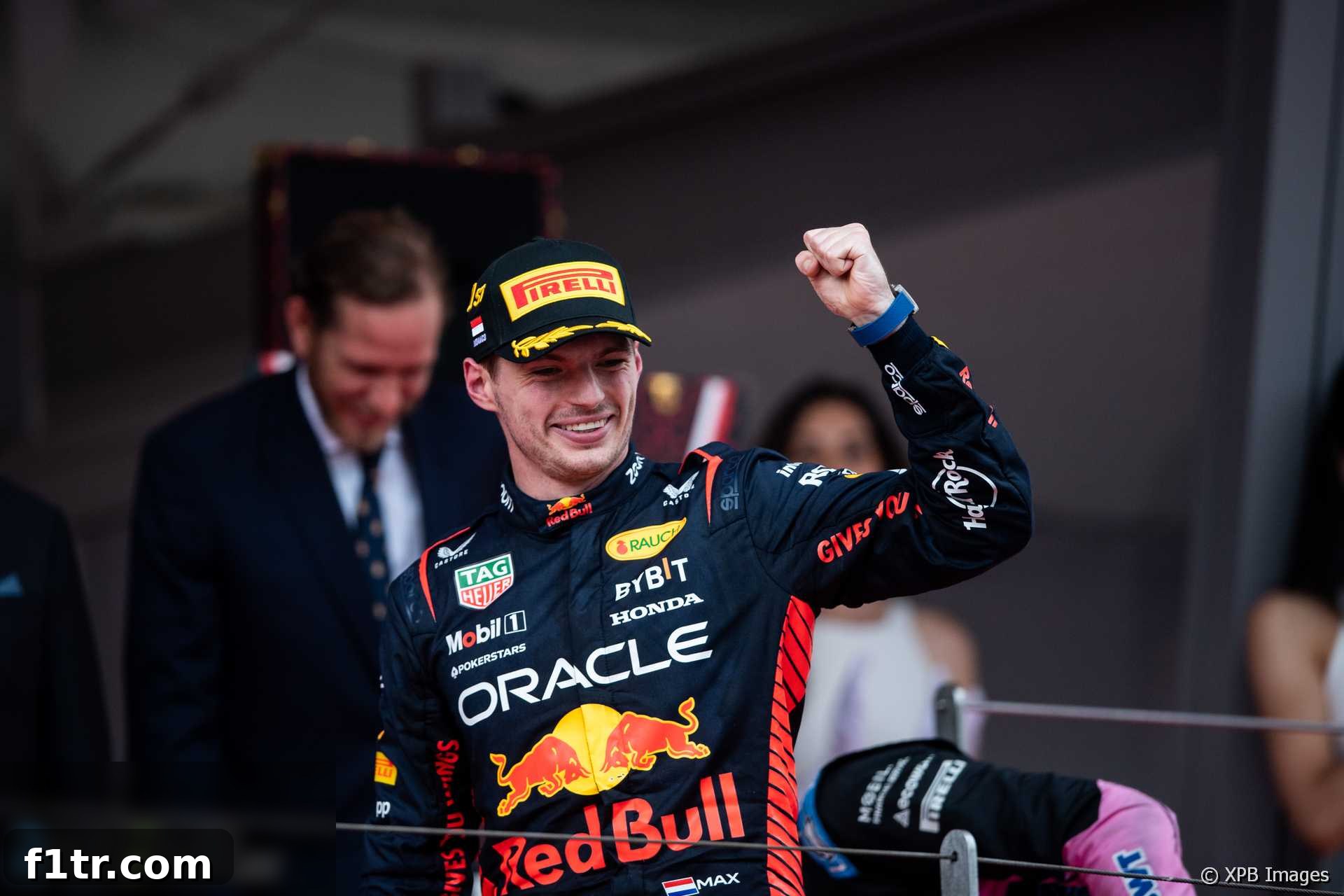
The illustrious Monaco Grand Prix, a jewel in the Formula 1 calendar renowned for its demanding street circuit, delivered an unforgettable spectacle of strategic brilliance and dramatic twists. Reigning world champion Max Verstappen demonstrated unparalleled mastery, leading the race from pole position to the chequered flag, securing a commanding victory. His performance was particularly noteworthy as he navigated a mid-race downpour that plunged the notoriously challenging circuit into chaos, outmaneuvering rivals and unpredictable conditions alike. Fernando Alonso, in a resurgent Aston Martin, maintained a valiant chase to claim second place, while Alpine’s Esteban Ocon brilliantly secured the final spot on the podium.
The 2023 Monaco Grand Prix served as a testament to the drivers’ skill and the teams’ strategic acumen. Verstappen’s triumph marked his fourth victory of the season, further solidifying his championship lead. The race saw a dramatic shift in dynamics when a sudden, torrential rain shower swept across the principality, forcing a flurry of pit stops for intermediate or full wet weather tyres. Despite the challenging circumstances and numerous minor incidents, an impressive 18 of the 20 starters successfully completed the gruelling 78-lap race, highlighting the resilience and adaptability of the modern Formula 1 grid.
The Pole Position and Opening Laps: A Strategic Chess Match Unfolds
The build-up to the Monaco Grand Prix is always charged with anticipation, and the 2023 edition was no exception. Max Verstappen, having snatched pole position with a breathtaking final sector in qualifying, lined up on the grid opting for the medium compound tyres. His seasoned rival, Fernando Alonso, starting alongside him in second, made a calculated gamble by choosing the harder compound, a strategic decision designed for a longer first stint. As the five red lights extinguished, signalling the start of the race, Verstappen executed a flawless getaway, confidently holding his lead into the tight Sainte Devote corner. Alonso tucked in behind, securing his second position, as the field navigated the narrow streets without major incident.
The initial laps unfolded with characteristic Monaco precision. The top ten drivers maintained their starting positions, a testament to the circuit’s difficulty for overtakes. However, at the very rear of the field, Sergio Perez, who had a disastrous qualifying session, made an early strategic call, pitting immediately after the first lap to switch to hard tyres. This bold move was an attempt to run a very long second stint, hoping to capitalise on potential safety cars or weather changes, though it put him significantly out of sync with the rest of the pack.
Building a Lead: Verstappen’s Relentless Pace and Midfield Battles
As the race settled into a rhythm, Verstappen began to exploit the superior grip and pace of his medium tyres, gradually extending his lead over Alonso. While the gap wasn’t immediately substantial, typically hovering around a few seconds, the Red Bull driver demonstrated a controlled dominance. Both leaders quickly pulled away from Esteban Ocon in third, who, despite his strong qualifying, found himself battling to maintain pace with the front two.
Further back, the midfield provided its own drama. Carlos Sainz Jnr, in his Ferrari, was relentlessly pressuring Ocon for third place. In an aggressive manoeuvre into the harbour chicane, Sainz misjudged his braking point, clipping the rear of Ocon’s Alpine and damaging the endplate of his own front wing. While Ocon’s car appeared unscathed by the contact, Sainz’s endplate broke free shortly after, scattering debris. The stewards noted the incident, issuing Sainz a black-and-white warning flag for his robust driving, but no further action was deemed necessary. This early skirmish underscored the high stakes and tight margins characteristic of racing in Monaco.
On lap 13, a moment of concern rippled through the Aston Martin garage when Fernando Alonso reported a possible puncture. This saw his lap time drop by over a second, momentarily shrinking his advantage over Ocon. However, a quick check of the team’s telemetry data confirmed that Alonso’s tyres were performing normally, suggesting a momentary loss of concentration or perhaps a brief issue with grip rather than a puncture. Reassured, Alonso swiftly resumed his tenacious pursuit of the leader, maintaining the pressure on Verstappen.
Verstappen, meanwhile, continued to stretch his legs, his advantage over the Aston Martin steadily growing. His lead expanded to over 10 seconds, a significant margin on a circuit where every tenth of a second counts. However, the relentless nature of Monaco soon presented a new challenge: traffic. As Verstappen encountered a train of backmarkers, notably including Nyck de Vries’ AlphaTauri, his pace was momentarily hampered. This allowed Alonso to close the gap at a rate of approximately a second per lap, injecting renewed tension into the race. Once Verstappen skillfully navigated through the congested traffic and found clear air, he immediately regained his blistering pace, re-establishing and then extending his comfortable lead once more.
The Rain Strikes: Chaos, Strategy, and Tyre Gambles
As the race progressed past lap 50, Verstappen remarkably remained on his original medium tyres, showcasing exceptional tyre management and the durability of the Pirelli compounds. The dry running seemed set to continue, but Monaco had other plans. A sudden, dramatic rain shower descended upon the circuit, transforming the pristine asphalt into a treacherous, slippery surface. The middle sector of the track, in particular, became slick almost instantly, causing drivers to experience a significant loss of grip and speed. The sudden change created a flurry of activity and frantic radio communications between drivers and their pit walls.
With the track rapidly deteriorating, the inevitable call for intermediate tyres began. Pit lanes sprang to life as teams prepared for the chaotic changes. However, Aston Martin initially made a bold, perhaps misguided, decision for Fernando Alonso, opting to pit him for another set of dry medium tyres. This gamble proved ill-fated almost immediately, as the rain intensified dramatically the moment Alonso rejoined the track. The conditions quickly became unsuitable for dry tyres, forcing Alonso to make an immediate second pit stop, this time for intermediates. This costly error in judgment meant Alonso effectively lost valuable track position and time, highlighting the fine line between genius and folly in Monaco’s unpredictable weather.
Red Bull, observing the escalating conditions and Alonso’s misstep, waited patiently. The decisive moment came when Verstappen himself touched the wall at Portier, a clear indication that dry tyres were no longer viable. Red Bull reacted swiftly, bringing Verstappen in for intermediates. The stop was executed flawlessly, and he rejoined the track still holding a comfortable lead over Alonso, whose double pit stop had erased any hopes of challenging for the win. The period immediately following the rain was fraught with incidents: cars slid wide, kissed the barriers, and made minor contact, a testament to the extreme challenge posed by the wet conditions on the unforgiving street circuit. Yet, remarkably, despite the numerous close calls and heart-stopping moments, the race saw no Safety Car or Virtual Safety Car interventions, allowing the drama to unfold uninterrupted.
Final Stages and Podium Finish: Mastering the Slippery Streets
As the rain eventually began to ease, the track started to dry in certain areas, allowing drivers to gradually find a new rhythm in the slippery conditions. Max Verstappen, still in control on his intermediate tyres, continued to manage his lead with cool precision, pulling further away from Fernando Alonso. Despite his costly extra pit stop, Alonso maintained a solid second place, thanks to his strong pace in the dry and the earlier gap he had built over the rest of the field. Esteban Ocon also held onto his impressive third position, around 10 seconds behind the Aston Martin, demonstrating exceptional defensive driving and consistent performance throughout the challenging conditions.
Verstappen remained on his intermediate tyres for the entirety of the remaining laps, expertly managing the evolving track conditions. He crossed the chequered flag at the end of the 78th lap, securing a dominant victory with just under half a minute separating him from Fernando Alonso in second. Ocon celebrated a well-deserved third-place finish, a testament to Alpine’s strong performance and his own skill. The two Mercedes drivers, Lewis Hamilton and George Russell, finished fourth and fifth respectively. Russell’s race, however, was not without incident; he received a five-second post-race time penalty for an unsafe rejoin after running off track at Mirabeau during the rain and making contact with Sergio Perez.
Beyond the podium, Charles Leclerc, the home hero, finished a respectable sixth after a difficult weekend, ahead of Pierre Gasly in seventh. Carlos Sainz Jnr secured eighth place in the second Ferrari, a somewhat disappointing result given his earlier skirmish for a podium spot. The final points-paying positions went to the two McLarens, with Lando Norris crossing the line in ninth and Oscar Piastri claiming his first points of the season in tenth. The 2023 Monaco Grand Prix was a race that encapsulated the unpredictable charm and relentless challenge of Formula 1’s most iconic circuit, with Max Verstappen emerging as a truly deserving winner.
2023 Monaco Grand Prix reaction
- Check back shortly for more race reaction