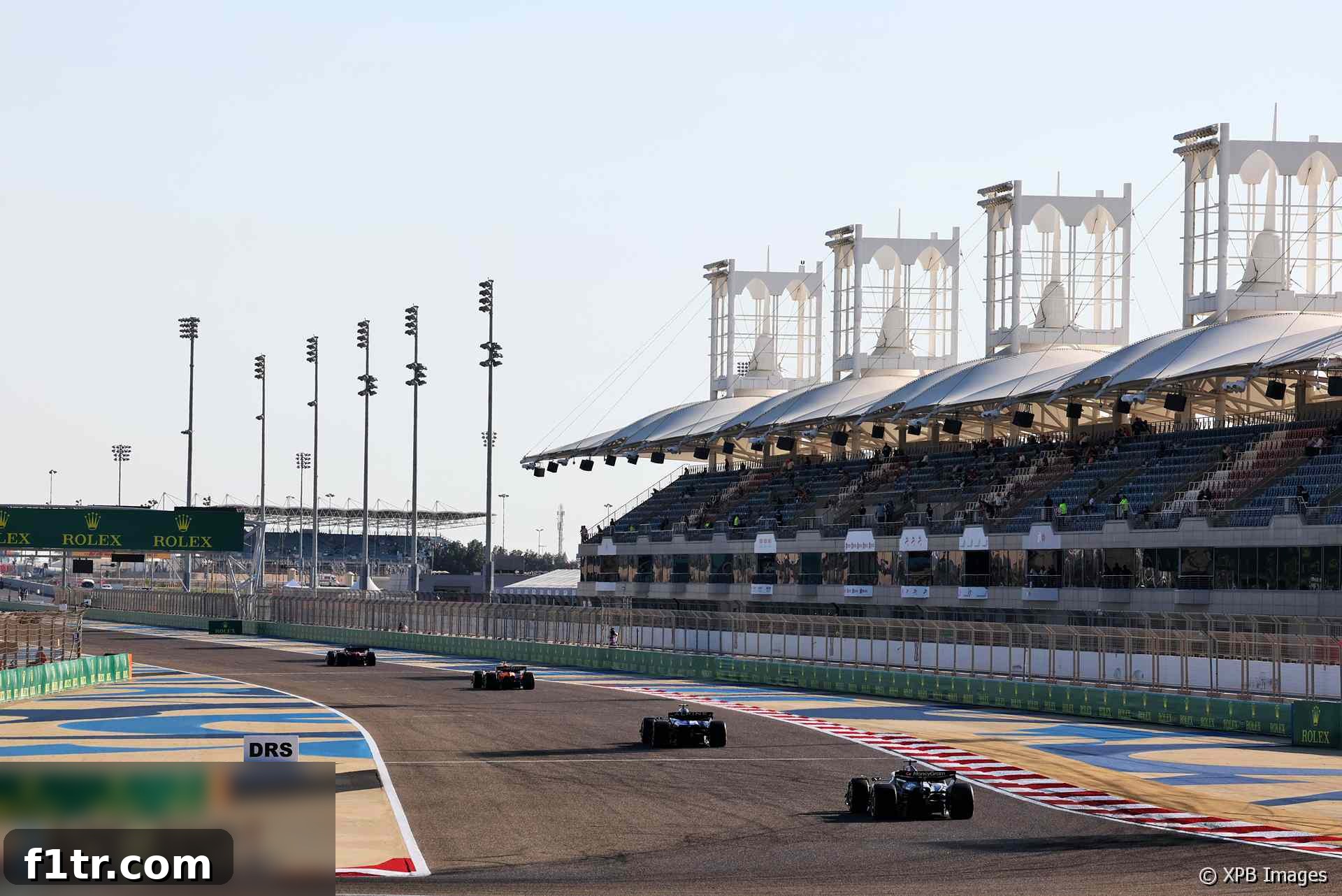
FIA Revises Slow Driving Rules for F1 Qualifying: Bahrain Grand Prix Sees Key Amendment
In a significant development for the opening round of the 2024 Formula 1 season, the FIA has announced a key revision to the rules governing slow driving during qualifying sessions for the Bahrain Grand Prix. An initial, more granular requirement for drivers to maintain a certain speed in every marshalling sector around the circuit has been swiftly withdrawn, reverting to a system focused on overall lap time between designated Safety Car lines.
The FIA’s race director, Niels Wittich, issued an updated version of the Bahrain Grand Prix event notes, deleting the new requirement that was originally intended to be enforced for today’s first qualifying session of the season. This amendment reflects the ongoing effort by the sport’s governing body to balance driver safety, competitive integrity, and practical enforceability within the high-stakes environment of Formula 1 qualifying.
The Perennial Challenge of Qualifying Traffic
The issue of drivers slowing down excessively during qualifying has been a recurring concern in Formula 1 for many years, often leading to dangerous scenarios and frustrating moments for both competitors and fans. Qualifying sessions, by their very nature, demand that drivers find clear track space to extract maximum performance from their cars for a single lap. However, with all twenty cars often trying to complete multiple runs within a limited timeframe, congestion inevitably becomes a factor, especially on circuits with shorter layouts or tight sectors.
The Dangerous Dance: Why Drivers Go Slow
Drivers intentionally slow down for a variety of strategic and technical reasons during qualifying. One primary motive is to create a sufficient gap to the car ahead, ensuring clean air for their flying lap and avoiding being hampered by another car’s turbulent wake. While a “tow” can be beneficial on some circuits, most drivers prefer to attack their qualifying lap unhindered. Additionally, managing tyre temperature and energy recovery systems (ERS) often requires specific out-lap procedures, which can involve slower speeds to prepare the tyres for optimal grip or recharge batteries for the hot lap. This delicate dance of finding space, managing temperatures, and conserving energy has, unfortunately, frequently led to scenarios where multiple cars converge at significantly different speeds, particularly in the final sectors of circuits, creating potential hazards that have sometimes resulted in near-misses or even collisions.
Incidents involving dangerous traffic build-ups have prompted the FIA to take increasingly stringent measures. While specific examples like the chaotic end to Monza qualifying in 2019 are often cited as catalysts, the underlying problem persists across various tracks, especially those with confined pit lane exits or tight sections where drivers try to bunch up before opening a lap.
FIA’s Evolving Stance: From Italian Grand Prix to Bahrain
The FIA’s attempts to mitigate these risks have been an evolving process, demonstrating a proactive approach to driver safety. Ahead of last year’s Italian Grand Prix qualifying, Niels Wittich informed teams that an existing rule, which previously limited how long drivers’ in-laps could take, would be extended. This crucial change meant the maximum lap time rule would now apply to every lap a driver completed during qualifying sessions – not just the laps returning to the pits. The move was a direct response to the escalating issue of dangerous traffic build-ups witnessed during several sessions, particularly in the final sectors of circuits where drivers would often back up to create space before their flying laps.
The 2023 Precedent: Maximum Lap Time Across All Laps
This revised rule was subsequently in effect for eight of the last nine Grands Prix in the 2023 season. Throughout this period, drivers who exceeded the maximum lap time set each weekend were summoned to the stewards for investigation. While the vast majority of these investigations for exceeding the maximum lap time resulted in no further action being taken, signalling that many infractions were deemed minor or due to extenuating circumstances, there were instances where drivers faced penalties. Notably, both Lando Norris and Yuki Tsunoda received reprimands for breaching this rule during the Brazilian Grand Prix weekend at Interlagos, underscoring the FIA’s commitment to enforcement even for seemingly minor infringements that could contribute to a larger safety concern.
The Brief Introduction and Subsequent Withdrawal of Sector-Specific Rules
For the start of the 2024 season, the FIA had initially sought to refine these regulations further. Wittich originally advised drivers that they would not only need to stay under the maximum lap time between the two Safety Car lines (typically encompassing the entire circuit from pit exit to pit entrance) but that they should also do so “at least once in each marshalling sector” around the circuit. This proposal represented a significant shift towards a more granular and potentially more complex enforcement mechanism. The intent was clear: to prevent drivers from deliberately slowing down in specific corners or straights within a sector, even if their overall lap time might still fall within the maximum limit. It aimed to address localized traffic issues more directly and comprehensively.
However, this additional requirement for sector-specific speed compliance was dropped in the latest version of his event notes, issued on Friday morning, just hours before the crucial qualifying session in Bahrain. This quick amendment suggests that after further consideration, perhaps in consultation with teams and drivers, the FIA determined that the sector-by-sector enforcement might be impractical, overly restrictive, or introduce unintended complications. Managing specific speed thresholds across multiple small sectors dynamically during a high-pressure qualifying session could prove extremely challenging for drivers and potentially lead to more contentious decisions, or even hinder drivers’ ability to properly prepare their tyres for a flying lap. The administrative burden of monitoring and adjudicating such detailed infractions could also be substantial, potentially leading to a barrage of investigations after each qualifying session.
The Rationale Behind the Revision: Practicality and Fair Play
With the sector-specific rule now withdrawn, drivers will revert to being assessed only for their speed across the full lap, specifically between the two Safety Car lines, as they were at the end of last season. This approach offers a more straightforward and arguably more pragmatic method of regulation. It provides drivers with a clear overarching target without micromanaging their speed through every segment of the track. While the ambition of the sector-specific rule was undeniably to enhance safety by preventing localized bunching, its practical application may have presented too many variables and potential for subjective interpretation, possibly leading to an increase in penalties rather than an improvement in flow.
The decision to revert to a full-lap assessment suggests a preference for a simpler, more enforceable rule that still achieves the primary objective of preventing dangerously slow driving. It indicates a willingness from the FIA to adapt its regulations based on feedback and real-world considerations, ensuring that rules enhance the spectacle and safety of the sport without creating undue complexity or frustration for participants. This flexible approach is vital in a sport as dynamic as Formula 1, where regulations must constantly evolve to meet new challenges.
The Pit Lane: A Continued Area of Focus
Crucially, a note that the restrictions also apply to the pit lane has been retained in the newest version of the wording. This continued emphasis highlights the FIA’s concern over driver conduct within the confines of the pit lane, which can often be a bottleneck, especially during busy qualifying periods. Several instances of drivers delaying each other or forming unnecessary queues in the pits occurred last year, leading to potential unsafe releases or hindering competitors’ ability to start their qualifying runs effectively. By including the pit lane within the scope of slow driving regulations, the FIA aims to ensure a smooth and safe flow of traffic even in this constricted and high-traffic environment, preventing a different kind of safety hazard.
Impact on the 2024 Bahrain Grand Prix: A Tighter Limit
Following Thursday’s opening day of practice sessions, Wittich has officially set the maximum lap time for the 2024 Bahrain Grand Prix qualifying to 1’54.000 between the two Safety Car lines on the circuit. This maximum time is notably one second less than the maximum lap time enforced for the 2023 Bahrain Grand Prix. It’s also important to remember that last year’s limit was only enforced on in-laps, laps after the chequered flag, and reconnaissance laps before the start of the race. The 2024 rule, however, applies across all laps during qualifying (out-laps, in-laps, and even slow preparation laps), making the 1’54.000 benchmark a significantly stricter parameter for drivers to adhere to throughout the session. This tighter limit reflects the ongoing commitment to maintain higher average speeds during qualifying to reduce the risk of dangerous disparities in pace around the track and improve overall safety.
Official FIA Wording: Understanding the Revised Regulations
To provide complete clarity on the revised qualifying restrictions, the official wording from the FIA event notes is as follows:
In order to ensure that cars are not driven unnecessarily slowly on in laps during and after the end of qualifying or during reconnaissance laps when the pit exit is opened for the race, drivers must stay below the maximum time set by the FIA between the Safety Car lines shown on the pit lane map.
Teams and drivers will be informed of the maximum time after the second practice session.
For the safe and orderly conduct of the Event, other than in exceptional circumstances accepted as such by the Stewards, any driver that exceeds the maximum time from the second Safety Car line to the first Safety Car line on any lap during and after the end of the qualifying session, including in-laps and out-laps, may be deemed to be going unnecessarily slowly. For the avoidance of doubt, this does not supersede Article 33.4 and Article 37.5 of the FIA Formula One Sporting Regulations, which apply to the entire circuit, furthermore this includes the pit lane as well. Incidents will normally be investigated after the qualifying session.
Implications for Drivers, Teams, and Race Safety
These regulations carry significant implications for drivers and their engineering teams. During a qualifying session, every millisecond counts, but so does finding the right window for a clear lap. Drivers must now be acutely aware of their overall lap time, not just their flying lap pace, but also the speed maintained on their out-laps and in-laps. This requires meticulous planning by race engineers and clear communication to the drivers, especially in congested sessions. The balance between preparing tyres optimally, charging ERS, and staying above the maximum lap time is a critical strategic challenge that can determine a team’s success in qualifying.
The Role of Stewards and Consistency in Enforcement
The revised rule places a considerable responsibility on the Stewards to apply the regulations consistently and fairly. While most investigations in 2023 resulted in no further action, the instances of reprimands for Norris and Tsunoda highlight that persistent or clear breaches will be met with penalties. The phrase “unnecessarily slowly” offers some discretion to the Stewards, allowing them to consider exceptional circumstances (such as encountering another car or a yellow flag), but the clear numeric maximum lap time provides a concrete baseline for judgment. The post-session investigation approach means that qualifying results might be provisional for some time, adding another layer of anticipation and scrutiny to the F1 weekend, reinforcing the need for drivers to be consistently compliant.
Looking Ahead: The Future of F1 Qualifying Regulations
The constant evolution of these rules underscores the dynamic nature of Formula 1 and the FIA’s proactive role in addressing safety and sporting integrity. As cars become faster and circuits present unique challenges, the regulations must adapt. The current iteration, focused on full-lap maximum times and pit lane conduct, appears to be a pragmatic compromise aimed at reducing danger without overly complicating the drivers’ tasks during a critical session. It’s highly probable that these rules will continue to be reviewed and refined based on feedback from drivers, teams, and the unfolding events of the 2024 season. The ultimate goal remains to ensure that qualifying is a thrilling display of speed and skill, conducted within the safest possible parameters, upholding the competitive spirit of Formula 1.
In conclusion, the FIA’s latest amendment to the slow driving rules for the Bahrain Grand Prix qualifying demonstrates a flexible and responsive approach to regulation. By reverting to a full-lap assessment rather than a complex sector-by-sector analysis, the sport aims to maintain safety and fairness with a clearer, more manageable framework for drivers and teams. This adjustment is crucial as Formula 1 kicks off its 2024 season, setting a precedent for how the critical qualifying sessions will be managed moving forward, ensuring both spectacle and safety are prioritized.
Related News and Updates from the 2024 Bahrain Grand Prix
- Tsunoda accepts he got “a bit heated” in team orders dispute with Ricciardo
- “We’re fighting with one arm behind our back”: Hamilton and Russell’s race radio
- Red Bull say RB20 draws inspiration from rivals in less obvious areas
- All cars finish two consecutive F1 races for first time ever
- “I don’t know what the car’s going to do every time I brake”: Leclerc’s race radio
Browse all 2024 Bahrain Grand Prix articles