Post-Race Stewards’ Investigations Rock Azerbaijan Grand Prix: Verstappen, Sainz, Perez, McLaren Under Scrutiny
The Azerbaijan Grand Prix, a spectacle of speed and strategic prowess, may have concluded on the challenging Baku City Circuit, but the drama is far from over. In the immediate aftermath of a thrilling and incident-filled race, the FIA stewards have launched a series of significant investigations involving six prominent drivers and one leading Formula 1 team. These inquiries threaten to cast a long shadow over the weekend’s results, potentially altering classifications and carrying substantial implications for the ongoing championship battles. From alleged Virtual Safety Car infringements to on-track collisions and pit lane procedural breaches, the post-race scrutiny underscores the relentless and complex nature of elite motorsport.
Key Drivers Under Scrutiny: Virtual Safety Car Infringements and Max Verstappen’s Defense
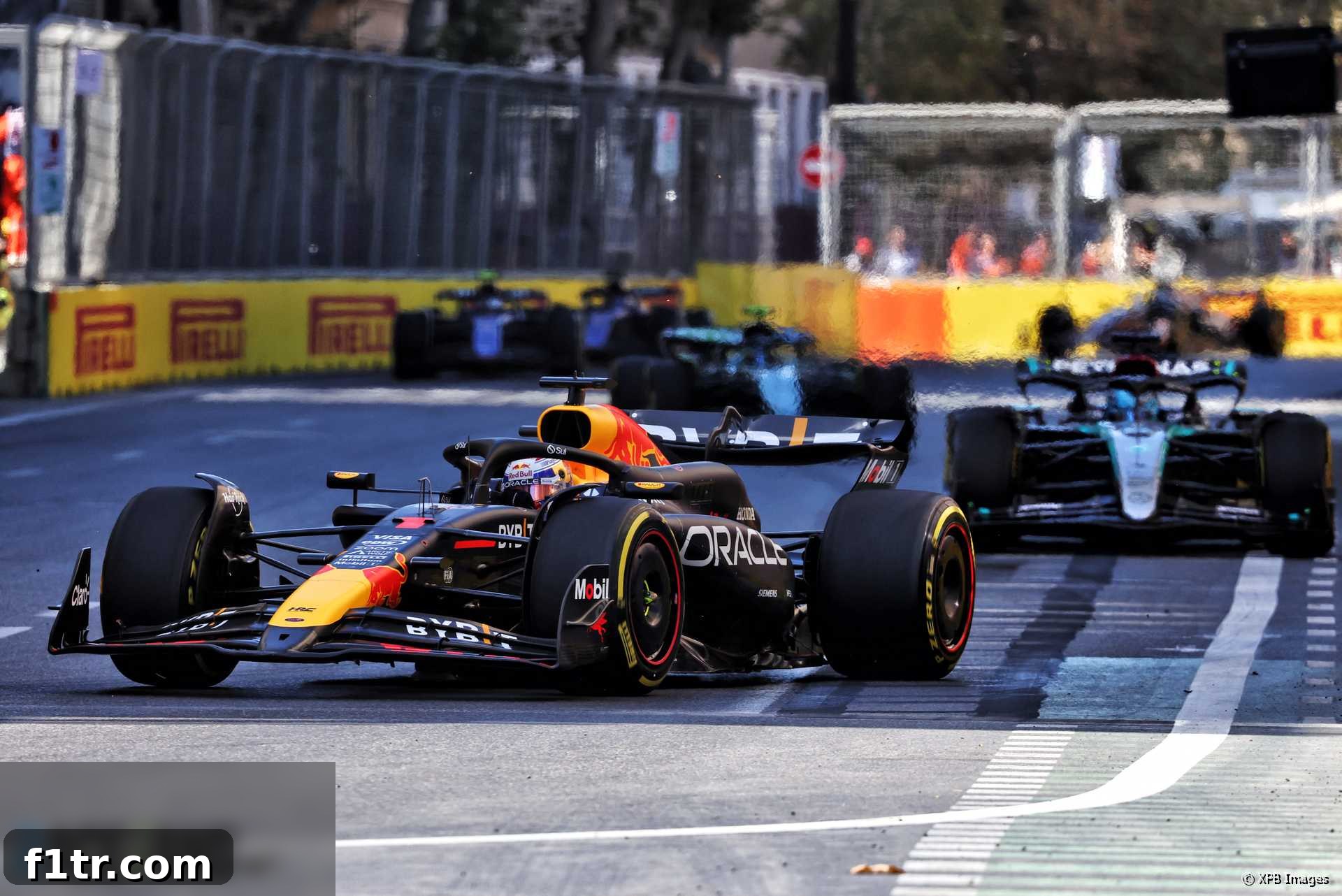
Max Verstappen, a pivotal figure in the championship hunt and one of the highest-placed points-scorers in today’s race, finds himself embroiled in a critical investigation. He has been summoned by the stewards alongside Haas driver Nico Hulkenberg and Alpine’s formidable duo, Pierre Gasly and Esteban Ocon. This quartet faces allegations of “overtaking under Virtual Safety Car conditions after the chequered flag,” a serious charge that could lead to penalties affecting their final race positions.
The incident that triggered this widespread investigation occurred during the race’s only Virtual Safety Car (VSC) period, which was deployed on the penultimate lap following a collision involving Carlos Sainz Jnr and Sergio Perez. The Virtual Safety Car system is a crucial safety mechanism in Formula 1, designed to neutralise the race and allow marshals to safely attend to incidents or debris on track without deploying a full Safety Car, which would bunch up the entire field. Under VSC conditions, drivers are required to reduce their speed and maintain a specific delta time, effectively holding position and preventing any competitive advantage or overtaking. The crux of the current investigation lies in the precise interpretation of these rules when the VSC period extends beyond the waving of the chequered flag, marking the official end of the race.
Despite the summons and the potential ramifications, Max Verstappen, known for his unyielding competitive spirit and meticulous understanding of the regulations, vehemently denied any wrongdoing. Speaking to Sky Sports after the race, he stated, “I didn’t pass under the Virtual Safety Car. We crossed the line, the race is finished, and there are a lot of examples in the past, this year as well, when we have done exactly the same thing. So for me, I’m a bit surprised.” Verstappen’s defense hinges on the argument that once the chequered flag is displayed, the strict VSC rules regarding overtaking may no longer be applicable, or at least have been interpreted flexibly in previous similar scenarios. This stance highlights a potential ambiguity within the sporting regulations that the stewards will now need to clarify definitively.
Further adding weight to the investigation, seven-time world champion Lewis Hamilton also provided an observation over his team radio during the contentious period. Hamilton specifically noted seeing Hulkenberg overtaking him and other drivers, which could serve as direct witness testimony for the stewards. Such in-race reports from fellow competitors are often vital pieces of evidence, providing an immediate perspective from the track. The stewards’ impending decision on these VSC infringements will not only impact the drivers involved but will also establish a critical precedent for how such situations are officiated at the conclusion of future Grand Prix events, potentially leading to penalties ranging from time additions to grid penalties for subsequent races.
Advert | Become a Supporter & go ad-free
Collision Controversy: Sainz and Perez Face Scrutiny for On-Track Incident
In a separate but equally significant inquiry, Carlos Sainz Jnr of Scuderia Ferrari and Sergio Perez of Red Bull Racing have also been summoned by the stewards. Their appearance is required to discuss the late-race collision between their two cars, an incident that, as mentioned, directly triggered the Virtual Safety Car period. The tangle occurred on the high-speed straight connecting turns two and three, a critical overtaking zone on the Baku circuit, as Perez made an assertive move to overtake Sainz.
On-track collisions are a regular feature of Formula 1, but those involving drivers from top-tier teams battling for crucial championship points are always subject to intense scrutiny. Stewards meticulously examine various parameters, including telemetry data, onboard camera footage, and driver radio communications, to determine the exact sequence of events and assign fault. Key considerations for the stewards will include whether either driver left sufficient racing room, the positioning of both cars at the point of contact, and whether the incident could have been avoided by one or both parties. Both Sainz and Perez are known for their strong racing instincts, and they will each be expected to provide their perspective on how the contact occurred, particularly on a circuit where the walls are notoriously unforgiving.
The summons for Sainz and Perez was scheduled for 5:30 PM local time, highlighting the urgency in resolving this particular incident before the official results are fully confirmed. The outcome of this investigation will not only clarify responsibility for the collision but will also reinforce the accepted standards of aggressive yet fair racing within the sport. Penalties could range from a reprimand to time penalties or even grid drops for future events, underscoring the high stakes involved in every on-track maneuver, especially in the closing stages of a Grand Prix.
McLaren Under Investigation for Pit Lane Infringement
Adding another layer of complexity to the post-race investigations, the McLaren Formula 1 team has found itself under the scrutiny of the stewards for a potential breach of the rigorous pit lane regulations. The specific rule in question is designed for paramount safety and fair play, stating unequivocally: “team personnel are only allowed in the pit lane immediately before they are required to work on a car and must withdraw as soon as their work is complete.” This regulation exists to minimize the presence of personnel and equipment in the highly dangerous and high-speed pit lane environment, thereby reducing the risk of accidents and ensuring no team gains an unfair advantage by prematurely preparing for or reacting to race events.
McLaren has been summoned to meet with the stewards at 5:20 PM local time. The stewards’ official notification stated that they observed “team personnel and equipment in pit lane during the race,” specifically when it appeared they were not permitted to be there. This alleged infringement could encompass a variety of scenarios: mechanics perhaps taking up positions too early in anticipation of a pit stop, pit stop equipment being left in the fast lane for an extended duration, or team members present in the pit lane during periods when no pit stop or car work was immediately required. Even what might seem like a minor procedural oversight can trigger an investigation, given the FIA’s stringent focus on safety and consistency in pit lane operations.
The investigation into McLaren underscores the exhaustive nature of Formula 1’s rulebook, where every aspect of team operation, both on and off track, is subject to intense regulation. Teams are expected to adhere to these guidelines with absolute precision, and any deviation, however slight, can lead to serious inquiries. The stewards will likely review a comprehensive array of evidence, including closed-circuit television footage of the pit lane, team radio transmissions, and potentially data logs to determine the exact nature, duration, and intent behind the alleged infringement. Depending on their findings, McLaren could face a range of penalties, from a formal reprimand or a financial fine to a more severe sporting penalty such as a time addition or a grid drop for a future race. This serves as a stark reminder of the meticulous discipline required to compete at the pinnacle of motorsport.
Advert | Become a RaceFans supporter andgo ad-free
The Broader Implications of Post-Race Scrutiny in Formula 1
Post-race investigations are an intrinsic and often dramatic component of Formula 1, serving as a critical mechanism to uphold the integrity, fairness, and safety of the sport. While they can sometimes prolong the suspense and occasionally frustrate fans eager for definitive results, these inquiries are indispensable for ensuring that all teams and drivers adhere to the complex web of sporting and technical regulations. The FIA stewards, typically an independent panel of experienced officials, bear the significant responsibility of interpreting these rules and making impartial judgments, often under immense pressure and public scrutiny. Their decisions are not merely punitive but also serve to clarify and establish precedents for future incidents, contributing to the consistent governance of the championship.
The consistency of stewarding decisions is a perennially debated topic within the Formula 1 community, involving drivers, team principals, and enthusiasts alike. Cases like Max Verstappen’s VSC incident, where historical examples are cited in defense, frequently bring this discussion to the forefront. Teams and drivers constantly seek clear guidelines on the nuances of the rules, recognizing that each steward’s verdict contributes to an evolving body of case law that influences how future situations will be interpreted. This ongoing dialogue and the process of judicial review are essential for the dynamic evolution and fair administration of a sport that pushes the boundaries of technology and human endeavor.
Ultimately, these extensive investigations following the Azerbaijan Grand Prix highlight that Formula 1 is far more than just the spectacle of raw speed and daring overtakes on track. It is a multi-faceted battle of engineering excellence, strategic ingenuity, and unwavering adherence to a comprehensive rulebook. The outcomes of these inquiries will undoubtedly add another captivating layer to the 2024 season, potentially influencing championship standings, shaping future regulations, and fueling further passionate debate among the global Formula 1 community, reminding everyone that in motorsport, the race truly isn’t over until the stewards say it is.
Related F1 News & Updates
- ‘I should have won last year but I did stupid stuff’: Norris out to avenge 2024 defeat
- Verstappen faces post-race investigation along with five other drivers and McLaren
- Red Bull lose constructors’ championship lead for first time in two years
- “Never had so much pain in a car”: How Colapinto impressed Williams on his debut
- F1’s most competitive season for 47 years? Four teams now have three wins each
Browse all 2024 Italian Grand Prix articles