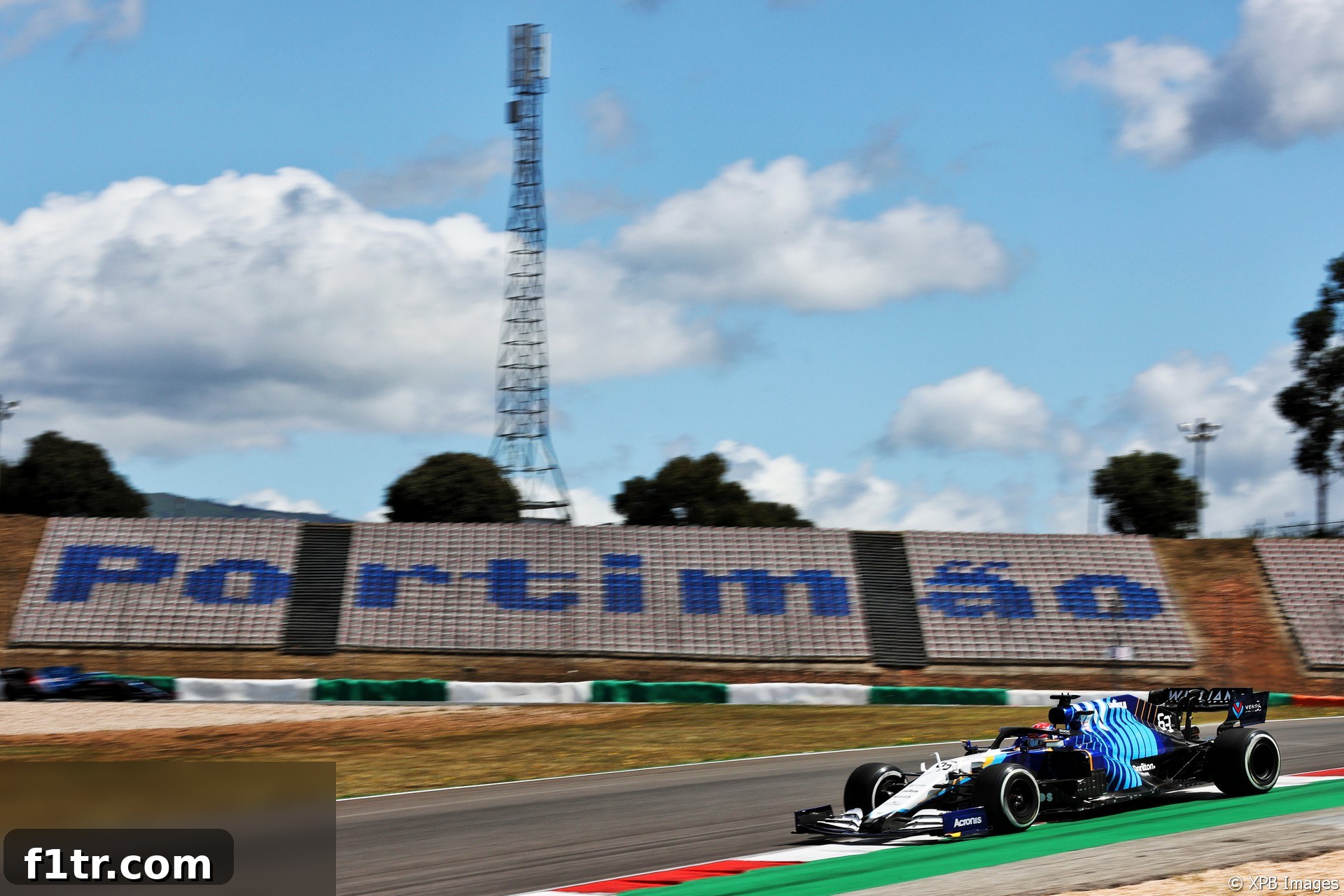
Portuguese Grand Prix 2021: An F1 Paddock Diary Amidst Evolving COVID-19 Protocols and Crucial Discussions
The 2021 Portuguese Grand Prix, a highly anticipated event on the 2021 F1 calendar, unfolded against a backdrop of strict COVID-19 restrictions, notably the absence of fans from the grandstands. As reported from the Algarve paddock, this trend of spectator-free events was set to continue for the subsequent three races, signaling a challenging period for Formula 1’s connection with its global fanbase. This diary delves into the intricate paddock life, critical discussions, and the personal observations of a seasoned F1 correspondent navigating the complexities of the sport during a pandemic.
Beyond the immediate challenges of fan exclusion, the paddock buzzed with significant developments and intriguing comments. Notably, Mercedes CEO Toto Wolff’s response to George Russell’s surprising claim – that he views both Valtteri Bottas and Lewis Hamilton as “teammates” – became a focal point of discussion. This seemingly innocuous statement hinted at deeper strategic implications and sparked intense debate within the F1 community, raising questions about team dynamics, driver loyalties, and the subtle power plays that underpin the pinnacle of motorsport.
Thursday: Navigating the Paddock’s Paradoxical Reality
My journey to Portimão began with a flight to Lisbon, followed by a picturesque, 280-kilometer drive to the Algarve. Arriving at my hotel by the marina as Wednesday evening drew to a close, the immediate reality of Formula 1’s COVID-19 protocols struck with stark inconsistency. Upon check-in, I was informed by hotel staff, under strict insistence from F1 organizers, that the dining room was exclusively reserved for members of the two Formula 1 teams also staying at the establishment. This directive left me, a credentialed member of the media, barred from a communal space shared by the very individuals I was there to cover.
The paradox of these protocols was immediately apparent. F1 personnel, including Alpine reserve driver Daniil Kvyat – with whom I later enjoyed a socially distanced conversation in the circuit car park – share common corridors, stairs, and even seat rows on flights with media members like myself. Yet, when it came to dining, I found myself relegated to take-away meals from fast-food outlets, as traditional restaurants in the Algarve region were largely closed. This situation highlighted a disconnect in the application of safety measures, creating an environment where close contact was permitted in some areas, while seemingly arbitrary restrictions were enforced in others, adding an unusual layer of logistical complexity to the paddock experience.
During my initial hours at the circuit, I conducted informal polls among fellow media colleagues and various F1 personnel. Given that the UK and other key European countries had reached significant vaccination levels – 50% and 25% respectively at the time – I inquired whether the FIA had requested information on vaccination status. This data, I believed, could provide crucial indicators of present immunity levels within the F1 community, aiding in more informed and adaptive COVID-19 management strategies. The unanimous response was negative; no such information had been requested. This lack of elementary, yet potentially crucial, data struck me as a significant oversight in F1’s ongoing battle against the pandemic, underscoring a missed opportunity for proactive health intelligence gathering.
Following a modest lunch in the circuit canteen, I had the pleasure of engaging in a conversation with Max Verstappen in the mixed zone, conducted in Dutch. This interaction once again underscored the remarkable maturity displayed by the now 23-year-old Red Bull driver, particularly in his handling of complex and challenging questions. I vividly recall meeting him for the first time as a 16-year-old in 2014, shortly after his groundbreaking signing to race for Toro Rosso the following year. Even then, his composure and insight were impressive. Years later, he has become an established veteran, an “old hand” in this intensely competitive business, yet paradoxically, he is often still perceived as a “young driver” within the sport’s narrative, a testament to his rapid ascent and sustained high performance.
The subsequent press conference delivered an astonishing moment when George Russell stated, reportedly after a private conversation with Mercedes team boss Toto Wolff, that he views both Mercedes drivers as his teammates. This declaration immediately raised concerns about the potential for undue influence or even collusion between the dominant Mercedes team and Williams, one of its power unit customers. My previous analyses, particularly on topics such as Wolff’s contentious advice to Russell regarding his battle with Bottas at Imola, had already highlighted the delicate balance of power. Consequently, I resolved to directly challenge Toto Wolff on this specific issue during Friday’s team principal conference, seeking clarity on the implications of Russell’s statement and the nature of the relationship between Mercedes and its customer teams.
Later in the afternoon, at 4 PM, I attended a special interview session with Fernando Alonso, convened by Alpine for a select group of media ahead of his home Grand Prix. The reportage from this session was embargoed until Thursday, preventing me from disclosing specific chat topics at the time. However, I can confirm that the Spanish champion consistently delivers exceptional value in these interactions, providing remarkably incisive and thoughtful answers, regardless of how challenging or “curved” the questions might be. His comments are always worth the wait, offering a blend of experience, wit, and candid insight that few other drivers can match, further cementing his reputation as one of F1’s most articulate and engaging personalities.
With the day’s commitments fulfilled, my working day concluded. A quick stop at the familiar golden arches for a take-out cheeseburger marked the end of an eventful Thursday in the Portuguese Grand Prix paddock.
Friday: Track Insights and Fan Frustrations
My first encounter with the Algarve circuit dates back to 2009 during F1 testing. The circuit’s distinctly ‘hilly’ nature, which I recalled from last year’s inaugural Grand Prix (an event I couldn’t attend due to last-minute flight cancellations), proved even more undulating and dramatic upon direct observation from the media center. The extent of its elevation changes, its dips and rises, are far more pronounced in person than they ever appear on television, confirming Portimão’s reputation as a truly challenging and visually striking venue for Formula 1.
On my morning commute to the circuit, my GPS system, opting for the “fastest route,” led me down a series of back roads. This unplanned detour proved to be a revelation: a winding, narrow, and incredibly picturesque route, rich with character. The road’s undulating terrain and tight corners made it feel perfectly suited for a rally stage – and if it isn’t already used as one, it absolutely should be. This unexpected journey prompted a fascinating line of thought: can one discern the inherent character of a Formula 1 circuit simply by its access routes?
The theory holds true for many legendary venues. The winding, challenging roads leading to the Nürburgring and Spa-Francorchamps mirror the demanding nature of the tracks themselves. Monaco, with its glamorous coastal approach and urban density, perfectly reflects its unique street circuit. Montreal, with its iconic river crossings, similarly aligns with the island-bound track, while Singapore’s sophisticated city-state setting beside the sea complements its urban night race. Conversely, modern “super-stadium” circuits, often surrounded by featureless, straight dual carriageways or suburban transport links, inadvertently support this theory for all the wrong reasons, suggesting a lack of organic integration with their surroundings and perhaps a more sterile racing experience.
First practice session proceeded without any major incidents, offering no significant surprises in terms of performance. The truncated Friday sessions, now reduced from 90 to 60 minutes each under the year’s new regulations, proved highly effective from my perspective. They delivered a more compacted and intense period of track action, which can only enhance the spectacle for fans, once they are again permitted to attend races. This streamlined format promises to make every minute on track more crucial and engaging, offering a denser viewing experience.
Mid-morning news reports indicated that Portugal had decided to lift several COVID-19 restrictions, effective Saturday. This immediately sparked speculation within the paddock: could this sudden change potentially open the door for last-minute ticket sales, allowing at least some spectators to attend the Grand Prix? The prospect, however fleeting, offered a glimmer of hope for a return to some semblance of normalcy, injecting a buzz of anticipation into the media center.
However, this optimism was quickly tempered by information from media staff. They clarified that Portugal’s lifting of restrictions applied to all but eight of its almost 300 communes – and unfortunately, the Algarve circuit fell within one of these exempted regions. This crucial detail meant that despite the broader national relaxation, the immediate vicinity of the track remained under strict lockdown, effectively squashing any hopes of fan attendance for the Portuguese Grand Prix. It was a stark reminder of the localized, often complex nature of pandemic regulations.
This news reinforced the disheartening reality that it would likely be a considerable period before Formula 1 could once again welcome spectators. We had already received confirmation that the grandstands would remain closed for the next round in Spain. With that event potentially facing replacement from the 2022 calendar, it raised the somber possibility that Spanish heroes Fernando Alonso and Carlos Sainz Jnr might never again race before their adoring home fans, a truly lamentable prospect for any driver.
Further updates indicated that Monaco, despite having already constructed its iconic grandstands – clearly visible in footage from the historic event held the previous week – was also unlikely to host fans. While a final decision was still pending at the time, the prevailing sentiment suggested another spectator-free event for the principality. Adding to this trend, the race immediately following Monaco, in Azerbaijan, was also confirmed to be held “behind closed doors.” These successive announcements painted a clear picture of the ongoing struggle to reintegrate fans into the F1 experience, highlighting the pervasive impact of global health challenges on the sport’s traditions and atmosphere.
At midday, the FIA media conference provided the perfect opportunity to address some pressing issues. Having completed my preparations after first practice, I formulated my questions for the assembled sextet of team principals and drivers. My primary focus was to offer Toto Wolff a clear chance to refute any suggestion of collusion, particularly in light of George Russell’s controversial “teammates” comment. If Russell truly considered the Mercedes drivers as his teammates, I pressed, then “why wasn’t Valtteri instructed to let his teammate through cleanly and safely at Imola?” This question aimed to expose the inconsistency between Russell’s claim and the realities of intra-team racing, especially when a power unit customer is involved.
Wolff’s response was notably terse and flat. “I don’t know what I should really respond to such a question,” he stated bluntly in reply to the third question from the floor. He concluded emphatically, “I have no response.” This refusal to engage with the question, despite its direct relevance to Russell’s earlier statements and the perceived relationship between Mercedes and Williams, only served to deepen the intrigue and left many in the media unsatisfied, reinforcing the impression of a delicate situation that Mercedes was keen to avoid dissecting publicly.
Following another largely uneventful practice session, I headed to the mixed zone for an interview with Daniel Ricciardo. Our conversations have always been enjoyable, often punctuated by a lively exchange of views and some light-hearted “southern hemisphere banter” – a natural rapport stemming from our shared Australian heritage and a mutual appreciation for good-natured teasing. Our shared initials, “DR,” also provided a unique and often amusing icebreaker, instantly establishing an easy camaraderie: “Hi DR…”
During our discussion, Daniel revealed a fascinating detail, including the chosen graphic for the tattoo Cyril Abiteboul would be “subjected to” after losing a bet over podium finishes while Ricciardo was racing for Renault under the Frenchman’s leadership. It was a delightful anecdote that underscored Ricciardo’s playful personality and the unique bonds forged in the F1 paddock. It was a pity that I couldn’t obtain Cyril’s perspective on the matter, as he had departed F1 after being replaced following the team’s transition to Alpine. Nevertheless, the pursuit of that particular side of the story remains on my journalistic agenda.
With those final interactions, my Friday in the Portuguese Grand Prix paddock drew to a close. Recalling a village name from my sinuous morning drive, I relied on Waze to guide me back to the Portimão marina via the very same scenic route. Even a standard-issue hatchback transforms into an enjoyable ride on such wonderfully engaging roads, a small but memorable pleasure in an otherwise demanding professional environment.
Related Articles: 2021 Portuguese Grand Prix Insights
- Pirelli’s tyre choice for Portuguese GP wasn’t “too hard”, Hamilton concedes
- Who are the top F1 juniors bidding for a grand prix debut in 2022?
- 2021 Portuguese Grand Prix Star Performers
- Race gains encourage Ricciardo after ‘unacceptable’ qualifying performance
- Sainz says top-five finish was possible after first no-score for Ferrari
Browse all 2021 Portuguese Grand Prix articles