Pirelli Unveils 2022 F1 Tyre Line-up: A New Era of Racing
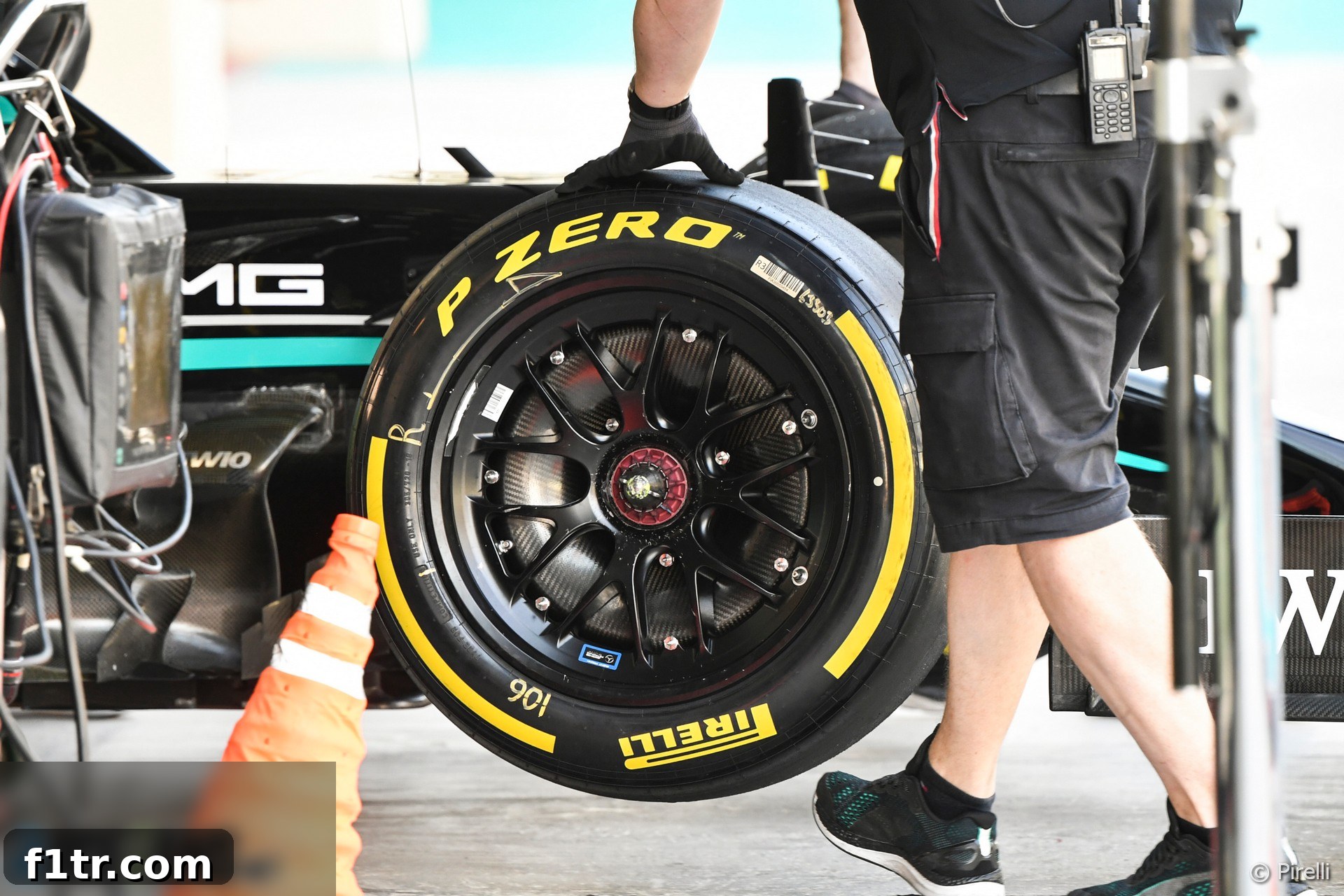
As the Formula 1 world braced for a seismic shift in regulations, Pirelli, the sport’s exclusive tyre supplier, revealed its critical compound selections for the highly anticipated opening rounds of the 2022 season. This year marks a pivotal moment with the introduction of entirely new technical rules and, most notably, the transition to larger 18-inch wheels, promising to reshape the dynamics of Grand Prix racing. Pirelli’s strategic choices aim to complement these changes, ensuring thrilling competition while pushing the boundaries of tyre technology.
The Italian manufacturer confirmed its tyre nominations for the initial three Grands Prix on the calendar, setting the stage for what is expected to be one of the most unpredictable seasons in recent memory. These selections are not merely technical specifications; they are a fundamental component of race strategy, performance, and the overall spectacle of Formula 1. With the new generation of cars and tyres designed to promote closer racing and reduce overheating, every compound choice carries significant weight.
The Dawn of a New Formula 1 Season: 18-inch Wheels and Revolutionary Regulations
The 2022 Formula 1 season ushered in a completely overhauled set of technical regulations, fundamentally altering car design and aerodynamics. Central to this transformation was the mandate for all teams to switch from the long-standing 13-inch wheels to new, lower-profile 18-inch wheels. This change, campaigned for by Pirelli and the FIA for several years, was not just aesthetic. It was engineered to significantly reduce tyre degradation and overheating, issues that frequently hampered drivers’ ability to follow closely and engage in sustained wheel-to-wheel battles. The objective was clear: to enhance the racing action by allowing drivers to push harder for longer, fostering more exciting overtakes and strategic diversity.
Pirelli’s challenge for 2022 was immense. They had to develop an entirely new range of compounds and constructions specifically for these 18-inch wheels, ensuring they met the rigorous demands of Formula 1’s highest performance cars while aligning with the sport’s new philosophical direction. The C1 through C5 nomenclature, representing the hardest to softest compounds, remained, but their characteristics were meticulously re-engineered. The selections for the opening races provide the first real-world glimpse into how these new tyres will perform under competitive pressure, offering crucial insights for teams and fans alike.
Bahrain Grand Prix: Kicking Off with the Hardest Compounds
The season opener at the Bahrain International Circuit was designated to host the official debut of these revolutionary tyres. For this demanding event, Pirelli opted for its hardest available combination: the C1 (hard), C2 (medium), and C3 (soft) compounds. This choice represents a deliberate step harder than the compounds Pirelli supplied for the 2021 Bahrain Grand Prix, signaling a cautious yet robust approach to the first competitive outing of the new era.
Bahrain International Circuit: A Grueling Test for Tyres
The Bahrain International Circuit is renowned for its high-abrasion asphalt, long straights, and heavy braking zones, making it particularly challenging for tyres. High track temperatures, often exacerbated by the desert environment, further stress the rubber, contributing to significant thermal degradation. The combination of these factors typically leads to multi-stop races, where tyre management becomes a cornerstone of strategy. By selecting the C1, C2, and C3 compounds, Pirelli aimed to provide a durable set of options that could withstand the circuit’s punishing nature, particularly important given the unknowns surrounding the new 18-inch wheels and car aerodynamics.
Strategic Implications of the C1, C2, C3 Choice
The selection of the harder compounds for Bahrain implies a focus on reliability and endurance. The C1 compound, being the hardest, offers maximum longevity but sacrifices outright grip, typically serving as a strategic option for longer stints. The C2, or medium, provides a balanced compromise between grip and durability, often becoming a versatile workhorse during the race. The C3, while designated as the ‘softest’ for this event, is still a relatively hard compound in Pirelli’s overall range, offering a performance advantage over short bursts, such as qualifying laps or initial race stints, but with higher degradation. This combination was expected to encourage varied pit stop strategies, pushing teams to understand the new tyres’ sweet spots and degradation rates rapidly, especially after the pre-season test held at the very same circuit just days prior to the race weekend.
Saudi Arabian Grand Prix: High-Speed Demands Met with Mid-Range Resilience
Following the desert challenge of Bahrain, Formula 1 headed to the lightning-fast Jeddah Corniche Circuit for the Saudi Arabian Grand Prix. For this unique venue, teams were allocated the C2 (hard), C3 (medium), and C4 (soft) compounds. This mirrors the compound selection used during the circuit’s inaugural race weekend in December of the previous year, suggesting Pirelli had gathered sufficient data to confidently replicate their choice for the 2022 event.
Jeddah Corniche Circuit: A Unique Challenge
The Jeddah Corniche Circuit is unlike any other on the F1 calendar. As a high-speed street circuit, it features a dizzying array of fast corners and minimal run-off areas, demanding extreme precision from drivers and exceptional aerodynamic performance from cars. Despite its street circuit classification, Jeddah’s asphalt is relatively smooth, which can lead to lower tyre wear compared to more abrasive tracks. However, the sustained high speeds and lateral G-forces generated through its sweeping bends still place considerable stress on the tyre structure. The 2021 race demonstrated the potential for significant incidents and safety car periods, which can profoundly impact tyre strategy.
Revisiting the C2, C3, C4 Selection
The C2, C3, C4 range for Jeddah is a step softer than Bahrain’s, reflecting the different characteristics of the circuit. The C4 compound, acting as the softest option, provides maximum grip for qualifying and early race pace, crucial for gaining track position on a circuit where overtaking can be tricky despite the high speeds. The C3 offers a robust medium option, capable of longer stints and providing strategic flexibility, especially if the race is interrupted by safety cars. The C2, as the hardest choice, serves as a durable backup, ideal for very long stints or reacting to unforeseen race developments. This combination aimed to balance outright performance with the resilience needed for a high-speed, demanding circuit, while still promoting strategic variety through the three distinct options.
Australian Grand Prix: An Unconventional Mix for a Revitalized Track
The return of the Australian Grand Prix to the heavily revised Albert Park circuit in Melbourne presented Pirelli with a unique scenario. For this highly anticipated event, Pirelli announced a distinctive compound choice: the C2 (hard), C3 (medium), and C5 (soft) compounds. This particular selection is noteworthy because it marks the first time since 2018 that Pirelli chose anything other than consecutive compounds for a race weekend, skipping the C4 compound entirely.
Albert Park’s Transformation and Pirelli’s Bold Choice
Albert Park underwent significant modifications ahead of the 2022 race. Several corners were widened, chicane sections were altered or removed, and the track was resurfaced. These changes were designed to promote more overtaking and improve race flow, effectively transforming the circuit into a faster, more flowing layout. The new surface and higher average speeds would inevitably change the demands on the tyres. Pirelli’s decision to jump directly from the C3 to the C5 as the softest compound for Melbourne was a bold move, reflecting their confidence in the new 18-inch tyres and a desire to maximize strategic opportunities on the revised track.
The Significance of the C5 Compound
The C5 is Pirelli’s softest compound, offering the highest level of grip but also the highest rate of degradation. Its inclusion as the ‘soft’ tyre for Albert Park suggests an expectation of aggressive strategies and potentially thrilling tyre cliff moments. The gap between the C3 (medium) and the C5 (softest) is substantial, creating a pronounced performance differential. This wide spread in compound characteristics was intended to open up a broader range of strategic options for teams, making one-stop, two-stop, or even aggressive three-stop races viable depending on race conditions and car performance. It also highlighted Pirelli’s commitment to injecting strategic variance and excitement into the racing, rather than simply providing a safe, consecutive range of compounds. The C2, as the hardest option, would provide a stable, long-lasting alternative, offering teams a durable baseline for their strategies while the C3 bridged the gap to the super-soft C5.
Pirelli’s Vision for 2022: Balancing Performance and Strategy
Pirelli’s tyre nominations for the initial races underscored their overarching philosophy for the 2022 season: to provide tyres that are robust enough to withstand the immense forces generated by new-generation Formula 1 cars, yet dynamic enough to facilitate diverse race strategies. The goal was to move away from tyres that were overly sensitive to temperature, which often forced drivers to manage their pace rather than attack. By developing more durable and less temperature-sensitive 18-inch tyres, Pirelli aimed to empower drivers to push closer to the limit for longer periods, leading to more sustained on-track battles and fewer strategic constraints dictated purely by tyre preservation.
Each selection for Bahrain, Saudi Arabia, and Australia was carefully considered, taking into account circuit characteristics, projected temperatures, and the unknown variables introduced by the new cars. The slight hardening of compounds for Bahrain, the consistent choice for Jeddah, and the unconventional skip for Australia all demonstrate Pirelli’s flexible and forward-thinking approach. They are not merely supplying rubber; they are actively shaping the racing landscape, striving to create a platform where genuine driver skill and strategic brilliance can shine.
The Impact of 18-inch Wheels on Formula 1
The switch to 18-inch wheels fundamentally alters the tyre’s profile, construction, and, crucially, its interaction with the car’s suspension and aerodynamics. The lower sidewall of the 18-inch tyre means less flex, leading to a more direct and precise steering feel for the drivers. This reduced sidewall deflection also translates to less energy being stored and released by the tyre itself, making the tyre’s contribution to the car’s overall suspension much smaller. This places a greater emphasis on the mechanical suspension components of the car to absorb bumps and manage loads, shifting the engineering challenge for teams.
From a performance perspective, the 18-inch tyres were designed with a key objective: to reduce the tendency for overheating when following other cars closely. In previous seasons, dirty air caused by a leading car would lead to significant aerodynamic turbulence, which in turn increased the temperature of the following car’s tyres, causing them to lose grip rapidly. The new tyre construction, combined with the revised aerodynamic regulations, was engineered to mitigate this effect, allowing drivers to stay closer to their rivals and mount more sustained attacks without immediately degrading their tyres. This change was central to Formula 1’s vision of creating a more engaging and accessible spectacle, moving away from “tyre management” races towards “tyre racing.”
Shaping the Race: How Tyre Choices Drive Grand Prix Strategy
The selection of tyre compounds is intrinsically linked to race strategy. A harder compound offers greater longevity, allowing for longer stints and fewer pit stops, but at the cost of outright pace. Conversely, a softer compound provides superior grip and faster lap times, but degrades more quickly, necessitating more frequent pit stops. The art of Formula 1 strategy lies in optimizing the trade-off between speed and durability, exploiting the characteristics of each compound to gain an advantage over rivals.
Pirelli’s compound choices, therefore, dictate the strategic playbook for each Grand Prix. When a wider range of performance exists between the available compounds, as seen with the C3-C5 jump in Australia, it encourages more aggressive and varied strategies. Some teams might opt for a single long stint on a harder compound, others for multiple short bursts on softer tyres. Safety car periods, weather changes, and competitive performance gaps between teams can further complicate these strategies, turning tyre management into a high-stakes chess match played out at 200 mph. The 2022 selections were a deliberate effort to empower this strategic diversity, aiming for races where tyre strategy is a key differentiator rather than a limiting factor.
Looking Ahead: The Evolution of F1 Tyre Performance in 2022
The initial three Grands Prix served as critical proving grounds for Pirelli’s new 18-inch tyre range. The data gathered from Bahrain, Saudi Arabia, and Australia provided invaluable insights for both Pirelli and the teams, allowing for continuous refinement and understanding of how these new tyres interact with the dramatically different 2022 cars. The move towards more robust, less temperature-sensitive tyres was expected to be a gradual evolution throughout the season, with Pirelli potentially adjusting compound allocations based on real-world performance and feedback. This adaptive approach ensures that Formula 1 can continue to push the boundaries of technology and sporting excitement, with Pirelli’s tyres at the heart of the action.