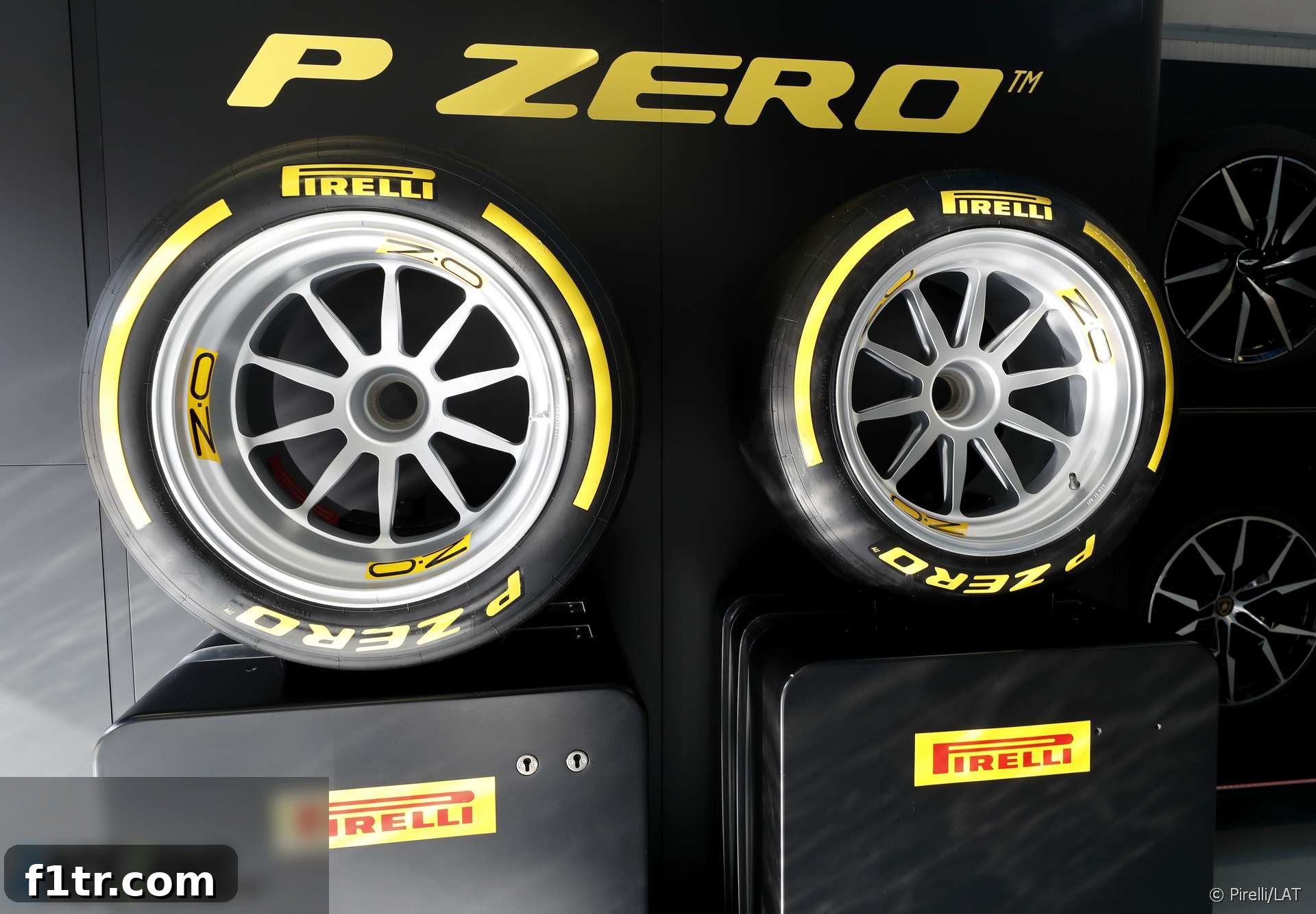
The world of Formula 1 is poised for a significant transformation, and a pivotal moment in this evolution occurred with Pirelli’s inaugural test of the much-anticipated 18-inch tyres. Slated for official introduction in the 2021 F1 season, these new larger wheels represent a radical departure from the long-standing 13-inch standard, promising to reshape both the aesthetic and dynamic characteristics of the sport. This crucial first test, conducted at the challenging Paul Ricard circuit, provided the initial real-world data for what will be an extensive development journey.
Advert | Become a Supporter & go ad-free
Chosen for this monumental task was former Williams racer and current Renault test driver, Sergey Sirotkin. His experience and precise feedback were invaluable as he steered a modified Renault mule car, specially adapted to accommodate the larger wheels, through its paces. The implications of this change extend far beyond a mere increase in wheel diameter; they touch every aspect of a Formula 1 car’s design, from suspension geometry to aerodynamic flow, making this initial testing phase absolutely critical.
A New Era Dawns: The Vision Behind F1’s 18-inch Tire Revolution
The transition to 18-inch tyres is more than just a regulatory tweak; it signifies a conscious effort by Formula 1 to embrace modernity and enhance its relevance to road car technology. For decades, F1 cars have sported relatively small 13-inch wheels, a characteristic that increasingly distanced the sport from contemporary automotive trends. The move to larger diameters aligns F1 with other prominent motorsport categories, such as Formula 2, and brings the visual appeal closer to high-performance road vehicles.
Beyond aesthetics, the technical rationale is profound. Larger wheels with lower-profile tires inherently possess stiffer sidewalls. This reduction in sidewall deflection changes how the tire interacts with the track and the car’s suspension system. Engineers anticipate a more direct and precise steering feel for drivers, potentially altering the driving style and car setup philosophy entirely. This shift promises to be a game-changer, demanding innovative solutions from teams and an adaptive approach from drivers, further intensifying the competitive landscape of F1.
Sirotkin Leads the Charge: Unveiling the Future at Paul Ricard
Sergey Sirotkin’s selection for this pioneering test was a testament to his technical acumen and ability to provide detailed feedback. Driving a modified Renault car, effectively a “mule” designed solely for tire development, Sirotkin’s objective was to explore the fundamental characteristics of the new 18-inch rubber. Pirelli motorsport director Mario Isola articulated the profound challenges and exciting unknowns of this pivotal moment, stating, “It is the real first test with 18 inches tyres in a modified car, a new car. So everything is new and there is a lot of question marks.”
This candid admission underscores the sheer scale of the engineering task at hand for Pirelli. Designing a completely new tire from the ground up, with radically different dimensions and load characteristics, is an immense undertaking. The interaction between the stiffer sidewall of the 18-inch tyre and the car’s suspension, brake cooling, and aerodynamic profiles needs to be thoroughly understood. Every parameter, from tire pressure to camber settings, will require re-evaluation and optimization. This initial test served as a crucial data-gathering exercise, laying the groundwork for subsequent development phases.
Isola further highlighted the strategic timing of these early trials: “But it’s important for us to start in September because at least we have time to react if we find any behaviour that was not predicted by our simulation.” This proactive approach is critical, allowing Pirelli to gather invaluable real-world data to refine its designs and simulations. Early identification of any unexpected behaviors or performance anomalies provides a vital window for adjustment, ensuring the tires meet the stringent demands of Formula 1 racing by their 2021 debut, both in terms of performance and safety.
Prioritizing the Foundation: Focusing on Tire Construction
The primary focus of this initial test, as explained by Isola, revolved around the fundamental “construction” of the tire. “The main work will be on construction,” he affirmed. “We start with a compound that is a baseline, something that we know because the first step is to define the construction.” This systematic methodology is crucial. Before fine-tuning rubber compounds for specific performance characteristics like grip or durability, Pirelli must first establish a robust and reliable internal structure. This construction must be capable of handling the immense forces generated by F1 cars – acceleration, braking, and cornering loads – while maintaining its integrity and desired shape.
Tire construction involves the arrangement of various layers of materials, including textile cords, steel belts, and rubber compounds, all meticulously engineered to provide specific attributes. With the shift to 18-inch wheels, the sidewall height is significantly reduced, meaning the tire’s internal structure must provide greater lateral stiffness. This change has direct implications for the car’s handling characteristics, particularly during cornering, where the tire’s ability to resist deformation is paramount. Pirelli’s objective is to find a construction that offers the optimal balance of stiffness, compliance, and durability, acting as the stable foundation upon which different rubber compounds can then be applied and evaluated.
Isola elaborated on this iterative process: “We cannot define the construction in one test but we start from a construction that is a known baseline. We have some variants of the construction to test at the same test.” This suggests a series of prototypes, each with subtle variations in their internal makeup, being evaluated against a known reference point. The objective is to understand how different construction methods influence the tire’s overall integrity, temperature management, and how it interacts with the car’s suspension system. This methodical approach minimizes variables and allows Pirelli to isolate and analyze the performance of each construction variant with precision.
Navigating the Unknown: Performance Expectations and Challenges
Given the unprecedented nature of this test, Pirelli acknowledged that the initial running might be limited compared to typical development sessions. “It’s difficult to predict and we have no idea how many kilometres we will be able to achieve because it’s the first test,” Isola admitted. He contrasted this with their usual targets: “Usually we target 600, 650 kilometres per day on a normal 13 inches test. It is probably that for the first test on 18 inches will be less.” This cautious approach is understandable; during foundational tests, the priority shifts from sheer mileage to meticulously gathering data, assessing safety, and understanding the tire’s basic behavior. Every lap is a learning opportunity, meticulously monitored for temperature, pressure, wear, and driver feedback.
The reduced mileage expectation also highlights the inherent complexities of introducing such a significant change. Tire engineers and car designers alike are navigating uncharted territory. Unexpected issues, such as unusual wear patterns, unexpected degradation, or unforeseen interactions with the car’s aerodynamics, could necessitate longer pit stops for detailed inspections or even early termination of runs. The initial phase is less about outright performance and more about establishing a reliable operating window and identifying any fundamental design flaws that need to be addressed before moving on to more aggressive performance testing.
Dual Development: Pirelli’s Ongoing Commitment to F1
While the focus understandably gravitates towards the future with the 18-inch tyres, Pirelli’s commitment to the present F1 season remains undiminished. In parallel with the Paul Ricard outing, Pirelli was also performing its last in-season development test on the current 13-inch rubber with Mercedes. This dual development pathway underscores the immense workload and resources required for Formula 1’s sole tire supplier. Managing two distinct development programs – one for the existing regulations and another for a radically different future – demands extraordinary logistical and engineering prowess.
This parallel effort is crucial. The ongoing 13-inch tire development allows Pirelli to continue improving its current product, responding to team feedback and ensuring optimal performance and safety for the prevailing regulations. Simultaneously, the 18-inch project runs full steam ahead, absorbing vast amounts of research and development capacity. It’s a testament to Pirelli’s dedication to Formula 1 that they are able to juggle these demanding requirements, striving for excellence in both the present and the future of the sport.
Transforming the F1 Aesthetic and Driving Experience
The shift to 18-inch wheels will undoubtedly transform the visual identity of Formula 1 cars. The larger diameter and lower profile will lend the cars a more modern, aggressive, and aesthetically pleasing appearance, akin to high-performance road cars. This visual upgrade is expected to resonate well with fans, enhancing the contemporary appeal of the sport. From a technical standpoint, the reduced sidewall flex will also alter the aerodynamic characteristics around the wheels, necessitating adjustments to front wing and brake duct designs to optimize airflow.
For the drivers, adapting to the new tires will be a significant challenge. The reduced sidewall will transmit more direct feedback from the road surface, potentially making the cars feel more responsive but also more sensitive to setup changes. Drivers will need to fine-tune their driving styles, understanding the new grip limits, degradation characteristics, and overall feel of the tires. The interaction between the tire, suspension, and aerodynamics will create a completely new dynamic, requiring extensive simulator work and track testing to master. The goal is not just to have faster cars, but also to create a more engaging and challenging driving experience.
A Glimpse into the Future: Pirelli’s Legacy and Innovation
This initial 18-inch tire test at Paul Ricard serves as a powerful symbol of Formula 1’s continuous quest for innovation and evolution. Pirelli, as the sport’s exclusive tire supplier, stands at the forefront of this technological leap. Their meticulous approach, beginning with fundamental construction and gradually progressing to compound development, highlights the scientific rigor required to produce tires capable of performing at the pinnacle of motorsport.
The journey to the 2021 season will be marked by many more tests, countless hours of simulation, and invaluable feedback from drivers and teams. Ultimately, these 18-inch tyres are set to be a cornerstone of a new regulatory era, complementing upcoming aerodynamic and technical changes designed to promote closer racing and greater sustainability. This first step with Sergey Sirotkin and Renault was not just a test; it was the opening chapter in an exciting new volume for Formula 1, promising a future that is both visually striking and technically exhilarating.
A new era of @F1 begins. @sirotkin_sergey @RenaultF1Team begin the very first lap of #F1testing @PaulRicardTrack with 18-inch #Fit4F1 #Pirelli #PZero #F1 tyres 🇫🇷 pic.twitter.com/3JWh6Aq0wZ
— Pirelli Motorsport (@pirellisport) September 12, 2019
Advert | Become a RaceFans supporter andgo ad-free
2019 F1 Season Insights
- Crying in the Melbourne car park at 2019 grand prix was my career low – Ocon
- McLaren Racing reports reduced £71 million loss in 2019
- Kvyat: Hockenheim podium last year was “my biggest achievement” so far
- How the FIA’s new encrypted fuel flow meter targets Ferrari’s suspected ‘aliasing’ trick
- “He smashed my office door”: 23 must-see moments from ‘Drive to Survive’ season two
Browse all 2019 F1 season articles