Pirelli Revamps F1 Tyre Strategy for 2019 Season: Introducing a Simpler Numerical System
As the Formula 1 landscape continually evolves, Pirelli, the sport’s exclusive tyre supplier, is implementing a significant overhaul of its tyre compound strategy for the 2019 F1 season. In a move designed to enhance clarity for both teams and fans, the Italian manufacturer will transition from descriptive names like ‘hyper-soft’ to a streamlined numerical system. Furthermore, Pirelli aims to reduce the overall number of available slick compounds, signaling a more focused approach to tyre development and race strategy.
Advert | Become a Supporter & go ad-free
Simplifying the Compound Chaos: Why Numbers Replace Names
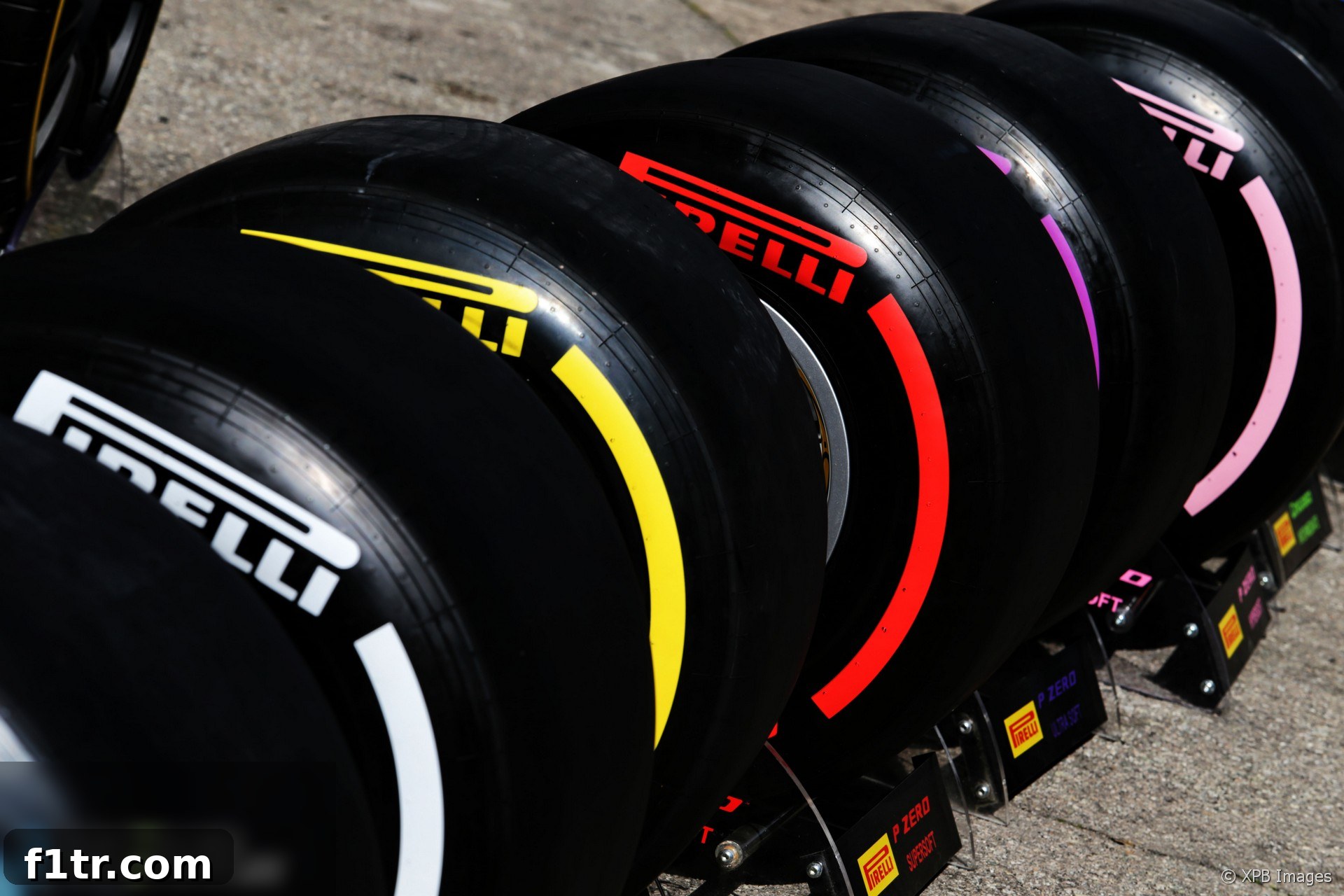
The 2018 Formula 1 season saw Pirelli introduce seven distinct slick tyre compounds, each bearing a unique, descriptive name ranging from ‘super-hard’ to ‘hyper-soft’. While this diverse range aimed to offer a spectrum of performance characteristics, it inadvertently led to confusion for many observers. With only three compounds selected and colored for each race weekend (hard/white, medium/yellow, soft/red), the connection between the race-specific color and the underlying technical compound name often became muddled.
For instance, what might be designated the ‘soft’ tyre in one race could be the ‘ultra-soft’ or ‘super-soft’ compound in technical terms, depending on the circuit’s demands. This created a disconnect, making it challenging for casual fans to track the nuances of tyre strategy throughout a Grand Prix. Recognising this complexity, Pirelli has opted for a far more straightforward approach for 2019, one that prioritises universal understanding without compromising the technical integrity required by the teams.
The New Designation: Clarity for Teams and Fans
Under the new system, Pirelli will refer to its various compounds by simple numbers. As Pirelli Motorsport Director Mario Isola explained in response to questions from RaceFans, “We call them one, two, three, four, five. One is the hardest and five is the softest. If we have six then six will be the softest.” This systematic numbering provides an unambiguous hierarchy, making it instantly clear which compound is harder or softer relative to the others.
For each Grand Prix weekend, the three chosen compounds will still carry the familiar white (hard), yellow (medium), and red (soft) sidewall markings for visual identification during the race. However, behind the scenes, and for team strategy discussions, the compounds will be identified by their numerical designation. “We’ll inform the teams [using] ‘compound one, compound two, compound three…’ and we’ll tell them not hard, medium, soft that will be white, yellow, red, but we’ll give them the numbers,” Isola elaborated. This dual approach ensures immediate visual recognition for fans while providing teams with precise, unambiguous technical references for their strategic planning.
Strategic Shift: Reducing the Tyre Range
Beyond simplifying designations, Pirelli is also keen to streamline its overall product offering. The 2018 season featured seven distinct slick compounds, but not all were equally utilised. Notably, the ‘super-hard’ compound was never nominated for any race, while the ‘hard’ compound only made an appearance at the British Grand Prix at Silverstone. This indicates that some compounds fell outside the optimal performance window or proved too conservative for the demands of modern F1 racing.
For the 2019 season, Pirelli aims to reduce its range to five slick compounds. This reduction is not merely about simplification; it reflects a desire to provide a more refined and relevant set of options that truly cater to the varied circuits on the F1 calendar. By focusing on a tighter range of five (or potentially six, pending testing results), Pirelli can concentrate its development efforts, ensuring each compound is finely tuned for performance, durability, and consistency. This also simplifies manufacturing and logistics for the sole supplier.
The Pivotal Yas Marina Test: Fine-Tuning the 2019 Selection
The crucial step in finalising the 2019 tyre lineup will take place during next week’s two-day test at the Yas Marina Circuit in Abu Dhabi. Pirelli intends to offer teams six compounds for evaluation during this critical post-season session. This extensive testing period allows teams to gather invaluable data on the characteristics and performance nuances of each potential compound, providing direct feedback to Pirelli before the final homologation process.
The insights gained from this test will be instrumental in Pirelli’s decision-making process. “The test will be important to understand if we can reduce by one compound,” Isola stated, highlighting the ambition to settle on a definitive range of five. “Ideally we want to homologate five but we have six available. Probably one of the six is going to disappear. But we will inform the teams so they know exactly what is going to happen.” This transparent approach ensures teams are fully aware of the tyre choices well in advance, allowing them to better prepare their car designs and strategies for the upcoming season.
Impact on Teams and Race Strategy
The shift to a numerical system and a reduced compound range carries significant implications for Formula 1 teams. A simplified, consistent designation system removes any potential ambiguity, allowing engineers and strategists to communicate with absolute clarity about tyre choices. This is crucial during high-pressure race weekends where split-second decisions can alter outcomes.
From a strategic standpoint, a more focused range of five compounds means teams will have a clearer understanding of the performance window and degradation characteristics across the available options. While it might slightly limit extreme strategic variations, it fosters a deeper understanding of the selected compounds, potentially leading to more predictable yet intensely competitive race strategies. Teams can dedicate more resources to optimising car setup and driver feedback for a known, refined set of tyres, rather than contending with a wider, less utilised array. This could encourage closer racing as teams push the limits of fewer, better-understood compounds.
The Evolution of F1 Tyre Management
Tyre management remains a cornerstone of success in modern Formula 1. Pirelli’s role as the sole tyre supplier means they must balance the demands for durable tyres that last a full stint with the desire for tyres that degrade enough to promote strategic variation and exciting racing. The 2019 changes reflect an ongoing effort to strike this delicate balance. By providing a clearer, more predictable range, Pirelli aims to empower teams to extract maximum performance while still requiring skilful management from drivers.
The feedback from teams during testing will be paramount, as their experience on various circuits with different car philosophies helps Pirelli fine-tune the final selection. The goal is to ensure that the chosen compounds are versatile enough to perform effectively across the diverse circuit characteristics of the F1 calendar, from high-speed tracks like Silverstone to street circuits such as Monaco, without being either overly conservative or excessively fragile.
Advert | Become a RaceFans supporter andgo ad-free
Enhancing the Fan Experience
Perhaps one of the most significant beneficiaries of these changes will be the Formula 1 fanbase. The previous system, while technically comprehensive, often proved opaque for viewers trying to follow race strategies. Explaining the difference between an ‘ultra-soft’ at one race and a ‘super-soft’ at another, when both were coloured yellow (medium), required a level of intricate knowledge that many casual viewers simply didn’t possess.
With the new numerical system for technical identification and the consistent ‘hard, medium, soft’ labels for race weekends, the strategic narrative of a Grand Prix becomes far more accessible. Fans will easily understand that a ‘hard’ (white) tyre is always the most durable option chosen for that specific race, while the ‘soft’ (red) offers the most outright pace but greater degradation. This clarity is vital for attracting and retaining viewership, making the complex world of F1 strategy more engaging and digestible for everyone.
Looking Ahead: The 2019 F1 Season and Beyond
The 2019 Formula 1 season promises to be an exciting chapter, not least due to these fundamental changes in tyre strategy. Pirelli’s commitment to simplifying its offerings and enhancing clarity underscores its dedication to supporting the sport’s evolution. By refining the tyre selection process and adopting a more intuitive designation system, Pirelli aims to contribute to more understandable and strategically compelling races.
As teams prepare their new challengers for the upcoming season, the knowledge that they will be working with a clearer, more consistent range of tyres will undoubtedly influence their design philosophies and pre-season testing programmes. The Yas Marina test results will set the stage, and motorsport enthusiasts worldwide will eagerly anticipate how these tyre changes will unfold and impact the fierce competition on track during the 2019 F1 season, marking a significant step towards a more transparent and strategically engaging era of Formula 1 racing.
2019 F1 season
- Crying in the Melbourne car park at 2019 grand prix was my career low – Ocon
- McLaren Racing reports reduced £71 million loss in 2019
- Kvyat: Hockenheim podium last year was “my biggest achievement” so far
- How the FIA’s new encrypted fuel flow meter targets Ferrari’s suspected ‘aliasing’ trick
- “He smashed my office door”: 23 must-see moments from ‘Drive to Survive’ season two
Browse all 2019 F1 season articles