F1 Pre-Season Testing 2020: Day Two Morning Unveils Pace, Innovation, and Intrigue at Circuit de Catalunya
The second day of Formula 1 pre-season testing at the iconic Circuit de Catalunya in Barcelona delivered a captivating morning session, with Sergio Perez of Racing Point and Daniel Ricciardo from Renault setting the pace. As teams continued to gather crucial data ahead of the 2020 F1 season, the session offered tantalizing glimpses of potential performance, intriguing technical innovations, and the enduring challenges of preparing for a new championship campaign.
Pre-season testing is a critical period for all ten Formula 1 teams, serving as the sole opportunity to fine-tune their new challengers before the lights go out for the first Grand Prix. While headline lap times often grab attention, the primary focus remains on reliability, understanding the car’s behaviour, and validating simulation data. Teams meticulously manage their testing programmes, rotating drivers, experimenting with different setups, and running a variety of tyre compounds to optimize their packages. The Circuit de Catalunya, with its mix of high-speed corners and a technical final sector, provides an excellent barometer for a car’s overall performance.
Perez and Racing Point Emerge as Morning Leaders
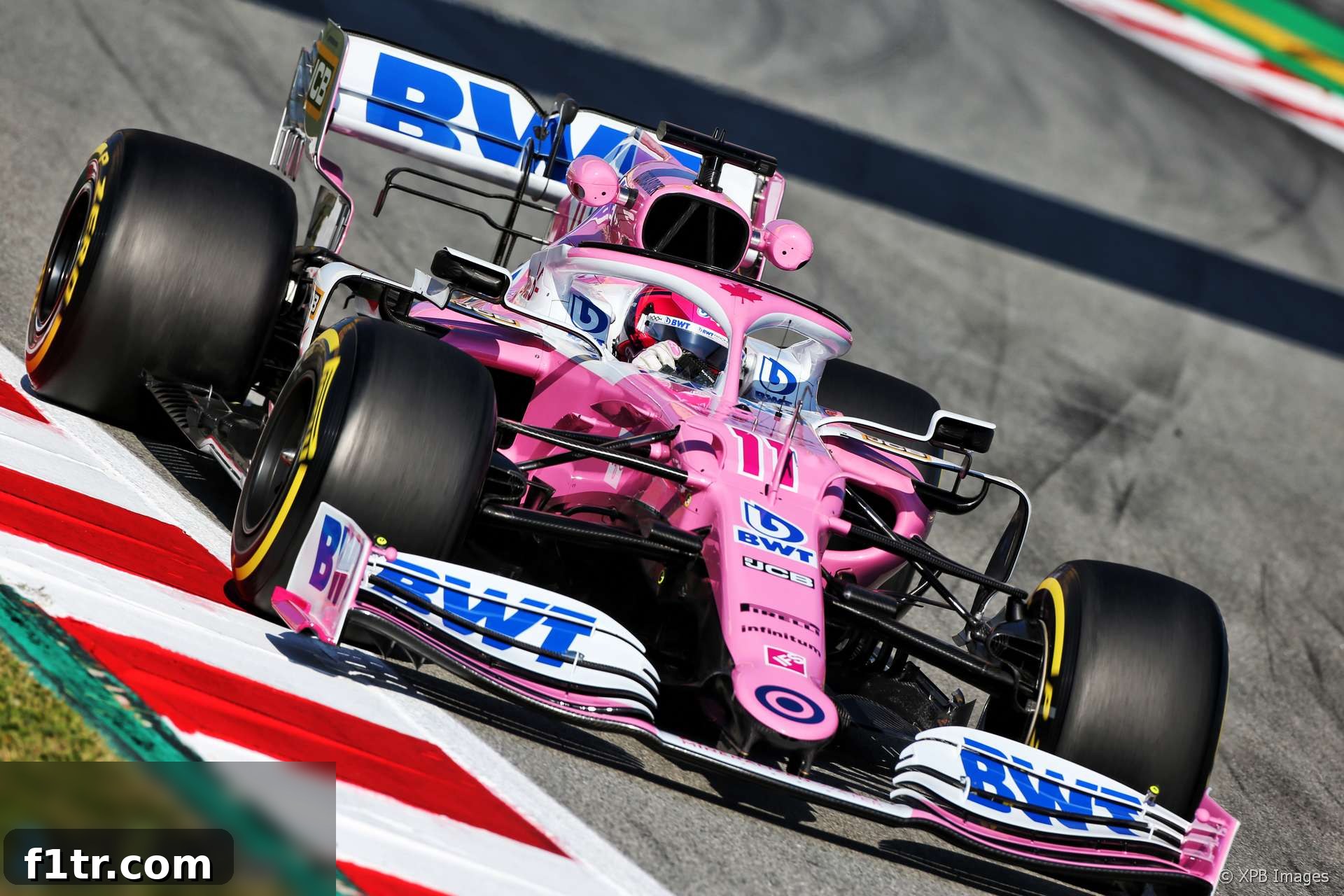
Sergio Perez, behind the wheel of the Racing Point RP20, emerged as the fastest driver of the morning session, posting an impressive 1’17.347. This time not only put the Silverstone-based squad at the top of the leaderboard but also underscored the potential of their new machine. The RP20, often dubbed the “Pink Mercedes” due to its striking resemblance to last year’s championship-winning W10, showed significant promise, fractionally outperforming its predecessor from the 2019 pre-season tests. This performance immediately fueled speculation about Racing Point’s prospects for the upcoming season, suggesting they could be strong contenders in the fiercely competitive midfield battle. Perez completed a solid 48 laps, demonstrating both outright pace and the car’s early reliability.
Close behind Perez, Daniel Ricciardo guided his Renault RS20 to the second-quickest time with a 1’17.749. This strong showing for the French manufacturer was a welcome sign, as Renault aims to close the gap to the front-runners and re-establish itself as a consistent points-scorer. Ricciardo’s performance, coupled with a respectable 41 laps, indicated that the RS20 is a step forward in terms of pace compared to its predecessors. For both Racing Point and Renault, these early results offered a morale boost, setting a positive tone for their development throughout the remaining test days.
Mercedes’ DAS System: A Game-Changer?
While the top two lap times caught the eye, it was Mercedes’ innovative Dual-Axis Steering (DAS) system that truly dominated the headlines and ignited widespread debate in the paddock. Lewis Hamilton, the busiest driver of the morning with a mammoth 106 laps in his Mercedes W11 – more than Perez and Ricciardo combined – was observed manipulating his steering wheel in a peculiar fashion. Onboard video footage clearly showed Hamilton pulling his steering wheel towards himself on straights, seemingly adjusting the toe angle of the front wheels, and then pushing it back into its original position before braking zones. This novel mechanism instantly sparked curiosity and speculation among rival teams and fans alike.
The DAS system, seemingly designed to adjust the front wheel toe angle, could offer significant advantages. By changing the toe-in or toe-out setting, drivers might be able to optimize tyre temperature and wear, particularly on long straights or during critical moments of a race. This could lead to better tyre management, reduced degradation, and potentially higher straight-line speeds, depending on the setup. Mercedes later confirmed the existence of the system, stating it was a “new idea” that had been fully vetted with the FIA. The legality of DAS became an immediate talking point, with many questioning whether it adhered to the technical regulations concerning steering systems. Regardless of its long-term fate, Mercedes once again showcased its unparalleled engineering prowess, pushing the boundaries of what’s possible within the regulations and sending a clear message to its competitors about its relentless pursuit of performance.
Red Bull, AlphaTauri, and Ferrari’s Divergent Approaches
Elsewhere on the track, other teams continued their crucial development work. Alexander Albon had his first taste of the new Red Bull RB16, completing 59 laps. For Albon, who joined Red Bull mid-season in 2019, these testing days were vital for him to get comfortable with the intricacies of the new car and fully integrate himself into the team’s testing programme. Red Bull, known for its strategic and often understated approach to testing, typically doesn’t chase headline lap times until later in the pre-season, focusing instead on understanding the car’s aerodynamic characteristics and reliability. Albon’s consistent lap count suggested a productive morning of data collection.
Pierre Gasly, driving for the newly rebranded AlphaTauri team (formerly Toro Rosso), put in a strong performance despite an early spin. Just seven minutes into the session, Gasly momentarily lost control at Turn 9 while running with a large aerodynamic rake on his AT01, an instrument used to collect airflow data. However, the Frenchman quickly recovered, demonstrating impressive resilience and productivity by completing 77 laps – more than a race distance – and posting the fourth-quickest time of the morning. This strong showing for AlphaTauri, combined with Gasly’s determined recovery, hinted at a promising start for the sister team to Red Bull, eager to make its mark under its new identity.
In contrast to the outright pace displayed by some teams, Ferrari’s approach remained noticeably conservative. Charles Leclerc, who took over driving duties from Sebastian Vettel, posted the sixth-fastest time and completed only 49 laps. This relatively low lap count, especially when compared to Hamilton’s extensive running, aligned with Leclerc’s previous statements that Ferrari was not prioritizing performance runs at the start of testing. The Scuderia often chooses to focus on long runs, reliability checks, and exploring various setup configurations before unleashing the full potential of their SF1000. This cautious methodology, while not yielding immediate top times, aims to build a solid foundation for the car’s development, ensuring robust performance throughout the long season. Their true pace, therefore, remained an intriguing question mark.
Midfield Battle Heats Up: Williams, Haas, and Alfa Romeo
The morning session also saw other midfield contenders making significant progress. George Russell continued to impress for Williams, completing 71 productive laps in the FW43 and recording the fifth-fastest time. After a challenging 2019 season where the team struggled for pace and missed early testing, Williams was keen to demonstrate a return to form and reliability. Russell’s consistent running and relatively strong lap time offered a glimmer of hope for the storied British team, suggesting they might be in a better position to compete in the midfield this year. For Russell, these test days are crucial to further hone his skills and provide vital feedback for the team’s engineering efforts.
Romain Grosjean logged an impressive 87 laps for Haas in the VF-20, focusing on gathering data and understanding the new car. Haas, like many midfield teams, needs to maximize track time to ensure their package is competitive enough to score points consistently. Kimi Raikkonen also added 65 laps for Alfa Romeo in the C39, showcasing the Swiss team’s determination to build on their previous season’s performance. McLaren, with Lando Norris at the wheel of the MCL35, completed 48 laps, making solid progress as they aim to consolidate their position as a leading midfield team. The close proximity of lap times among these teams underlined the intense competition expected in the midfield for the 2020 F1 season.
Interpreting the Data: Beyond the Stopwatch
It’s crucial to remember that pre-season lap times are notoriously difficult to interpret and are rarely a true reflection of the pecking order. Teams run varying fuel loads, engine modes, and tyre compounds (from the hardest C1 to the softest C5) to achieve different objectives. A quick lap time on a soft compound tyre with low fuel might look impressive, but a slower time on a harder compound with high fuel could indicate excellent long-run pace or reliability. Nevertheless, the early pace from Racing Point and the innovative DAS system from Mercedes provided much food for thought as the F1 community looked forward to the remainder of the testing schedule. The morning session of Day 2 offered a compelling blend of raw speed, technical ingenuity, and strategic plays, setting the stage for an intriguing 2020 Formula 1 season.
2020 F1 Testing Day Two Morning Lap Times
| Pos. | Car number | Driver | Team | Model | Best time | Gap | Laps | Tyres |
|---|---|---|---|---|---|---|---|---|
| 1 | 11 | Sergio Perez | Racing Point | RP19 | 1’17.347 | 48 | C3 | |
| 2 | 3 | Daniel Ricciardo | Renault | RS20 | 1’17.749 | 0.402 | 41 | C3 |
| 3 | 10 | Alexander Albon | Red Bull | RB16 | 1’18.155 | 0.808 | 59 | C2 |
| 4 | 10 | Pierre Gasly | AlphaTauri | AT01 | 1’18.165 | 0.818 | 77 | C3 |
| 5 | 63 | George Russell | Williams | FW43 | 1’18.266 | 0.919 | 71 | C3 |
| 6 | 16 | Charles Leclerc | Ferrari | SF1000 | 1’18.335 | 0.988 | 49 | C3 |
| 7 | 44 | Lewis Hamilton | Mercedes | W11 | 1’18.387 | 1.040 | 106 | C1 |
| 8 | 8 | Romain Grosjean | Haas | VF-20 | 1’18.496 | 1.149 | 87 | C3 |
| 9 | 7 | Kimi Raikkonen | Alfa Romeo | C39 | 1’18.525 | 1.178 | 65 | C3 |
| 10 | 4 | Lando Norris | McLaren | MCL35 | 1’18.537 | 1.190 | 48 | C2 |
2020 F1 season
- Grosjean to make F1 test return tomorrow for first time since Bahrain horror crash
- Pictures: Wrecked chassis from Grosjean’s Bahrain fireball crash to go on display
- Bottas vs Rosberg: Hamilton’s Mercedes team mates compared after 78 races each
- F1 revenues fell by $877 million in Covid-struck 2020 season
- Hamilton and Mercedes finally announce new deal for 2021 season
Browse all 2020 F1 season articles