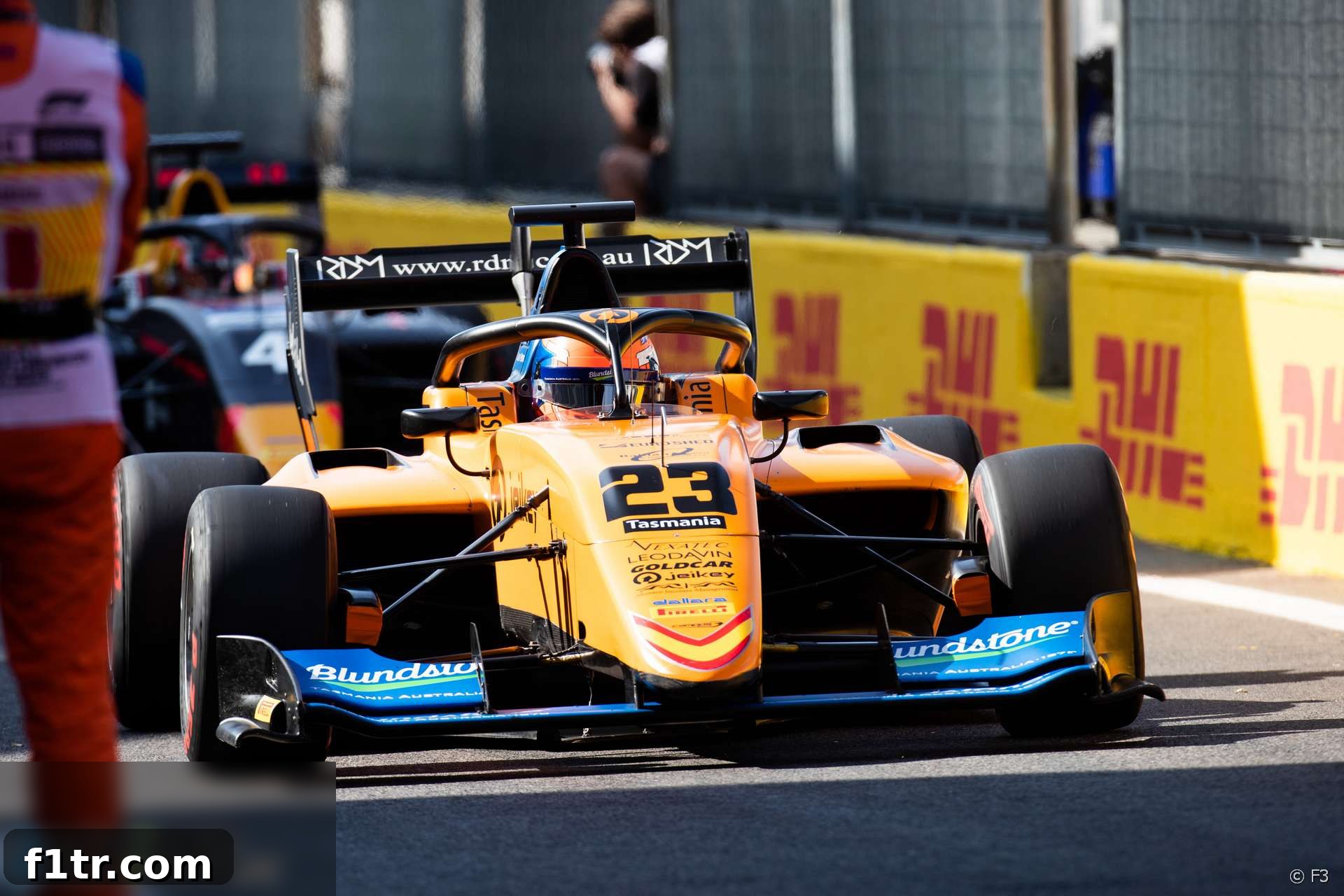
Pierre Gasly, a prominent figure in Formula 1 and a driver for Toro Rosso at the time, made a pivotal statement regarding the indispensable nature of the Halo head protection device. His comments came in the wake of a truly terrifying crash involving Formula 3 driver Alex Peroni at Monza, an incident that sent shockwaves through the motorsport community and unequivocally highlighted the critical advancements in driver safety.
Historically, Gasly had been among the many drivers who voiced skepticism about the Halo. Introduced to Formula 1 in 2018 and subsequently incorporated into the new Formula 3 chassis for the 2019 season, the head safety structure initially faced resistance from various quarters, including some drivers and fans concerned about its aesthetic impact and potential obstruction of visibility. However, the sheer brutality of Peroni’s accident served as a stark reminder of why such protective measures are not just desirable, but absolutely essential for safeguarding lives in high-speed racing environments.
From Skepticism to Advocacy: Gasly’s Profound Shift on Halo Safety
“I must say I’ve never been a fan of the Halo,” Gasly admitted candidly in response to an inquiry from RaceFans. This sentiment echoed a common refrain heard across the paddocks when the device was first mandated. Many argued that it detracted from the traditional open-cockpit ethos of single-seater racing. Yet, the vivid, horrifying images of Peroni’s car being launched violently into the air were powerful enough to fundamentally alter Gasly’s perspective. “Looking at these images I think it’s clearly a good reason to have it.” His statement underscored a profound shift from a position of doubt to one of clear and emphatic advocacy for the device.
The core of the Halo’s justification lies in its ability to prevent catastrophic head injuries, which have historically been among the most devastating in motorsport. While the exact outcome without the Halo in Peroni’s specific crash remains a hypothetical, Gasly articulated a truth that resonates deeply within the sport’s safety discussions: “I don’t know, we will never know what would have happened without it but we don’t want to imagine.” This sentiment reflects a collective sigh of relief and a growing recognition that the Halo, despite its initial criticisms, has proven to be a vital layer of protection, potentially averting far worse consequences in high-speed impacts and vehicle intrusions.
Advert | Become a Supporter & go ad-free
The Horrific Incident: Alex Peroni’s Crash and Its Immediate Aftermath
Alex Peroni’s terrifying incident occurred during the FIA Formula 3 Championship race at the iconic Autodromo Nazionale Monza, a circuit renowned for its high-speed sections. The young Australian driver suffered a fractured vertebra and concussion, injuries that, while undoubtedly serious and career-threatening, could have been immeasurably worse given the sheer violence of the impact. He was promptly transported to a local hospital, San Gerardo, for urgent medical attention and evaluation, initiating a period of recovery that would remove him from competition for an extended duration. The severity of the crash immediately prompted concerns not just for Peroni’s personal well-being, but for the inherent safety aspects of the circuit itself and the design elements causing such an alarming outcome.
“I saw the big crash and it was really shocking,” Gasly recounted, expressing the visceral reaction shared by many who witnessed the incident unfold live or through replays. “I didn’t see the beginning of the action, I just saw once he was in the air and then the guys explained a bit how it happened.” The sight of a racing car becoming airborne at high speed, completely out of control, is always disturbing, but the specific circumstances surrounding Peroni’s crash were particularly alarming. His car was launched violently upwards after making contact with a “sausage kerb” positioned at the exit of the challenging Parabolica corner, sending it spiraling into the catch fencing at an extreme angle, narrowly avoiding a direct impact with the barrier posts.
The immediate aftermath of such an event always brings a wave of relief when a driver emerges relatively unscathed, yet it simultaneously ignites a critical examination of preventative measures. “It’s just crazy, especially after what happened yesterday,” Gasly continued, likely referencing the tragic passing of Anthoine Hubert the previous day in a Formula 2 race at Spa-Francorchamps, an event that had already cast a deep, somber shadow over the motorsport world. “It’s always horrible to see images like this and I’m glad Peroni seemed to be fine after that. But it’s clearly something they need to change because we can’t have these kind of accidents.” Gasly’s forceful call for change underscored a widespread belief that the incident was preventable and demanded immediate attention from governing bodies and track officials, particularly concerning track design elements.
The Sausage Kerb Controversy: A Hidden Danger Exposed
The root cause of Peroni’s dramatic launch was unequivocally identified as the aggressive sausage kerb. These elevated kerbs are intentionally placed at track limits to deter drivers from gaining an unfair advantage by running wide, effectively acting as a physical deterrent. While often successful in policing track limits, they can become treacherous obstacles if struck at an awkward angle or at high speed, particularly for open-wheel cars with their delicate suspension components and low ground clearance. “There are a couple of these kerbs on other tracks as well,” Gasly observed, highlighting a systemic issue that extends beyond the confines of Monza. “For some reasons we’ve never had this kind of accident before. It was really strange but really scary at the same time.” This incident served as a wake-up call, revealing a potential flaw in a widely used track design feature.
The unique geometry of Peroni’s car striking the kerb, combined with the immense speed carried through the high-g Parabolica, created a ramp-like effect, propelling the vehicle into an uncontrolled flight path. Gasly, still piecing together the full details from initial reports, emphasized the absurdity and inherent danger of the situation: “I still didn’t see the full crash and I’d like to see it properly to understand it. For me it’s quite insane to just take off that high, just with a kerb. Hopefully they make sure this never happens again.” His words resonate with the urgency for the FIA (Fédération Internationale de l’Automobile) and circuit designers to meticulously review track configurations, particularly the design, height, and placement of kerbs, to prevent similar catastrophic incidents in the future. The delicate balance between enforcing track limits for sporting fairness and ensuring driver safety is a constant challenge, and Peroni’s crash served as a brutal illustration of how quickly that balance can be disrupted, demanding a comprehensive re-evaluation.
Peroni’s Recovery and the Long Road Ahead for the F3 Driver
Following the harrowing crash, Alex Peroni received intensive medical care at San Gerardo hospital. His D6 vertebra was the primary focus of examination, as doctors assessed multiple fractures to determine the necessity of surgical intervention. Spinal injuries are among the most debilitating and complex in motorsport, often requiring extensive rehabilitation and potentially threatening a driver’s long-term career prospects. The initial diagnosis of a fractured vertebra, coupled with a concussion, meant a significant period away from racing, emphasizing the severe physical toll such an accident can take on an athlete. Peroni’s treatment and subsequent recovery journey continued for many months, with medical staff diligently monitoring his condition and planning the optimal course for his return to full health, underscoring the long and arduous journey back to competition for any athlete involved in such a high-impact incident.
The Broader Implications for Motorsport Safety and Track Design
Alex Peroni’s crash at Monza transcended a single incident; it became a poignant case study in the ongoing evolution of motorsport safety. Pierre Gasly’s transformation from Halo skeptic to staunch advocate perfectly encapsulates the paradigm shift in perception that often follows a near-tragedy or a severe incident. The FIA and governing bodies are under continuous pressure to innovate and implement stricter safety protocols, ranging from advanced driver protection devices like the Halo and HANS (Head and Neck Support) to crucial track design elements such as meticulously engineered run-off areas and robust barrier systems. The intense discussion around aggressive sausage kerbs, ignited by Peroni’s crash, significantly intensified the debate on whether certain track features, while intended to improve sporting fairness and enforce track limits, inadvertently introduce new, unacceptable risks to driver well-being. The ultimate goal remains to create an environment where the thrill and excitement of racing can be pursued with the highest possible degree of safety, ensuring that drivers are protected even in the most unforeseen and violent circumstances, continually pushing the boundaries of what is considered safe in high-performance motorsport.
Advert | Become a RaceFans supporter andgo ad-free
Related Articles: Exploring the 2019 F1 Season and Beyond
- Esteban Ocon’s Emotional Struggles: A Look Back at His 2019 Melbourne Grand Prix Experience
- McLaren Racing’s Financial Performance: Analyzing Their £71 Million Loss in 2019
- Daniil Kvyat’s Career Highlight: Reflecting on His Hockenheim Podium in 2019
- FIA’s Technical Response: How the New Encrypted Fuel Flow Meter Addressed Suspected Irregularities in 2019
- Beyond the Track: Unforgettable Moments from ‘Drive to Survive’ Season Two Featuring 2019 F1 Drama
Browse all 2019 F1 season articles for more insights