Decoding Formula 1’s 2026 Regulations: A New Era of Hybrid Power and Driver Challenge
Formula 1 is on the cusp of another monumental shift with the introduction of its new technical regulations for 2026. This marks the definitive end of the ‘ground effect’ era, a design philosophy that only returned to the sport just three years ago. While the current generation of regulations, introduced in 2022, aimed to foster closer racing – with mixed success – its successor is built around a fundamentally redesigned engine formula. The core principle driving these changes is a significant increase in the electrical power generated by the cars, promising a future where strategic energy management will be paramount.
The Dawn of a New Technical Era
The decision to overhaul Formula 1’s technical landscape for 2026 stems from a desire to make the sport more sustainable, relevant to road car technology, and equally, to preserve its DNA of exhilarating speed and intense competition. The outgoing ground effect regulations, designed to allow cars to follow each other more closely, will be replaced by a fresh aerodynamic concept. This change aims to strike a better balance between downforce generation and drag reduction, potentially making cars less sensitive to turbulent air and improving their ability to race wheel-to-wheel.
A Hybrid Evolution: The Shift Towards Electrification
At the heart of the 2026 regulations lies a revolutionary power unit. The complex MGU-H (Motor Generator Unit – Heat), responsible for recovering energy from the exhaust gases, will be removed. This simplification is intended to make the power units more accessible to new manufacturers, reducing entry barriers and fostering greater competition among engine suppliers. In its place, the electrical component of the hybrid system will see a dramatic increase in power output, effectively tripling its contribution compared to the current specification. This means cars will rely more heavily on battery power and the MGU-K (Motor Generator Unit – Kinetic), which recovers energy from braking. The new power units will also run on 100% sustainable fuels, aligning F1 with broader environmental goals.
The Strategic Implications: Energy Recovery and Racing Dynamics
This increased reliance on electrical power introduces a fascinating new layer of strategic complexity. Drivers and teams will need to meticulously manage their energy deployment and recovery throughout a lap and across an entire race distance. Red Bull team principal Christian Horner has already voiced concerns that this could fundamentally alter racing, predicting scenarios where drivers might be forced to slow down, or even shift down a gear on long straights, solely to maximise energy recovery. This ‘lift-and-coast’ technique, common in efficiency-focused series like Formula E, could become a critical skill in Formula 1, influencing overtaking opportunities and race pace in unprecedented ways. The delicate balance between outright speed and strategic energy conservation will define the tactical battles on track.
Simulation Reveals the Future: Gary Paffett’s Insights
To shed light on what these forthcoming changes truly mean, former Formula 1 test driver and seasoned Formula E racer Gary Paffett recently undertook a revealing simulation drive. Paffett, known for his keen technical understanding and extensive experience in electric motorsport, piloted a third-party simulation model of a car designed precisely to the 2026 technical specifications. His observations provide a compelling glimpse into the future of Formula 1, confirming many of the anticipated challenges and strategic shifts.
Formula E Parallels: A Glimpse into F1’s Strategic Future
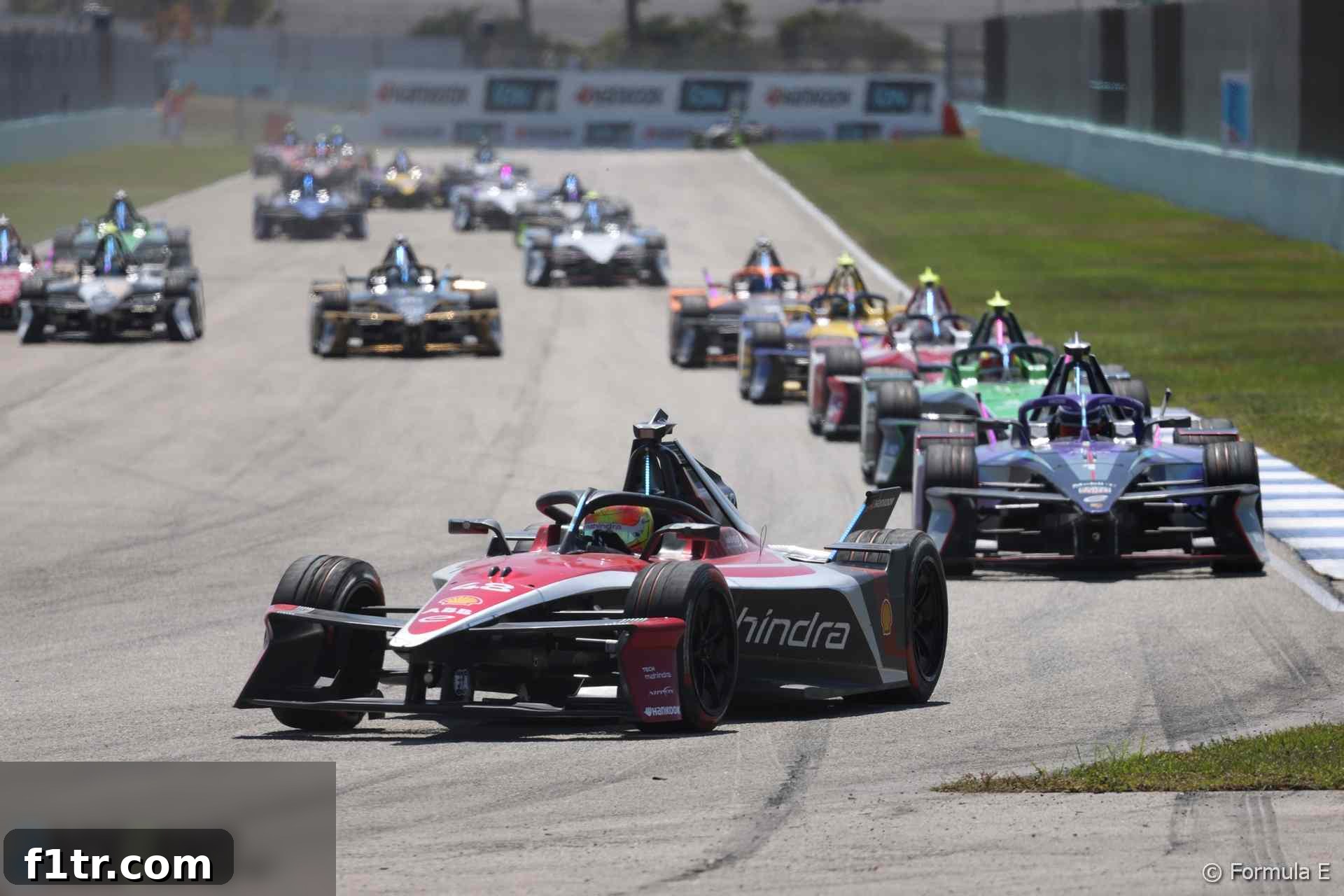
Paffett’s primary takeaway was the potential for F1 racing to mirror certain aspects of Formula E, particularly concerning energy management. In Formula E, drivers often run in close proximity during the early stages of races to conserve energy, only deploying it more aggressively later on. This could translate to F1, where early race conservation becomes key. Paffett elaborated on the strategic potential: “If you get to a point where teams are using the amount of energy they’ve got available in different ways on different straights, then it could make a big difference.” He explained further, “In Formula E you have a point where you get a lot of lift-and-coasting, basically, to save energy. How your [engine] map is set up around the laps means that you’ll have strong areas and weak areas. And that could be the same thing: If teams have got their battery deployment in different areas then it could mean that there’s better overtaking opportunities.” This suggests a future where diverse energy management strategies could lead to fluctuating performance windows, creating exciting tactical variations and potentially more unpredictable outcomes for fans.
Chassis Dynamics: Cornering and Low-Speed Performance
Beyond the power unit, the simulation also provided insights into the aerodynamic and mechanical characteristics of the 2026 cars. Paffett noted that while the new machines could lap within a second of current chassis, their handling characteristics would be distinctly different. He expects drivers to find the 2026 car notably stronger on corner entries but more challenging on corner exits, particularly at low speeds. He contrasted this with current cars, stating, “Whereas the ’25 car has got really good grip and really good stability, sometimes it can be a bit lazy into the corners. Whereas the ’26 car seems a bit more direct into the corners.”
The most significant challenge, according to Paffett, lies in the low-speed performance. “For me the hardest thing to get used to with the ’26 car was the low-speed performance, especially on exits,” he revealed. This translates directly into a struggle for traction, an issue exacerbated by the new aerodynamic regulations which are expected to reduce overall downforce. “For me, the biggest difference and the biggest thing I struggled with with the new tyres, combined with the downforce, was just the low-speed,” Paffett explained. This will force teams to focus heavily on set-ups that maximise mechanical grip and improve traction, as it is “definitely going to be a limitation.” Should these issues persist into races, drivers will face immense pressure to manage their cars carefully, preventing tyre overheating and maintaining performance.
The Tyre Conundrum: A Critical Challenge for 2026
Adding another layer of complexity to the 2026 challenge are the revised tyre specifications. The new regulations will see smaller tyres introduced, designed to align with the reduced downforce levels of the cars. While intended to promote mechanical grip over aerodynamic grip, this change brings its own set of hurdles. Paffett highlighted that “With the tyres being smaller, they’ll definitely take less load.” This reduction in load-bearing capacity, combined with the expected reduction in downforce, will make tyre wear and overheating an even more critical factor than it is currently. “Tyre wear and overheating and managing the tyres is definitely going to be a bigger topic in the ’26 car,” he predicted.
This will significantly impact both qualifying and race strategies. “Qualifying is going to be more difficult, I think, to nail a lap, because the car is just a bit more on the edge,” Paffett stated. The narrower operating window for the tyres will demand extreme precision from drivers to extract maximum performance without overstressing the rubber. In races, the challenge will intensify. “But then into the race overheating the tyres is a massive thing. And especially now, even in the high speed corners when there’s less downforce, you’re stressing the tyres more and things like this.” Drivers will need to employ sophisticated tyre management techniques, adjusting their driving style and working closely with engineers to ensure their tyres last the required stints, all while pushing for competitive lap times. The delicate balance between aggression and conservation will truly test the best in the business.
A Return to Driver-Centric Racing?
Despite the myriad challenges, Paffett’s simulation experience pointed towards an exciting outcome for the sport: a more demanding, and consequently, more rewarding driving experience. He observed a stark contrast between the current and future cars: “It was interesting after running the ’26 components and then going back to the ’25 car. It was a great car to drive because it was easy to drive. Then you change to the ’26 and suddenly it’s more of a challenge again.”
This increased difficulty could be exactly what Formula 1 needs to enhance the spectacle. Paffett believes this will resonate positively with the fanbase. “I think that’s what the fans want to see. The drivers are definitely going to be tested more than before and it also should make the actual racing more interesting.” A more challenging car, demanding greater skill and precision from drivers, often translates into more visible heroics, more mistakes, and ultimately, a more engaging and unpredictable show for spectators. The 2026 regulations, therefore, hold the promise of not just a technical evolution, but a resurgence of driver skill as the ultimate determinant of success, ensuring that Formula 1 remains at the pinnacle of motorsport entertainment.
2025 Formula E Miami EPrix Highlights
Miss nothing from RaceFans
Get a daily email with all our latest stories – and nothing else. No marketing, no ads. Sign up here:
Formula 1
- GT driver killed in multi-car crash at Nurburgring Qualifiers
- Should F1 change tracks or racing guidelines to tackle dangers in 2026 rules?
- Controversies, Norris, Newey and more: Five new motorsport books reviewed
- One of F1’s greatest races happened 15 years ago today. Or did it?
- “Overtaking is overtaking”: Domenicali denies F1’s yo-yo racing is “artificial”
Browse all Formula 1 articles