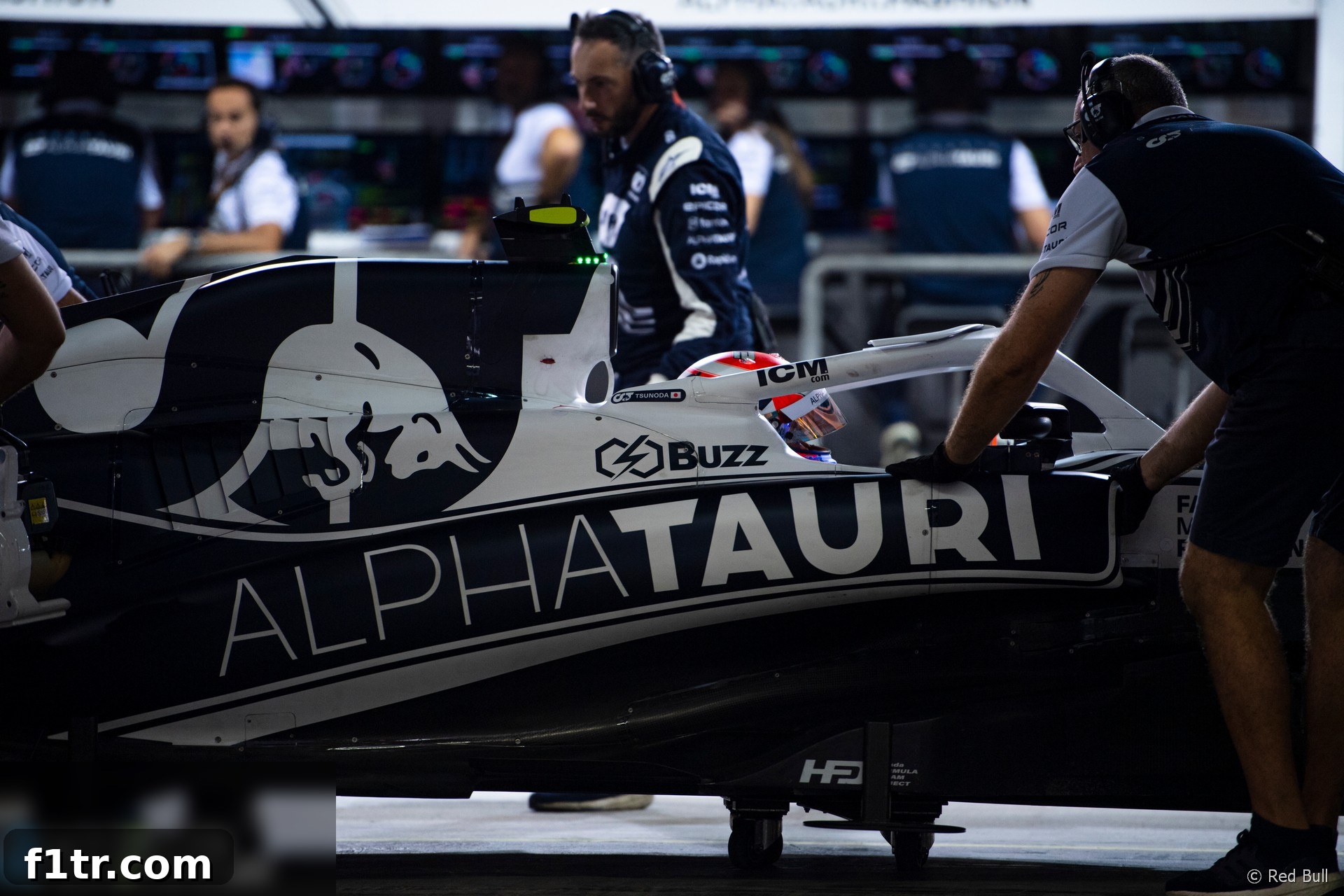
Red Bull and AlphaTauri: F1’s Unconventional Path to Success
Red Bull has always carved its own path, actively shunning conventional wisdom in favor of innovative and often daring approaches. This ethos is deeply embedded in their global brand identity, meticulously crafted to ensure that ‘conventional’ is the antithesis of everything associated with the energy drink giant. This unconventional philosophy naturally extends to their audacious strategy in Formula 1, where they operate not one, but two formidable teams – a model unique in the pinnacle of motorsport and a testament to their long-term vision and ambition.
This dual-team structure is far from a mere whim; it’s a strategically brilliant maneuver that provides Red Bull with an unparalleled advantage in driver development and technical innovation. While Red Bull Racing spearheads the charge for world championships, its sister team, currently branded as AlphaTauri, serves a distinctly crucial purpose. It functions as a high-pressure finishing school, a crucible designed to identify, nurture, and prepare the next generation of Grand Prix winners and world champions for the Red Bull dynasty. This symbiotic relationship ensures a constant supply of top-tier talent, rigorously tested and refined before they even contemplate stepping into the senior team’s cockpit.
AlphaTauri: The Ultimate F1 Finishing School and Its Evolving Mission
AlphaTauri, formerly known as Toro Rosso, stands out amongst its peers on the Formula 1 grid. While other midfield teams relentlessly pursue race wins and championship positions, AlphaTauri’s primary raison d’être is singular: to identify, nurture, and prepare an endless stream of promising prospects for the ultimate challenge of Formula 1. Its track record speaks volumes; the team has successfully produced two multiple world champions, Sebastian Vettel and Max Verstappen, since its inception, unequivocally proving its invaluable worth to the Red Bull motorsport empire. Beyond these two titans, the likes of Daniel Ricciardo and Carlos Sainz Jr. also honed their skills within this intense environment, showcasing the program’s consistent success and the rigorous demands placed upon its young hopefuls.
The Red Bull driver development system, with AlphaTauri at its core, is inherently demanding. It places immense pressure on young drivers to perform immediately and consistently, fostering a meritocracy where talent is rewarded, but patience is a rare commodity. This rigorous proving ground ensures that only the most resilient, adaptable, and skilled drivers ascend the ranks. The journey through AlphaTauri is not just about learning to drive a Formula 1 car; it’s about understanding the complex dynamics of team collaboration, strategic thinking, and managing immense public scrutiny.
However, the team itself is not immune to the fluctuating fortunes of the sport. The 2022 season presented a significant challenge for AlphaTauri. After enjoying a record points haul in 2021 and contending for a top-five championship position, the introduction of ground effect aerodynamics for the new regulatory era drastically realigned the midfield competitive order. Unfortunately for AlphaTauri, this seismic shift did not play in their favor, leading to a noticeable drop in performance and a more difficult campaign than anticipated. This dip highlighted the team’s ongoing challenge of balancing its role as a talent incubator with the demands of competitive Formula 1.
Despite the team’s struggles on the constructor front, the spotlight at AlphaTauri invariably shines brightest on its drivers. Their individual performances are paramount, serving as direct reflections of the efficacy of Red Bull’s talent pipeline and their potential future contributions to the senior team. Consequently, the 2023 season is poised to be an exceptionally critical year for both occupants of the AT04, each facing unique pressures and opportunities that could define their Formula 1 careers and their standing within the highly competitive Red Bull family.
Nyck de Vries: The Experienced Rookie Steps Up to F1
With Pierre Gasly finally breaking free from the often-dubbed Red Bull ‘purgatory’ to pursue new opportunities with Alpine, Nyck de Vries steps into a highly coveted AlphaTauri seat. His arrival marks a unique chapter for the team, as de Vries becomes the oldest driver to make his full-time Formula 1 debut since Brendon Hartley raced for the same team in 2018. At an age where many drivers are already established in their careers, de Vries brings an extraordinary level of experience and pedigree to his rookie season. He is notably older than more than half the current Formula 1 grid, yet his single-seater track record is undeniably formidable and exceptionally diverse, setting him apart from his fellow debutants.
De Vries is not just another promising junior; he is a proven champion across multiple high-level categories, demonstrating a rare versatility and mastery of different racing disciplines. He is the fifth of six Formula 2 champions to reach the pinnacle of motorsport, an achievement that speaks volumes about his raw speed, racecraft, and ability to conquer the notoriously competitive feeder series. Furthermore, he holds the unique distinction of being the first Formula E World Champion to successfully transition into Formula 1 after securing the all-electric series crown. This diverse background in various machinery and racing environments underscores his remarkable adaptability, deep technical understanding, and innate ability to quickly get to grips with new challenges.
Crucially, unlike most rookies who arrive in F1 with limited high-pressure experience, de Vries already has a Grand Prix under his belt. His unexpected call-up to replace an unwell Alexander Albon at Williams for the 2022 Italian Grand Prix at Monza was a true baptism of fire, yet he emerged with flying colors. Stepping into an unfamiliar car with minimal preparation, de Vries looked anything but a debutant, expertly navigating the challenges of the weekend to secure an impressive ninth-place finish and two vital points. This sensational maiden performance, achieved under immense pressure, will undoubtedly have injected immense confidence into him as he prepares for his first full season as a Formula 1 driver, setting a high bar for what he can achieve with consistent track time.
Adding to his unparalleled preparation, de Vries embarked on an extensive internship with Mercedes as their official reserve driver for several seasons. This role provided him with invaluable insight into the intricate workings of a top-tier Formula 1 operation. He logged countless hours in the simulator, meticulously refining his understanding of vehicle dynamics, tire management, and complex race strategy. Moreover, thanks to the Friday practice rules, he had the unique opportunity to drive every Mercedes-powered car on the grid last season, with the sole exception of the McLaren entry. This extensive hands-on experience in a variety of 2022 cars, specifically designed under the new ground effect regulations, is an enormous advantage. He is already fluent in the ways of a modern Formula 1 machine, something his fellow rookies like Oscar Piastri, who heads into testing with minimal seat time, cannot claim. This intimate familiarity with the current generation of F1 cars could be a significant differentiator.
While this comprehensive preparation offers de Vries the best possible opportunity to make a resounding impact in his inaugural F1 campaign, it also comes with increased expectations. With such a robust foundation and a wealth of experience, there will be fewer excuses should he encounter significant struggles along the way. The spotlight is firmly on him to deliver from the outset, proving that his long wait for an F1 seat was indeed worth it.
Yuki Tsunoda: The Crucial Third Season Showdown
Excuses are a luxury that Nyck de Vries’ new teammate, Yuki Tsunoda, can no longer afford. The much younger, yet now more experienced, AlphaTauri driver prepares for his pivotal third season in Formula 1 acutely aware that this year represents the most important juncture of his entire racing career. History within the ruthless Red Bull Junior Team is a stark reminder of the unforgiving nature of their driver development program: the third year often proves to be the critical determinant for a driver’s future within the Red Bull orbit.
For drivers such as Jaime Alguersuari, Sebastian Buemi, Jean-Eric Vergne, and even Carlos Sainz Jr. during his initial Red Bull tenure, the organization demonstrated little interest in extending opportunities beyond three seasons to fully prove their worth. The expectation is clear: by year three, a driver must consistently demonstrate maturity, sustained pace, and the undeniable potential to advance to the senior Red Bull Racing team or at least secure a long-term future in F1. While there have been exceptions, notably Daniil Kvyat and Pierre Gasly, who were retained for longer periods when Red Bull’s options for immediate replacements were limited, the current landscape paints a different picture. Red Bull is rarely short of talent, and its stable of younger prospects waiting in the wings appears as stacked and competitive as ever, particularly its longer-term prospects currently dominating feeder series.
The depth of this talent pipeline is truly formidable, with half a dozen drivers on the current Formula 2 grid proudly holding Red Bull Junior Team memberships, all vying for that elusive F1 seat. Furthermore, reserve driver Liam Lawson, currently competing in Japanese Super Formula, is meticulously following a similar path that saw Pierre Gasly successfully transition to F1 after excelling in the same championship. This continuous influx of highly motivated and skilled young racers means the competition for AlphaTauri seats is relentlessly intense, leaving absolutely no room for complacency or prolonged development periods. Every race, every session, is an audition.
Over his first two seasons in Formula 1, Yuki Tsunoda has undeniably showcased flashes of impressive raw speed, particularly during his second year alongside Pierre Gasly. His tally of just 12 points in 2022 perhaps did not fairly reflect his underlying performance. There were instances of cruel misfortune that robbed him of significant points; he deserved a healthy bundle in Baku before a DRS failure prematurely ended one of his strongest performances of the season. He was also an innocent victim when Esteban Ocon clumsily collided with him at the start of the French Grand Prix, and later denied further points in Mexico by a robust, though controversial, challenge from Daniel Ricciardo. These moments highlighted his potential pace and ability to run within the points when circumstances allowed, demonstrating genuine talent.
However, alongside these commendable performances and moments of bad luck, there were also far too many costly errors that plagued his 2022 campaign. No driver suffered a retirement as embarrassing as Tsunoda’s mishap in Canada, where he crashed out of the pitlane during an out-lap. Just one race later at Silverstone, he clumsily clattered into his teammate, Pierre Gasly, in the early laps. This wasn’t merely a personal setback; it cost AlphaTauri crucial points and, alarmingly, impacted Max Verstappen’s afternoon after the Red Bull championship contender sustained damage running over small pieces of AlphaTauri debris scattered across the racing line. Such incidents underscore a clear lack of consistency, judgment under pressure, and the maturity that Red Bull rigorously demands from its drivers before they can be considered for higher honors.
For Yuki Tsunoda, the imperative for year three is abundantly clear: he must demonstrate significant progress and a marked increase in maturity both on and off the track. He needs to prove that he is developing into the consistent, reliable, and error-free driver Red Bull envisions, especially when measured against an experienced and accomplished elder teammate like Nyck de Vries. If he fails to deliver on these expectations, the specter of promising talents like Liam Lawson, meticulously waiting in the background for an opportunity to prove their capabilities, will undoubtedly loom larger. The stakes couldn’t be higher for Tsunoda’s future in Formula 1.
The AlphaTauri Dynamic: A Double-Edged Sword for Aspiring F1 Drivers
It is genuinely rare for AlphaTauri to commence a Formula 1 season with the palpable possibility that both of its drivers could face replacement for the following year if their performances do not meet the stringent expectations. While the chances of both drivers wilting simultaneously under this immense pressure might be slim, it serves as a stark and powerful reminder of the unique, high-stakes dynamic that defines this most unconventional of teams. The AlphaTauri project is not merely about achieving mid-pack results; it’s a critical component of Red Bull’s long-term F1 strategy, a relentless proving ground for future champions and a brutal testing ground for current talents.
Each driver’s performance at AlphaTauri is not just about their personal career; it’s a direct validation of Red Bull’s substantial investment in its talent pipeline. The team’s role is to ensure that when a driver is called up to Red Bull Racing, they are not only fast but also fully prepared for the immense technical, mental, and media scrutiny that accompanies a top-tier F1 drive. This constant internal competition, fueled by the vast pool of talent in the Red Bull Junior Team, creates an environment where complacency is simply not tolerated. It’s a brutal yet highly effective model that has consistently delivered world-class talent to the pinnacle of motorsport, solidifying Red Bull’s reputation as a powerhouse in driver development.
Ultimately, the AlphaTauri seats are among the most coveted and fiercely contested in Formula 1. They represent a golden opportunity for young drivers to showcase their abilities on the grandest stage, but also a formidable test of their mental fortitude, adaptability, and consistency. The 2023 season, with its compelling pairing of the experienced rookie Nyck de Vries and the pressured third-year veteran Yuki Tsunoda, promises to be an enthralling chapter in the ongoing narrative of Red Bull’s unique and successful approach to Formula 1, where only the strongest survive and thrive.