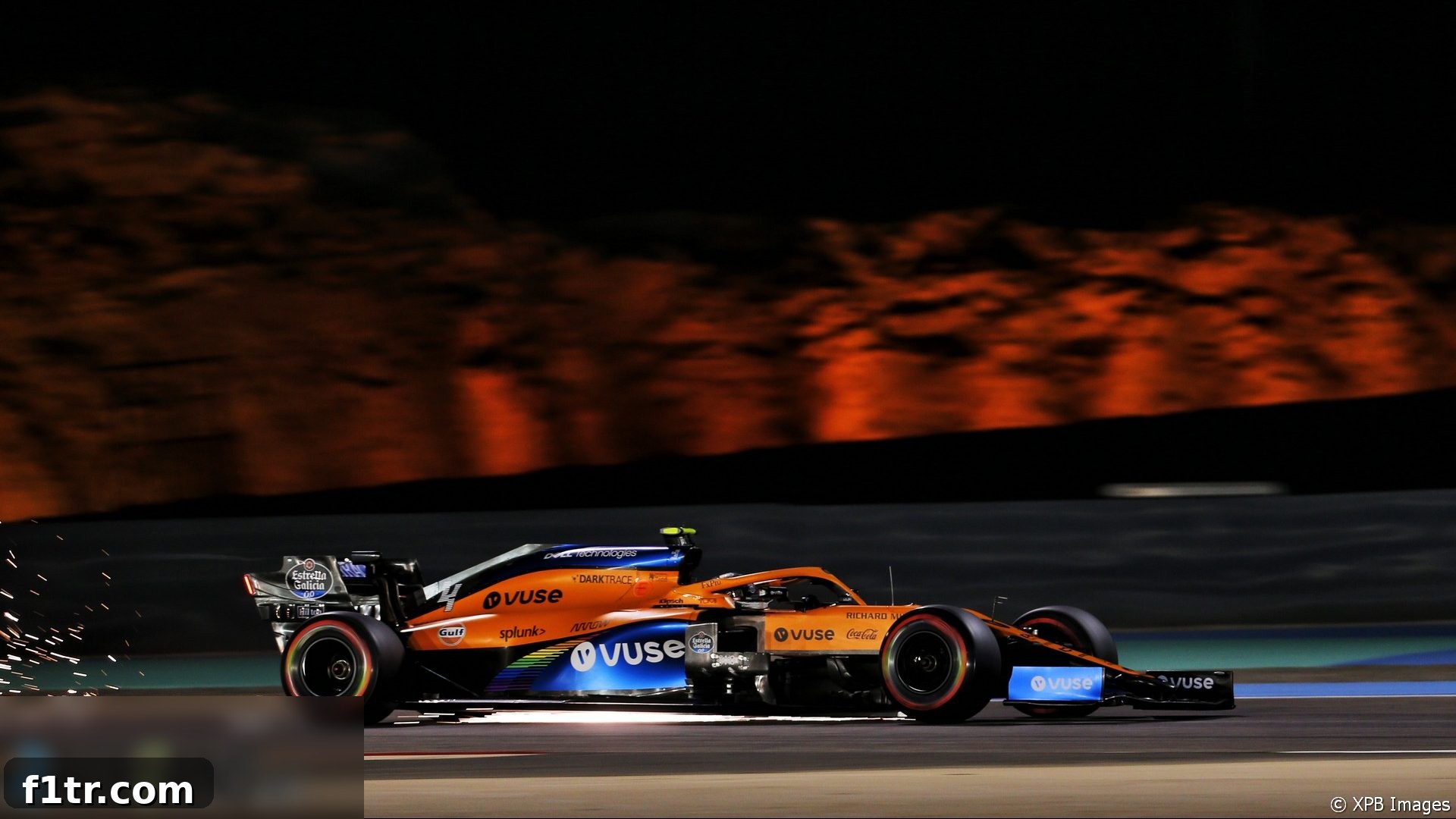
Lando Norris Regrets Costly Turn One Error in Bahrain GP Qualifying as McLaren Fights for P3
The high-stakes qualifying session for the Bahrain Grand Prix delivered a mix of promise and frustration for McLaren, with driver Lando Norris openly acknowledging a critical error that he believes cost him and the team valuable grid positions. A minor slip-up at Turn 1 on his final Q3 lap significantly impacted his final standing, leaving him to reflect on what might have been a stronger performance.
Norris’s Candid Admission: The Critical Turn One Slip-Up
In the fiercely competitive world of Formula 1, where fractions of a second can separate multiple drivers, Lando Norris’s self-assessment highlighted the razor-thin margins that define qualifying success. He revealed that a seemingly small error at the first corner of the Bahrain International Circuit proved immensely costly.
“I made a mistake at Turn 1 which cost me one and a half to two tenths,” Norris explained, his frustration evident. “Which is pretty frustrating because obviously two tenths would have put me probably behind Perez.”
These crucial tenths, as Norris elaborated, had a cascading effect on his grid position. Had he maintained that pace, he believes he would have been placed behind Sergio Perez, securing sixth place. This position would have been significant not only for his individual standing but also for McLaren’s strategic advantage, as it would have placed him ahead of both Renault drivers – key rivals in the hotly contested battle for third place in the constructors’ championship.
“I don’t think we could have beaten Perez but it would have put me behind him which would have been sixth and ahead of both Renaults,” he clarified. This illustrates just how vital every thousandth of a second is in F1. A tiny lapse in concentration or an overly aggressive move can translate directly into several lost positions on the starting grid, fundamentally altering the team’s race day prospects.
Norris further emphasized the potential that was left untapped: “So there was a bit more potential today. It wasn’t like we didn’t have the speed, I think we did. But I made one mistake at Turn 1 and it proved costly today. It shows how close it is but also it shows just how difficult it is to put everything together and one mistake can be three or four positions.” His comments underscore the immense pressure on drivers to deliver a perfect lap, especially in the high-stakes environment of Q3, where every driver is pushing the absolute limits of their car and their own ability.
McLaren’s Dual Challenge: Sainz’s Technical Snag and Its Impact
While Norris grappled with his personal error, the qualifying session presented a different challenge for his teammate, Carlos Sainz Jnr. Sainz’s session was unfortunately cut short during Q2 due to a critical technical issue, preventing McLaren from showcasing its full potential with both cars in the final qualifying phase.
A brake-by-wire problem on Sainz’s car led to a sudden brake lock-up at the very same Turn 1 that later troubled Norris. This unforeseen mechanical failure brought an abrupt end to Sainz’s qualifying run, leaving him outside of Q3. The brake-by-wire system is a sophisticated electronic control system that replaces traditional mechanical linkages, offering precise braking control. When it malfunctions, as it did for Sainz, it can be unpredictable and dangerous, forcing drivers to retire from sessions to ensure safety and prevent further damage.
The impact of this issue was significant for McLaren. Having both cars in Q3 is a strategic advantage, allowing for more diverse race strategies and a greater chance of scoring double points. With Sainz sidelined, the team had to place all its hopes for a top-tier grid position on Norris. This unfortunate turn of events further highlighted the unpredictable nature of Formula 1, where driver errors and mechanical failures can equally derail a team’s ambitions.
Andreas Seidl’s Assessment: Unfulfilled Potential and Forward Focus
Team principal Andreas Seidl echoed Norris’s sentiments regarding the unfulfilled potential of the McLaren package. While acknowledging the competitive pace of the MCL35, Seidl expressed disappointment that the team couldn’t maximize its opportunities with both cars.
“It was a disappointment that we couldn’t maximise what was potentially possible,” Seidl stated, reflecting on the qualifying session. He was keen to emphasize the inherent speed of the car, which had shown promise throughout the weekend. “We had a competitive car yesterday and also today in the morning and in qualifying up to the point where Carlos had to finish his qualifying unfortunately early,” he noted, acknowledging Sainz’s mechanical woes.
Seidl also confirmed that the team’s strategy was on track, especially concerning tire choices. “And it was going well in terms of strategy, progressing to quali three with the medium tyres.” This indicated a well-thought-out plan designed to optimize their starting position for the race, particularly important on a circuit like Bahrain where tire management plays a crucial role.
However, Norris’s mistake undeniably impacted the team’s overall outcome. “Everything went according to plan on Lando’s side. But then unfortunately with a mistake in Turn 1 we simply couldn’t make this tenth [of a second] that we have to make in quali three in order to go for the positions higher up,” Seidl explained. He agreed with Norris’s assessment of their potential: “I agree we had the potential to be close to Perez today but in the end it doesn’t count what would have been possible. It only counts what is the final result.”
Despite the setback, Seidl maintained a pragmatic and forward-looking perspective, characteristic of a top-tier F1 team principal. He stressed the importance of learning from the experience and immediately shifting focus to the race. “It simply means we have to try to make up for it tomorrow and do a better job next time.” This reinforces McLaren’s commitment to continuous improvement and their determination to convert potential into tangible results on race day.
The High Stakes: McLaren’s Intense Battle for Third in the Constructors’ Championship
The qualifying results, and particularly the missed opportunities, carry significant weight for McLaren given their ongoing, fierce battle for third place in the Constructors’ Championship. This position is not merely about prestige; it brings substantial financial rewards, increased prize money, and enhanced standing within the sport, all of which directly impact a team’s ability to invest in future development and talent.
McLaren has been locked in an incredibly tight contest with Renault, and occasionally Racing Point, throughout the season. Every point, and therefore every grid position gained or lost, can have monumental implications for their championship standing. For Norris to have qualified ahead of both Renault drivers, as he believed he could, would have been a psychological boost and a tactical advantage for Sunday’s race. It would have placed McLaren in a stronger position to score more points than their direct rivals, widening the gap or closing it, depending on the current standings.
The pressure on drivers and strategists is immense. Knowing that a single tenth of a second in qualifying can directly contribute to millions of dollars in prize money at the end of the season creates an environment where perfection is relentlessly pursued. McLaren’s aspirations go beyond individual race wins; securing third in the constructors’ championship is a crucial milestone in their journey back to the top echelon of Formula 1, underscoring the importance of performances like those delivered in qualifying.
Learning and Development: The Driver’s Journey in Formula 1
Lando Norris’s candid self-criticism following his qualifying error is a testament to his maturity and dedication as a developing Formula 1 driver. In a sport where perfection is unattainable but constantly strived for, the ability to openly acknowledge mistakes, learn from them, and move forward is a hallmark of truly great athletes.
For a young driver like Norris, such experiences are invaluable. Every error, every challenge, and every triumph contributes to a deeper understanding of the car, the circuit, and their own limitations and capabilities. His willingness to pinpoint the exact moment and cost of his mistake demonstrates an analytical mindset essential for continuous improvement. The mental fortitude required to shake off a costly error and refocus for the race is immense, highlighting the psychological demands placed on F1 drivers.
McLaren, as a team, plays a critical role in this development process. Through detailed data analysis, debriefs, and feedback sessions, they work with drivers to understand what went wrong, identify areas for improvement, and build strategies to prevent similar issues in the future. This symbiotic relationship between driver and team is fundamental to achieving sustained success in Formula 1, turning individual setbacks into collective learning opportunities.
Looking Ahead: Race Day Prospects in Bahrain
Despite the challenges faced in qualifying, McLaren will now shift its entire focus to the Bahrain Grand Prix race. From their grid positions, both Lando Norris and Carlos Sainz will be aiming to make up ground and maximize their points haul, particularly crucial in the ongoing Constructors’ Championship battle.
The Bahrain International Circuit is known for its long straights and heavy braking zones, which offer opportunities for overtaking. Tire degradation, especially in the desert heat, will also play a significant role, potentially opening up strategic options for teams that manage their tires effectively. Norris, starting from a strong position despite his error, will be looking to capitalize on any early race chaos or strategic advantages to climb up the field.
For Sainz, starting further down the grid due to his technical issue, the challenge will be greater. However, the McLaren MCL35 has demonstrated competitive race pace throughout the season, giving the team confidence that both drivers can execute strong recovery drives. Andreas Seidl’s call to “make up for it tomorrow” encapsulates the team’s resilient spirit and their determination to turn around any qualifying disappointment into a strong race performance.
The strategic decisions on tire compounds, pit stop timings, and the drivers’ ability to manage their machinery while pushing hard will be key determinants of McLaren’s success on Sunday. The race offers a fresh start and an opportunity to mitigate the qualifying setbacks, reinforcing the notion that in Formula 1, the ultimate result is always decided on race day.
Conclusion: A Mix of Speed, Missed Opportunities, and Unwavering Resolve
The Bahrain Grand Prix qualifying session served as a poignant reminder of the fine margins and relentless pursuit of perfection that define Formula 1. For McLaren, it was a day characterized by the promising pace of their car, overshadowed by both a driver’s honest mistake and an unfortunate technical setback. Lando Norris’s candid reflections on his Turn 1 error, coupled with Carlos Sainz’s brake-by-wire issue, underscored the challenges inherent in maximizing performance on every single lap.
Despite these immediate frustrations, the team’s and drivers’ responses showcased a deep commitment to learning and improvement. Andreas Seidl’s forward-looking perspective, emphasizing the need to “do a better job next time,” highlights McLaren’s unwavering resolve to climb back to the top. As the focus shifts from qualifying to the race itself, McLaren will be determined to translate their car’s competitive speed into valuable championship points, ensuring that every lesson learned from Bahrain’s qualifying session contributes to their ongoing ascent in the Constructors’ Championship battle.
Related Articles: 2020 Bahrain Grand Prix
- Grosjean reunited with helmet which saved him from huge fire in 2020 Bahrain crash
- Pictures: Wrecked chassis from Grosjean’s Bahrain fireball crash to go on display
- Grosjean reveals extent of burns to right hand
- ‘I put both my hands in the fire’: Grosjean describes his 28 seconds trapped in an inferno
- “Thank you for saving my life” Grosjean tells crash scene marshals
Browse all 2020 Bahrain Grand Prix articles