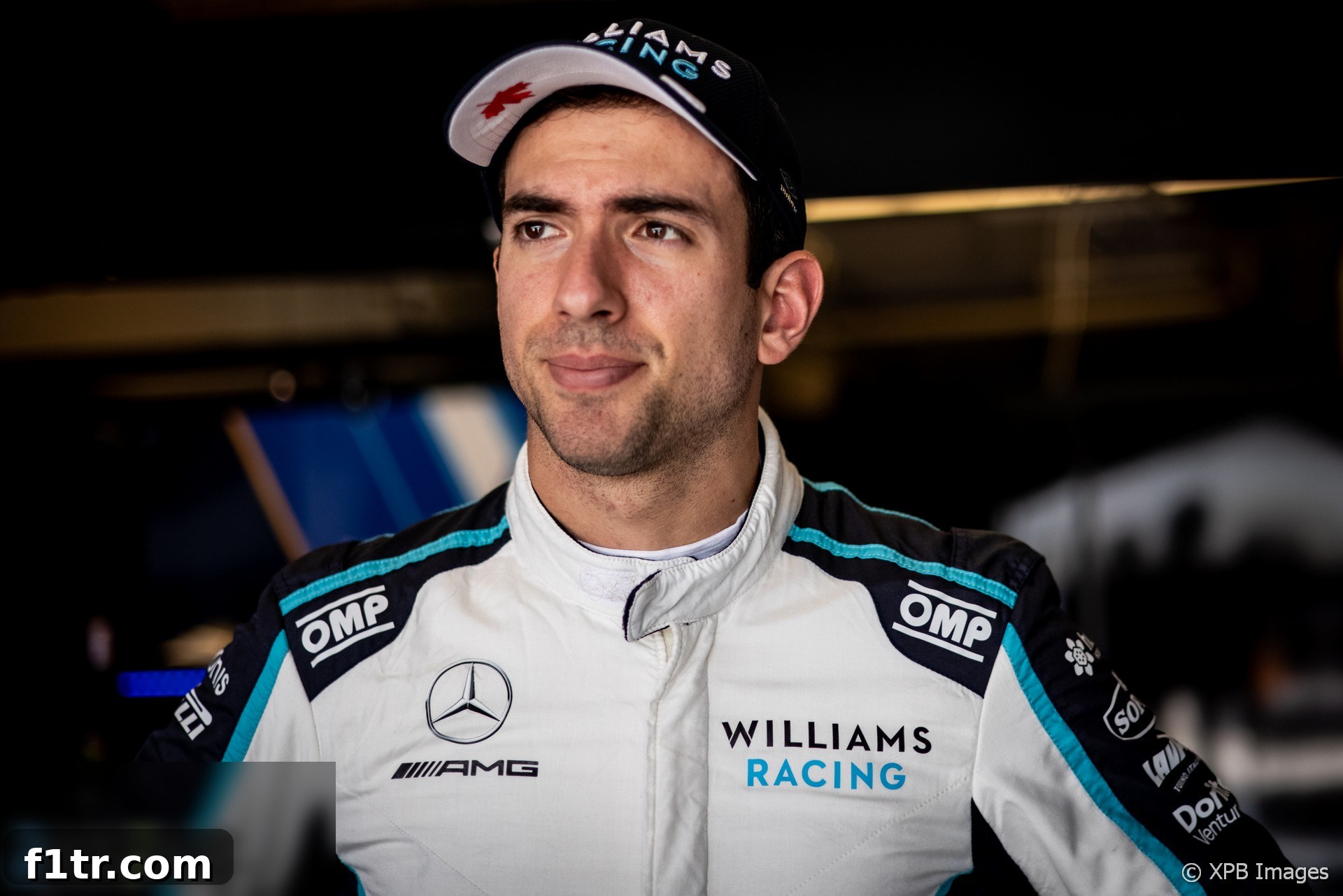
The 2021 Formula 1 season concluded with an unforgettable and highly controversial finale, a race that propelled Nicholas Latifi into an unexpected, and regrettably, unenviable spotlight. His collision towards the end of the Abu Dhabi Grand Prix triggered a Safety Car period that ultimately reshaped the outcome of the world championship. This single incident, amplified by the high stakes, regrettably led to appalling and unwarranted vilification and abuse directed at the young driver, a stark reminder of the harsh realities of public scrutiny in elite sports.
While the Abu Dhabi crash defined the public perception of his season, a comprehensive review reveals a year marked by struggle, occasional glimpses of potential, and the immense pressure of competing in Formula 1’s midfield. Latifi’s second season with Williams Racing was undoubtedly a challenging one, as he navigated the competitive landscape of Grand Prix racing alongside a highly-rated teammate and an ever-improving car.
Nicholas Latifi – 2021 Season Snapshot |
|
|---|---|
| Beat team mate in qualifying | 2/22 |
| Beat team mate in race | 3/17 |
| Races finished | 19/22 |
| Laps spent ahead of team mate | 186/1094 |
| Qualifying margin | +0.34s |
| Points | 7 |
The pivotal moment in Abu Dhabi occurred on his 51st lap when Latifi spun his Williams into a barrier while engaged in a tussle with Mick Schumacher. The Haas driver, in his rookie season, had managed to get past the quicker Williams, a scenario that, unfortunately for Latifi, was not an isolated incident throughout the 2021 campaign. This particular battle underscored a broader theme of inconsistency that plagued Latifi’s season.
Indeed, Schumacher had demonstrated his prowess earlier in the year as well. Latifi found himself trailing the young German at the third round in Portugal, and was notably out-qualified by the Haas in Spain. For a driver in his second Formula 1 season, being occasionally outperformed by a rookie in a machine generally considered less competitive was far from an ideal situation, raising questions about his pace and adaptability. These early-season skirmishes set a challenging tone, highlighting the steep learning curve and immense pressure inherent in Grand Prix racing.
Latifi’s stumbling start to the 2021 season was further punctuated by an early retirement at Imola. The Emilia Romagna Grand Prix saw him go off track on the very first lap, subsequently tangling with the other Haas driven by Nikita Mazepin upon rejoining. Such incidents in the opening races put him on the back foot, both in terms of confidence and championship standing. However, to his credit, after these initial tricky encounters, Latifi did show signs of settling into a rhythm and performed somewhat better over the subsequent rounds, hinting at a gradual improvement that would become a recurring theme, albeit an inconsistent one, throughout the year.
Despite these sporadic improvements, Latifi found himself consistently operating in the shadow of his highly-regarded Williams teammate. The deficit to George Russell was hardly a surprise, given the substantial performance gap between the two drivers in the preceding season. Russell, who was already earmarked for a future with Mercedes, continually pushed the Williams car to its limits, often achieving results that seemed beyond its inherent capabilities. This created an incredibly high benchmark for Latifi, making his own performance assessment inherently challenging.
To his credit, Latifi showed commendable persistence throughout the season, gradually chipping away at the significant gap to his highly-rated teammate. Towards the end of the year, he even managed to qualify ahead of Russell on a few rare occasions. Whether these instances were purely due to his improved pace or potentially aided by Russell employing more aggressive strategies in pursuit of higher-risk, higher-reward outcomes, it was a feat that seemed highly improbable just 12 months prior. This narrowing of the qualifying margin, even if slight, pointed to a degree of learning and adaptation from the Canadian driver, demonstrating his dedication to improving his performance.
While Russell consistently pushed the boundaries, coming ever closer to ending Williams’ long wait for championship points in races like France and the two Austrian Grand Prix events, Latifi often lagged further back. His season was also marred by unfortunate penalties; he was unlucky to pick up a penalty in Azerbaijan, but at the Austrian Grand Prix, he incurred a more significant 30-second sanction for failing to slow sufficiently for yellow flags. Such infractions, while sometimes unavoidable, highlight the fine margins and strict regulations that drivers must contend with at the pinnacle of motorsport.
A turning point in Latifi’s season, and indeed for the Williams team, arrived at the Hungarian Grand Prix. After a better showing at Silverstone, Hungary proved to be a stroke of fortune that Latifi capitalized on spectacularly. In a chaotic race start that saw a multi-car collision wipe out several quicker rivals, Latifi navigated the mayhem adeptly, leading Russell home to secure seventh and eighth places for Williams. This remarkable team effort delivered crucial points, a rare and welcome achievement for the struggling outfit. Russell had, as usual, qualified ahead, but Latifi managed to get by at the very start, demonstrating opportunistic driving when it mattered most. This race was arguably the highlight of his 2021 campaign, a moment where circumstances aligned to allow him to shine and contribute significantly to the team’s constructors’ championship tally.
Advertisement: Support independent F1 journalism by becoming a RaceFans Supporter.
Another valuable point came at Spa-Francorchamps. Latifi achieved his best qualifying position of the year, securing 12th place – though still 10 places behind his teammate. However, the notoriously wet and ultimately curtailed, one-lap ‘race’ saw him elevated into ninth place, bagging another precious championship point. These points, although sometimes facilitated by circumstances beyond his direct performance, were vital for Williams and provided glimpses of what Latifi could achieve when conditions were favorable or when he managed to avoid trouble. Unfortunately, no more points followed over the remainder of the season, underscoring the challenge of consistent performance.
The latter half of Latifi’s season saw a return to earlier struggles, characterized by several more Q1 eliminations. Across the 22 rounds, he was eliminated in the first qualifying session 18 times, a stark contrast to Russell’s mere three Q1 exits. Zandvoort provided one of the few occasions where Latifi managed to reach Q2, only for him to crash out during the session, an unfortunate parallel to Russell who also crashed in Q2. Such incidents not only hindered his own progress but also placed additional burden on the team.
After a relatively decent run to 11th in Italy, where Russell once again scored points, Latifi hit another rough patch. The Russian Grand Prix in Sochi saw him crash as rain began to fall, demonstrating the difficulties he faced in adapting to changing conditions. He also spun on the first lap at Istanbul and was involved in a tangle with Lance Stroll at the very first turn in Austin. These repeated incidents highlight a persistent issue with consistency and judgment under pressure, factors critical for sustained success in Formula 1. While some incidents can be attributed to racing circumstances, the frequency with which Latifi found himself in trouble suggested an area needing significant improvement.
In reflection, while there were indeed signs of improvement from Nicholas Latifi in his second season of Formula 1, particularly in reducing the gap to his esteemed teammate, his incident rate remained on the high side. The days where he truly seemed to extract the absolute maximum from his equipment were regrettably too rare. Formula 1 demands relentless consistency, a seamless blend of raw pace, race craft, and the ability to avoid costly errors. For Latifi, 2021 was a season of learning and sporadic breakthroughs, ultimately overshadowed by the singular event in Abu Dhabi and the ongoing quest for more consistent, error-free performances. His journey in Formula 1 remains a testament to the unforgiving nature of the sport and the constant pressure to perform at the highest level.
Experience an Ad-Free RaceFans for Less Than £1/Month>> Discover the benefits and become a supporter today
What are your thoughts on Nicholas Latifi’s 2021 season? Did he meet your expectations, or were there areas where you expected more? Share your verdict on his performance and how you feel he stacked up against other drivers in the comments section below. We value your insights!
Explore More: 2021 F1 Season Review Articles
Here’s a look at other top drivers from the 2021 Formula 1 season:
- 2021 F1 driver rankings #1: Max Verstappen
- 2021 F1 driver rankings #2: Lewis Hamilton
- 2021 F1 driver rankings #3: Lando Norris
- 2021 F1 driver rankings #4: Charles Leclerc
- 2021 F1 driver rankings #5: Carlos Sainz Jnr
Browse all 2021 F1 season review articles