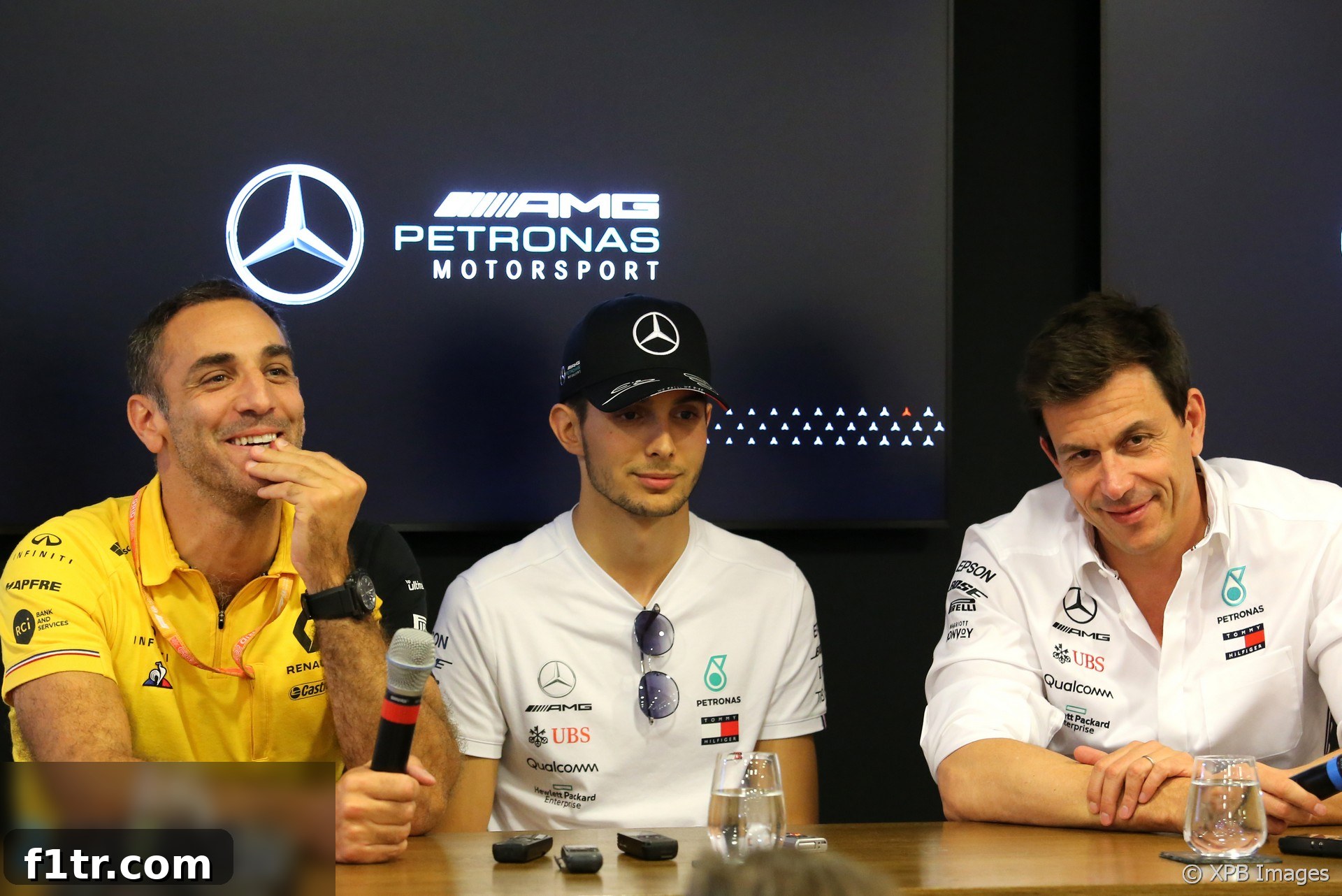
In the high-stakes world of Formula 1, every driver move sends ripples through the paddock, and Esteban Ocon’s confirmed switch to Renault for the 2020 F1 season was no exception. This pivotal moment not only solidified Ocon’s return to a full-time race seat but also ignited intense speculation about his long-term ties to Mercedes and the implications for the future of the Silver Arrows in the sport. The answers, or rather the carefully chosen words, from Ocon himself, his current boss Toto Wolff, and future team principal Cyril Abiteboul, offered a tantalizing glimpse into the complex web of contracts, ambitions, and strategic maneuvers that define F1 at Monza.
A Grand Prix Weekend Unfolds: Monza Paddock Insights
The Monza circuit, a hallowed ground for motorsport, buzzed with its usual blend of anticipation and drama as the Saturday morning traffic flowed surprisingly smoothly. My arrival at the media centre, a mere 45 minutes after navigating the start of weekend shopping congestion, marked the beginning of another whirlwind day in the heart of Formula 1. The air was thick with the scent of high-octane fuel and fresh espresso, a familiar prelude to the day’s unfolding narrative.
9:30 AM: FIA’s Urgent Call for Road Safety Amidst Tragedy
A media alert soon arrived, announcing an impromptu press session with FIA President Jean Todt, scheduled to host a road safety photo call. Given the tragic events of the previous week, which saw the devastating loss of Anthoine Hubert at Spa, it was clear that Todt’s address would carry an immense emotional weight and a renewed emphasis on safety. His relentless global push for enhanced safety across all forms of motoring had never been more pertinent, and the motorsport community braced itself for a poignant message.
10:30 AM: Jean Todt, Didier Drogba, and the Global Safety Imperative
True to expectation, Jean Todt appeared, accompanied by football icon Didier Drogba, the latest high-profile ambassador for the FIA’s ‘3,500 Lives’ road safety campaign. Drogba’s role in disseminating crucial safety messages, particularly in Africa where he is revered as an international hero, underscored the campaign’s global reach and vital importance. During the subsequent Q&A session, I posed a question to Todt regarding the perception of safety: while circuit racing fatalities, especially at the highest level, are highly visible and impactful, countless more lives are lost annually across other, less publicized motorsport categories. A death, I argued, is one too many, regardless of its context.
Todt acknowledged this grim reality, revealing that globally, there had already been 21 motorsport-related fatalities this year, with only a small fraction occurring in high-profile circuit racing. He further admitted a troubling trend: the perceived high level of safety in modern motorsport, particularly in top-tier disciplines, inadvertently leads younger participants to assume that the sport is inherently danger-free. This misguided belief, he cautioned, could lead them to take risks without a full and comprehensive understanding of the inherent perils. “Never assume,” he stressed, “youngsters should not assume that motorsport is without danger.” His words served as a stark reminder that despite monumental advancements, complacency remains the deadliest adversary.
- “One victim is too much”: Todt vows to continue safety push after Hubert crash
Support journalism: Become a RaceFans supporter and enjoy an ad-free experience.
11:00 AM: F3 Horror Crash and the Unyielding Quest for Safety
With an almost cruel twist of fate, even as discussions about safety dominated the morning, news filtered through of a horrifying accident in the FIA Formula 3 championship. The footage, which I later reviewed in sickening slow motion, showed Alex Peroni’s car launching airborne after striking a ‘sausage kerb,’ resulting in a spectacular and terrifying crash. Miraculously, Peroni escaped with spinal injuries and concussion, a testament to the incredible advancements in driver protection. The survival cell, the Halo device, and the robust circuit fencing all performed their duties flawlessly, a credit to the tireless scientific and engineering efforts dedicated to driver safety. Yet, the incident served as a potent, unsettling reminder that there is absolutely no room for complacency, especially given the controversial nature of the kerb that triggered the crash.
The start of final practice for F1 was subsequently delayed, allowing officials to assess the damage and ensure the track was safe. During this hiatus, a well-placed source shared an intriguing detail: the ‘sausage kerb’ Peroni hit might have been damaged prior to his impact. This insight, suggesting a pre-existing weakness in the track furniture, added another layer of complexity to the incident, prompting further questions about track maintenance and design integrity. The ongoing debate around ‘sausage kerbs’ and their dual role – deterring track limits abuse versus posing a launch ramp for cars – intensified in the wake of this dramatic event, underscoring the constant tension between performance and safety in circuit design.
1:15 PM: Paddock Politics and Power Lunches
Lunch at Mercedes offered a brief respite and a chance to refuel – a Caesar salad paired with Mediterranean quinoa and a cold meat platter provided the necessary sustenance. Following this, I made my way to Red Bull Racing for a formal introduction to their new head of communications. While Formula 1 often projects an intimidating, exclusive image, the reality within the paddock is that personal relationships are incredibly vital. It’s a colossal global business, yet paradoxically, a very small and interconnected world where rapport and trust can significantly influence access and information flow. These seemingly casual interactions are often crucial for navigating the intricate political landscape of the sport.
My subsequent wander through the bustling paddock was a deliberate hunt for news, specifically insights gleaned from Saturday’s highly anticipated meeting between the team bosses and F1 CEO Chase Carey. This crucial gathering, attended by all team principals, had been hosted at the Red Bull hospitality unit this time. However, the intel I gathered suggested a surprising lack of substantive discussion. According to a team boss, little of significance was addressed beyond the mundane: minor adjustments, if any, to the 2020 tire regulations, and procedural details for the 2021 18-inch tire testing program. “Nothing else,” was the dismissive verdict. This apparent inertia, at a time when F1 was grappling with crucial decisions about its future identity, governance, and commercial direction, immediately brought to mind the cynical adage, “Nero fiddles; Rome burns.” The feeling was palpable that while fundamental challenges loomed, the key stakeholders were either unwilling or unable to address them with the urgency required.
Support journalism: Become a RaceFans supporter and enjoy an ad-free experience.
3:00 PM: Qualifying Chaos and the Art of the Draft
As qualifying commenced, the collective anticipation in the media centre was almost tangible, fueled by strong bets that traffic jams would inevitably mar the end of Q3. This phenomenon, born from drivers strategically attempting to secure a ‘draft’ from a rival car, is a well-known tactic at Monza’s high-speed layout. The prediction proved accurate. The qualifying session descended into a chaotic spectacle as drivers deliberately slowed, jockeyed for position, and often failed to cross the start-finish line in time to begin a flying lap. Yet, the blame for this wasn’t solely on the drivers. As extensive transcripts of team radio messages later revealed, these tactics were explicitly instructed from the pit wall by their respective teams. As employees, the drivers were simply following orders, highlighting a fundamental flaw in the regulations that incentivized such dangerous and disruptive behavior.
- Analysis: Drivers’ team radio transcripts reveal how F1’s qualifying shambles unfolded
5:00 PM: The Draft’s Value and Regulatory Loopholes
Post-qualifying interviews saw drivers vocalize their frustrations, largely pointing fingers at the existing regulations that facilitated such widespread traffic chaos. They meticulously explained the immense value of a well-timed draft at Monza, illustrating how it could yield up to four-tenths of a second per lap – a monumental gain in the hyper-competitive world of F1. The unique characteristics of Monza, particularly the ‘tunnels’ created by the close proximity of trees alongside certain sections of the track, exacerbate the aerodynamic benefits of drafting, multiplying its usual impact. For teams that invest upwards of $100,000 to find a mere tenth of a second in performance, securing a four-tenths advantage for virtually zero outlay represents an incredible bargain. The irony, of course, is that this theoretical bargain becomes entirely worthless if, in the pursuit of the perfect draft, a driver fails to even set a competitive lap time, as many did in that chaotic session. The incident underscored the need for regulatory adjustments to prevent such strategically manipulated chaos from overshadowing genuine competition.
6:30 PM: Ocon’s Future: Mercedes, Renault, and Lingering Doubts
The highly anticipated press conference regarding Esteban Ocon’s move to Renault, initially scheduled for the previous week at Spa, finally took place. It had been postponed due to the tragic passing of Anthoine Hubert, casting a somber shadow over what would normally be a celebratory announcement. Now, at Monza, Mercedes team principal Toto Wolff, Renault F1 boss Cyril Abiteboul, and the young French talent Esteban Ocon sat before the media to clarify the details of the complex deal. They explained it as essentially a two-year suspension of Ocon’s contract with Mercedes, with long-term options strategically placed on both sides. While seemingly a straightforward arrangement on the surface, this type of intricate contractual ‘loan’ felt somewhat peculiar, especially given Mercedes’ broader and often opaque contractual commitments and long-term strategies within Formula 1.
I directly questioned Toto Wolff on whether this unusual arrangement, particularly the temporary release of a promising junior driver, might be interpreted as a subtle message that Mercedes could potentially exit Formula 1 after the upcoming season, especially with the impending overhaul of regulations in 2021. Wolff, ever the master of strategic communication, offered a nuanced and somewhat evasive response. He spoke of “other contracts that go beyond that time, and many [other] contracts that can be cancelled,” implying a flexibility in Mercedes’ commitments without explicitly confirming or denying any future plans. His answer, while technically not revealing anything concrete, did little to dispel the lingering suspicions within the paddock regarding Mercedes’ long-term commitment. Instead, it arguably fueled further speculation, leaving everyone none the wiser about the true implications of Ocon’s deal for Mercedes’ future in the sport.
7:30 PM: Winding Down and Looking Ahead
As the long day at Monza drew to a close, I headed back to my B&B, making a necessary pit stop at a local grill house. An entrecôte with baby potatoes and fresh salads provided a hearty end to a day filled with high-stakes discussions and trackside drama. I deliberately skipped dessert, having already indulged in my fill of refreshing sorbet from the various gelateria stands generously provided by the promoters in the paddock throughout the day – a small luxury amidst the demanding schedule. Once back in my room, the focus shifted to packing. An early departure was planned for Sunday morning, ahead of a late flight home. The return to Belgium would mark the immediate commencement of preparations for the next F1 adventure: sorting out a Russian visa before heading to Frankfurt for next week’s motor show. The relentless pace of the F1 calendar truly knows no bounds, with one event seamlessly transitioning into the next, each demanding unwavering focus and meticulous planning.
2019 Italian Grand Prix Recap
For more insights and analysis from the thrilling 2019 Italian Grand Prix weekend, explore the articles below:
- Top ten pictures from the 2019 Italian Grand Prix
- 2019 Italian Grand Prix Star Performers
- Why Binotto told Leclerc “today you are forgiven” after Monza win
- Ferrari’s new hero Leclerc single-handedly beats Mercedes at Monza
- Stewards did not consider disqualifying Vettel for “dangerous” rejoin
Browse all 2019 Italian Grand Prix articles