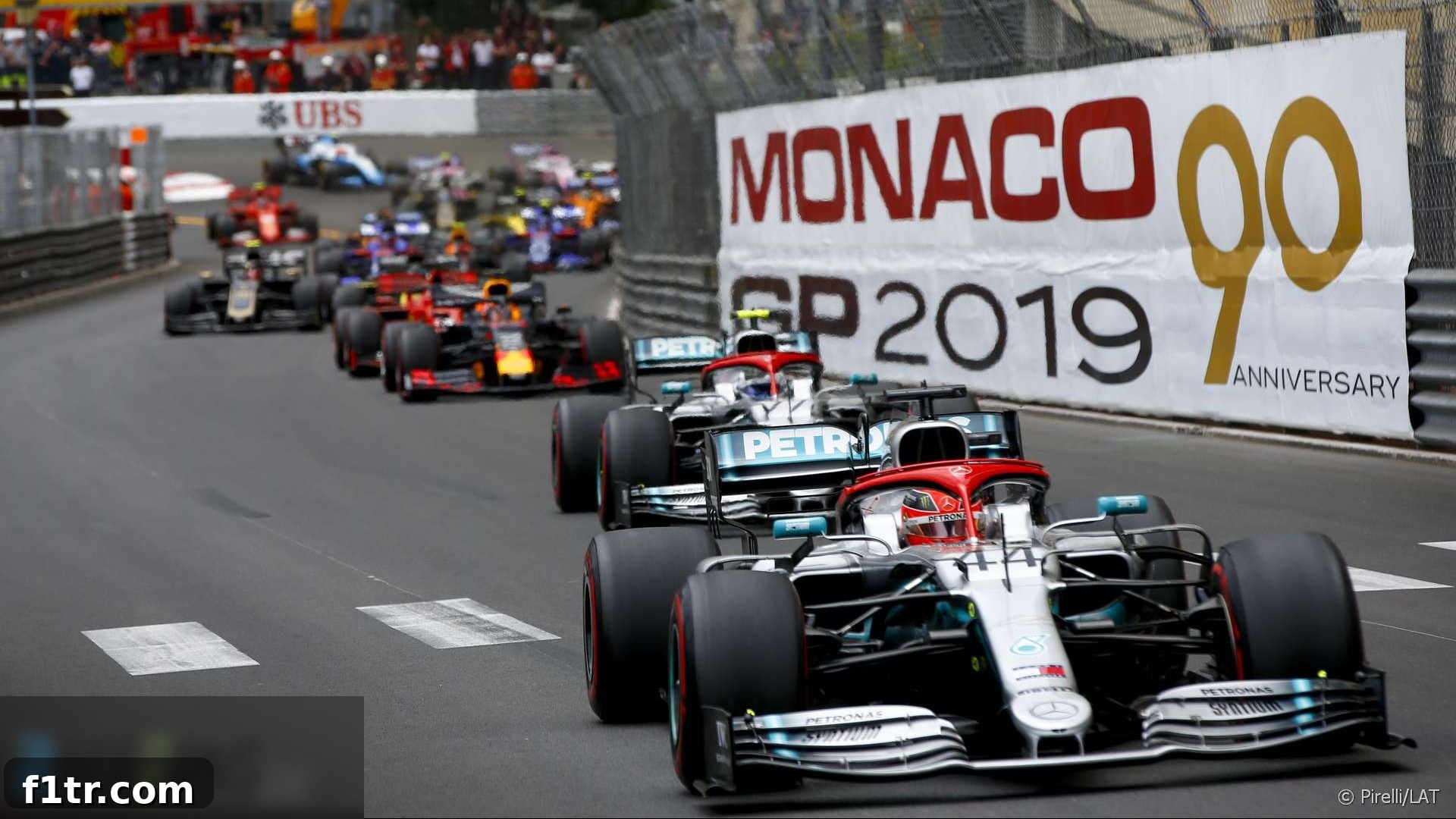
The legendary Monaco Grand Prix, a cornerstone of the Formula 1 calendar, will not proceed in 2020. Race promoters officially confirmed they would not seek an alternative date, solidifying the cancellation of one of motorsport’s most prestigious events.
Monaco Grand Prix 2020 Cancelled Amid Global Pandemic
In a decision that sends ripples throughout the motorsport world, Formula 1 confirmed earlier today that the Monaco Grand Prix, originally slated for May 24th, would not take place as planned. Subsequently, the Automobile Club de Monaco (ACM) delivered the definitive blow, announcing its inability to find a replacement date for the 78th running of the historic race. This marks a truly unprecedented moment, as the Grand Prix has rarely missed a season since its inception, underscoring the severe impact of the ongoing global health crisis.
The Unavoidable Decision: Logistical Nightmares and Public Health Concerns
The Automobile Club de Monaco issued a comprehensive statement detailing the myriad factors that led to this regrettable but necessary cancellation. The promoters highlighted the “current situation concerning the worldwide pandemic and its unknown path of evolution” as the primary concern. They further elaborated on a cascade of logistical and operational hurdles that rendered organizing the event simply untenable.
These challenges included:
- Uncertainty Regarding the FIA F1 World Championship 2020: The fluid state of the entire F1 season, with numerous races postponed or cancelled, made planning for Monaco impossible.
- Team Participation Doubts: The ability of teams to travel, prepare, and compete safely under varying international restrictions was highly questionable.
- Global Confinement Measures: Differing government-imposed lockdowns and travel restrictions across the globe created a complex and unmanageable environment for international event organization.
- Multi-Border Access Restrictions: Accessing the Principality of Monaco itself became significantly complicated due to tightened border controls, impacting everything from team personnel to essential supplies.
- Pressure on Businesses and Staff: Local and international businesses vital to the Grand Prix infrastructure faced immense pressure, with staff unable to undertake necessary installations and preparations.
- Unavailability of Workforce and Volunteers: The event relies on a massive workforce, including over 1,500 indispensable volunteers, whose availability and safety could not be guaranteed under public health directives.
“As a result, and after careful consideration as to the gravity of this crisis worldwide, it is with great sadness that the Automobile Club de Monaco Board of Directors has taken the decision to cancel the 12th Grand Prix de Monaco Historique (8-10 May 2020) and the 78th Grand Prix de Monaco Formula 1, FIA world championship (21-24 May 2020),” the statement concluded. The ACM also expressed deep regret to fans, spectators, partners, and members, clarifying that postponement was not feasible and that organizing the events later this year was unequivocally impossible.
A Historical Perspective: The Jewel in F1’s Crown
The Monaco Grand Prix is more than just a race; it is an institution. Having been held on 77 occasions since its inaugural event in 1929, it holds a unique place in motorsport history. It was famously the second race ever in the first FIA Formula 1 World Championship season in 1950, immediately cementing its status as a foundational element of the sport. Throughout its storied history, Monaco has hosted races in 66 of the 70 F1 seasons, with notable absences only occurring from 1951 to 1954 due to differing regulatory frameworks. The cancellation of the 2020 edition is therefore not merely a logistical setback but a significant break in a rich tradition that has captivated generations of fans and challenged the world’s best drivers.
The circuit itself is legendary. Winding through the narrow, twisting streets of Monte Carlo, it demands unparalleled precision, bravery, and concentration from drivers. Its iconic turns like Mirabeau, the Fairmont Hairpin, and the Tunnel have been the stage for countless unforgettable moments, daring overtakes, and heartbreaking crashes. Winning at Monaco is often considered the pinnacle of a driver’s career, ranking alongside victory at the Indy 500 and Le Mans as part of motorsport’s ‘Triple Crown’. The glamour, the history, and the sheer difficulty of the track combine to create an atmosphere unlike any other race on the calendar, making its absence acutely felt.
The Broader Impact on the 2020 F1 Season
The cancellation of the Monaco Grand Prix compounds the challenges facing the 2020 Formula 1 season, which has been severely disrupted by the global COVID-19 pandemic. Numerous other races, including the Australian, Bahrain, and Vietnam Grands Prix, were either cancelled or postponed in the early stages of the crisis, leading to a highly uncertain and truncated calendar. The loss of Monaco, a race that commands immense prestige and significant financial contributions, deals another significant blow to Liberty Media, Formula 1’s commercial rights holder, and the participating teams.
F1 teams, many of whom rely heavily on prize money and sponsorship, face substantial financial strains as races are called off. Reduced revenues from broadcasting rights, ticket sales, and hospitality further complicate their operational viability. The sport is actively exploring options for a revised calendar, potentially featuring multiple races at the same venue or races held behind closed doors, to salvage as much of the season as possible. However, the unique nature of the Monaco street circuit – its reliance on public roads, the extensive temporary infrastructure, and the massive logistical undertaking to transform the principality into a race track – makes any form of rescheduling or adaptation particularly difficult compared to purpose-built circuits.
The Unique Challenges of a Street Circuit in a Pandemic
Unlike permanent racing facilities, the Monaco circuit is constructed entirely on public streets. This process involves weeks of preparation, including installing miles of barriers, grandstands, safety fencing, temporary buildings for teams and media, and advanced timing and telemetry systems. Such an undertaking requires thousands of workers, substantial heavy machinery, and continuous interaction with local residents and businesses. In the context of a public health crisis demanding social distancing, travel restrictions, and mass gathering prohibitions, this complex transformation becomes virtually impossible to execute safely and efficiently. The disruption to daily life for Monaco’s residents, already a consideration in normal times, becomes an unacceptable burden when health and safety are paramount.
Furthermore, the high concentration of spectators, VIPs, and media in close proximity within the tight confines of the principality contributes significantly to the event’s atmosphere but also presents an insurmountable challenge from an epidemiological perspective. The decision to cancel, rather than postpone, highlights the recognition that the fundamental nature of the Monaco Grand Prix—a spectacle woven into the very fabric of the city—is incompatible with the necessary measures to combat a pandemic in the short to medium term.
Looking Ahead: Hope for a Grand Return
The cancellation of the Monaco Grand Prix for 2020 is a stark reminder of the unprecedented times the world is experiencing. It demonstrates that even the most iconic and resilient sporting events are not immune to the far-reaching consequences of a global health crisis. Earlier today, news also emerged that Prince Albert of Monaco had tested positive for the Coronavirus, further emphasizing the immediate local context of the pandemic’s severity.
While fans and stakeholders alike will mourn the absence of this year’s race, the decision reflects a responsible and necessary prioritization of public health and safety. The motorsport community will undoubtedly look forward to the day when the roar of Formula 1 engines once again echoes through the streets of Monte Carlo, signifying not just the return of a beloved race, but also a step towards global recovery and normalcy. The spirit of Monaco, with its blend of speed, glamour, and history, will undoubtedly return stronger than ever in future seasons.
Related Articles: Exploring the 2020 F1 Season and Beyond
- Grosjean to make F1 test return tomorrow for first time since Bahrain horror crash
- Pictures: Wrecked chassis from Grosjean’s Bahrain fireball crash to go on display
- Bottas vs Rosberg: Hamilton’s Mercedes team mates compared after 78 races each
- F1 revenues fell by $877 million in Covid-struck 2020 season
- Hamilton and Mercedes finally announce new deal for 2021 season
Browse all 2020 F1 season articles