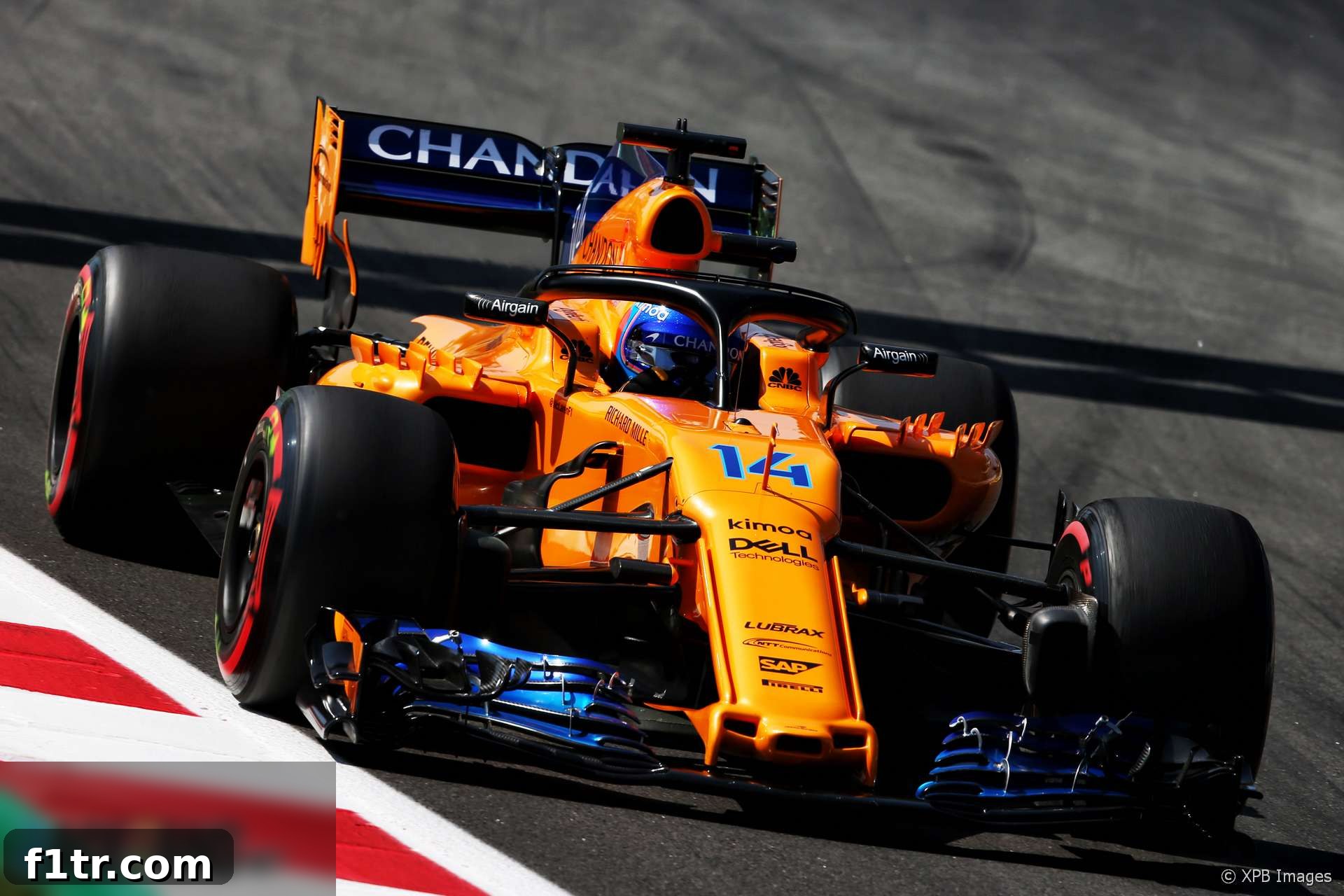
McLaren’s Endurance Test: Fernando Alonso Unpacks the MCL33’s Deep-Seated Challenges and a Glimmer of Future Hope
The 2018 Formula 1 season presented an arduous journey for McLaren, a team steeped in racing history and championship aspirations. Despite high hopes for a resurgence, the Woking-based outfit found itself embroiled in a season-long struggle for performance. According to two-time world champion Fernando Alonso, the team’s difficulties were so profound that only a single significant upgrade package was genuinely introduced to their MCL33 challenger throughout the year, underscoring the depth of their technical predicament.
Unpacking the MCL33’s Fundamental Flaws and Elusive Downforce
A core revelation from within the McLaren camp was the stark admission that the MCL33 produced less downforce compared to its predecessor. In the cutthroat world of Formula 1, downforce is paramount, dictating a car’s cornering speed, grip, and overall aerodynamic efficiency. A deficit in this critical area means a car struggles to generate sufficient grip, leading to slower lap times and compromised handling. This fundamental weakness was not immediately apparent, even after extensive winter testing, leading to a frustrating period of introspection for the team.
Alonso articulated the team’s dedicated efforts, stating, “We are working very hard and very deep into the weakness of the car.” This intensive analysis began once the season was underway, with the initial identification of significant problems surfacing around the third and fourth races of the calendar. Such a delayed discovery of a fundamental flaw highlights potential issues in the team’s simulation tools or wind tunnel correlation – vital components in modern F1 car development.
Following these crucial revelations, McLaren introduced what was hailed as their sole significant upgrade package in Barcelona. This update included a new nose concept and various other aerodynamic refinements designed to address the identified downforce deficiencies. Initially, this intervention seemed promising, as Alonso noted, “In Barcelona we introduced a new package with a new nose and different things and we recovered a little bit the level. So we performed well in Barcelona, in Monaco.” The immediate uplift in performance offered a fleeting moment of optimism, suggesting the team had turned a corner.
However, this respite was short-lived. The gains proved to be localized or insufficient to fundamentally alter the car’s trajectory over a broader range of tracks. “But then we came back to our original problems and a lack of performance,” Alonso lamented, indicating that the underlying issues were far more complex and pervasive than a single upgrade could resolve. This regression underscored the challenge of tackling deep-rooted aerodynamic problems, especially when they weren’t fully understood from the outset.
The Strategic Shift: Sacrificing Present Performance for Future Gains
Faced with persistent and perplexing aerodynamic problems that hadn’t been detected during pre-season wind tunnel testing, McLaren adopted a rather unconventional strategy. During several race weekends, the team made the deliberate decision to dedicate Friday practice sessions, particularly FP1, to extensive aero development and understanding exercises. This approach involved running various experimental configurations, gathering vast amounts of data, and sacrificing immediate competitive performance.
Alonso explained the rationale behind this strategic pivot: “I think now after investing three or four Friday FP1s, doing just aero development and aero understanding, we know that maybe we compromised a little bit the race weekend and the performance in qualifying but we get a lot of information on those Fridays.” This candid admission revealed the team’s prioritisation of long-term learning over short-term results. While it undoubtedly affected their qualifying positions and race performance in the immediate races, it was deemed a necessary evil to truly diagnose the car’s intricate issues.
The extensive data gathering and analysis conducted during these ‘Friday labs’ ultimately yielded crucial insights. Alonso expressed a renewed sense of clarity: “I think now we are in a point of we know exactly what to do.” This statement marked a significant turning point, signifying the transition from a state of uncertainty and guesswork to a concrete understanding of the car’s aerodynamic characteristics and, crucially, how to rectify them. This comprehensive understanding, achieved through rigorous real-world testing, was invaluable, even if it came at the cost of the current season’s competitiveness.
Advert | Become a Supporter & go ad-free
A Glimmer of Hope: Investing in Tomorrow’s Success
Despite the hard-won understanding of the MCL33’s weaknesses, the reality of Formula 1 development cycles means that immediate fixes are often elusive. Alonso candidly stated, “There are some fixes for this year but let’s say that 70% of the knowledge and the understanding of this car will be for next year’s project because it requires time, three or four months’ development and wind tunnel time et cetera. It’s probably better to invest for next year.” This pragmatic assessment underscores the long lead times inherent in F1 car design and manufacturing. Implementing significant aerodynamic overhauls mid-season is exceptionally challenging, requiring extensive design, simulation, wind tunnel testing, and physical production, often spanning several months.
The revelation that many of the development items brought to races were “experimental” further illustrates McLaren’s struggle. Some of these parts failed to deliver the expected gains, while others, as Alonso noted, were even “negative, not positive.” This trial-and-error approach, born out of a desperate search for performance, highlights the difficult period the team navigated. It’s a testament to the scientific and engineering complexities of F1 that even highly advanced teams can misstep in their pursuit of marginal gains.
However, despite the setbacks and the painful learning curve, Alonso conveyed a profound sense of optimism. “Sometimes it’s good to go very deep into the problems and down in performance to understand the car. I see a much clear and brighter future now with all the problems and all the understanding now.” This perspective suggests that the comprehensive and at times brutal self-assessment has laid a solid foundation for future development. By truly understanding the root causes of their underperformance, McLaren positioned itself to avoid similar pitfalls in subsequent car designs, fostering a more robust and effective development process.
Performance Trajectory: A Season of Regression
The tangible impact of McLaren’s technical struggles was clearly reflected in their on-track performance throughout the season. At the outset of the year, during the Australian Grand Prix, the team was consistently fighting for points, typically operating “between seventh and 10th.” This initial competitive standing offered a glimmer of hope that the team could build upon.
However, as the season progressed and the true extent of the car’s limitations became apparent, that initial promise faded. Following the temporary boost in Barcelona and Monaco, where the team managed to regain its position “from seventh to 10th,” the performance began to regress steadily. Alonso’s concise summation, “And then we are going back, back,” painted a grim picture of a team that, despite its best efforts, was consistently losing ground to its rivals. This downward trend underscored the critical importance of effective in-season development and the steep price paid for fundamental design flaws.
The Road Ahead for McLaren: Lessons Learned and Future Prospects
The 2018 Formula 1 season was undeniably a challenging chapter for McLaren. The revelations from Fernando Alonso painted a picture of a team grappling with deep-seated aerodynamic issues, a lack of effective in-season upgrades, and the difficult decision to sacrifice immediate results for a clearer understanding of their car’s problems. While the short-term impact was a season of underperformance and regression, the long-term strategic investment in forensic analysis and understanding is poised to yield significant dividends.
The profound learning experience, though costly in terms of points and championship standing, has reportedly equipped McLaren with the necessary insights to develop a more competitive challenger for the future. By knowing “exactly what to do,” the team is now better positioned to channel its considerable resources and engineering talent towards rectifying past mistakes and building a car capable of consistently fighting at the sharp end of the grid. Alonso’s vision of a “much clear and brighter future” reflects the enduring hope that from this period of profound struggle, a stronger, more competitive McLaren will emerge.
Advert | Become a RaceFans supporter andgo ad-free
2018 F1 season
- F1 feared “death knell” for Drive to Survive after Ferrari and Mercedes snub
- McLaren staff told us we were “totally crazy” to take Honda engines in 2018 – Tost
- ‘It doesn’t matter if we start last’: How Red Bull’s junior team aided Honda’s leap forward
- Honda’s jet division helped F1 engineers solve power unit problem
- McLaren Racing losses rise after Honda split
Browse all 2018 F1 season articles