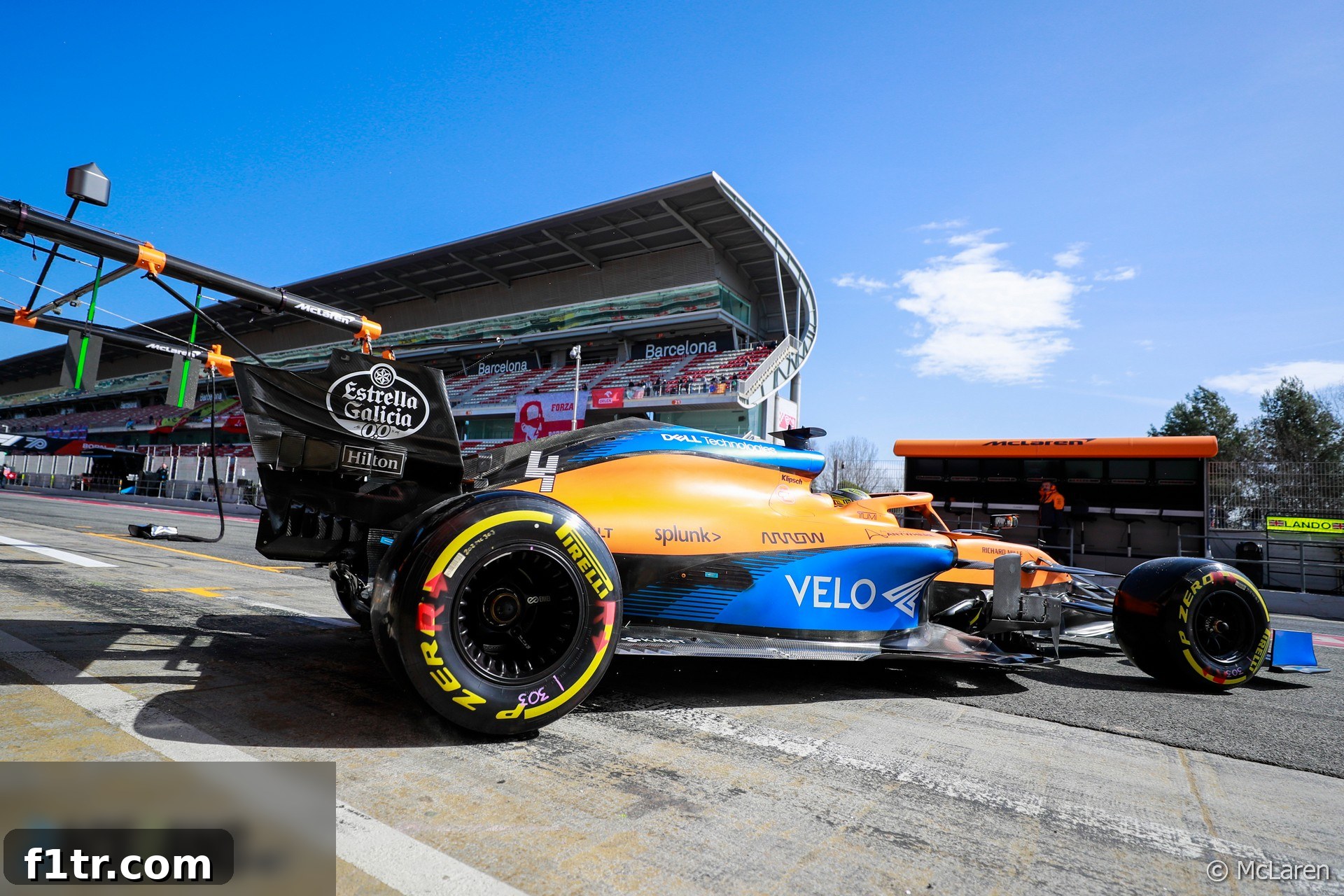
McLaren Racing is set to navigate a unique and unprecedented challenge in the upcoming 2021 Formula 1 season, a situation born from a confluence of strategic planning and unforeseen global circumstances. Despite a unanimous agreement among teams to freeze their chassis designs from 2020 as a cost-saving measure, McLaren will be granted special dispensation to make “necessary changes” to its 2020 F1 car. This crucial allowance is to accommodate its planned switch to Mercedes power units for the next year, a move that promises to significantly alter the Woking team’s competitive landscape.
The decision to postpone the radical new technical regulations, originally slated for 2021, and instead carry over the 2020 chassis designs, was a direct consequence of the global pandemic. The widespread disruption caused by COVID-19 necessitated swift and decisive action from Formula 1’s governing bodies to safeguard the financial stability of all ten teams on the grid. Freezing development on major components like the chassis was seen as a vital step to curtail expenditure during a period of significant economic uncertainty and operational challenges.
McLaren’s Pre-Planned Power Unit Transition
However, McLaren found itself in a unique predicament. Long before the pandemic reshaped F1’s immediate future, the team had already solidified an agreement with Mercedes-AMG High Performance Powertrains to transition from their current Renault power units to Mercedes engines for the 2021 season. This strategic move, announced well in advance, was intended to align McLaren with a proven championship-winning engine supplier, marking a return to a highly successful partnership from the past.
The challenge, therefore, was inherent: the 2020 MCL35 chassis, designed and constructed around the architecture and specific packaging requirements of the Renault power unit, would now need to seamlessly integrate a fundamentally different Mercedes engine. Without the allowance for modifications, McLaren would have been forced into an almost impossible compromise, potentially severely hampering their performance for an entire season.
Andreas Seidl Confirms Green Light for Modifications
Team Principal Andreas Seidl has unequivocally affirmed McLaren’s support for the cost-saving measures introduced by Formula 1. He emphasized the critical importance of protecting the sport’s financial health during these trying times, while also ensuring a level playing field once racing resumes. Crucially, Seidl confirmed that the decision to postpone the new regulations and freeze chassis designs would not impede McLaren’s pre-arranged switch to Mercedes power units. “Furthermore,” Seidl stated, “this decision does not impact our change to Mercedes power units in 2021, and we will be allowed to make the necessary changes to our car to accommodate this.”
What “Necessary Changes” Entail
The term “necessary changes” is pivotal here. Integrating a new power unit is far from a simple bolt-on operation. Modern F1 engines are integral to the car’s overall design, affecting everything from chassis structure and cooling systems to aerodynamic efficiency and electrical architecture. The Mercedes power unit, known for its compact turbocharger layout and unique engine-gearbox interface, will require significant alterations to the MCL35’s rear end.
These modifications will likely include redesigned engine mounts, adjustments to the gearbox casing to mate with the new engine, re-routing of exhaust and intake systems, and comprehensive revisions to the cooling package to optimize thermal management for the Mercedes unit. Furthermore, the electronic control units, wiring looms, and associated software will all need to be completely integrated, representing a substantial engineering undertaking. The rear bodywork, which is heavily influenced by the engine’s packaging, will also require redesigning to ensure optimal airflow and aerodynamic performance. While the core structural integrity of the chassis remains frozen, these specific areas related to the power unit are critical and require bespoke attention.
Strategic Implications for McLaren and the Grid
This dispensation offers McLaren a vital lifeline, preventing a season of forced technical compromise. The strategic implications are manifold. For McLaren, gaining access to the benchmark Mercedes engine is expected to provide a significant performance uplift, enabling them to better compete at the sharp end of the grid. It underscores their ambition to return to championship-contending status.
From a broader F1 perspective, this decision highlights the sport’s pragmatism in balancing cost-saving initiatives with pre-existing contractual obligations and the need to maintain competitive integrity. While the chassis freeze is a blanket rule, recognizing McLaren’s unique situation prevents an unfair disadvantage from a scenario entirely outside their control. It demonstrates a commitment to fairness while navigating an unprecedented crisis.
Maintaining Operational Readiness During Shutdown
Beyond the technical and regulatory discussions, McLaren, like all UK-based F1 teams, implemented a mandatory factory shutdown in response to government restrictions and the ongoing pandemic. Andreas Seidl provided insight into how the team was adapting its operations to prioritize safety while maintaining readiness for when racing can safely resume.
“The key focus for everyone in the team is on staying safe,” Seidl emphasized. “Prior to shutdown, much of the team are working from home, with only critical staff working in the factory on split shift working schedules. This enables us to be ready to go racing again as soon as we can, while minimising the risk to our team.” This approach ensured that essential maintenance, planning, and design work could continue with minimal personnel on-site, safeguarding employees’ health while keeping the wheels of innovation turning, albeit at a reduced pace.
Seidl’s comments underscored the unwavering passion within the team, regardless of working arrangements: “We all want to go racing and we carry that passion with us whatever our working arrangements are. The effort doesn’t stop, we just make sure that we are working in a safe manner.” This collective determination is what drives Formula 1 and its teams through challenging periods.
Looking Ahead: The 2021 Season and Beyond
The 2021 Formula 1 season promises to be a fascinating chapter in the sport’s history, defined by continuity of chassis designs alongside significant power unit changes for some teams. McLaren’s ability to seamlessly transition to Mercedes power units, with the necessary modifications, will be a critical factor in their performance. It sets the stage for a highly anticipated season where the integration of new engines into existing chassis will be a key performance differentiator.
This period of adaptation and strategic maneuvering, enforced by global events, will undoubtedly test the ingenuity and resilience of every team. McLaren’s proactive steps and the sport’s supportive regulatory framework ensure that the Woking outfit can pursue its ambitions without being unduly penalized by circumstances beyond its control, setting the stage for an exciting new era of competition with Mercedes power.
The long-term vision for Formula 1 remains focused on sustainability, both financial and environmental, and the 2021 transition represents a temporary but necessary deviation from the planned radical overhaul. The experience gained during this period of constraint and adaptation will likely inform future regulations, reinforcing the sport’s ability to evolve and adapt.
In conclusion, McLaren stands at the cusp of a transformative year. The permission to adapt their MCL35 chassis for the Mercedes power unit ensures that their strategic engine switch can proceed as planned, even amidst the backdrop of frozen chassis regulations. This unique scenario not only highlights McLaren’s operational agility but also Formula 1’s commitment to supporting its teams through unprecedented challenges, paving the way for a fiercely contested 2021 season.
2021 F1 season
- Masi ‘basically gifted the championship’ to Verstappen says 2021 FIA steward Sullivan
- Las Vegas race backers looking to extend F1 deal beyond 2025
- Why Mercedes put ‘a reminder of joy and pain’ on display in their factory lobby
- Verdict on error in GT race suggests Mercedes would have lost 2021 Abu Dhabi GP appeal
- Title ‘stolen’ from Mercedes made us ‘underdogs people cheer for’ – Wolff
Browse all 2021 F1 season articles