The Dutch Grand Prix was a regular stop on the Formula 1 calendar for many years until it disappeared after 1985. Its return in recent seasons has been driven largely by the popularity of Max Verstappen, whose rise in F1 over the past seven years helped create the momentum organisers needed to bring the race back to Zandvoort after a three-decade absence.
Advert | Become a Supporter & go ad-free
Last year’s Dutch Grand Prix became effectively a three-day celebration of Verstappen. He denied championship rival Lewis Hamilton pole position by a mere three-hundredths of a second despite a DRS problem on his final lap, and then produced a tense victory as Mercedes tried unsuccessfully to outmanoeuvre Red Bull during the race.
The grandstands were noisy and colourful throughout the weekend: loud music, waves of orange and occasional clouds of orange smoke created a festival-like atmosphere. Even with an especially lively crowd, capacity was limited to around two-thirds last year because of lingering Covid-19 restrictions.
This year organisers expect a full capacity of about 105,000 spectators for the decisive days at the seaside track. Zandvoort’s compact layout concentrates fans into a smaller space than many circuits, and the stands that line the start-finish straight and curve around the famed first corner, Tarzan, often produce an atmosphere more akin to a football match than a typical grand prix.
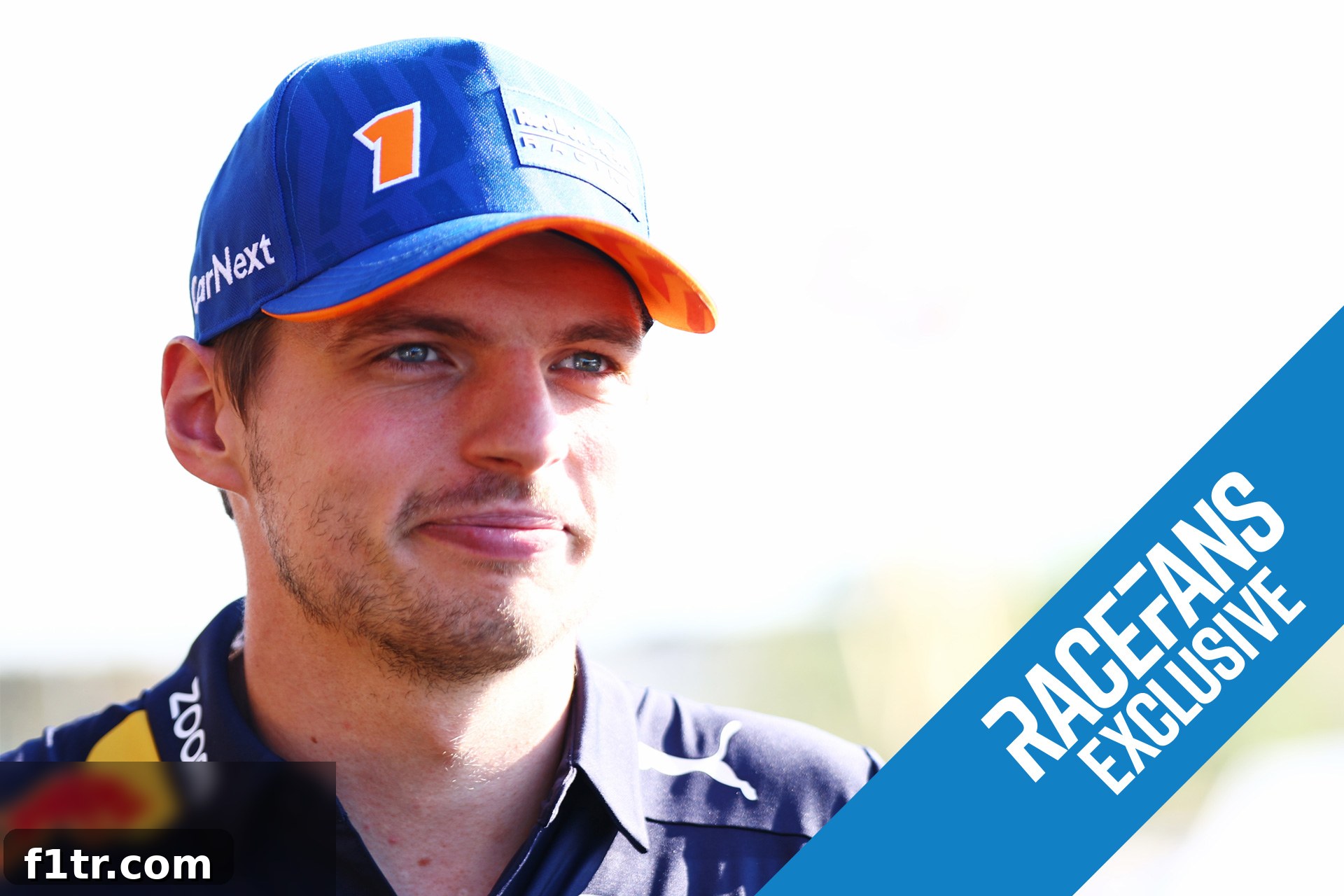
“This year there are even more fans allowed so I expect even more orange and that’s going to be a really special weekend again,” Verstappen told RaceFans in an exclusive interview ahead of the race. “Of course, last year after winning it, that was already insane. It will be hard to replicate something like that. But I’m looking forward to it, I hope we can really enjoy the weekend.”
Advert | Become a RaceFans supporter andgo ad-free
Other drivers attract passionate followings too: Lewis Hamilton has a huge social media presence, and Ferrari’s Tifosi travel the world. But the speed at which Verstappen has built such enthusiastic support—visible at races well beyond Europe even before he clinched his world title—has been striking.
“I think it’s just the passion in the country,” Verstappen says. As the first world champion, pole-sitter and grand prix winner from the Netherlands, he has become a national figure. “We are a small country but we love racing and we love to support individuals. I think you can see it in a lot of sports. Of course, F1 nowadays here in Holland is very popular. And they like a good time as well.”
Verstappen believes his fans bring an unmatched energy to races. “I think not only like supporting a person, but when you see them on the grandstand, the atmosphere, it’s really good. They have a great time. At some other races you have full grandstands, but the atmosphere is a bit… I wouldn’t say ‘dull’, but a bit more static. That’s what I like about Dutch people, they know how to create a party, that’s for sure.”
For many years a return to Zandvoort seemed unlikely. Verstappen’s father Jos, who raced in F1 from 1994 to 2003, never had the chance to contest a home grand prix in Formula 1, apart from brief appearances in other series. Now Max is bidding for a second home victory, this time wearing a helmet design inspired by his father’s—adapted to fit Red Bull’s branding rules.
Advert | Become a RaceFans supporter andgo ad-free
“He didn’t know anything about it until two months after it was completed,” Verstappen says of his father’s reaction. “When I showed him, I said, I’m going to make a helmet for something like we always do. He was like ‘oh great, what does it look like?’ And then I showed him the picture. I think he really appreciated what I was doing.”
Verstappen first used a similar helmet design when he started karting as a very young child. “When I see the old footage of when I started when I was four years old, running around as a little kid with that helmet design, it was something I was really proud of because a helmet design can be very personal. Of course I had to give up a lot of my helmet design when I joined Red Bull—anyway, for good reasons—but sometimes it’s nice to be able to come back to it. And I thought this was the right weekend to do so.”
Racing runs in his family. While many drivers have racing fathers, Verstappen is unusual in having a successful racing mother too: Sophie-Marie Kumpen was a karting champion in the 1990s. He says his parents never forced him into motorsport, though they likely supported the idea privately. “Maybe secretly they wanted it,” he admits. “They never told me that I had to do it.” His sister Victoria tried karting but did not follow him into cars.
“The nice thing was that when I would come home from a test day, I had my dad to talk to, but I could also talk to my mum about what we did,” he adds. “I didn’t have to talk in a very basic language, I could just speak how you speak in the racing language. That’s nice because that doesn’t happen very often that you talk to your mum about what you were doing on the track in terms of things you change on the go-kart.”
Even with that shared background, Verstappen says he avoids discussing technical secrets of the Red Bull RB18 with his family. “Of course, I don’t go now into detail about what I do on my car,” he points out. His mother, like many parents, still worries about the risks of racing, but remains a devoted supporter and has returned to attending races more often now that pandemic restrictions have eased.
The family’s dedication during his early years meant frequent travel and sacrifices. “The whole family had to move around for it, live for the dream,” he explains. “Then, of course, my dad didn’t spend the full amount of time with my sister back in the day because he was travelling with me all the time. So it’s important to have everyone involved.”
His karting experience and parental guidance helped prepare him for a fast rise through the junior categories. After karting he raced a winter single-seater series in Florida, moved to F3 and was signed by Red Bull before the season ended. His promotion to F1 at 17 drew criticism and led the FIA to introduce an 18-year age limit, ensuring he remains the youngest ever grand prix driver. Yet his record—16 pole positions, 20 fastest laps, 29 wins and a world championship—has largely answered those early doubts.
Verstappen acknowledges that becoming a top-level driver so young meant “growing up in Formula 1.” He says the mix of good and bad experiences has been an important part of his development. “The speed has always been there,” he notes. “It’s the same in go-karting: When I compare myself from when I was 12 to 15 and you go through the categories, you grow a lot as a driver. Then of course, you make an even bigger jump, probably from 17, 18 to where I am now.”
At 24 he has already contested more than 150 races and is under contract with Red Bull into his thirties, giving him ample time to build on his achievements in a team that increasingly feels tailored to his strengths. His immediate goal is to excite his home fans with another victory at the race that returned to the calendar in large part because of him.
RaceFans’ exclusive interview with Max Verstappen will conclude tomorrow. Read part one here
Become a RaceFans Supporter
RaceFans is supported in part by its readers. By contributing £1 per month or £12 per year (or the equivalent in your currency) you help cover the costs of producing and maintaining the site.
Become a RaceFans Supporter today and browse the site ad-free. Sign up or find out more via the links on the site.
- Become a RaceFans Supporter
- RaceFans Supporter FAQ
Advert | Become a RaceFans supporter andgo ad-free
2022 Dutch Grand Prix
- Ferrari’s season of missed chances led to “difficult” criticism for Binotto
- How many victory chances did Hamilton have in his first winless F1 season?
- Why F2’s role as F1’s sustainable fuel guinea pig ‘isn’t going to be a reliability issue’
- Straight-line speed deficit will continue to “bite” Mercedes in qualifying – Wolff
- Verstappen achieves his longest winning streak with second home victory
Browse all 2022 Dutch Grand Prix articles