The exhilarating start to the 2022 Formula 1 World Championship left fans with more questions than answers after a dramatic Bahrain Grand Prix. The desert night race in Sakhir delivered an enthralling spectacle of speed, strategy, and unexpected twists, setting a high bar for the season ahead. Yet, with barely a moment to breathe, the ten teams of the pinnacle of motorsport are already making their way to the bustling city of Jeddah, Saudi Arabia, for the second round of what promises to be an unforgettable year. Just one week after the season opener, the Jeddah Corniche Circuit awaits, ready to host its second Grand Prix in a remarkably short span of four months. The circuit has undergone various modifications since its debut, aiming to enhance both safety and the quality of racing, promising an even more refined and thrilling experience for drivers and spectators alike.
As the F1 circus descends upon the fastest street circuit on the calendar, several compelling narratives and challenges emerge. From Ferrari’s newfound dominance to Red Bull’s immediate reliability concerns, and the ever-present specter of porpoising on a high-speed urban track, the Saudi Arabian Grand Prix is poised to offer yet another captivating chapter in the 2022 season. Here are the key talking points that will shape the weekend ahead.
Can Ferrari Back Up Their Bahrain Success and Maintain Momentum?
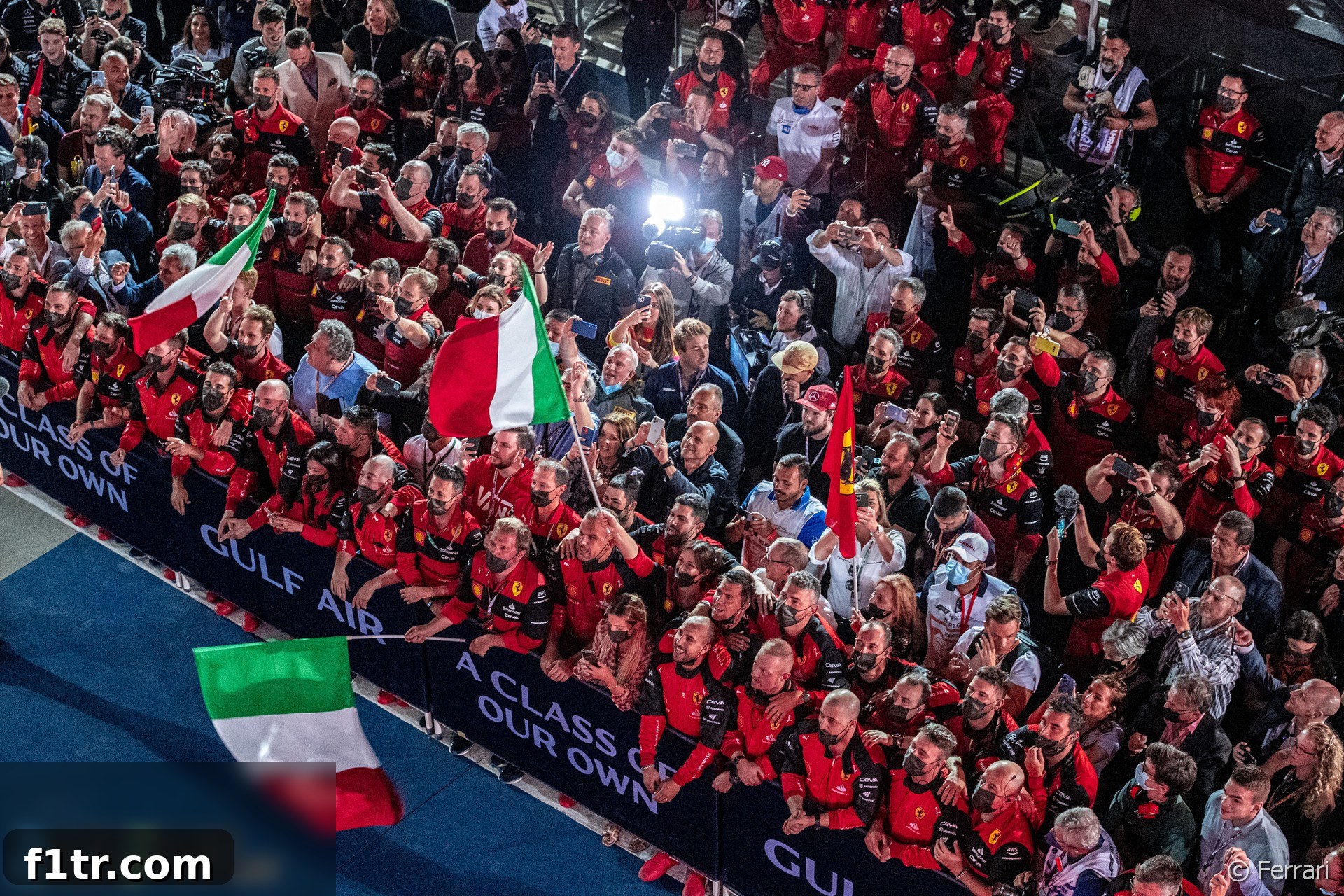
For Scuderia Ferrari, the Bahrain Grand Prix represented nothing short of a dream start to the new era of Formula 1. The Maranello outfit could not have scripted a more perfect opening act: pole position, the fastest lap of the race, and a commanding victory for Charles Leclerc, marking his first win in over two years. Adding to their jubilation, teammate Carlos Sainz Jnr crossed the line in a comfortable second place, securing a magnificent one-two finish for the Italian giants. This performance not only exceeded expectations but also validated the immense promise shown during pre-season testing, where the F1-75 consistently appeared to be one of the most stable and competitive cars on the grid.
Now, heading into Saudi Arabia, Ferrari stands on the cusp of achieving something they haven’t managed since the 2018 season: winning the opening two rounds of the championship. Such an accomplishment would send a powerful message to their rivals and firmly establish them as serious title contenders. While Ferrari undeniably delivered on their potential in Bahrain, Red Bull Racing proved to be formidable adversaries throughout the weekend. Max Verstappen was mere tenths off Leclerc’s pole time and engaged in a thrilling wheel-to-wheel battle after the initial pitstops, showcasing the razor-thin margins between the top teams. It was only an unforeseen power unit issue that forced Verstappen’s retirement late in the race, denying Red Bull a likely double podium finish.
The transition from the traditional Bahrain International Circuit, with its emphasis on traction and braking, to the unique challenge of the Jeddah Corniche Circuit presents an intriguing test. Jeddah is renowned for its ultra-high-speed sections, rapid changes of direction, and unforgiving walls, characteristics that demand a different setup and aero balance. With so many unknowns surrounding the behavior of these new ground-effect cars for 2022, a critical question looms: will the Ferrari F1-75 once again demonstrate its superior all-round package and maintain its edge over the Red Bull RB18 this weekend? Or will the distinct demands of the high-speed street circuit inherently suit the characteristics of the Red Bulls better, potentially reversing the fortunes seen in Bahrain? The answers will not only define the early championship narrative but also provide crucial insights into the true pecking order of the 2022 season.
Will Jeddah Track Changes Make Racing Cleaner and Safer?
The Jeddah Corniche Circuit earned immediate notoriety among fans and drivers alike following its inaugural race just four months ago. Billed as the “fastest street circuit in the world,” its debut was marked by a flurry of incidents, including two red flag stoppages due to significant accidents. With the second-highest average lap speed of any circuit on the calendar, the many fast, blind, and barrier-lined corners drew considerable criticism regarding both safety and the quality of racing. As Sebastian Vettel aptly remarked after last year’s chaotic event, “I think Suzuka is an amazing track, but you wouldn’t do Suzuka with walls. And that’s what they’ve done, more or less, here.” His comments highlighted a prevalent concern among drivers: the combination of extreme speed and unforgiving barriers made for a dangerously high-stakes environment where even minor errors could lead to major consequences.
In direct response to these safety concerns and driver feedback, the circuit’s management, in conjunction with Formula 1 and the FIA, implemented a series of minor yet impactful changes to the track layout for this year’s event. The primary objective was to significantly improve drivers’ sightlines into many of the circuit’s notorious blind corners, thereby enhancing safety and reducing the risk of high-speed collisions. To achieve this, barriers have been subtly moved back by up to two meters at critical points, notably at turns two and three, as well as the exhilarating flat-out turn 14, which immediately follows a tight hairpin. These adjustments aim to provide drivers with a crucial extra fraction of a second to react to unfolding situations and better anticipate the corner apexes.
Further modifications include making the barriers on the apexes of turns four and 16 shallower, allowing for a wider entry and exit without compromising speed. Similar adjustments have been applied to turns 22 – a section that witnessed numerous incidents during the inaugural weekend – and the fast kink of turn 24. Even the final hairpin, famously where Max Verstappen lost a likely pole position after hitting the wall, has been widened with the barrier moved back, aiming to give drivers more room to maneuver and reduce the likelihood of contact. While these proactive changes are certainly welcomed, it’s noteworthy that no adjustments were made to turns eight and nine. This particular section was the scene of one of the closest near-misses of the 2021 weekend, when Nikita Mazepin unexpectedly encountered a slow-moving Lewis Hamilton in the middle of a fast, blind sweeper during practice. Teams and drivers will therefore need to remain on the highest level of alert throughout all sessions this weekend, constantly monitoring their mirrors and communicating effectively to avoid running into slower cars or being hit by faster ones.
Adding another layer of complexity to the safety equation are the new 2022 cars themselves. With their taller wheels and mandatory bodywork extensions over the top, drivers face an added visibility problem. These design changes inherently make it harder for drivers to accurately judge where the apex of a corner is, especially on a circuit like Jeddah where precision is paramount and the margins for error are minuscule. The combination of these new car characteristics and the inherent challenges of the Jeddah Corniche Circuit will ensure that the Saudi Arabian Grand Prix remains a demanding and high-octane affair, testing the skills and nerve of every competitor.
Red Bull’s Early Season Power Unit Problems
The Bahrain Grand Prix proved to be a baptism of fire, quite literally, for Red Bull’s newly established powertrains division. In a shocking turn of events, only one of the four cars powered by the Red Bull-badged Honda power units managed to reach the chequered flag. This stark reality cast a shadow over what had otherwise been a highly competitive weekend for the Milton Keynes outfit.
Sergio Perez candidly described last Sunday as a “very low day” for the team, and understandably so. The race saw a potential second-place finish evaporate for Max Verstappen after his car suffered a sudden loss of power in the final laps. The team’s woes were compounded just moments later when a potential third-place podium finish for Perez also vanished on the final lap, as his car seized up at the very last hairpin. Earlier in the race, the power unit reliability issues had already struck the sister team, AlphaTauri, with Pierre Gasly forced to pull off the circuit as his car dramatically erupted in flames. This left Yuki Tsunoda’s AlphaTauri as the sole Red Bull-powered machine to successfully finish the race, a deeply concerning statistic for a team with championship aspirations.
Initial analysis from Red Bull suggested a problem with the fuel system was the root cause for the double retirement of the main Red Bull cars – an issue that, crucially, had not manifested itself during the extensive pre-season testing program. The rapid turnaround between the Bahrain and Saudi Arabian Grand Prix offers precious little time for Red Bull to conduct a thorough investigation, diagnose the exact problem, and implement a robust fix, especially if the issue proves to be more fundamental within their intricate power unit design. The compressed schedule means that any potential solutions will have to be rapidly designed, manufactured, and implemented, adding immense pressure on the Red Bull Powertrains team. Consequently, there’s likely to be a palpable sense of apprehension and nervous faces in the Red Bull garage and on the pit wall, right up until the chequered flag waves in Jeddah this weekend. The team will be holding its breath, hoping that the reliability gremlins have been banished, allowing their potent RB18 to unleash its full performance without interruption. The championship battle hinges not just on pace, but critically, on flawless dependability.
How Will the Order Vary at Round Two?
The major rules overhaul for 2022 was designed with the explicit aim of shaking up the established order and offering teams traditionally further down the grid the best opportunity in years to make a significant leap up the pecking order. In the Bahrain Grand Prix, this vision certainly materialized, with Haas and Alfa Romeo enjoying surprisingly strong performances, securing fifth and sixth place finishes respectively. Kevin Magnussen’s sensational return to F1 for Haas and Valtteri Bottas’s immediate impact at Alfa Romeo were two of the biggest feel-good stories of the opening weekend, signaling a genuine shift in competitiveness for these perennial backmarkers.
However, relying on a single race weekend as a definitive sample size to assess the true performance order across all ten teams for an entire season would be premature. Formula 1 is a sport of constant evolution, and the specific characteristics of each circuit can dramatically influence the pecking order. The transition from a permanent circuit like Bahrain, which places a heavy emphasis on traction out of slow corners and robust braking performance, to a unique street circuit like Saudi Arabia could not be more stark. Jeddah is defined by its quick kinks, rapid changes of direction, and extremely high top speeds, demanding a completely different aerodynamic setup, suspension stiffness, and driver approach. This stark contrast in circuit characteristics could very well paint a dramatically different picture of the teams’ relative strengths and weaknesses this weekend.
While it remains unlikely that Mercedes will miraculously find the half-second-plus per lap they need to fully join the battle at the very front of the grid in such a short space of time, we could certainly witness an incredibly tight midfield fight. It wouldn’t be surprising to find six, or even seven, different teams coming away with valuable points from Jeddah. The exact configuration of this points-scoring order, however, remains a tantalizing unknown. Teams like Alpine and McLaren, who had mixed fortunes in Bahrain, will be eagerly looking to exploit any advantages their cars might have on Jeddah’s flowing layout. Ferrari and Red Bull will be pushing hard to understand if their initial pace disparity was track-specific or an inherent characteristic. With the rate of development expected to be exceptionally high throughout this season as teams unlock the potential of their new cars, every single point scored at this early stage could prove crucial in determining the final standings in this year’s highly competitive constructors’ championship. Therefore, expect the fight for every available point to be especially intense and fiercely contested this weekend.
Will Porpoising Prove More of a Problem on a Street Circuit?
After emerging as one of the major talking points throughout pre-season testing, the phenomenon of ‘porpoising’ – where the car oscillates rapidly at high speeds due to aerodynamic stalling and reattachment – didn’t seem to become an insurmountable headache for the 20 cars on track during the Bahrain Grand Prix. While visible on some cars, particularly the Mercedes, teams generally managed to mitigate its most severe effects during the race. This was almost certainly influenced by teams who had suffered with more severe bouncing, such as Mercedes, opting to run set-ups specifically designed to deliberately reduce the porpoising effect as much as possible, often involving adjustments to ride height and suspension stiffness, even if it meant a slight compromise on ultimate performance.
However, the Bahrain International Circuit is characterized by its long straights leading into heavy braking zones for tight corners, allowing cars to dissipate speed and reset their aerodynamic platform. The Jeddah Corniche Circuit presents a fundamentally different challenge. With its much greater variety of corners, many of which are high-speed and approached in higher gears, the cars will be spending more sustained periods operating at the very edge of their aerodynamic limits. This sustained high-speed running, combined with constant direction changes, could potentially exacerbate the porpoising problem for teams that haven’t fully resolved it. The high G-forces through these rapid sequences of corners could trigger or worsen the bouncing effect, making the cars far more challenging to drive.
Many drivers, including Charles Leclerc, Sebastian Vettel, and Alex Albon, have already voiced concerns, stating their expectation that the 2022 cars will be significantly less comfortable to drive around street circuits this season. This discomfort stems from the inherently stiffer suspension settings that teams are compelled to run in order to make the most of the ground effect downforce. A stiffer car setup allows for a more consistent aerodynamic platform, maximizing the underfloor tunnels’ efficiency, but at the cost of ride comfort and the ability to absorb bumps. Given that street circuits are naturally bumpier and feature more undulations than most permanent and purpose-built racing venues, this weekend in Jeddah will likely provide teams with a crucial and, potentially, painful insight into just how badly their cars are likely to be affected by porpoising over the many other street tracks to come on this year’s extensive calendar. The challenge will be to find a delicate balance between extracting maximum aerodynamic performance and ensuring the car remains drivable and predictable over the bumpy and unforgiving surfaces of a street circuit.
Are You Going to the Saudi Arabian Grand Prix?
If you’re one of the fortunate fans heading to Saudi Arabia for this weekend’s highly anticipated race, we’d love to hear about your experience! Share your insights, excitement, and any tips you might have for fellow attendees:
- Forum: Going to the Saudi Arabian Grand Prix at Jeddah Corniche Circuit
Who do you believe will be the team to beat at the Jeddah Corniche Circuit this weekend? Will Ferrari continue their dominant start, or will Red Bull find their reliability and fight back? Perhaps another team will rise to the occasion on this unique track. Have your say and share your predictions in the comments section below.
And don’t forget to enter your predictions for this weekend’s thrilling race in our championship. You can edit your predictions right up until the start of qualifying, so make sure to get your entries in and compete against fellow F1 enthusiasts:
- RaceFans Predictions Championship
2022 Saudi Arabian Grand Prix
- Vettel will return to race for Aston Martin at Australian Grand Prix
- Mercedes “a second per lap” off Red Bull’s pace – Russell
- Transcript: How Verstappen fought Leclerc on his radio and on the track in Jeddah
- F1 intends to keep racing in Saudi Arabia despite missile attack
- Paddock Diary: 2022 Saudi Arabian Grand Prix
Browse all 2022 Saudi Arabian Grand Prix articles