The world of Formula 1, with its dazzling speeds and intense competition, relies heavily on the diligent efforts of track marshals, unsung heroes who ensure driver safety and manage incidents under immense pressure. However, recent events, particularly during the Emilia-Romagna Grand Prix, have once again thrust the critical issue of marshal safety into the spotlight. Following last week’s race at Imola, video footage surfaced, depicting several drivers passing precariously close to marshals who were present on or near the track during a Safety Car period. This incident reignited a vital debate surrounding safety protocols and communication within motorsport.
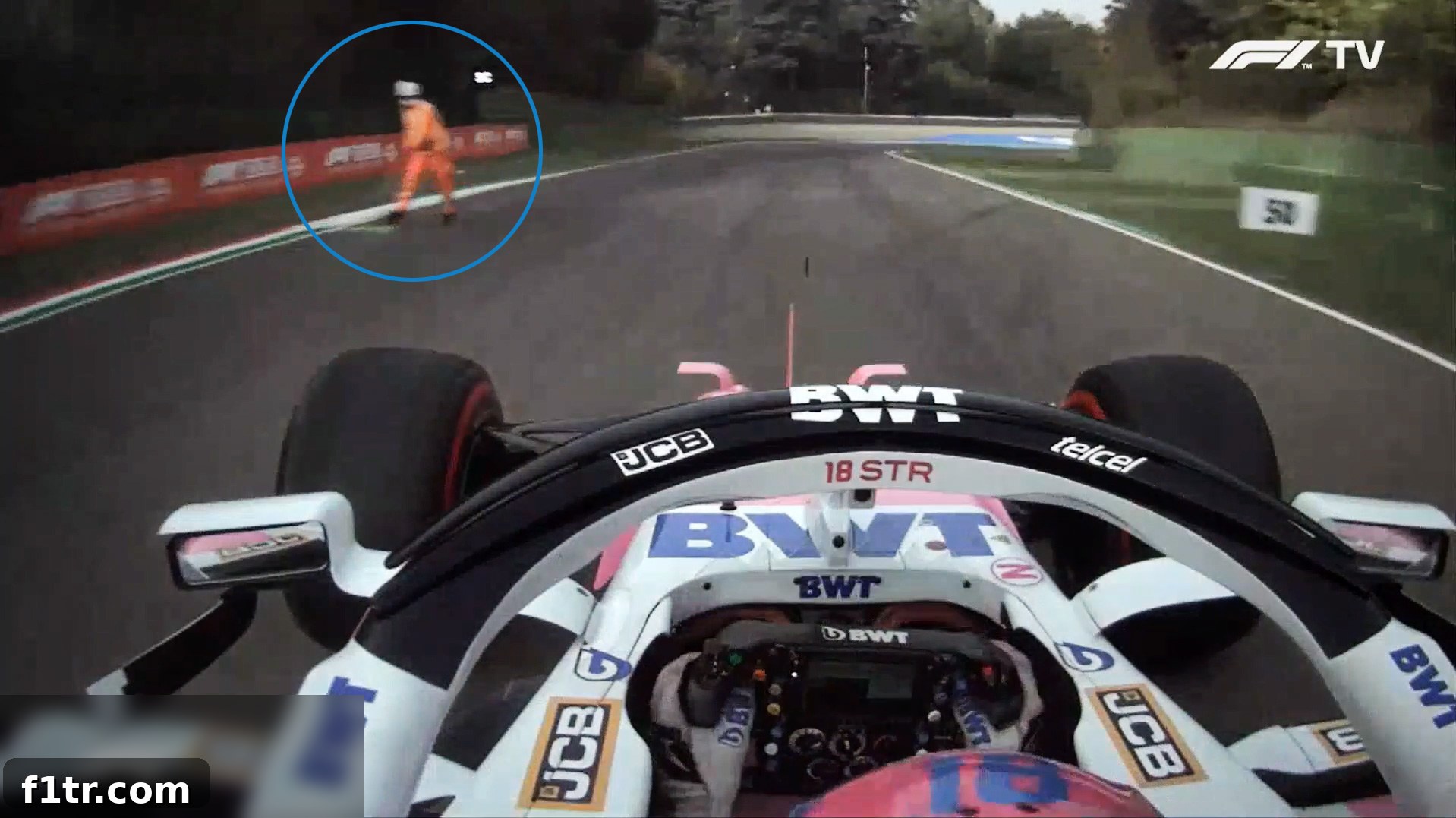
The situation unfolded when six drivers, having been waved past the Safety Car to un-lap themselves and rejoin the lead lap, encountered marshals actively working on the track. This occurred on the approach to Acque Minerale, where the circuit was still being cleared of debris following George Russell’s earlier crash. The sight of these essential personnel in such close proximity to high-speed Formula 1 cars, even under Safety Car conditions, immediately raised alarm bells across the paddock and among fans.
Among the drivers involved, Lance Stroll, the last of the group, passed alarmingly close to the working marshals at considerable speed. Ahead of Stroll, seasoned veteran Sebastian Vettel, witnessing the scene unfold, vocally warned race control, emphasizing that the presence of marshals on track was “very, very dangerous”. Vettel’s immediate concern underscored the severity of the situation and the inherent risks involved for those brave individuals ensuring track integrity.
This incident at Imola was not an isolated event but rather echoed a similar near-miss that occurred in Monaco the previous year. During the 2019 Monaco Grand Prix, Sergio Perez encountered two marshals on the track during a Safety Car period, highlighting a recurring pattern of safety breaches that demand thorough investigation and preventative measures. The repeated nature of these incidents points to systemic challenges that need to be addressed comprehensively to safeguard the well-being of all involved in F1.
To gain a deeper understanding of the complexities surrounding the Imola incident, RaceFans sought the perspective of an experienced marshal, who was not directly involved in either the Emilia-Romagna or Monaco races. This expert, boasting over two decades of experience across a wide spectrum of motorsport events – from local grassroots competitions to multiple Formula 1 Grands Prix – meticulously reviewed the onboard videos of the Imola near-miss. Their insights provide invaluable context on how such situations are typically managed and where potential improvements could be made. Here’s a detailed breakdown of their professional opinion:
One critical aspect highlighted by the veteran marshal is the significant variation in marshal procedures and policies from one country to another. While core principles of safety remain universal, the specific execution and communication protocols can differ. In the context of the Emilia-Romagna Grand Prix, a crucial unanswered question pertains to the kind of prior warning, if any, the working marshals received regarding the approaching F1 cars. Effective and timely communication is paramount in such dynamic environments.
In many races, a dedicated senior marshal is positioned trackside, maintaining constant radio contact with race control. This individual acts as a vital ‘spotter’, diligently watching for approaching vehicles and providing audible warnings, such as a whistle, every time a car nears the incident scene. This early warning system is indispensable, particularly for working marshals who may have their backs turned to oncoming traffic, fully focused on their tasks. The presence of a competent spotter is a cornerstone of ensuring marshal safety during track interventions.
When the drivers were released from behind the Safety Car and subsequently passed the crash scene at Imola, observations from the onboard footage confirm that double yellow flags were displayed on the digital flag panels. These digital flags, positioned from the turn preceding where the marshals were actively cleaning, are a clear indication of significant danger. Unlike a single yellow flag which simply blinks the entire board on and off, double yellows flash the diagonal top half, then the opposite bottom half of the board, signifying a partial or complete blockage on the track. The Safety Car board, conversely, displays a giant ‘SC’ on its screen, indicating a different phase of the race. The display of double yellows mandates drivers to reduce speed significantly and be prepared to stop.
Kimi Raikkonen, a highly experienced driver, immediately recognized the double yellow flags and prudently backed off, demonstrating the expected reaction to such a critical warning. His cautious approach naturally slowed down the drivers immediately behind him, showcasing the effectiveness of the flag system when properly observed. However, not all drivers seemed to react with the same level of caution or awareness.
Romain Grosjean, who was among the last drivers in this group, was reportedly warned about the flags by his race engineer. Despite the warning, he appeared visibly disturbed by the sight of marshals on the track. The marshal expert acknowledged this reaction, explaining that the section of track leading down to where the marshals were working is a blind descent in an F1 car. To emerge from a corner and suddenly find a group of people in orange overalls sweeping the track would undoubtedly have been a startling and unexpected experience. Yet, as the expert reiterated, this is precisely why the double yellow flags are deployed – to prepare drivers for such unforeseen obstacles.
Sebastian Vettel, positioned further behind the initial cluster of drivers, was traveling at a higher speed when he approached the scene. Nevertheless, he commendably reduced his pace upon spotting the marshals and promptly communicated his concern about the dangerous situation to his team, underscoring his commitment to safety protocols and his awareness of the risks involved.
However, the most concerning reaction came from Lance Stroll. The marshal expert expressed significant apprehension regarding Stroll’s actions, noting that he sped past the marshals while simultaneously changing up gears. This suggested a lack of awareness or disregard for the extreme hazard. The expert observed that Stroll appeared to receive no immediate warning from his engineer and displayed little apparent consideration for the marshals diligently clearing the track. While Formula 1 drivers are widely regarded as the best in the world, capable of extraordinary feats of control, even they are susceptible to errors. This incident starkly highlighted the unpredictable nature of racing, especially given that just a couple of laps earlier, George Russell had crashed his car into a wall at precisely the same location, under Safety Car conditions, even before marshals had entered the track. Such incidents erode full confidence in the absolute safety of marshals, reminding everyone that mistakes can occur at any moment, necessitating the utmost vigilance.
Another crucial point requiring thorough consideration is the timing of race control’s decision to release the lapped drivers from behind the Safety Car, particularly before the track clearing operation had been fully completed. Standard procedure typically dictates that race control waits until the track is entirely clear of all marshals and equipment before allowing lapped cars to pass. On this specific occasion, with the race nearing its conclusion and only a few laps remaining, it appears that race control aimed to expedite the process, presumably trusting that drivers would strictly obey the double yellow flags in that sector. This decision, however, placed marshals in a vulnerable position and warrants a comprehensive review to prevent future recurrences.
The marshal expert articulated the difficulty of critiquing the specific actions of their fellow marshals on track, acknowledging the complex processes they follow. However, it is undeniable that the marshals were engaged in cleaning the track and should only have been present with explicit permission and authorization. This very issue formed the core of the discussion following the Monaco incident last year, which prompted the FIA to issue a stern reminder to marshals, emphasizing that they must not enter the track without explicit authorization from race control. This directive underscores the paramount importance of strict adherence to protocols for all trackside personnel.
Ultimately, for the marshal expert, the most significant concern arising from the Imola incident was the varied response of some drivers to the double yellow flags. This disparity in reaction suggests a potential need for renewed education and emphasis. Perhaps a crucial discussion, at the very least, needs to be initiated within the F1 community to remind all drivers of the critical importance and implications of these essential safety flags. Consistent understanding and adherence are non-negotiable for a safe racing environment.
The 2020 Formula 1 season presented unique challenges, with the calendar featuring numerous unfamiliar and infrequently used tracks such as Imola, Algarve, and Mugello. This influx of new venues introduced a multitude of unknowns, as teams and drivers lacked extensive data on how an F1 car would react under varying conditions on these specific circuits. These circumstances inherently increase the likelihood of unexpected situations and potential mistakes. Under such conditions, it becomes even more vital that all possible steps are taken to ensure that valuable lessons are learned from every incident, like the one at Imola, to continuously enhance safety protocols.
In response to these grave concerns, the FIA, motorsport’s governing body, affirmed last week that it will “evaluate whether any changes can be made to the procedures currently in place to further protect the marshals and officials and minimise the likelihood of a reoccurrence in the future”. This commitment from the FIA is a crucial step towards fostering a safer environment for all individuals, both on and off the track, who contribute to the spectacle of Formula 1. The ongoing collaboration between race control, teams, drivers, and marshals is essential to mitigate risks and uphold the highest safety standards in motorsport.
Join the RaceFans Supporters Drive!
If you’ve enjoyed RaceFans’ comprehensive motor sport coverage during 2020, we invite you to take a moment to find out more about our Supporter Drive and help us continue our mission.
We’re passionately committed to producing quality, original, and independent motorsport coverage, and to achieve this, we’re aiming to welcome 3,000 new Supporters to help fund RaceFans. Your support is invaluable. Here’s what we’re asking for, why it matters, and how you can become a part of our community:
- Join the RaceFans Supporters Drive!
2020 F1 season
- Grosjean to make F1 test return tomorrow for first time since Bahrain horror crash
- Pictures: Wrecked chassis from Grosjean’s Bahrain fireball crash to go on display
- Bottas vs Rosberg: Hamilton’s Mercedes team mates compared after 78 races each
- F1 revenues fell by $877 million in Covid-struck 2020 season
- Hamilton and Mercedes finally announce new deal for 2021 season
Browse all 2020 F1 season articles