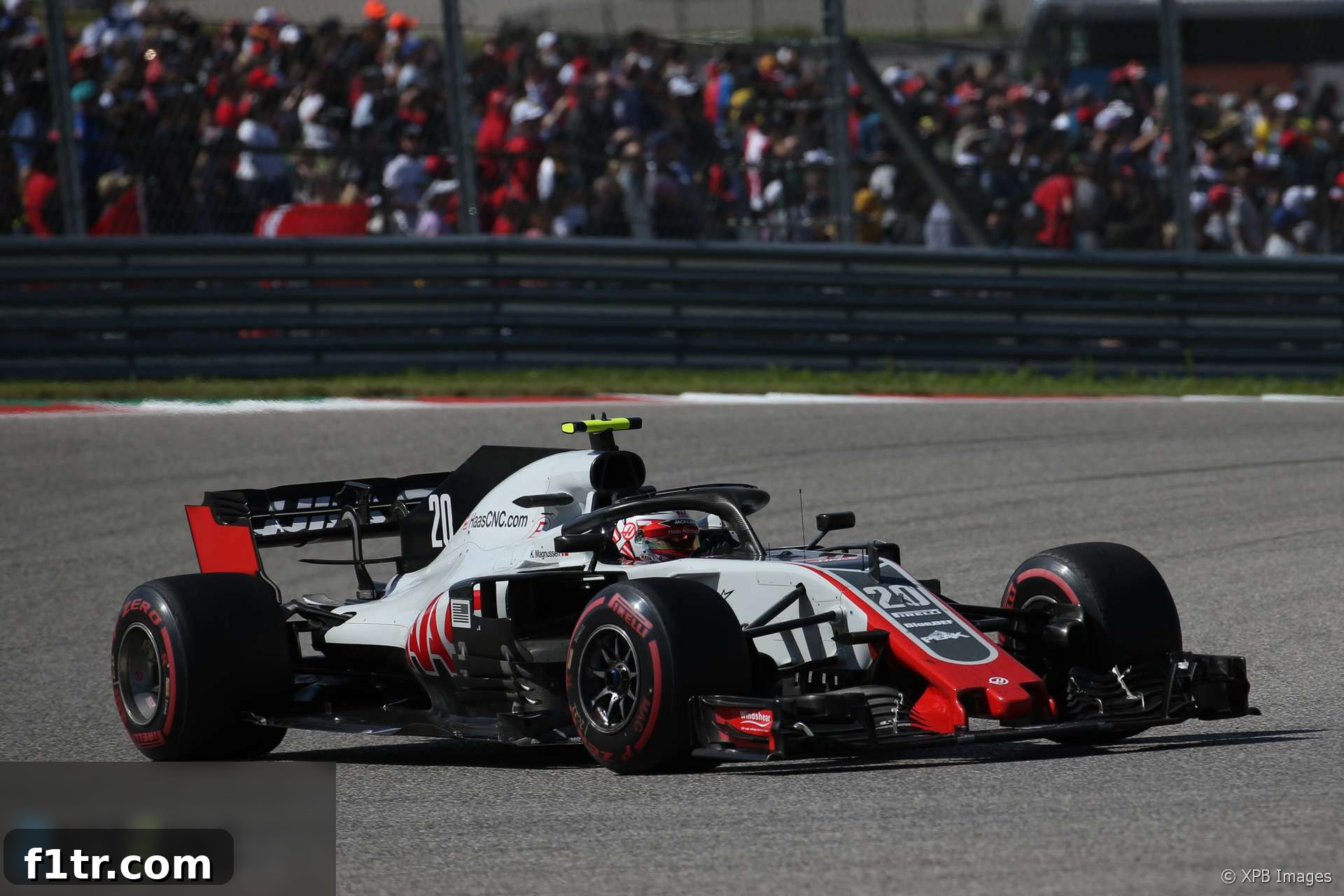
FIA Scrutiny Intensifies: Kevin Magnussen Under Investigation for Fuel Usage at United States Grand Prix
The aftermath of the United States Grand Prix saw a cloud of regulatory uncertainty hang over the paddock, as a second Formula 1 driver faced a post-race investigation concerning fuel usage. Following an intense battle on the Circuit of the Americas, the meticulous examination of technical data by the FIA brought to light potential breaches of the sport’s stringent fuel regulations, raising questions about race integrity and the fine line between competitive advantage and rule-breaking.
Advert | Become a Supporter & go ad-free
The spotlight quickly turned to Kevin Magnussen of the Haas F1 Team. A detailed report from FIA technical delegate Jo Bauer indicated that Magnussen’s Car 20 consumed more than the maximum allocated 105 kilograms of fuel during the race. This specific regulation mandates that from the moment the signal to start the race is given until the car crosses the finish line after the end-of-race signal, a competitor must not exceed this fixed fuel mass. The 105kg limit is a cornerstone of modern F1 technical regulations, designed to promote efficiency, manage performance, and ensure a level playing field across all teams.
Bauer’s report was unequivocal, stating, “Car 20, driver Kevin Magnussen, consumed more than 105kg of fuel, from the time at which the signal to start the race was given to the time the car had crossed the line after the end-of-race signal had been given.” Such a clear violation, if confirmed, carries significant penalties, potentially impacting not only Magnussen’s individual result but also the Haas F1 Team’s valuable points in the Constructors’ Championship.
The matter was promptly referred to the stewards for a thorough investigation. Consequently, the Haas F1 Team was summoned to answer questions regarding the alleged breach. This formal process involves representatives from the team presenting their defense and evidence, while the stewards meticulously review all available data, telemetry, and team explanations. The stakes are particularly high for Magnussen, as his hard-fought ninth-place finish, which secured crucial points for Haas, now hangs in the balance. A disqualification would strip him of these points, a severe blow for a midfield team battling for every position in the standings.
Understanding F1 Fuel Regulations and Their Enforcement
Formula 1’s technical regulations are incredibly complex, and fuel rules are among the most strictly enforced. The 105kg fuel limit has been in place for several seasons, a direct consequence of the sport’s shift towards V6 turbo-hybrid engines and a greater emphasis on efficiency and sustainability. This limit forces teams to optimize their engine mappings, driving styles, and aerodynamic packages to complete a full race distance without running out of fuel or, conversely, exceeding the allowance. Any deviation is seen as gaining an unfair performance advantage, making compliance absolutely critical.
The FIA employs sophisticated monitoring systems to track fuel consumption in real-time. Flow meters are mandatory components, providing continuous data to the technical delegates. However, these systems are not without their challenges, and interpretations can sometimes lead to disputes. The role of the FIA technical delegate, such as Jo Bauer, is pivotal. They are responsible for ensuring that all cars adhere to the regulations throughout a Grand Prix weekend, from scrutineering to post-race checks. Their reports are the initial step in flagging potential infringements to the stewards, who then hold the ultimate authority to impose penalties.
The potential consequences for exceeding the fuel limit can range from grid penalties in subsequent races to a complete disqualification from the event where the infringement occurred. Given Magnussen’s ninth-place finish, a disqualification would mean losing two valuable championship points, impacting Haas F1 Team’s position in the highly competitive Constructors’ Championship. Such outcomes underscore the zero-tolerance policy of the FIA when it comes to technical compliance, aiming to preserve the integrity and fairness of the sport.
Esteban Ocon’s Separate Fuel Investigation: A Tale of Two Breaches
Adding to the regulatory complexities at the United States Grand Prix, Esteban Ocon of Racing Point Force India was also under investigation for a related, but distinct, fuel regulation breach. Unlike Magnussen’s overall fuel consumption, Ocon’s scrutiny centered on exceeding the fuel mass flow limit on lap one. This particular regulation dictates the maximum rate at which fuel can be delivered to the engine at any given moment, specifically capped at 100 kg/hour.
The fuel mass flow limit is designed to prevent teams from using excessive bursts of fuel to gain short-term power advantages, particularly during crucial race phases like the start or restarts. Exceeding this limit, even for a brief period, can provide a significant boost in performance, making it a critical regulation to police. The first lap of a Grand Prix is notoriously challenging for fuel management, as drivers often push hard to gain positions, leading to higher engine demands and potentially pushing the boundaries of fuel delivery. The distinction between Ocon’s investigation and Magnussen’s is crucial: one is about the rate of fuel usage, the other about the total quantity consumed over the race distance.
Both investigations highlight the meticulous nature of F1’s technical policing and the narrow margins within which teams operate. While the specific nature of the infringements differs, they both fall under the umbrella of fuel regulations, underscoring the FIA’s commitment to ensuring that all competitors adhere strictly to the rules designed to balance performance, efficiency, and fair competition. The outcomes of both investigations would undoubtedly send a strong message to the entire grid about the importance of absolute technical compliance.
The Impact on Teams and the Future of Fuel Management in F1
These investigations serve as a potent reminder of the constant pressure on F1 teams to optimize every aspect of their car’s performance while staying within the confines of the rulebook. Fuel strategy in Formula 1 is a complex art, requiring intricate calculations of fuel load, engine modes, driving style, and race conditions. Engineers spend countless hours simulating different scenarios to ensure that their drivers can push the limits of performance without inadvertently breaching regulations.
For a team like Haas, battling in the competitive midfield, every point is vital. A potential disqualification for Magnussen would not only cost them two points but also impact their morale and standing in the Constructors’ Championship, a key factor for prize money distribution and future development budgets. Similarly, for Racing Point Force India, any penalty for Ocon would affect their own battle in the constructor standings.
The rigorous enforcement of fuel regulations also prompts broader discussions within the sport. Are the rules too restrictive? Do they stifle innovation or merely ensure fairness? These are questions that continuously evolve with the sport’s technological advancements. However, for the integrity of Formula 1, the FIA’s commitment to enforcing its technical regulations remains paramount. The outcomes of these two investigations from the United States Grand Prix will be keenly awaited by teams and fans alike, shaping perspectives on regulatory compliance and the fine margins that define success in the pinnacle of motorsport.
As the Formula 1 season progresses, these incidents underscore the need for absolute precision and adherence to technical specifications. The grey areas, if any, are shrinking, and teams are expected to operate with utmost diligence to avoid penalties that can derail their championship aspirations. The United States Grand Prix served as a stark reminder that in F1, winning isn’t just about speed; it’s also about flawless execution and meticulous compliance with every letter of the law.
Don’t miss anything new from RaceFans
Follow RaceFans on social media to stay updated with the latest news, analyses, and exclusive content:
- Join RaceFans on Facebook for community discussions and instant updates.
- Follow RaceFans on Twitter for breaking news and live commentary.
- Get daily email updates from RaceFans directly to your inbox for comprehensive coverage.
Advert | Become a RaceFans supporter andgo ad-free, enjoying an uninterrupted browsing experience.
Explore More from the 2018 F1 Season
Delve deeper into the events and stories that shaped the 2018 Formula 1 season with these related articles:
- F1 feared “death knell” for Drive to Survive after Ferrari and Mercedes snub
- McLaren staff told us we were “totally crazy” to take Honda engines in 2018 – Tost
- ‘It doesn’t matter if we start last’: How Red Bull’s junior team aided Honda’s leap forward
- Honda’s jet division helped F1 engineers solve power unit problem
- McLaren Racing losses rise after Honda split
Browse all 2018 F1 season articles to relive the drama and excitement of that memorable year in Formula 1.