The Evolving F1 App: Fan Backlash Over Live Timing Changes
The digital realm of Formula 1 has always been a crucial extension of the on-track action, allowing fans to engage with the sport in unprecedented ways. Among these digital offerings, the official F1 App stands as a cornerstone, providing real-time data, news, and insights. However, a recent “major release” of the app, version 11, has stirred a significant wave of discontent among the sport’s dedicated fanbase, primarily due to contentious changes made to its popular live timing screens.
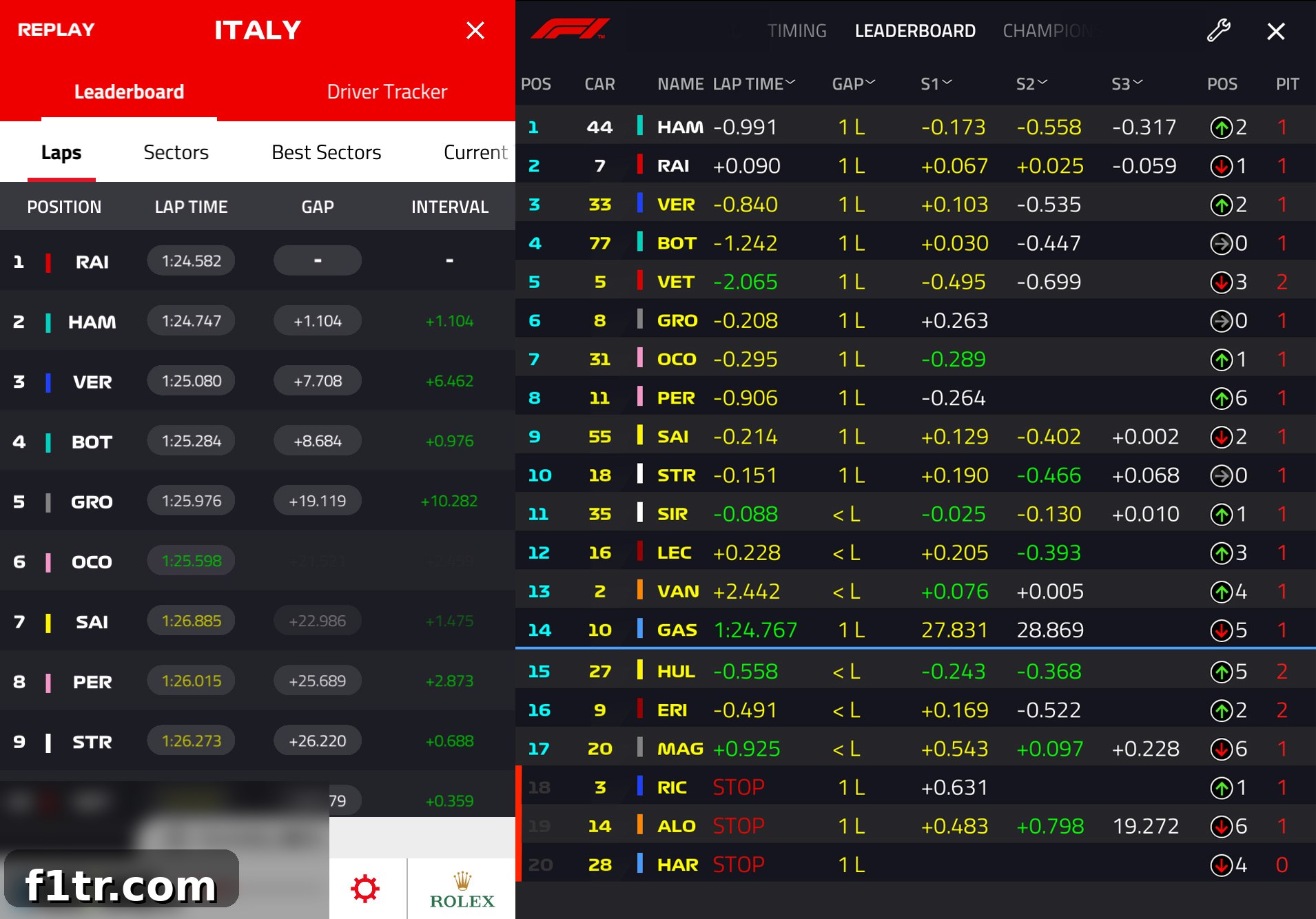
Formula 1 Management (FOM) unveiled version 11 with much anticipation, promising an array of enhancements. The official announcement highlighted a “redesigned live timing experience with smarter telemetry data and easier-to-use driver tracker.” While these upgrades sounded promising on paper, their implementation has led to widespread criticism, leaving many fans feeling that a vital part of their race-day experience has been compromised rather than improved.
A ‘Major Release’ Meets Fan Disappointment
The rollout of the F1 App’s latest iteration, version 11, was anticipated to elevate the digital interaction for millions of Formula 1 enthusiasts globally. FOM’s vision for this update focused on streamlining the user interface and incorporating advanced data presentation, aiming to deliver a more intuitive and comprehensive experience. Specific enhancements touted included an improved driver tracker and more intelligent telemetry data, features designed to give users a deeper dive into the intricacies of a Grand Prix weekend. Furthermore, the update promised a new race hub, a revamped video hub for richer content consumption, expanded biographies of drivers and teams, and more efficient push notifications to keep fans abreast of critical race developments.
Despite these announced improvements, the immediate aftermath of the app’s release saw a surge of negative feedback. Enthusiasts who promptly downloaded the update quickly identified a critical alteration that overshadowed any perceived benefits: the fundamental change to the live timing display. This particular feature, long cherished by a significant segment of the F1 community, had been drastically altered, triggering a wave of complaints that resonated across social media platforms and app store review sections. The promised “redesigned experience” was, for many, a step backward, diminishing the app’s utility as a primary source of real-time race information.
The Core Grievance: A Shrinking View of the Grid
At the heart of the fan uproar lies a singular, yet profoundly impactful, change to the live timing screen: the reduced number of drivers displayed simultaneously. Previous versions of the F1 App provided users with the invaluable ability to view all 20 competing drivers on a single screen. This comprehensive overview was not merely a convenience; it was a fundamental tool for seasoned fans to track the entire race narrative unfolding in real-time. Whether monitoring midfield battles, assessing pit stop strategies across the grid, or simply keeping tabs on a favorite driver’s progress relative to the rest of the field, having all drivers visible at once was indispensable.
Version 11, however, drastically altered this dynamic. Reports from users indicate that the new interface now limits the live timing display to a mere seven to ten drivers at any given time, depending on the device being used. This reduction forces users to scroll constantly to see the full grid, disrupting the flow of information and making it significantly harder to grasp the overall picture of the race. This shift has been widely interpreted as a “dumbing down” of the app, stripping away a core functionality that previously empowered fans with detailed insights.
The impact of this change is profound for those who rely on live timing for strategic analysis and immersive viewing. Imagine trying to follow a complex strategy battle, where different teams are on varying tire compounds and pit stop cycles, without a full overview. Or attempting to understand how a safety car period has affected the entire field’s gaps. These scenarios become inherently more challenging and less engaging when only a fraction of the grid is visible. The inability to quickly scan positions, lap times, and intervals for all competitors simultaneously fundamentally detracts from the app’s value as a professional-grade race companion. Consequently, many disgruntled users have taken to platforms like Google Play and Twitter, inundating the official F1 Help channel with one-star reviews and demands for refunds, expressing their frustration at what they perceive as a regression rather than an advancement.
In stark contrast, the preceding version of the app, version 10, was celebrated for its comprehensive live timing display, which effortlessly presented all 20 drivers on a single screen. This feature was a significant draw for many, allowing for a complete and uninterrupted view of the race’s evolving dynamics. The ability to glance at the entire grid and immediately grasp the positions, gaps, and vital telemetry data of every competitor was a cornerstone of its appeal, particularly for those who follow Formula 1 with an analytical eye.
Understanding the Fan Perspective: Why Live Timing Matters
For the ardent Formula 1 fan, live timing is far more than just a list of positions; it’s the digital heartbeat of the race. It provides a real-time narrative that complements television coverage, offering granular data often not highlighted during broadcasts. The ability to monitor every driver’s lap times, sector performance, tire compound, pit stop status, and the ever-fluctuating gaps between competitors offers a level of immersion and strategic insight unparalleled by simply watching the race. This data allows fans to become armchair strategists, anticipating overtakes, understanding undercut/overcut scenarios, and appreciating the tactical genius (or missteps) of teams and drivers.
The comprehensive nature of the previous live timing screen allowed fans to effortlessly track a specific driver’s charge through the field, observe a crucial battle unfolding between two or more cars, or even keep an eye on backmarkers whose performance could indirectly influence the leaders. It offered a holistic view of the grid, empowering fans to connect with every aspect of the Grand Prix. When this panoramic view is segmented into smaller, scrolling windows, it fragments the experience. The continuous need to scroll to gather complete information disrupts concentration, diminishes the sense of real-time understanding, and ultimately dilutes the intensity of following an F1 race.
Furthermore, a premium sport like Formula 1 has built a global fanbase with high expectations for its digital products. Fans invest not only their time and passion but often their money into subscriptions and app purchases, expecting a top-tier experience that mirrors the technological sophistication of the sport itself. The perception of a “dumbed down” feature in an official app can therefore feel like a betrayal of that trust and investment, leading to the strong emotional responses and demands for refunds seen across social media platforms. For many, the live timing screen was the primary reason to use the official app, and its degradation impacts their core F1 viewing ritual.
FOM’s Rationale and Unanswered Questions
While the fan outcry has been clear, Formula 1 Management has yet to provide a detailed explanation for the controversial change to the live timing screen. Public communication from the official F1 Help channel merely confirmed the alteration, stating, “It was changed to showing only seven drivers at a time.” This brief acknowledgement has done little to placate the frustrated user base, leaving many to speculate about FOM’s underlying rationale.
Several theories could explain such a design decision. One possibility is a push for user interface simplification, aimed at making the app more accessible to casual viewers or those new to the sport. A less cluttered screen, showing fewer drivers, might appear less daunting to a novice. Another potential reason could be performance optimization. Displaying real-time data for all 20 drivers simultaneously, especially on older or less powerful mobile devices, could potentially lead to latency issues or higher data consumption. Streamlining the display might improve overall app responsiveness and reduce bandwidth requirements.
Device screen size optimization could also be a factor. With a vast array of smartphones and tablets available, developers often grapple with presenting complex data effectively across varying screen dimensions. Reducing the number of visible drivers might have been seen as a way to ensure readability and maintain a clean aesthetic, albeit at the cost of information density. Finally, business considerations cannot be ruled out. Could this be a strategic move to encourage users towards higher-tier paid subscriptions that might offer a more comprehensive, “pro” version of live timing? Or perhaps an attempt to drive engagement with other parts of the app that have received updates, such as the new video hub or driver biographies, by making the live timing less of a standalone draw.
Regardless of the specific reasoning, the lack of transparency from FOM has exacerbated fan frustration. A clear, well-communicated explanation of the changes, their benefits, and any future plans to address advanced user needs could have potentially softened the blow. In the absence of such communication, the silence itself becomes a point of contention, fueling the narrative that fan experience for dedicated enthusiasts is being deprioritized.
Beyond Live Timing: Other Features of F1 App V11
It is important to acknowledge that the version 11 update wasn’t solely focused on the contentious live timing changes. FOM did introduce several other features intended to enrich the overall F1 experience within the app. Among these additions are a brand-new race hub, designed to be a central repository for all race-weekend information, from session schedules to results and championship standings. A new video hub promises enhanced access to F1’s vast library of video content, including race highlights, driver interviews, and exclusive behind-the-scenes footage.
Moreover, the app now boasts expanded driver and team biographies, offering more in-depth profiles and historical context for fans looking to delve deeper into the personalities and constructors of Formula 1. Improved push notifications were also implemented, aiming to deliver more timely and relevant alerts about key race events, breaking news, and exclusive content. These features, in isolation, represent genuine attempts to enhance the app’s value proposition and provide a more rounded digital platform for F1 followers.
However, the overwhelming negative reaction to the live timing modifications has regrettably overshadowed these positive developments. For many, the utility of a new video hub or expanded biographies cannot compensate for the degradation of a core, functional feature like comprehensive live timing. This highlights a crucial lesson in app development and community management: a significant perceived downgrade in a beloved feature can negate the impact of numerous other improvements, especially when that feature is central to the user’s engagement with the product’s primary purpose.
The Road Ahead: Addressing User Concerns and Future Development
The situation with the F1 App’s version 11 highlights a recurring challenge for developers of digital platforms associated with major sports: balancing the introduction of new features and appealing to a broader audience with the maintenance of core functionalities that satisfy long-standing, dedicated fans. Formula 1 Management now faces the task of addressing the passionate feedback from its user base. Ignoring or downplaying these concerns could lead to further alienation of devoted followers, potentially driving them to alternative, unofficial sources for their real-time F1 data.
Moving forward, FOM has several avenues to consider. One approach could be to re-introduce a customizable live timing view, allowing users to toggle between a simplified display and a comprehensive 20-driver grid, perhaps as an “advanced” option. Another could involve a tiered subscription model, where premium users gain access to enhanced live timing features, although this could further inflame those who feel basic functionality has been unfairly removed. Crucially, transparent communication regarding these changes and future plans is paramount. Engaging with the community, perhaps through surveys or dedicated feedback channels, could help FOM better understand user needs and priorities.
The development cycle of any app is iterative, and user feedback is an invaluable resource for refinement. The current backlash provides an opportunity for FOM to demonstrate its commitment to its fanbase, showing that it listens and is willing to adapt. The success of the official F1 App, in the long run, will depend not just on its technological prowess but also on its ability to evolve in a way that truly serves the diverse needs and expectations of the global Formula 1 community.
The Broader Impact on the F1 Digital Ecosystem
This controversy extends beyond just the F1 App; it touches upon Formula 1’s broader digital strategy and its relationship with its fanbase. In an era where sports organizations are increasingly leveraging digital platforms to engage audiences, foster community, and generate revenue, the quality and functionality of an official app are critical. The F1 App serves as a gateway for millions, from casual viewers to hardcore enthusiasts, to connect with the sport. Its design and features reflect FOM’s understanding of its audience and its vision for the digital F1 experience.
The incident surrounding the live timing changes underscores the delicate balance between catering to existing, deeply invested fans who appreciate intricate data and aiming to broaden appeal to new, potentially less technically savvy audiences. While simplifying an interface might attract newcomers, alienating the most passionate segment of the fanbase carries significant risks. These are the fans who drive much of the engagement, discussion, and passion around the sport. Their dissatisfaction can ripple through online communities, impacting overall brand perception and trust in F1’s digital offerings.
Ultimately, the performance of the official F1 App is a barometer of Formula 1’s commitment to its digital future. A robust, user-friendly, and feature-rich application is essential for maintaining and growing fan engagement in a competitive digital landscape. How FOM responds to this feedback will not only shape the future of its app but also signal its long-term strategy for digital fan interaction.
In conclusion, the launch of F1 App version 11 has presented Formula 1 Management with a significant user experience challenge. While the update brought several welcome enhancements, the controversial decision to limit the live timing screen’s driver display has ignited a wave of strong negative reactions from dedicated fans. The app’s future success will hinge on FOM’s ability to carefully consider and respond to this crucial feedback, ensuring that the official F1 digital platform continues to deliver the comprehensive and immersive experience its global fanbase expects and deserves.
Interested in staying up-to-date with the latest from Formula 1 without interruptions? Consider supporting independent F1 journalism.
Don’t miss anything new from RaceFans
Follow RaceFans on social media to stay connected:
- Join RaceFans on Facebook
- Follow RaceFans on Twitter
- Get daily email updates from RaceFans
Explore More from the 2018 F1 Season
Delve deeper into key moments and stories from the 2018 Formula 1 season:
- F1 feared “death knell” for Drive to Survive after Ferrari and Mercedes snub
- McLaren staff told us we were “totally crazy” to take Honda engines in 2018 – Tost
- ‘It doesn’t matter if we start last’: How Red Bull’s junior team aided Honda’s leap forward
- Honda’s jet division helped F1 engineers solve power unit problem
- McLaren Racing losses rise after Honda split
Browse all 2018 F1 season articles