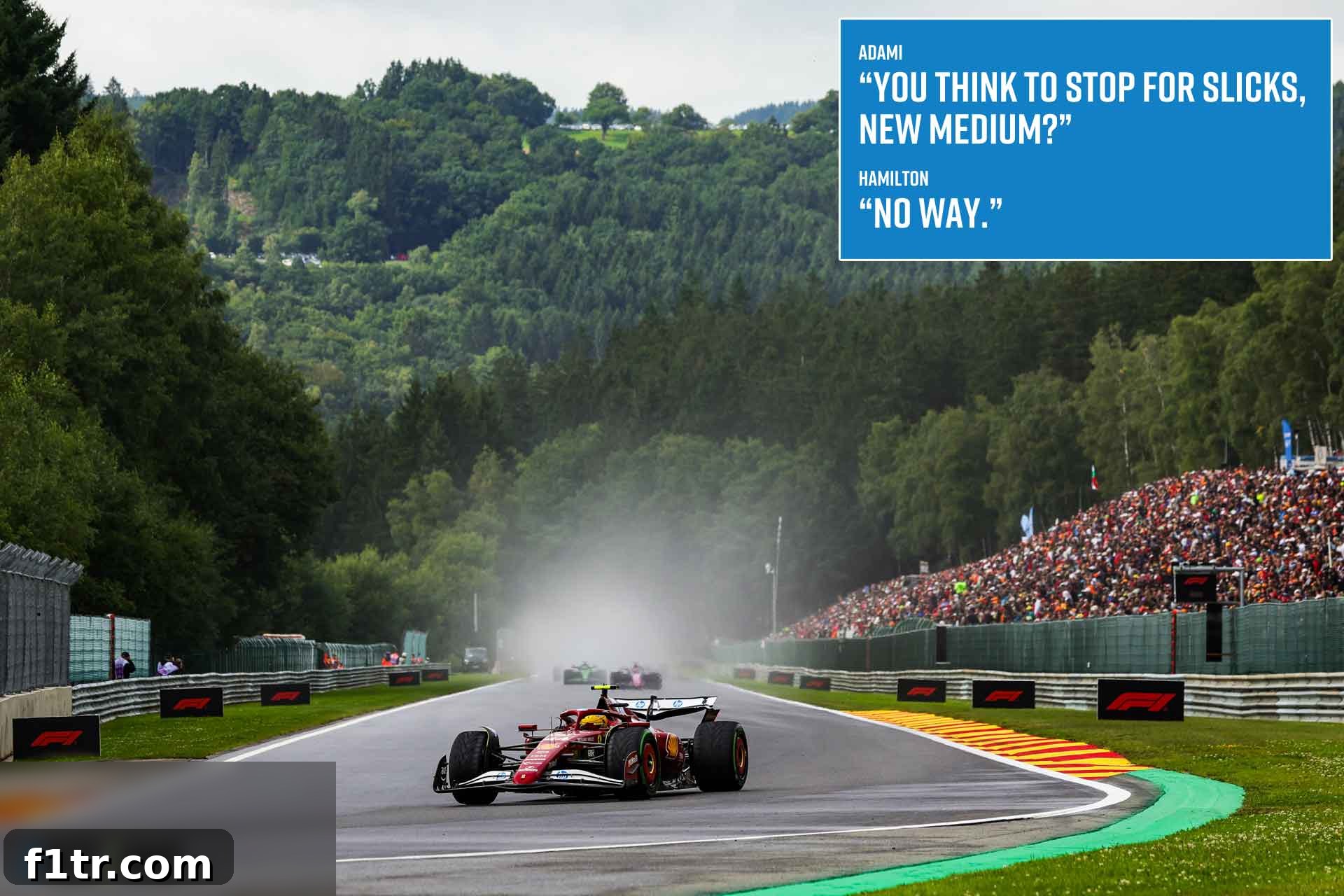
Lewis Hamilton, a name synonymous with Formula 1 excellence and strategic brilliance, once again demonstrated his exceptional skill and adaptability at the iconic Spa-Francorchamps circuit. In a race defined by unpredictable weather, Hamilton executed a perfectly-timed pit stop, switching to slick tires on a drying track. This bold decision allowed him to gain a remarkable six positions, a testament to both his instinct and the Mercedes team’s acute strategic prowess. Yet, this pivotal moment wasn’t without its initial hesitation; Hamilton initially resisted his race engineer’s call to pit, highlighting the intense pressure and split-second decision-making inherent in elite motorsport.
Advert | Become a Supporter & go ad-free
“No way,” Hamilton’s emphatic reply echoed through the radio when his seasoned race engineer, Ricardo Adami, posed the critical question early on lap 11: was the track sufficiently dry for slick tires? This exchange underscored the delicate balance between a driver’s immediate feel from the cockpit and the analytical insights from the pit wall. The seven-kilometre Spa-Francorchamps circuit, renowned for its dramatic elevation changes and microclimates, makes such decisions even more challenging, as different sections of the track can dry at varying rates. It’s a high-stakes gamble where the right call can propel a driver through the field, while a misjudgment can send them tumbling down the order.
As Hamilton continued his demanding drive around the legendary Belgian track, the conditions were rapidly evolving. The rain had subsided, and the asphalt began to shed its moisture, creating a treacherous but potentially rewarding landscape for those brave enough to switch to dry weather tires. With each passing corner, Hamilton’s perspective shifted. The initial skepticism gave way to a growing conviction that Adami’s daring suggestion might, in fact, be the correct one. The subtle nuances of grip, tire degradation, and the visual cues of a drying racing line all played into his reassessment.
“I’m down to try if you want,” he eventually communicated to Adami, signifying his trust in the team’s strategic vision and his willingness to take the calculated risk. This moment of mutual understanding and decisive action set the wheels in motion for one of the most impactful strategic moves of the race. Heading into the pit lane, Hamilton was about to embark on a high-wire act, being the first driver to commit to slick tires in what were still largely damp conditions – a move that could either be a stroke of genius or a disastrous error.
The decision proved to be a masterstroke of Formula 1 strategy. As Hamilton exited the pits on fresh slick tires, the immediate impact was evident. On his out-lap, through the winding and technical middle sector of Spa, he instantly found an almost four-second advantage over his competitors who were still struggling on intermediate or full wet tires. This incredible pace highlighted the rapid change in track conditions and the perfect timing of the pit call. The risk of sliding off, which loomed large just moments before, was quickly overshadowed by the sheer speed and grip offered by the new medium compound tires.
The ripple effect across the pit lane was almost instantaneous. Witnessing Hamilton’s blistering pace on the telemetry screens and seeing the track visually drying, nearly every other driver in contention scrambled for the pits on the very next lap. This mass exodus into the pit lane created a chaotic scene, but for Hamilton, it was an opportunity to capitalize on his foresight. He artfully navigated his way through the field, gaining five crucial positions from drivers who had been ahead of him just moments before. The strategic advantage wasn’t over, as he then dispatched Liam Lawson, who emerged from the pits just ahead of him, solidifying his ascent.
This remarkable sequence of events propelled Lewis Hamilton into seventh place. With the track conditions stabilizing and the field spread out, opportunities for further overtakes through raw pace were dwindling. The tactical brilliance of the early slick tire call, a move he had initially resisted, had paid off massively, fundamentally reshaping his race and securing a strong points finish. It was a perfect blend of driver intuition, engineering analysis, and a courageous commitment to an aggressive strategy. Understanding how this intricate decision unfolded requires a closer look at the precise radio communications between Hamilton and Adami.
Advert | Become a RaceFans supporter andgo ad-free
Hamilton’s Radio Messages: A Glimpse into the Crucial Pit Stop Decision
In the opening stages of the race, with the track at its absolute wettest, Lewis Hamilton, known for his prowess in challenging conditions, showcased his racing instinct by skillfully navigating through the spray and slippery asphalt. He managed to make several critical overtakes, rapidly improving his track position. These early gains were vital, positioning him to exploit any strategic opportunities that might arise as the track evolved.
| Lap: 8/44 HAM: 2’01.599 | |||||||||||||||||||||||||||||||||||||||||||||||||||
| Adami | Hamilton passes Colapinto Well done Lewis. Hulkenberg next car ahead, one second. |
||||||||||||||||||||||||||||||||||||||||||||||||||
| Lap: 9/44 HAM: 2’04.389 | |||||||||||||||||||||||||||||||||||||||||||||||||||
| Adami | Hamilton passes Hulkenberg That’s P14, good job. Gasly next. |
||||||||||||||||||||||||||||||||||||||||||||||||||
| Adami | Hamilton passes Gasly at Stavelot That’s awesome, Lewis. Bearman ahead, three seconds, about track conditions when you can. |
||||||||||||||||||||||||||||||||||||||||||||||||||
| Hamilton | Tyre’s good. | ||||||||||||||||||||||||||||||||||||||||||||||||||
| Adami | Cool. | ||||||||||||||||||||||||||||||||||||||||||||||||||
| Lap: 10/44 HAM: 2’03.457 | |||||||||||||||||||||||||||||||||||||||||||||||||||
| Adami | Wettest part of the track is turn five, you can manage in 10 and 15 for tyres. | ||||||||||||||||||||||||||||||||||||||||||||||||||
| Adami | Switch red, switch red. And pull back the entry of five, five metres. We are in the rear overheating phase. | ||||||||||||||||||||||||||||||||||||||||||||||||||
The critical phase of the race began on lap 11. Despite Adami’s initial suggestion to consider a switch to slicks, Hamilton’s immediate, visceral reaction from the cockpit was one of caution, reflecting the immense risk involved in such a premature change. However, as he navigated the long, challenging sectors of Spa-Francorchamps, feeling the changing grip levels beneath him, his perspective began to shift. The initial hesitation slowly gave way to a calculated consideration, demonstrating the dynamic interplay between driver feedback and strategic data that defines F1 decision-making.
| Lap: 11/44 HAM: 2’10.597 | |||||||||||||||||||||||||||||||||||||||||||||||||||
| Adami | Kemmel straight You think to stop for slicks now, new medium? |
||||||||||||||||||||||||||||||||||||||||||||||||||
| Hamilton | No way. | ||||||||||||||||||||||||||||||||||||||||||||||||||
| Adami | Copy. | ||||||||||||||||||||||||||||||||||||||||||||||||||
| Hamilton | Exit of Les Combes It’s not far, some places, but it’ll be very [unclear] slick. |
||||||||||||||||||||||||||||||||||||||||||||||||||
| Adami | Understood. Let’s [unclear] those cars ahead. | ||||||||||||||||||||||||||||||||||||||||||||||||||
| Hamilton | Approaching Pouhon Very close, for sure. |
||||||||||||||||||||||||||||||||||||||||||||||||||
| Hamilton | Approaching Fagnes I’m down to try if you want. |
||||||||||||||||||||||||||||||||||||||||||||||||||
| Adami | Copy. | ||||||||||||||||||||||||||||||||||||||||||||||||||
| Hamilton | These tyres are dropping off. | ||||||||||||||||||||||||||||||||||||||||||||||||||
| Adami | Box, Lewis, box. | ||||||||||||||||||||||||||||||||||||||||||||||||||
| Hamilton | Yeah, probably go to medium though. | ||||||||||||||||||||||||||||||||||||||||||||||||||
| Adami | Yeah, medium. | ||||||||||||||||||||||||||||||||||||||||||||||||||
| Hamilton | I’ve got a little too much front wing. | ||||||||||||||||||||||||||||||||||||||||||||||||||
| Adami | Hamilton pits Tyre back at position three. Drop shallow. |
||||||||||||||||||||||||||||||||||||||||||||||||||
Advert | Become a RaceFans supporter andgo ad-free
The moments immediately following the pit stop were critical for Hamilton to understand the impact of his audacious gamble. Rejoining the track on the medium compound slick tires, he needed instant feedback on his new position and how the gamble had altered the competitive landscape. Adami’s voice, calm and reassuring, provided the confirmation Hamilton needed, affirming the success of their collective strategic foresight.
| Lap: 12/44 HAM: 2’12.214 | |||||||||||||||||||||||||||||||||||||||||||||||||||
| Adami | Caution pit exit is wet. Also five, six. Tyre position three, all clear ahead and behind. Hulkenberg three seconds behind, also on medium. | ||||||||||||||||||||||||||||||||||||||||||||||||||
| Adami | Everybody is boxing ahead. | ||||||||||||||||||||||||||||||||||||||||||||||||||
| Lap: 13/44 HAM: 1’51.050 | |||||||||||||||||||||||||||||||||||||||||||||||||||
| Adami | Racing cars ahead. Lawson ahead, two seconds. Hamilton passes Lawson on the Kemmel straight |
||||||||||||||||||||||||||||||||||||||||||||||||||
| Hamilton | Gap ahead? | ||||||||||||||||||||||||||||||||||||||||||||||||||
| Adami | Six seconds. | ||||||||||||||||||||||||||||||||||||||||||||||||||
| Hamilton | Position? | ||||||||||||||||||||||||||||||||||||||||||||||||||
| Adami | We are on P7 on the road. You are the fastest man on track. Group of cars ahead, three and a half, racing for position. | ||||||||||||||||||||||||||||||||||||||||||||||||||
This sequence of radio messages encapsulates the raw drama and high stakes of Formula 1 strategy. Hamilton’s initial skepticism, followed by his gradual acceptance and ultimate commitment, showcases the dynamic partnership between a driver and their engineer. The successful execution of this pivotal pit stop was not just about raw speed or mechanical precision; it was a profound demonstration of teamwork, trust, and the courage to make a decisive call when it mattered most.
The ability to adapt quickly to changing conditions is a hallmark of truly great drivers, and Lewis Hamilton consistently proves his mastery in this regard. Spa-Francorchamps, with its notoriously unpredictable weather, provides the perfect canvas for such strategic gambles. The length of the lap, combined with varying altitudes across the circuit, means that one section can be soaking wet while another is rapidly drying. This complexity demands an intricate understanding of tire performance, track evolution, and the confidence to be the first to deviate from the conventional.
Hamilton’s “rear overheating phase” comment during lap 10 was a crucial piece of feedback. It indicated that his intermediate tires were beginning to struggle with the improving track conditions, generating excessive heat as they worked on a surface that was becoming too dry for their optimal operating window. This feedback from the cockpit, combined with the team’s meteorological data and trackside observations, solidified Adami’s conviction that slick tires were becoming viable. The conversation then became one of timing – balancing the risk of an overly early switch with the reward of gaining track position if the call was perfect.
The “No way” response from Hamilton wasn’t merely a rejection; it was a driver communicating the severity of the current conditions from his unique vantage point, highlighting the extremely fine margin between genius and folly. But as he rounded corners like Les Combes, Pouhon, and Fagnes, he felt the track improving, bridging the gap between his instinct and Adami’s data. His eventual “I’m down to try if you want” was a green light, a sign of mutual trust, allowing the team to prepare for an aggressive pit stop. The rapid four-second gain in the middle sector on the out-lap wasn’t just impressive; it was a definitive signal to the entire paddock that the crossover point had been reached, triggering a cascade of subsequent pit stops that Hamilton had already pre-empted.
In the aftermath of the race, the shared sense of accomplishment was palpable. Hamilton’s appreciative radio message to his team – “Great job with the strategy and pit stop” – was met with Adami’s humble yet telling reply: “Hey, you made it work.” This exchange perfectly encapsulates the symbiotic relationship at the heart of Formula 1 success. While the strategy originates from the pit wall, it is the driver’s ability to execute it flawlessly, often pushing the limits of the car and their own nerve in uncharted territory, that ultimately brings it to fruition. This incident at Spa will undoubtedly be remembered as another highlight in Lewis Hamilton’s illustrious career, demonstrating that even a moment of initial doubt can lead to a spectacular triumph when paired with courage, skill, and outstanding teamwork.
Miss nothing from RaceFans
Get a daily email with all our latest stories – and nothing else. No marketing, no ads. Sign up here:
Advert | Become a RaceFans supporter andgo ad-free
2025 Belgian Grand Prix
- Hadjar’s Silverstone crash shows FIA was right to be cautious with Spa rain, say drivers
- “Stay out”: Antonelli told Mercedes track was ready for slicks on same lap as Hamilton
- Antonelli ‘paying the price for wrong steps’ made by Mercedes – Allison
- Verstappen is in his longest run of races without a podium finish for six years
- “I’m down to try”: How Hamilton changed his mind about crucial Spa pit stop
Browse all 2025 Belgian Grand Prix articles