Driving the Future: How Formula 1 Leverages Technology for Next-Gen Fan Engagement
Formula 1, often hailed as the pinnacle of motorsport, is actively steering towards a future defined by cutting-edge technology and unparalleled fan engagement. This strategic pivot is vital for the sport to expand its global reach and resonate with a new generation of enthusiasts. At the forefront of this vision is seven-time world champion Lewis Hamilton, who has vocally championed the necessity of deeper interaction with fans through innovative technological solutions.
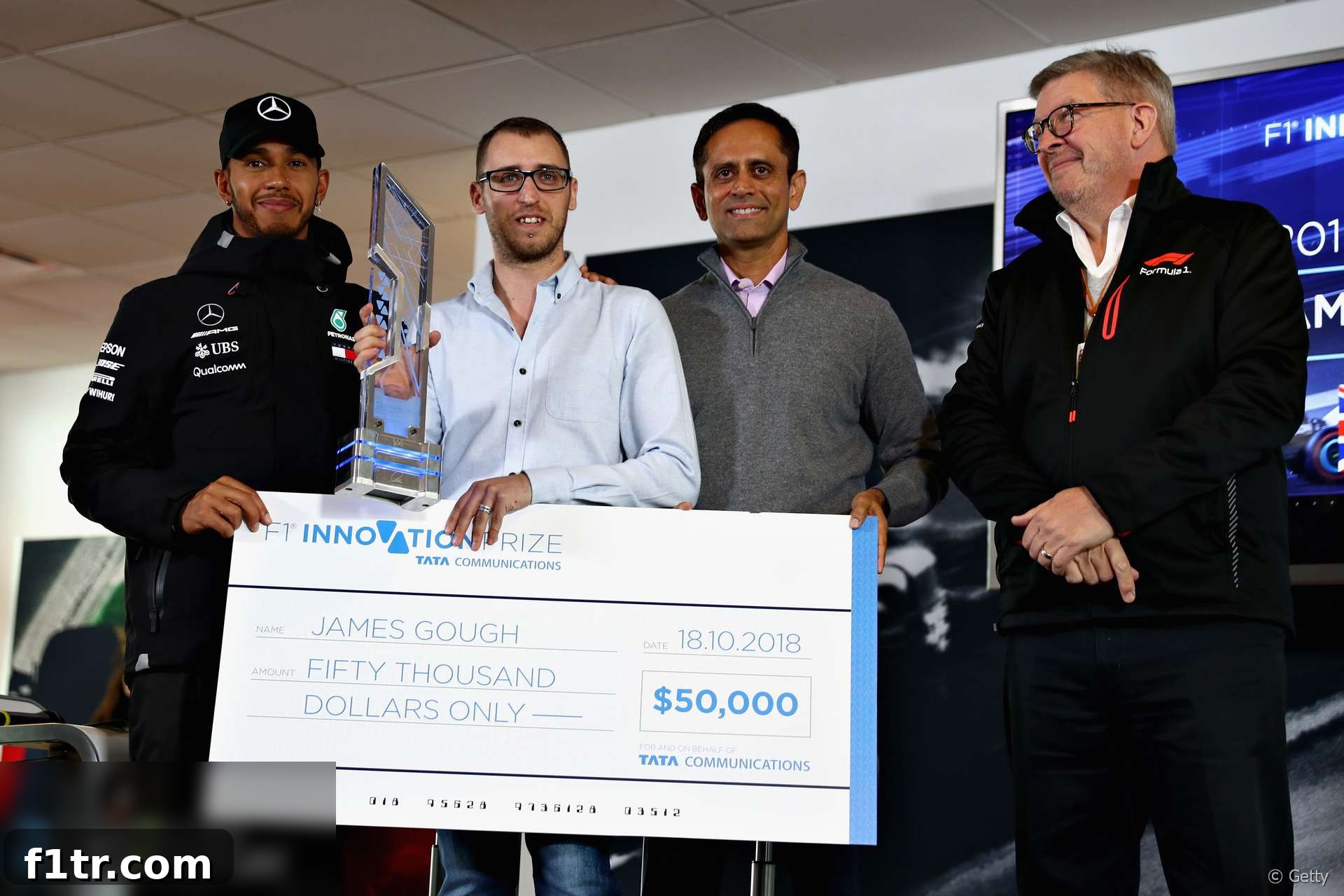
Hamilton’s compelling insights, articulated during the announcement of the 2018 F1 Innovation Prize, shed light on how fan-driven developments are poised to transform the sport. He emphasized that leveraging advanced technologies is not just an option but a critical imperative for F1 to grow its audience effectively. This perspective highlights a broader understanding within the sport that merely showcasing thrilling races is no longer enough; engaging fans on a more personal and interactive level is key to sustained relevance in a rapidly evolving digital landscape.
Lewis Hamilton’s Call for a Fan-Centric F1
“Formula 1 is in a place where its viewership is still not where it’s desired to be,” Hamilton candidly observed, pointing to the ongoing challenge of optimizing the sport’s audience numbers. He underscored that countless opportunities exist for improvement, advocating for a continuous influx of fresh ideas. Crucially, Hamilton stressed that fans are the authentic heart of Formula 1, the very individuals whose passion and dedication elevate the sport to its iconic status.
The Mercedes-AMG Petronas F1 driver commended the proactive stance taken by Ross Brawn, Liberty Media, and Tata Communications in actively involving the fanbase. “There’s always so many areas that can be improved and the more ideas the better. Particularly the fans who are the ones who make the sport what it is,” he affirmed. Hamilton shared his personal experiences of growing up watching Grands Prix, recalling a childhood desire for more diverse camera angles and the ability to switch effortlessly between various onboard views. He expressed his immense satisfaction that many of these fan-inspired concepts are now being progressively implemented, enhancing the overall viewing platform and enriching the fan experience.
Hamilton’s advocacy resonates strongly with modern media consumption habits. Today’s audiences, particularly younger demographics, expect dynamic, interactive, and personalized content. They seek to immerse themselves in the action, gain deeper insights, and feel a tangible connection to the drivers and the drama unfolding on track. By embracing technologies that deliver such experiences, Formula 1 can bridge the gap between passive observation and active engagement, transforming viewers into integral participants in the F1 narrative.
The F1 Innovation Prize: Fueling Future Fan Experiences
A cornerstone of Formula 1’s commitment to fan engagement and technological advancement is the F1 Innovation Prize. This collaborative initiative, a joint effort by F1, Tata Communications, and Mercedes, serves as a powerful platform to crowdsource inventive ideas aimed at enhancing the fan experience. It embodies a forward-thinking philosophy that recognizes the boundless creative potential residing within the global F1 community.
The 2018 competition saw James Gough recognized as the deserving winner for his groundbreaking concept. Gough’s winning design centered on a highly customized viewing experience that ingeniously integrates human, mechanical, and technical data. Imagine a scenario where a fan could not only select their preferred camera angle but also simultaneously monitor their favorite driver’s real-time biometric data, observe intricate telemetry from the car’s engine and chassis, and receive AI-driven analyses of race strategy and performance metrics—all within a uniquely tailored interface. This proposed level of detail and personalization represents a monumental leap towards a truly immersive and interactive fan experience.
Gough’s visionary idea promises to democratize access to the complex layers of Formula 1. By synthesizing diverse data streams—from driver heart rates and g-force readings to tire degradation and aerodynamic loads—the viewing experience transcends mere entertainment. It evolves into an interactive educational journey, catering equally to the seasoned technical aficionado and the curious newcomer eager to grasp the intricacies of this high-octane sport. The allocation of £50,000 for Gough to develop his concept, coupled with the commitment to create a prototype at Formula 1’s advanced media and technology centre in the UK, underscores a serious intent to transform these innovative ideas into tangible realities for fans worldwide.
Ross Brawn on Tailoring F1 for a Diverse Audience
Echoing Hamilton’s sentiments, Ross Brawn, F1’s Motorsport Managing Director, emphasized the strategic necessity of customizing the sport to meet the varied expectations of its extensive global fanbase. Brawn articulated that “the sport means different things to so many different people,” a profound insight highlighting the wide spectrum of interests and engagement levels among F1 enthusiasts. This understanding forms the bedrock of Formula 1’s contemporary fan engagement strategy—a nuanced approach designed to cater to multiple demographics simultaneously.
For some, Formula 1 is a captivating showcase of engineering prowess and technological innovation; for others, it represents a compelling drama of human skill, courage, and intense competition. There are ardent followers who meticulously track every technical regulation change, and those drawn by the sport’s glamorous lifestyle and global spectacle. Brawn underscored the critical importance of enabling fans to “tailor and shape the sport the way they want to see it.” This means offering a broad spectrum of content and interactive features that resonate with each specific group. Such adaptability is crucial not only for retaining long-standing devotees but also for attracting new audiences who may discover F1 through diverse channels, including esports, social media platforms, or critically acclaimed documentary series like ‘Drive to Survive’.
Brawn further highlighted the significant philosophical shift within F1’s management since Liberty Media’s acquisition. “We have a new management in Formula 1 [for] who the fans come first,” he proudly declared. This fan-first philosophy is more than just a slogan; it underpins substantial investments in digital infrastructure, diverse content creation, and pioneering initiatives such as the Innovation Prize. The core belief is unequivocal: without a vibrant and deeply engaged fanbase, the sport risks becoming “hollow.” Consequently, every strategic decision, from calendar modifications to technical rule adjustments, is increasingly evaluated through the lens of its potential impact on fan experience and overall accessibility.
Engaging the Next Generation: Navigating the Digital Frontier
Addressing the challenge of appealing to a “new generation of fans coming through” is a paramount concern for Formula 1. These younger audiences, primarily Gen Z and younger millennials, exhibit distinct consumption patterns. They gravitate towards on-demand content, thrive on interactivity, anticipate personalized experiences, and are heavily engaged with social media platforms. Formula 1 is proactively responding to these trends by aggressively expanding its digital footprint, experimenting with immersive technologies, and fostering vibrant online communities.
Emerging technologies such as virtual reality (VR) and augmented reality (AR) hold immense potential for Formula 1 to deliver truly revolutionary viewing experiences. Imagine donning a VR headset and being instantly transported into the cockpit for a scorching hot lap, or seeing AR overlays project real-time race data onto your living room table as you watch the Grand Prix. Artificial intelligence (AI) can further refine content delivery, recommending personalized highlights or analytical deep-dives based on individual viewing preferences and historical engagement. Moreover, the burgeoning global popularity of F1 Esports exemplifies how the sport can create entirely new avenues for active engagement, transforming passive viewers into passionate participants and skilled competitors.
Brawn confidently asserts that “Formula 1’s setting the trend in how we can engage those fans but still respect all the fans we already have.” This delicate yet crucial balance—innovating for the future while steadfastly honoring tradition—is central to F1’s strategy. The objective is not to alienate the loyal, long-standing fanbase, but rather to enrich their already cherished experience while simultaneously opening compelling new gateways for newcomers. By offering diverse entry points and multi-layered engagement opportunities, F1 endeavors to cultivate a dynamic ecosystem where every fan, regardless of their preferred mode of interaction, can forge a profound and fulfilling connection to the exhilarating world of Grand Prix racing.
Conclusion: A Future Built on Connection and Innovation
The shared vision articulated by Lewis Hamilton and Ross Brawn paints a compelling and ambitious picture of Formula 1’s future: one where technology acts as a powerful catalyst for unprecedented fan engagement. From highly personalized viewing experiences and interactive data streams to immersive digital platforms, the sport is actively reimagining and redefining how it connects with its vast global audience. The F1 Innovation Prize stands as a tangible testament to this unwavering commitment, clearly demonstrating a willingness to harness the collective creative ingenuity of its dedicated fanbase.
By consciously prioritizing fan feedback, making strategic investments in cutting-edge technology, and adapting its content strategy to accommodate an increasingly diverse array of preferences, Formula 1 is doing more than just keeping pace with the rapid advancements of the digital age; it aims to spearhead it. The journey towards a more interactive, accessible, and ultimately more captivating F1 experience is firmly underway, promising a vibrant, dynamic, and sustainable future for the pinnacle of motorsport where every fan feels an indispensable part of the exhilarating ride.
Related Formula 1 Articles and Insights
- F1 feared “death knell” for Drive to Survive after Ferrari and Mercedes snub
- McLaren staff told us we were “totally crazy” to take Honda engines in 2018 – Tost
- ‘It doesn’t matter if we start last’: How Red Bull’s junior team aided Honda’s leap forward
- Honda’s jet division helped F1 engineers solve power unit problem
- McLaren Racing losses rise after Honda split
Browse all 2018 F1 season articles