The exhilarating world of Formula 1 never ceases to deliver drama, strategy, and unexpected twists. Following the high-stakes Azerbaijan Grand Prix, a weekend of intense street circuit action in Baku, several narratives emerged, dominating discussions among fans and pundits alike. From unexpected mechanical failures and controversial team orders to the physical demands of modern F1 cars and the broader conversations within the motorsport community, the event provided a rich tapestry of stories. This comprehensive round-up delves into the key incidents and insights from the weekend, ensuring you’re up-to-date with all the essential happenings, presented with clarity and an emphasis on engaging, accessible language.
Azerbaijan Grand Prix: Key Incidents and Driver Insights
Yuki Tsunoda’s Unforeseen DRS Malfunction in Baku
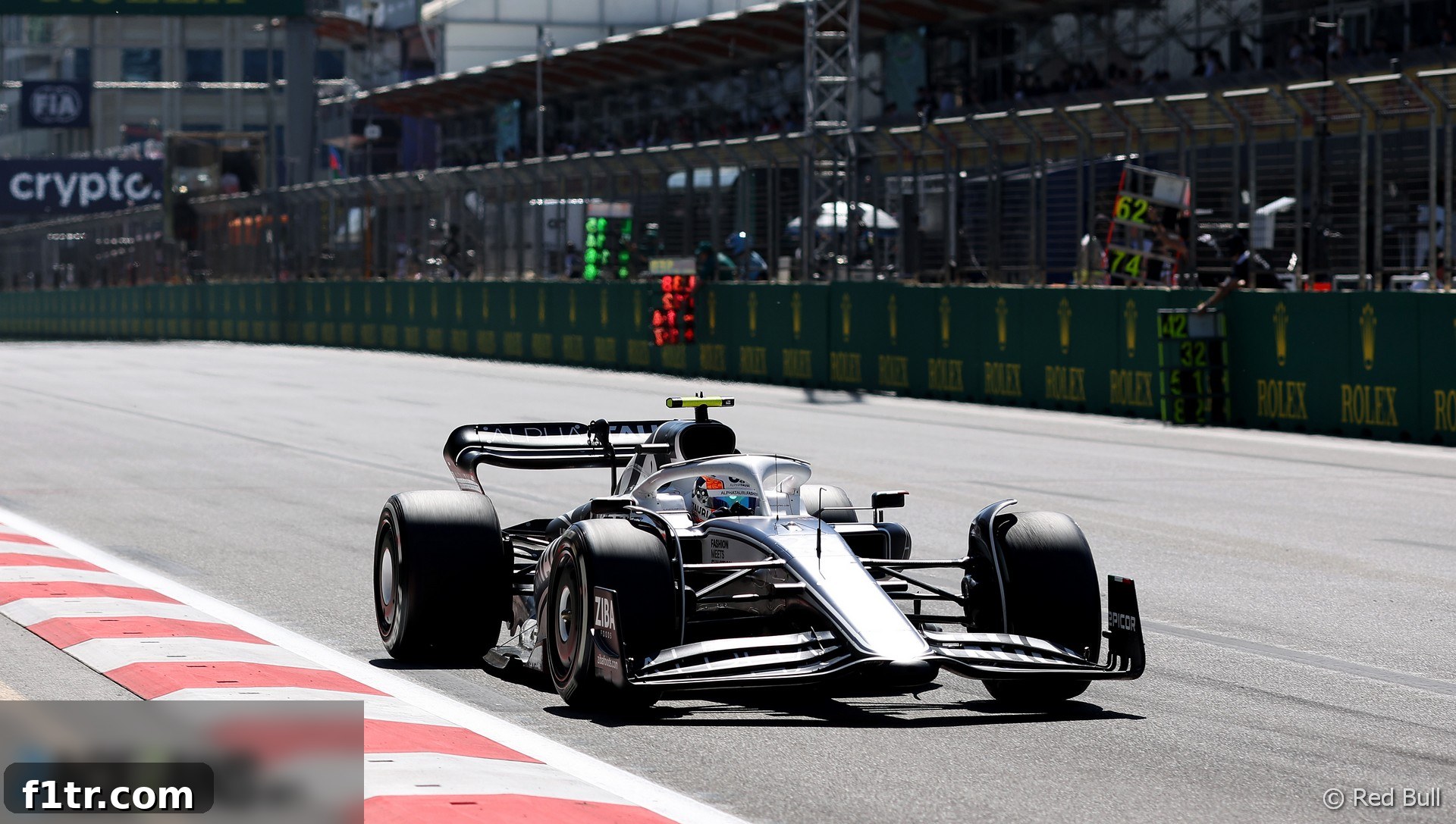
The Azerbaijan Grand Prix often throws up technical challenges, and for AlphaTauri driver Yuki Tsunoda, it presented a particularly baffling problem. During the race, Tsunoda was shown the black-and-orange flag, a rare but critical directive from race control, demanding an immediate pit stop to rectify a safety-related mechanical issue. The problem was a broken Drag Reduction System (DRS) flap on his rear wing, which needed urgent repair. Unbeknownst to Tsunoda at the time, this crucial aerodynamic component had failed.
The DRS, designed to aid overtaking by temporarily reducing drag on the rear wing, is a fundamental part of modern Formula 1 racing. Its malfunction can severely impact a car’s performance, particularly on long straights like those found at the Baku City Circuit. Tsunoda later confessed his surprise regarding the nature of the problem: “They didn’t tell me what the issue was so I thought it was an engine issue. It was rear wing – I didn’t know that.” This admission highlights the limited communication drivers sometimes have with their teams in the heat of battle, especially when a black-and-orange flag is deployed.
Once in the pits, the AlphaTauri mechanics swiftly addressed the issue, taping up the broken flap to ensure it was safe for Tsunoda to continue. Despite the quick repair, the unscheduled stop severely hampered his race, ultimately seeing him finish outside the points. However, Tsunoda’s post-race comments sparked a debate about risk management and the sport’s evolving economics. He expressed a willingness to continue racing with the damaged wing, believing his pace was sufficient. “I was running okay pace,” he stated. “Until the race director gave me that black-and-orange flag, I could still drive.”
His perspective also touched upon the practicalities of the budget cap system in F1: “I know as a team you don’t want to take a risk, especially as we have the cost cap. But I hope this was enough reason to come back, to be honest. If it’s only those things, to be honest, we should take the risk to carry that car because I was able to [drive] and I was kind of the same pace as Vettel also.” This statement encapsulates the delicate balance F1 teams must strike between driver safety, competitive ambition, and financial prudence in the era of cost caps. Taking a risk with a slightly damaged car for a potential point-scoring finish might seem appealing to a driver, but for a team, the implications of a costly repair or, worse, a crash, can be significant.
Fernando Alonso Anticipated More Incidents at Baku
Veteran driver Fernando Alonso, with his wealth of experience, admitted he was surprised by the relatively clean nature of Sunday’s Azerbaijan Grand Prix, having expected more chaos and incidents. The Baku City Circuit is renowned for its unique challenges: incredibly fast straights, tight castle sections, and unforgiving barriers that punish even the slightest error. These characteristics, combined with the current generation of Formula 1 cars, led Alonso to predict a race fraught with mistakes.
“Probably. I was expecting more, yes,” said the Alpine driver. His reasoning stemmed from the inherent difficulties drivers face: “The race was difficult to execute and the cars are so stiff. You can hardly see the corners in some of the braking points, and things like that. So I thought we could make more mistakes between us, between drivers.” The rigid suspension setups and low ride heights of the 2022 cars, designed to maximize aerodynamic performance, make them incredibly demanding to drive on bumpy street circuits. This stiffness, coupled with the limited visibility from the cockpit, especially into complex braking zones, increases the propensity for driver error.
Alonso’s insights underscore the immense skill and concentration required from F1 drivers. Despite the circuit’s reputation for high-drama moments and the physical toll these cars take, the field largely managed to navigate the 51 laps without major incidents, a testament to the drivers’ precision and adaptability. His observations highlight a common sentiment among drivers regarding the challenging nature of these ground-effect machines on circuits like Baku.
Sergio Perez Supports Red Bull’s Strategic Team Orders
Team orders in Formula 1 are always a contentious topic, often dividing opinion among fans and drivers. However, Sergio Perez, having been asked to cede position to his Red Bull Racing teammate Max Verstappen for the third time in as many races (including twice previously in Spain), maintained a pragmatic and professional stance. The instruction came from his race engineer, Hugh Bird, who simply stated “no fighting” as Verstappen rapidly closed in for the lead.
Perez openly acknowledged Verstappen’s superior pace at that crucial juncture of the race: “He was clearly a lot faster at that stage of the race. So it was the right call not to fight because I didn’t have any pace at the time and Max deserved to be ahead at that point.” This acceptance is critical for team harmony, especially in a championship battle where every point counts for the constructor’s title. While fans often crave uninhibited racing between teammates, teams prioritize maximizing their overall championship points, particularly when one driver has a clear pace advantage.
Perez also reflected on other factors that contributed to the outcome: “We also boxed too late. So, there were a few things that played into the result, but still at the end of the day, Max deserved the win, because he was the faster car.” This highlights the intricate web of strategy, tire management, and raw pace that dictates race outcomes. While the “no fighting” order might have seemed abrupt, it was a decision rooted in the real-time data indicating Verstappen’s stronger performance and the team’s overarching strategy to secure a dominant 1-2 finish. For Red Bull, with both the drivers’ and constructors’ championships firmly in their sights, such strategic calls, though often unpopular with purist fans, are a necessary evil in pursuit of ultimate success.
Advert | Become a RaceFans supporter andgo ad-free
Social Media Buzz: Voices from the Motorsport World
The digital sphere often captures the immediate reactions, frustrations, and celebrations of drivers, teams, and fans, offering a raw and unfiltered look at the motorsport ecosystem. Here’s a selection of notable posts from Twitter and Instagram, reflecting diverse perspectives on recent events:
Had a good chat with @DevlinDeFran this morning. We’re all good. Tough day for both of us. That’s racing…
— Will Power (@12WillPower) June 13, 2022
IndyCar driver Will Power’s tweet offers a glimpse into the often-intense rivalries and subsequent reconciliations within racing. Following a tough on-track incident with Devlin DeFrancesco, Power’s message confirms that despite the heat of competition, professional respect often prevails, highlighting the “that’s racing” mentality that allows drivers to move past incidents.
Despite the barbarity called @F1 ended, many roads are still closed, metal nets still obstruct the pavements and traffic jams right in the middle of city continue. It will likely last a month, denizens of will suffer while F1 drivers are probably somewhere having bubble baths.
— Cavid #RussiaIsNotAlly (@cavidaga) June 13, 2022
Cavid’s tweet from Baku provides a stark contrast to the glamour of Formula 1. It sheds light on the significant disruption a major event like the Grand Prix can cause for local residents, even after the race concludes. This perspective reminds us that while the F1 circus moves on, its temporary infrastructure and associated logistics can have lasting impacts on the host city and its inhabitants, raising questions about the balance between economic benefits and local quality of life.
Instagram often serves as a visual diary for drivers and teams, sharing behind-the-scenes moments and personal reflections. While the direct links are provided, these typically feature stunning race photography, driver celebrations, or team achievements, bringing fans closer to the action and the personalities involved in the sport. The platform allows for a more personal connection, showcasing not just the results but the journey and emotions that come with racing at the pinnacle of motorsport.
- Find more official F1 accounts to follow in the F1 Twitter Directory
Beyond F1: Exploring Other Motorsport News
The world of single-seater motorsport extends far beyond Formula 1, offering a diverse range of racing series each with its own unique challenges, stars, and storylines. Here’s a curated selection of interesting links, providing a broader look at the exhilarating universe of competitive racing:
Power controls surge of emotion after tussle (IndyCar)
IndyCar racing is renowned for its close-quarters, no-holds-barred action, and the recent incident involving Will Power and Devlin DeFrancesco perfectly illustrates this intensity. Following a physical on-track battle, DeFrancesco acknowledged the contact, stating, “You could say I made contact with him, which I did, but from my vantage point it did look like he moved, but we need to look at it better.” This kind of immediate post-race analysis and the sometimes-conflicting perspectives of drivers are a staple of motorsport, highlighting the fine margins and split-second decisions that define close racing in series like IndyCar, where rivalries often boil over but professional respect ultimately leads to resolution.
Vesti: Salvaging start-line disaster and lost podium opportunities ‘part of the learning process’ (F2)
For aspiring F1 stars in Formula 2, every race is a crucial learning experience. Frederik Vesti’s recent outing perfectly encapsulates the highs and lows of a junior driver’s journey. Describing a start-line stall as “really annoying,” Vesti candidly spoke about the inherent dangers and frustration: “It’s not a good thing for safety, it’s not a nice thing to be sitting still on the grid when 10 cars are going left and right past you.” However, his ability to bounce back and deliver a strong performance despite the setback led him to conclude, “But on the other hand, it was actually a very good race.” This resilience and ability to learn from adversity are vital for young drivers aiming for the pinnacle of motorsport, turning what could be a crushing disappointment into valuable growth.
Turnout of 20,000-plus expected for Borders motorsport festival in aid of Jackie Stewart’s dementia charity (The Southern Reporter)
Beyond the competitive circuits, motorsport often serves as a platform for noble causes. The Sir Jackie Stewart Classic, held at Lauder’s Thirlestane Castle, is a prime example, expecting a turnout of over 20,000 spectators. This event, organized to support Sir Jackie Stewart’s dementia charity, offers a blend of historic motorsport and philanthropic effort. A key highlight for attendees will be the three-time Formula 1 world champion himself taking his iconic 1969 Matra MS-80 02 F1 car for a spin in his native Scotland for the very first time. Such events not only celebrate motorsport heritage but also demonstrate the community spirit and charitable contributions that are an integral part of the wider racing world, drawing immense crowds for a worthy cause.
Jack Todd: F1 is back in town — lock, stock and yowl (Montreal Gazette)
Journalist Jack Todd’s commentary from the Montreal Gazette critically examines the impact of F1 team orders, particularly in the context of the recent Red Bull situation. Todd argues against such interventions early in the season, asserting, “You might understand Horner’s decision at the end of the season with a championship on the line, but F1 desperately needs rules to prevent such hijinks at this point in the season, when Perez himself may turn out to be the better driver of the two.” His perspective highlights a common frustration among fans and critics who feel that strategic team decisions can detract from the pure sporting spectacle and deprive audiences of genuine racing battles. Todd concludes that “Perez should be furious — and so should racing fans in Baku who were deprived of the chance to see an actual race,” sparking a debate about the integrity of competition versus team strategy.
We always endeavour to credit original sources. If you have a tip for a link relating to single-seater motorsport to feature in the next RaceFans round-up please send it in via the contact form.
Advert | Become a RaceFans supporter andgo ad-free
Debate of the Day: The ‘Porpoising’ Dilemma and F1 Suspension Systems
One of the most significant technical challenges introduced by the 2022 ground-effect regulations in Formula 1 has been ‘porpoising’ – the violent, high-frequency bouncing of cars at speed. This phenomenon has not only impacted driver comfort and visibility but has also raised serious safety concerns, prompting discussions about potential rule adjustments regarding car suspension systems. Should Formula 1 teams be allowed more sophisticated suspension systems to effectively control this ‘porpoising’ effect? This debate centers on whether the FIA should intervene to address a safety and performance issue, or if teams should be left to solve it within the existing regulatory framework, which aims to limit complex and expensive suspension technologies.
It’s embarrassing FIA goes for such rules, where half the grid is kangarooing over the tracks.
This is not a pinnacle of motorsports, but some soapbox racing. Even my 20 year old street car has more advanced suspension technics, than current F1 cars. That’s what FIA should care about, cause it is devastating for the marketing of F1.
There are many series which look a lot more like motorsports currently. And I am not talking about Mercedes only, but about half the grid, or even all but two-and-a-half teams.
Steven Robertson (@emu55)
Steven Robertson’s comment vividly expresses a common sentiment among some fans: frustration with the current state of F1’s technical regulations and the perceived backward step in suspension technology. His comparison of F1 cars to “soapbox racing” and his own “20 year old street car” highlights the feeling that the sport, meant to be the pinnacle of engineering, is being held back by rules that lead to fundamental performance issues like porpoising. He argues that this phenomenon is “devastating for the marketing of F1” as it makes the sport appear less advanced and professional. This perspective fuels the call for the FIA to allow more sophisticated solutions, prioritizing the integrity and image of Formula 1 as a cutting-edge motorsport series over strict adherence to current technical limitations.
Happy Birthday to Our Fellow RaceFans!
A big shout-out and warmest wishes to all our readers celebrating their birthdays today! Happy birthday to Sudhakar, Sankarjune14, Tifoso1989, Winterwarmer and Mashiat! We hope you have a fantastic day filled with joy and perhaps some thrilling motorsport moments. Thank you for being a part of the RaceFans community!
On This Day in Motorsport History
Motorsport is rich with history, and every day marks a significant event that shaped the sport we know today. Let’s cast our minds back to a notable moment that occurred on this very day:
- 30 years ago today, June 14, 1992, the Canadian Grand Prix delivered a memorable race where Gerhard Berger secured victory. His triumph came after a controversial incident between his McLaren teammate, the legendary Ayrton Senna, and Williams’ Nigel Mansell. The two championship rivals clashed while battling for position, forcing both out of the race. This dramatic turn of events opened the door for Berger to claim a surprising win, showcasing the unpredictable nature of Formula 1 and the fine line between victory and disappointment for even the sport’s greatest contenders. The 1992 season was dominated by Mansell, making this particular victory for Berger a rare standout moment amidst a season of Williams superiority.
As the dust settles on another action-packed Grand Prix weekend, the conversations sparked by these events continue to shape the narrative of the Formula 1 season. From technical debates and strategic team decisions to the challenges faced by drivers and the broader impact of the sport, motorsport offers endless topics for discussion. Stay tuned for more insights and analyses as the championship battle intensifies.