Ferrari’s Resurgence: The Power of Collaboration Between Charles Leclerc and Carlos Sainz
The hallowed halls of Maranello have long echoed with the dreams of championship glory, yet recent seasons have presented unprecedented challenges for the iconic Scuderia Ferrari. After a particularly arduous 2020 campaign, where the team finished a disappointing sixth in the constructors’ championship – their worst result in decades – a significant turnaround was imperative. Scoring a mere 131 points compared to Mercedes’ dominant 573, Ferrari found themselves at a critical juncture. Of those points, 98 were meticulously garnered by their talented Monegasque driver, Charles Leclerc, often through sheer force of will in a struggling machine.
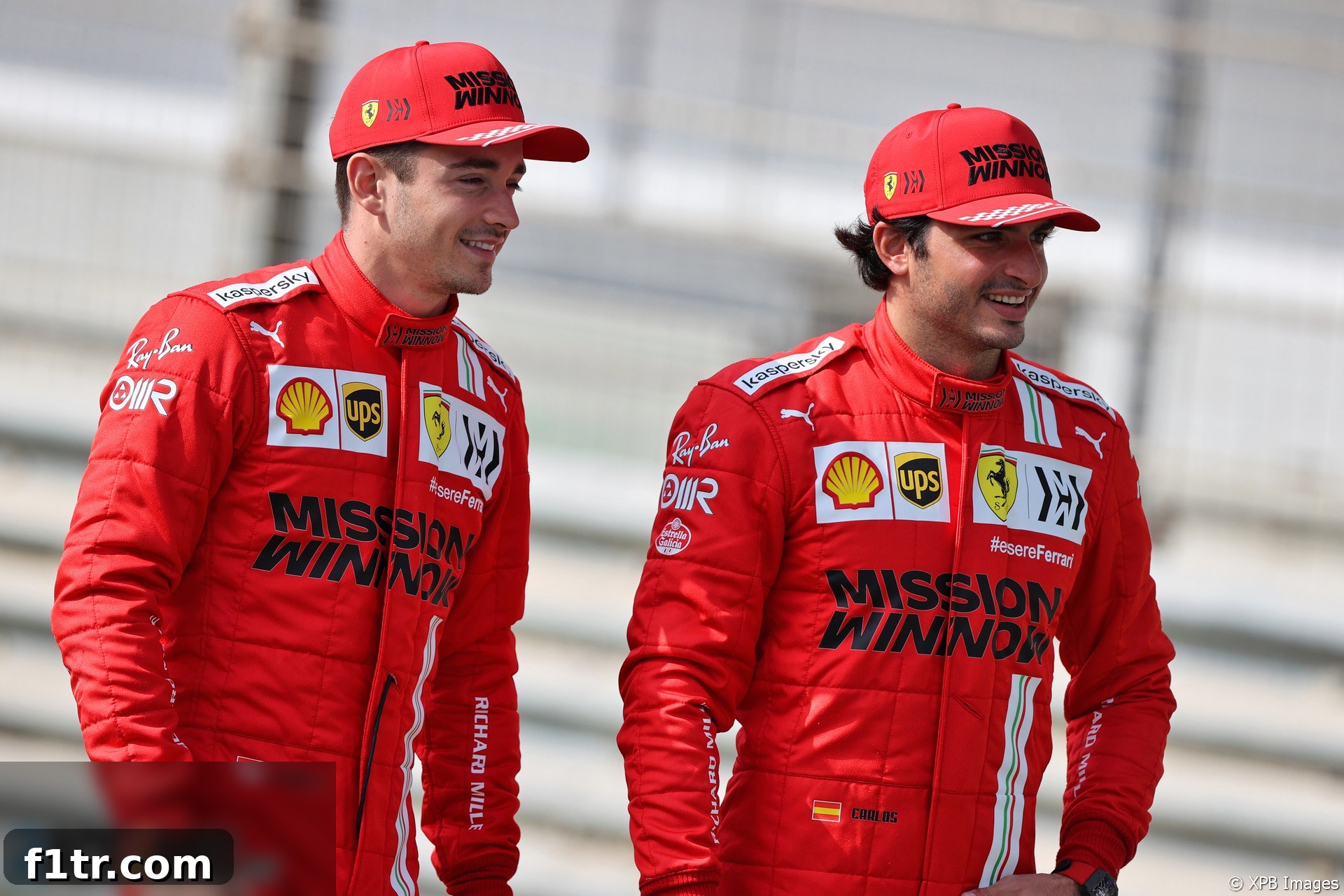
However, the 2021 Formula 1 season has unveiled a significantly more promising chapter for the Italian outfit. A palpable sense of renewed vigor and improved performance has been evident, largely attributed to the refreshed driver line-up. At the heart of this resurgence lies the burgeoning partnership between Charles Leclerc and the new arrival, Carlos Sainz Jnr. This dynamic duo has quickly established a synergistic relationship, proving to be a cornerstone of Ferrari’s recovery in the highly competitive world of Formula 1.
Where last year saw both Ferrari cars occasionally finish outside the points – notably at Spa and Abu Dhabi – the current season has painted a far brighter picture. With the exception of Sainz’s eleventh-place finish in Portugal, both drivers have consistently scored points in every round, a testament to the SF21’s improved capabilities and the drivers’ combined efforts. This newfound consistency is not merely a stroke of luck; it is, as Charles Leclerc himself articulates, a direct consequence of the fierce yet constructive competition and collaboration that defines their partnership.
“It’s looking good,” Leclerc commented on their working relationship. “We are working very well as a team. We are pushing each other. Carlos is extremely competitive and very quick all the time, so we are pushing each other.” This insight offers a glimpse into the internal dynamics at Ferrari, where individual ambition is channeled into collective progress. The drivers’ shared objective to extract maximum performance from the car, coupled with their individual drives for excellence, creates a virtuous cycle of improvement that benefits the entire team.
Carlos Sainz Jnr: A Catalyst for Change
Carlos Sainz Jnr’s arrival at Ferrari marked a pivotal moment for the team. Joining the legendary Scuderia after several impactful years with midfield teams, Sainz brought with him a wealth of experience, a meticulous approach, and a reputation for being an exceptional team player. His journey through Formula 1 has been one of consistent progression and adaptability. After a formative stint at Toro Rosso, he moved to Renault, where he continued to hone his craft. His subsequent move to a recovering McLaren team proved particularly fruitful, culminating in the team’s first podium finish in five years at the thrilling 2019 Brazilian Grand Prix. This proven track record of helping teams climb the grid positioned him as an ideal candidate to aid Ferrari’s own recovery.
Sainz’s contribution extends beyond his on-track performances; his methodical feedback and ability to integrate seamlessly into a new team environment have been invaluable. He echoed Leclerc’s sentiments regarding their collaboration, emphasizing the mutual benefits. “We are learning a lot from one another and I think this is very positive for the whole team,” Sainz explained. This mutual learning is crucial in Formula 1, where incremental gains in understanding and car development can translate into significant performance advantages. Each driver’s unique perspective on car characteristics, tire degradation, and setup preferences provides the engineers with a broader data set, enabling more informed and effective development decisions.
Furthermore, Sainz highlighted the synchronized approach they adopt when engaging with the engineering team. “We are also asking the same thing to the engineers to have just a better car, which is also very constructive for the whole team. So we are in a good place at the moment and we need to keep working on that.” This alignment in feedback is incredibly powerful. When both drivers provide consistent and complementary input, it allows the technical team to focus their resources and efforts more efficiently. Instead of having disparate requests pulling development in different directions, a unified message helps streamline the design and upgrade process, leading to a more balanced and ultimately faster car.
The Impact of a Harmonious Partnership on Team Morale and Development
The dynamic between Leclerc and Sainz represents a significant departure from some of Formula 1’s more historically turbulent driver pairings. While healthy competition is essential, an overabundance of internal rivalry can often detract from a team’s overall progress. Ferrari, under the leadership of Team Principal Mattia Binotto, seems to have successfully fostered an environment where individual excellence is celebrated, but collective success is paramount. This harmony spills over into the broader team, boosting morale and fostering a more positive and productive working atmosphere within the factory and at the track.
For a team like Ferrari, striving to reclaim its former glory, such a collaborative spirit is indispensable. The 2020 season served as a stark reminder of how quickly performance can unravel when the car is not performing optimally. The ensuing pressure on the drivers and engineers was immense. Now, with two highly capable drivers working in unison, that burden is shared, and the path to improvement becomes clearer. This synergy is particularly vital in the context of the forthcoming 2022 regulation changes, which will usher in an entirely new era of Formula 1 car design. A cohesive driver pairing that can effectively communicate their needs and adapt to new machinery will be a distinct advantage in navigating these significant technical shifts.
Moreover, the detailed feedback from both drivers enables Ferrari to pinpoint areas for improvement with greater precision. Whether it’s enhancing aerodynamic efficiency, optimizing suspension setup, or fine-tuning engine performance, having two top-tier drivers with aligned objectives accelerates the development cycle. This methodical approach is crucial for Scuderia Ferrari as they work tirelessly to bridge the gap to the front-running teams and re-establish themselves as championship contenders.
Leclerc’s Consistent Performance and Qualifying Prowess
Charles Leclerc, already established as one of the sport’s brightest talents, continues to demonstrate his remarkable speed and consistency. His ability to extract the maximum from any car, even a challenging one, has been a hallmark of his career. At the 2021 Spanish Grand Prix, his qualifying performance once again underscored his innate talent, as he secured a coveted fourth position on the grid. This achievement marked his third second-row start of the season, a clear indicator of the SF21’s improved one-lap pace and Leclerc’s skill behind the wheel. Securing a strong grid position at circuits like the Circuit de Barcelona-Catalunya, which is notoriously difficult to overtake on, is often half the battle won.
Leclerc’s journey to Q3, however, was not without its moments of tension. He recounted a specific incident during Q1 where he encountered unexpected traffic, a common pitfall in the opening stages of qualifying sessions. “In Q1 I had some traffic in turn one, two and three, and I lost quite a bit of lap time and then we had to go again just to be, to be sure,” he explained. This situation often forces drivers to push harder on subsequent laps, increasing the risk. Yet, Leclerc’s composure and ability to deliver when it mattered most shone through. “We did well because I don’t think we will have gone through with my first timed lap,” he concluded, highlighting the fine margins that define qualifying success in Formula 1.
This ability to adapt and perform under pressure is invaluable, especially as Ferrari seeks to challenge for podiums more regularly. The consistent Q3 appearances and strong race starts from both drivers are foundational elements of their overall strategy to return to the forefront of the sport. Their combined efforts, both in developing the car and maximizing its potential on track, are proving to be the driving force behind Ferrari’s encouraging resurgence in the 2021 season.
Looking Ahead: A Brighter Future for Scuderia Ferrari
The combined force of Charles Leclerc and Carlos Sainz Jnr is clearly injecting a renewed sense of optimism and purpose into Scuderia Ferrari. Their dynamic partnership, characterized by mutual respect, healthy competition, and a shared vision for success, is not merely improving the current car but is also laying crucial groundwork for the future. As the team continues its focused development efforts, particularly with the seismic shift in regulations looming for 2022, the strength of this driver pairing will undoubtedly be a defining factor in Ferrari’s quest to reclaim its rightful place at the pinnacle of Formula 1. The journey back to championship contention is a long and arduous one, but with Leclerc and Sainz leading the charge, Ferrari appears to be firmly on the right track.
2021 Spanish Grand Prix
- Two reasons why Catalunya may not predict the championship – at least this year
- McLaren to keep “drip-feeding” updates onto 2021 car
- Working group tackling F1’s track limits problem
- ‘We’ll discuss what went wrong’: Hamilton and Verstappen team radio transcript analysis
- 2021 Spanish Grand Prix Star Performers
Browse all 2021 Spanish Grand Prix articles