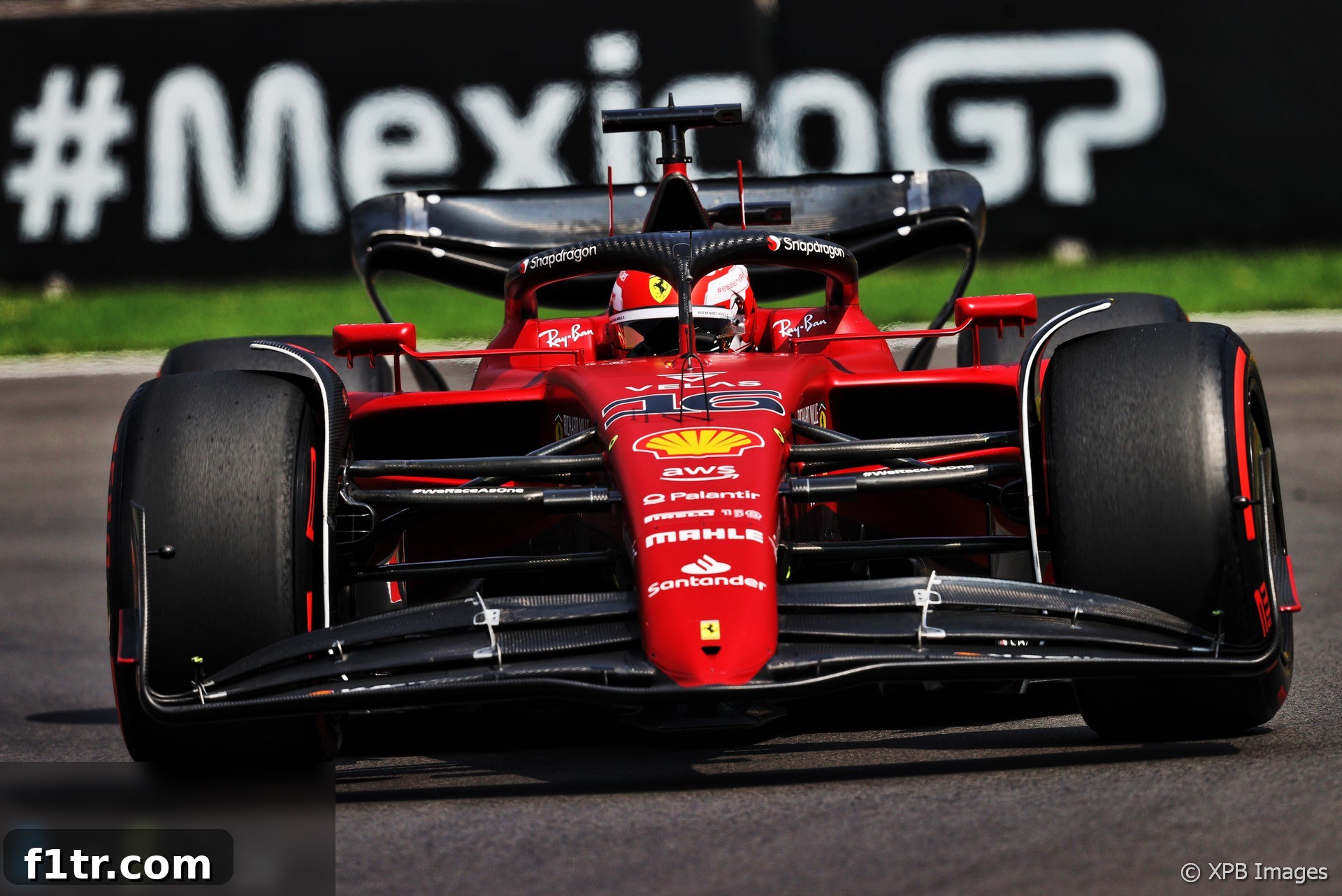
Charles Leclerc has voiced profound concerns regarding the upcoming Mexican Grand Prix, fearing a “nightmare” race if Ferrari fails to resolve the persistent power unit issues that severely hampered his qualifying performance. The Monegasque driver, a formidable force in Formula 1, found himself battling not just his rivals but also the erratic behavior of his SF-22 during Saturday’s crucial session, leaving him with a disappointing seventh-place starting grid position.
Advert | Become a Supporter & go ad-free
Leclerc’s Qualifying Ordeal: A Battle Against Unseen Forces
Leclerc’s frustration was palpable after a qualifying session he described as his “most difficult by far” this season. Despite registering top speeds comparable to his teammate, Carlos Sainz Jnr, Leclerc struggled significantly with inconsistent power delivery. This issue became particularly evident on his final flying lap, where a critical loss of time on the approach to Turn 12, a high-speed corner crucial for lap time, underscored the car’s underlying problems. The lack of responsive throttle inputs made the fast, flowing corners in the middle sector of the Autódromo Hermanos Rodríguez a treacherous challenge. Leclerc explicitly noted the car’s peculiar reactions over the circuit’s notorious kerbs and bumps, adding another layer of complexity to an already difficult session.
Securing seventh on the grid, without any grid penalties, marks Leclerc’s lowest starting position of the year, a stark contrast to the pole positions and strong front-row starts he has often achieved. This performance setback is particularly concerning for Ferrari, a team that began the season with championship aspirations but has since seen its title challenge falter amidst a series of reliability issues, strategic missteps, and performance inconsistencies. The qualifying result in Mexico City serves as a potent reminder of the challenges Scuderia Ferrari continues to face as the 2022 season draws to a close.
The Echoes of Past Setbacks and Fresh Concerns
The power unit issues surfacing in Mexico are not isolated incidents for Leclerc. Just prior to the Mexican Grand Prix, his car received a new engine and turbocharger for the United States Grand Prix at the Circuit of the Americas. While typically a new power unit component offers a fresh start, the recent history suggests ongoing struggles for Ferrari in maintaining peak performance and reliability. Adding to the pre-race anxiety, Leclerc experienced a crash during the second practice session in Mexico on Friday, which resulted in damage to the rear of his car. While Ferrari’s technical team worked diligently to repair the damage, the incident raises questions about potential underlying issues or the car’s overall robustness at such a demanding circuit.
The high-altitude environment of the Autódromo Hermanos Rodríguez presents a unique set of challenges for Formula 1 cars. The thinner air significantly impacts aerodynamic downforce, requiring teams to run maximum wing angles to compensate, and also places immense strain on the power units. Engines must work harder to generate power, and cooling systems are pushed to their limits. In such conditions, any existing power delivery or throttle response problems are exacerbated, turning what might be a minor inconvenience at sea level into a major performance deficit. For Leclerc, this combination of technical glitches and circuit specific difficulties paints a grim picture for the 71-lap race ahead.
“A Nightmare” Race Looms Without a Resolution
Leclerc’s candid assessment of the potential race outcome underscores the severity of the situation. “If I still have the same issues then the race will be a nightmare,” he stated emphatically, conveying the deep frustration and apprehension he feels. The prospect of wrestling a car that is unresponsive and unpredictable for the entire Grand Prix distance is daunting. Such conditions not only compromise a driver’s ability to extract performance but also dramatically increase the risk of errors and further damage, especially on a circuit known for its unforgiving nature.
For Ferrari, the overnight period between qualifying and the race is critical. Their engineers will be working tirelessly to diagnose the root cause of the power unit anomaly and implement a solution. The hope is that a fix can be found, allowing Leclerc to compete at his full potential and salvage a respectable result from a challenging weekend. Failure to do so would not only lead to a frustrating race for Leclerc but also further erode confidence within the team as they look towards the conclusion of the season and preparations for the next.
Tyre Degradation: Another Hurdle for Ferrari in Mexico’s Heat
Beyond the immediate power unit concerns, Ferrari has been grappling with another significant challenge in recent races: excessive tyre degradation. This issue, which has plagued the Scuderia at various points throughout the season, could prove particularly detrimental in the intense heat of Mexico City. High track temperatures accelerate tyre wear, making effective tyre management a crucial determinant of race strategy and performance. Teams that struggle with degradation often find themselves forced into suboptimal multi-stop strategies or endure a significant drop-off in pace during longer stints, allowing rivals to gain an advantage.
However, Leclerc offered a glimmer of optimism regarding this particular aspect. He noted encouraging signs in their tyre management during the practice sessions. “I feel like the tyre management we had in FP2, mostly in FP3 for me, was good,” he commented, suggesting that the team might have made some progress in understanding and mitigating this issue. Despite this positive observation, he acknowledged the inherent unpredictability, adding, “But then on the overheating, it depends a little bit how forecast will be.” This highlights the dynamic nature of F1 racing, where ambient and track temperatures, along with the specific demands of the race, can drastically alter tyre performance. The combination of a potentially compromised power unit and ongoing tyre degradation concerns presents a complex strategic puzzle for Ferrari as they prepare for race day.
The Mexican Grand Prix is renowned for its thrilling races, often characterized by overtakes, strategic gambles, and unpredictable outcomes. For Charles Leclerc, this edition promises to be a true test of resilience, skill, and the collective ability of Scuderia Ferrari to overcome significant technical hurdles. His performance, and indeed the team’s ability to address these critical issues, will be closely watched as the lights go out for what could be a pivotal race in their tumultuous 2022 campaign.
Advert | Become a RaceFans supporter andgo ad-free
2022 Mexican Grand Prix
- How many victory chances did Hamilton have in his first winless F1 season?
- Delay in producing new parts held up Alfa Romeo upgrade
- Doohan’s practice run earns praise, but Alpine undecided over reserve role
- ‘I was in the fight, which hasn’t been often this year’: Ricciardo’s Mexican GP transcript
- Verstappen “will continue to break records for the rest of his career” – rivals
Browse all 2022 Mexican Grand Prix articles