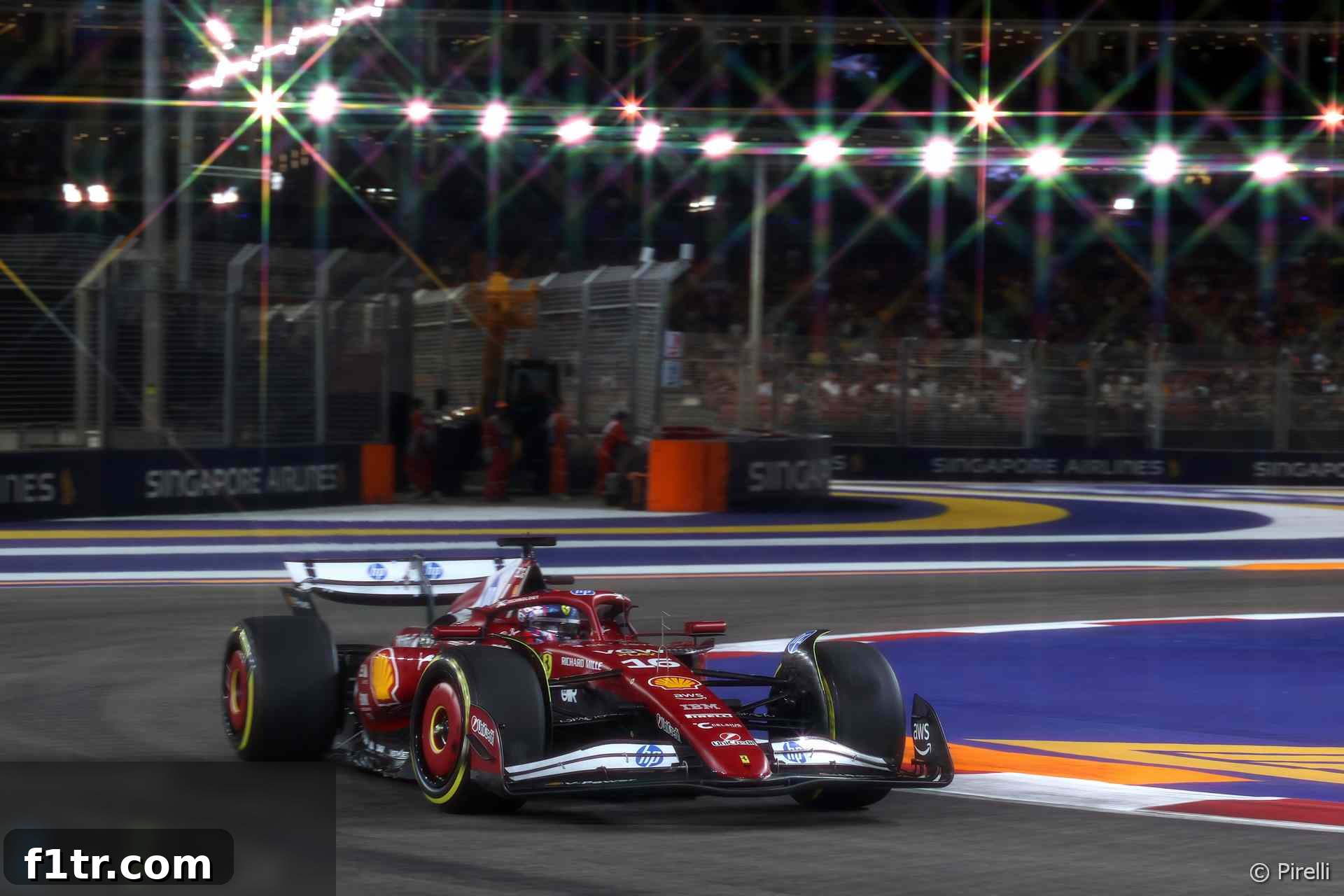
Ferrari’s Alarming Stagnation: A Deep Dive into Development Struggles and a Winless Season
Scuderia Ferrari, one of Formula 1’s most iconic and decorated teams, finds itself in an unenviable position this season, struggling to keep pace with rivals in the relentless car development race. Driver Charles Leclerc has candidly admitted the team’s shortcomings, a stark confession that casts a long shadow over their aspirations to secure a single Grand Prix victory before the season concludes. This marks a significant downturn for a team that, just last year, celebrated multiple race wins, a feat now seemingly out of reach as the chequered flag looms.
Advert | Become a Supporter & go ad-free
The contrast with their competitors couldn’t be starker. While McLaren, Red Bull, and Mercedes have each notched up at least two Grand Prix victories, Ferrari’s trophy cabinet remains empty this year. This winless streak is not merely a statistical anomaly but a glaring symptom of deeper issues within the team’s development pipeline, creating a palpable sense of frustration among the Tifosi and within the Maranello camp itself.
Charles Leclerc’s Stark Reality Check
Charles Leclerc, often a beacon of optimism, has voiced a somber outlook for the remainder of the season, dampening any hopes of a late-season resurgence. “It’s very tough,” he confessed to the official Formula 1 channel, his words echoing the grim reality facing the Prancing Horse. “We are not strong at the moment, and we are struggling massively with the car.” This frank assessment underscores the depth of the challenges that Ferrari currently confronts, extending beyond mere race-day performance to fundamental design and development flaws.
Leclerc’s pessimism is rooted in the absence of any immediate, tangible solutions. “It’s not easy. I wish I could say that I’m positive for the rest of the season, but I don’t think there’s anything in the car at the moment that proves to me that we are going to do a step forward,” he stated with disarming honesty. His comments highlight a worrying lack of upcoming upgrades or fundamental shifts that could alter their trajectory. This admission suggests that the team might have reached a plateau in their current car concept, with significant improvements requiring a more comprehensive overhaul that is not feasible within the confines of the current season.
The young Monegasque driver further emphasized the bleakness of their situation: “And I think this is the reality of our situation at the moment. I don’t quite know how to turn that situation around because we don’t have new parts or anything coming to the car.” Such statements are not just a reflection of driver frustration but an indication of the broader technical challenges faced by Ferrari, where immediate fixes appear to be elusive. This situation demands a critical review of their development philosophy and resource allocation for future seasons.
The Shifting Sands of F1 Development
While Leclerc acknowledged that Ferrari had made some progress earlier in the season, this advancement has been overshadowed by the exceptional development pace of their rivals. “We did steps forward, but the others did as well, so the gaps stayed kind of the same,” he explained, illustrating the relentless nature of Formula 1’s competitive environment. The problem for Ferrari is not necessarily a lack of effort but rather a slower rate of progression compared to the leading contenders.
Advert | Become a RaceFans supporter andgo ad-free
The championship landscape vividly demonstrates this disparity. Red Bull, for instance, has executed what Leclerc described as “two steps in the season, first half and then in Monza more recently, where they did a really big step forward.” These targeted upgrades have cemented Red Bull’s dominant position. Similarly, Mercedes appears to have found its stride: “And now Mercedes seems to have done this step forward, and we are the only one that didn’t find that solution.” This sentiment perfectly encapsulates Ferrari’s predicament – a sense of isolation as the competitive pack pulls away, leaving them grappling with fundamental issues that have yet to be resolved.
The Technical Conundrum: Where Did Ferrari Go Wrong?
Ferrari’s inability to maintain a competitive development curve points to potential deeper issues within its technical department and car philosophy. The intricacies of modern Formula 1 car design demand a holistic approach, where aerodynamics, power unit integration, chassis dynamics, and tire management work in perfect harmony. A breakdown in any of these areas can have cascading effects, leading to a performance plateau.
Speculation suggests that Ferrari might be facing challenges in correlating simulation data with real-world track performance, a common hurdle for F1 teams. This discrepancy can lead to upgrades that, while promising on paper, fail to deliver the expected gains on the circuit. Furthermore, the sensitive nature of current-generation F1 tires means that an unstable or unpredictable car can quickly fall out of the optimal operating window, exacerbating performance deficits and making consistent results elusive. The focus on rear-end grip, as highlighted by other drivers in the paddock discussing their own car’s limitations, suggests that Ferrari may also be struggling with stability, hindering drivers from pushing the car to its absolute limit.
The Singapore Grand Prix: A Weekend of Disappointment
The recent Singapore Grand Prix served as a stark illustration of Ferrari’s current struggles. Both Ferrari cars finished outside the top 10, a truly disappointing outcome for a team with championship aspirations. The challenging Marina Bay Street Circuit, known for its demanding technical sections and high-downforce requirements, exposed the vulnerabilities of the SF-23.
Advert | Become a RaceFans supporter andgo ad-free
Reflecting on the Singapore performance, Charles Leclerc acknowledged the team’s underperformance, particularly in qualifying. “There was potential for us to be further ahead this weekend,” he noted. “I think in qualifying I’m still not extracting the full potential of the car. We didn’t in the last race and we didn’t this weekend.” This suggests a persistent issue with unlocking peak performance during the crucial qualifying sessions, which often dictates race outcomes on tight street circuits.
Leclerc further elaborated on the missed opportunities in qualifying: “There was potential to have been third or fourth on the grid this weekend if we had extracted the tyre performance and not queued at the end of the pit lane, for example.” Such incidents, whether related to tire warm-up strategies or operational missteps, highlight the fine margins in Formula 1 and how even minor errors can have significant consequences. In the race, the pace was equally concerning: “In the race I think we were kind of on par pace-wise with at least a couple of cars ahead of us, but obviously not quicker.” This indicates an inability to challenge the front-runners and a struggle to even maintain pace with midfield competitors.
Ultimately, the Singapore weekend encapsulated Ferrari’s season-long battle. Leclerc’s assessment of their realistic targets – “So I think if we can get our qualifying fixed, which is very very hard to do against these quick cars, then maybe we can get slightly better results. But ultimately we’re still fighting for fourth, fifth, sixth, at best” – paints a sobering picture. The team is no longer vying for victories but rather contending for respectable, albeit not podium-contending, positions.
Implications for the Remainder of the Season and Beyond
With only a handful of races remaining, Ferrari’s immediate goal will be to salvage some pride and consolidate their position in the Constructors’ Championship. The current performance trajectory suggests that securing a win will be an uphill battle, requiring a stroke of immense luck or unexpected circumstances. The pressure will undoubtedly intensify on the team’s leadership, including Team Principal and the technical directors, to identify and rectify the fundamental issues plaguing the SF-23.
Looking beyond the current season, the lessons learned from this challenging year will be crucial for Ferrari’s long-term future. A thorough review of their car concept, development processes, and organizational structure might be necessary to ensure they return to championship-contending form. The fervent Tifosi, renowned for their unwavering support, will be hoping for a strategic reset that can reignite Ferrari’s legendary competitiveness. The path to redemption will be arduous, but for a team synonymous with Formula 1 success, anything less than a return to winning ways is simply not an option.
Miss nothing from RaceFans
Get a daily email with all our latest stories – and nothing else. No marketing, no ads. Sign up here:
2025 Singapore Grand Prix
- What are McLaren’s “repercussions” for Norris and why did they wait to apply them?
- Hamilton “had no choice” about cutting corners when brakes failed in Singapore
- Norris reveals he faces ‘repercussions to the end of the season’ over Piastri clash
- Russell denies Verstappen a ‘full set’ of wins, Hamilton breaks Schumacher record
- ‘Good shout on staying out’: Did Verstappen consider a second pit stop in Singapore?
Browse all 2025 Singapore Grand Prix articles