The exhilarating world of Formula 1 racing is continually evolving, driven by commercial interests and the quest for new audiences. A significant debate currently gripping the motorsport community revolves around the strategic shift towards urban street circuits. The City of Miami, for instance, has been a focal point for this discussion, with its commission previously considering a bid for a place on the F1 calendar with a new street circuit. This trend represents a cornerstone of Liberty Media’s vision to expand Formula 1’s global footprint, bringing the spectacle directly into the heart of major cities. But does this strategy truly offer long-term economic viability and benefit the sport itself?
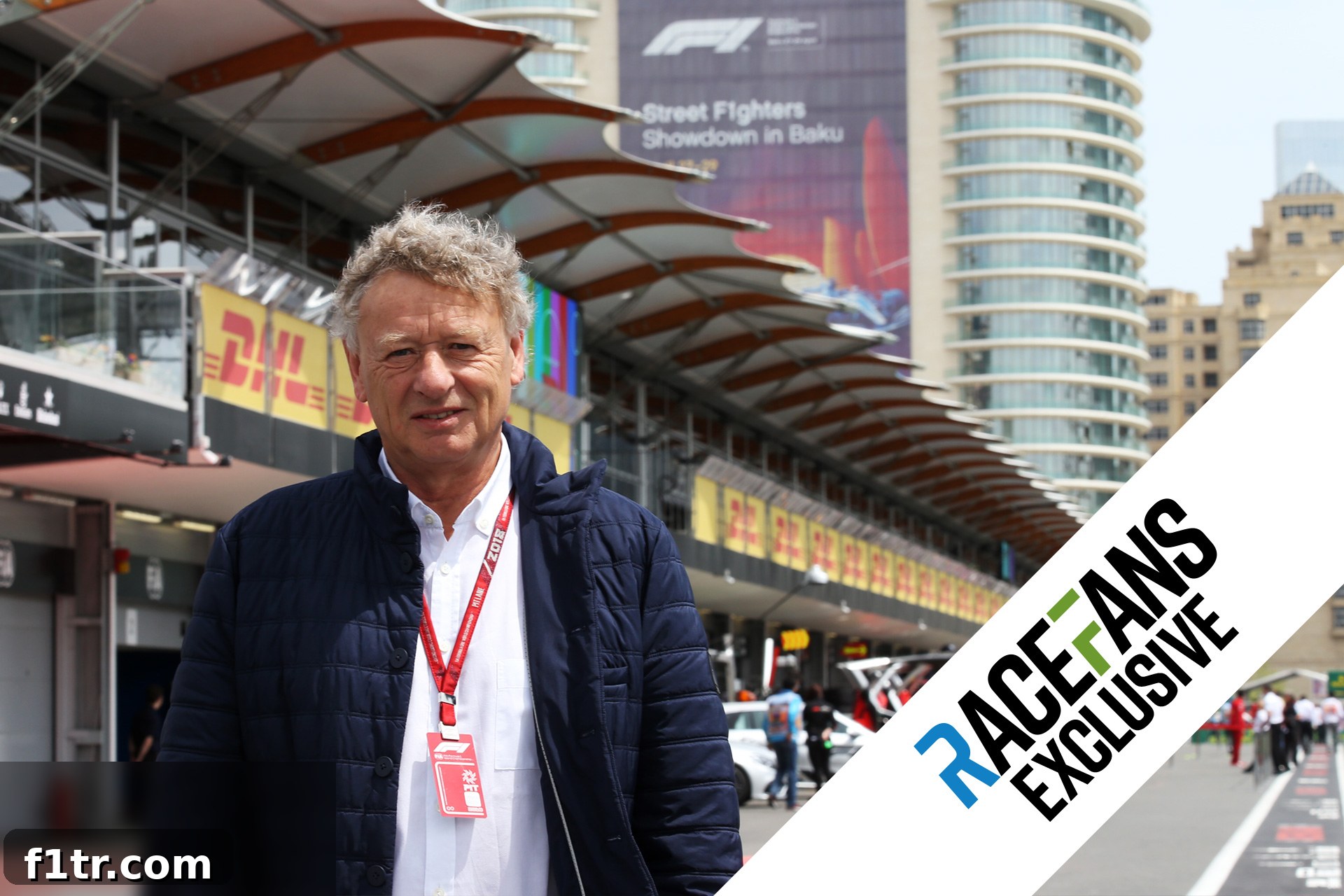
To gain a deeper understanding of the intricate challenges and criticisms surrounding modern circuit design, we turn to the foremost architect in the field, Hermann Tilke. Having designed the majority of tracks currently on the F1 calendar, Tilke offers unparalleled insight into the complexities of creating both temporary street circuits and permanent racing facilities. In an exclusive interview, he addresses the persistent criticisms of his designs and sheds light on the future trajectory of Formula 1 venues.
One of the most anticipated races of recent seasons, particularly among the early ‘fly-away’ rounds, has been the Azerbaijan Grand Prix. The Baku City Circuit has consistently delivered high-octane drama, earning widespread acclaim. Its 2017 edition was frequently hailed as the race of the year, a sentiment echoed by many, including RaceFans readers, who celebrated Daniel Ricciardo’s spectacular triple overtake as the pass of the season. The event was replete with thrills, spills, and controversies, setting a high bar for spectacle that its 2018 counterpart, also highly anticipated, successfully matched. Even the FIA became embroiled in reviewing multiple stewards’ decisions long after the race concluded, underscoring the relentless action on track.
The consistent success of Baku lends credence to the idea that street circuits are a viable answer to Liberty Media’s ambitious goal of bringing Formula 1 closer to fans. By integrating the electrifying ‘engineered insanity’ of F1 with vibrant city festivals, these venues aim to create an immersive experience. The word ‘streets’ has become a pervasive buzzword in F1 circles, with downtown locations in Miami, Hanoi, Berlin, and even London (again) frequently floated as prospective Grand Prix hosts. Beyond these, iconic urban settings like Cape Town, South Africa, and Los Angeles (with a nod to Long Beach’s historic racing legacy), along with Copenhagen, have regularly entered the conversation.
This surge of interest suggests approximately eight new venues could join the calendar, representing about 40 percent of the current schedule, all proposed as street circuits. Strikingly, there has been little discussion about introducing new races on purpose-built, permanent tracks. While this enthusiasm for urban racing might yield short-term financial gains for F1, it potentially carries significant long-term consequences for motorsport as a whole.
During Liberty Media’s stewardship of Formula 1, which began with their acquisition of commercial rights in January 2017, the streets of Baku have twice played host to a Grand Prix, and twice delivered an extraordinary level of excitement per second. This consistent performance might understandably lead F1’s owners to believe that the solution to their share price fluctuations – with FWONK trading significantly below its peak – lies in transforming pedestrian crossings into racing lines. However, those with a longer memory in Formula 1 will recall venues like Valencia, a cautionary tale against the unqualified embrace of street circuits. The Circuito Urbano de Valencia, weaving through the city’s America’s Cup harbour, was widely infamous for delivering successive borefests. Sparsely populated grandstands and an uninspiring layout contributed to races that offered little overtaking action, apart from spectators rushing to escape the monotony in its later years.
It’s worth noting that the inaugural Baku race, controversially named the European Grand Prix for political reasons, was paradoxically rated by the RaceFans community as the worst race of the 2016 season, scoring a mere 4.7 out of 10. For comparison, Valencia features twice among the bottom four races in similar fan ratings: its 2011 race scored 3.8, and the inaugural 2008 event was rated 3.9. Herein lies an interesting point: both Baku’s original layout and the Valencia circuit were designed by Tilke Engineers & Architects, the firm led by Hermann Tilke, the German circuit architect whose designs have shaped virtually every new circuit to join the F1 calendar since 1999, starting with Malaysia’s Sepang International Circuit.
Beyond designing new venues, Tilke has also been instrumental in remodelling existing circuits to enhance overtaking opportunities, such as the “Newburgring” (the modern short version of the Nürburgring) and Hockenheim. His firm has also designed numerous test venues for manufacturers like Porsche. At 64 years old at the time of the interview, Tilke remains the preeminent authority and go-to expert in the highly specialized field of circuit design. Hermann, who himself competed with some success at a national level in Germany during the 1980s, has often been a lightning rod for criticism over the years. The term “Tilkered” has even entered the lexicon of F1 fandom, used to describe any circuit that fans dislike, sometimes even erroneously applied to venues he had no hand in designing. Yet, he is seldom adequately credited for delivering tracks where overtaking is not just possible, but has become a regular feature. Having known Hermann for many years, our meeting in Baku ahead of qualifying provided an opportunity to delve into his design methodology. He appeared utterly relaxed and confident that the track would deliver another thrilling race on Sunday, just as it had the previous year.
Given the contemporary surge in enthusiasm for street circuits, I posed a crucial question to Tilke: what is the cost difference between commissioning a new street circuit and constructing a permanent circuit, both built to the rigorous FIA Grade 1 standards required for Formula 1? After a thoughtful pause, he explained, “You cannot say. Because a street circuit has two types of costs. One is the first time, where you have to buy the walls, the fences, pit building and everything, and maybe new asphalt and so on. And then the annual [erection] costs… you cannot [quantify] the difference. But of course [a street circuit] is more expensive.”
One of the most significant drawbacks of street circuits is their inherent lack of motorsport legacy. Once the Grand Prix weekend concludes, these temporary venues leave no dedicated asphalt for local club racing, national championships, or even amateur track days. Consequently, the cumulative costs of annually erecting and dismantling street circuits almost invariably surpass the investment required for constructing permanent facilities. A purpose-built track, by contrast, can foster a thriving regional motorsport ecosystem, providing continuous opportunities for various racing categories and nurturing local talent—a critical factor for developing motorsport markets.
“For sure it is like this,” Tilke agreed, acknowledging the disparity. However, he quickly pivoted to highlight the countervailing advantages of street circuits: “Street circuits have other advantages: events coming to the people, coming to the city, the atmosphere is unique in a city… we [F1] have now three pure street circuits. We have Singapore, we have Monaco, and here [Baku].” Beyond these, Formula 1 also incorporates semi-street circuits such as Melbourne’s Albert Park and Montreal’s Circuit Gilles Villeneuve, bringing the total number of temporary or semi-permanent venues on the calendar to five. If the prospective Miami Grand Prix and other proposed venues come to fruition, with even half making it onto the calendar, Formula 1 could soon see a significant portion of its world championship contested on non-permanent tracks.
Considering that Tilke’s firm would likely be awarded the contracts for these new ventures, the discussion naturally turned to his design process for such venues. “In the beginning, we look very carefully at the city and where it could happen,” he explained. “Mostly the promoter has rough ideas of where it could be. One of the starting points is where to position the paddock, because for a paddock you need space. The TV compound, the paddock, and all the infrastructure.” Finding such expansive, uninterrupted space within a bustling urban environment is no small feat. “That is not easy to find in a city. Here [in Baku] we were lucky because we have this big square.”
The track layout itself necessitates utilizing existing road networks. “You have to find streets that are wide enough, especially when it goes to high speed. If it’s very narrow, you make it slow. Then you have a look at what is possible, what is not possible, and here we had really positive discussions with the FIA, with Charlie Whiting, to make it possible,” Tilke detailed. The complexities extend beyond asphalt and barriers; integrating a race into a living city demands meticulous consideration for its inhabitants. “With a street circuit you also need to think about people inside the circuit, living, what they’re doing. Businesses, whatever. What if you are inside the circuit and somebody gets a heart attack? You have to bring them out. How to do it, these all the things you have to think about, a lot of organisational things, and, and, and… And the traffic of course.” The logistical puzzle of traffic management, emergency access, and maintaining urban functionality throughout the event is immense.
The timeline for staging a street circuit once all formal approvals are secured is surprisingly swift. If Miami’s proposed street festival garnered the desired enthusiasm from Liberty Media, could a race realistically be held the following year? “Usually it’s possible to do it in eight, nine months, maybe one year. If you have the route. And all the legal things are solved. For the first year it needs about nine months. You have to produce the pit buildings and all the technical [infrastructure] and so on. You need some time to order…” This timeline suggests that a street race in Miami could indeed have been a distinct possibility for 2019, underscoring the rapid deployment potential of temporary venues.
Our conversation then shifted to the economics of constructing a permanent circuit. I asked him bluntly about the typical cost, perhaps 300 or 500 million in any currency. Tilke offered a tangible example: “Let’s say a good example is Bahrain. Now it would be a little bit more, but at the time (2001-2004) it was 180 million dollars.” When asked if this figure excluded the land, he confirmed, “Yeah, without the land of course. The land is different, a different story. Sometimes it’s cheap, sometimes it costs nothing; sometimes it’s expensive. The really expensive [part] is the infrastructure for spectators: grandstands, toilets, parking, and infrastructures like the pit building, it’s more expensive than the Tarmac, the actual track itself.” He then provided a helpful rule of thumb for cost breakdown: “You can calculate, you have one third, one third, one third. One third is the track itself, with everything, the asphalt and the run-offs and the guard rails and the fences, and, and and… Also the drainage. One should never forget the drainage and this kind of thing. One third is the building infrastructure needing for Formula One. And one third is the spectator infrastructure.” So, for a 250 million dollar circuit, it implies approximately 80 million for each of these three core components. “Yes,” he affirmed, “but it’s also possible to make it cheaper than 250, of course, why not? Everything is basic, but could be nice. By the way, the cheapest one was the Red Bull Ring.” This efficiency at the Red Bull Ring, he clarified, wasn’t due to existing facilities from its previous iteration as the A1 Ring, as “there were nothing left from the existing track [in 1997]”. Instead, it was because “It’s a short track, and everything’s done in a very effective way. And it’s very compact.” Its initial upgrade cost around 60 million Euros in contemporary terms, with its 2011 renovation as the Red Bull Ring costing a similar amount.
As the interview drew to a close, I broached two long-held questions, anticipating Tilke’s response. First, how does he counter the pervasive perception that overtaking is impossible on circuits often labelled as ‘Tilkedromes’? A weary look crossed Hermann’s face as he replied slowly, “First of all, it’s not true. Look to the Shanghai race this year, look to the Bahrain race this year. What happened? Overtaking. Also with these cars, [with] which it is really very difficult to overtake. Look to Austin” (for which he shares partial design credit). “Always overtaking, and always wheel-to-wheel fighting. So this is just not true. Of course you have some races which are boring. But you have also football games which are boring. And if the fastest is in front of the less fast car, nothing happens. So what then? Then the fastest is going and the second fastest is behind. Nothing happens.” Tilke emphasized the realistic scope of a circuit architect’s influence: “The only thing we [as circuit architects] can influence is that a good race is possible. It’s not necessarily guaranteed, but it’s possible. We do not disturb a good race.” This nuanced perspective underscores that while design facilitates action, the variables of car performance, driver skill, and race strategy ultimately dictate the spectacle.
My second question addressed another frequent criticism: the signature wide run-off areas that often draw ire from fans and many F1 drivers alike. “You see here you can also do something very narrow [through the Old Town],” Tilke began, referring to Baku. “But it’s like this: When you make a permanent circuit, and we have this [phenomenon] only at permanent circuits; look at Singapore, look here, it’s another case.” He explained that if a circuit is designed “purely for Formula One, only for Formula One, then you can do a lot of things.” However, the reality of permanent circuits is far more complex. “When you make a permanent circuit, the owner of the circuit, or the investor, wants to have everything. They want to have motorcycles, they want to have private people, launches, they want to have track days, and Formula One. And so everything has another demand.” For instance, motorcycle racing demands substantially larger run-off areas for safety. “For example, motorcycles need a lot of run-off, because if they hit the guard rail at 60kph…” His voice trailed off, implying severe consequences. When prompted, “Dead?” he clarified, “Not dead, but hurt. And at least for him the season is over. The same accident with a car at 60, nothing. We have Formula One cars, highly professional, we have motorcycles, also highly professional, but with other demands… and you see, you have on the same circuits, people say it’s wide, we have very interesting motorcycle races. Then you have the private people, and you have the other, track days, launches.” Tilke articulated that amateur participants and car manufacturers conducting launches prioritize safety and avoiding damage. “Nobody wants to hurt themselves, to demolish their car. They feel better with long run-offs. Ask people who do car launches, Porsche racing days or whatever, they don’t go to circuits which are very narrow because it costs money. They go into the guard rail and hit the guard rail and it costs minimum €5,000.”
Establishing the primary purpose and varied demands of a circuit is “really, really important,” Tilke stressed. “What is the demand of the circuit? What does the owner want? I totally understand the motorcycle people, totally understand.” Essentially, the main objective when designing a permanent circuit is to enable it to generate revenue from multiple sources, ensuring its long-term sustainability. Without this multi-purpose functionality, a permanent F1 circuit could scarcely exist. “Yes, they want to have [all categories],” he affirmed, highlighting the economic imperative that often dictates design compromises.
In wrapping up, I mentioned that after the rather uneventful season opener in Melbourne, some within Liberty Media had suggested that the circuits themselves should be changed to improve racing. Tilke’s response was definitive: “Look, a circuit is a building. And a building is at least for 50 years. You can make some small changes, but you have it there and then it’s a reality. For 50 years. And you cannot change with every new generation of cars. They can make the regulations like this, that they can better overtake. Look at Formula Two. They can do it. Moto GP, they can do it. Also other series. Look to GT cars, GT3, very interesting, side-by-side, everything. They have downforce, but they can do it.” His point was clear: the onus for improving racing spectacle often lies more with the technical regulations governing the cars than with fundamentally altering the fixed infrastructure of racing circuits.
The debate between the allure of temporary street circuits and the enduring legacy of permanent facilities continues to shape the future of Formula 1. While street circuits offer immediate excitement and access to new markets, their high annual costs and lack of lasting motorsport infrastructure present significant challenges. Permanent circuits, though demanding substantial initial investment and requiring multi-purpose functionality for sustainability, contribute to a broader motorsport ecosystem. Hermann Tilke’s insights underscore the complex interplay of design, safety, economics, and sporting spectacle that define the venues of elite motorsport.
RacingLines
- The year of sprints, ‘the show’ – and rising stock: A political review of the 2021 F1 season
- The problems of perception the FIA must address after the Abu Dhabi row
- Why the budget cap could be F1’s next battleground between Mercedes and Red Bull
- Todt defied expectations as president – now he plans to “disappear” from FIA
- Sir Frank Williams: A personal appreciation of a true racer
Browse all RacingLines columns