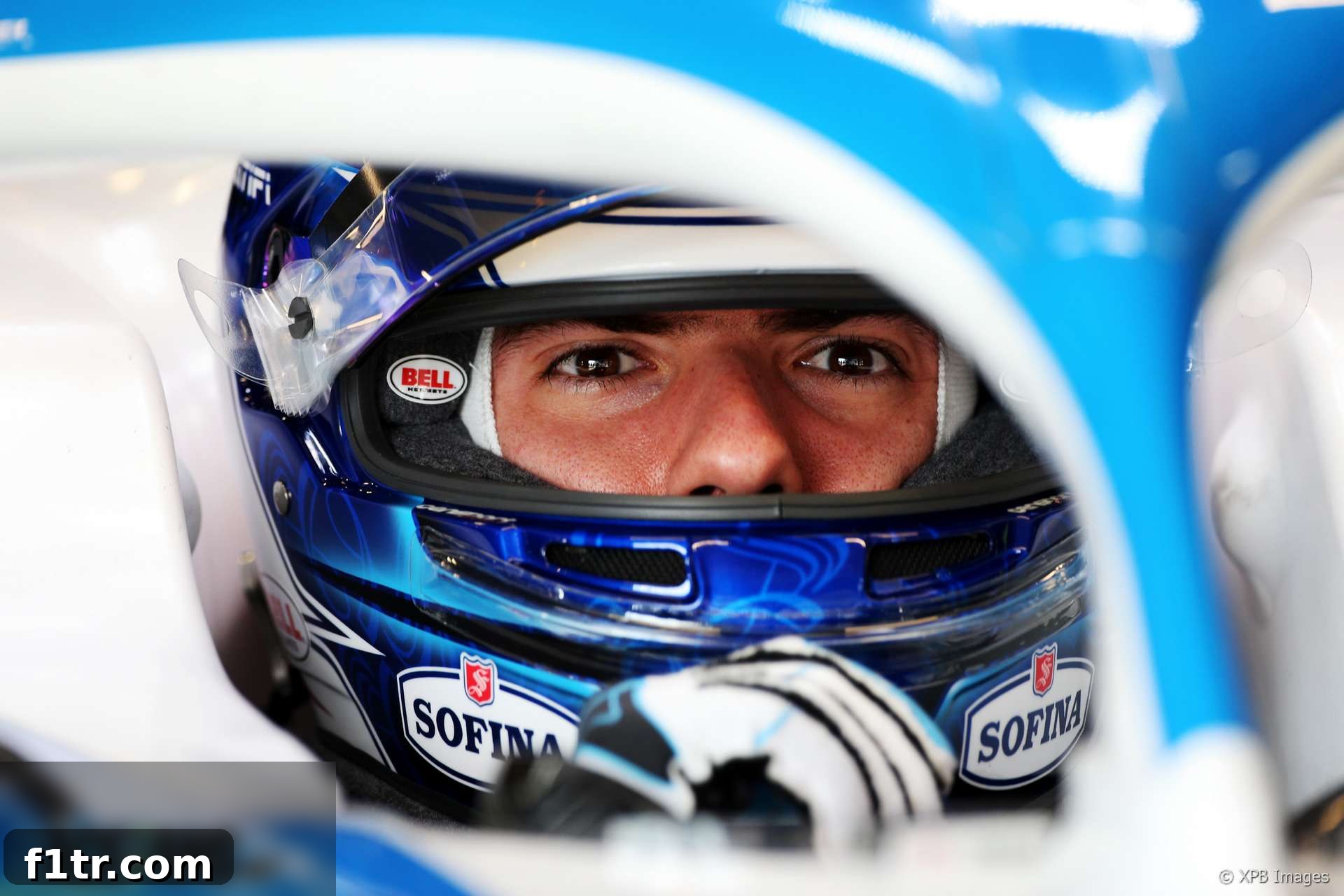
Canada’s Nicholas Latifi embarked on his highly anticipated Formula 1 journey with an unexpected administrative twist: making his debut under an American racing license. This unusual situation arose following significant developments within Canada’s national sporting authority, a change that also impacted fellow Canadian F1 competitor, Lance Stroll.
Nicholas Latifi’s F1 Debut: A Canadian Driver, An American License
The Unexpected Turn: Why Canadian Drivers Are Racing Under US Flags
The world of Formula 1 is known for its intricate rules and regulations, but few administrative changes draw as much attention as a driver’s national licensing. For Canadian drivers Nicholas Latifi and Lance Stroll, the eve of the 2020 F1 season brought a surprising development: a switch from Canadian to American racing licenses. This shift stems from ASN Canada FIA, the organization historically responsible for motorsport governance in Canada, voluntarily resigning its mandate from the FIA in December of the previous year.
This resignation meant that the authority to issue crucial international racing licenses, including the highly coveted FIA Super Licence required for Formula 1 participation, was no longer held by the Canadian body. Consequently, both Latifi, preparing for his maiden F1 season with Williams Racing, and the more experienced Stroll, representing Racing Point, found themselves in a unique position. To ensure their eligibility for the pinnacle of motorsport, they had to swiftly obtain their competition licenses from the Automobile Competition Committee for the United States (ACCUS).
Latifi’s Account: A Surprising but Necessary Adjustment
Reflecting on the situation, Nicholas Latifi openly admitted his surprise at the turn of events. “It was a bit strange to be honest,” Latifi stated. “We had actually heard that this might be the case going into the end of last year, coming back from Abu Dhabi, that into the new year the Canadian ASN might have not been renewed or not be allowed to give the licences out anymore.” This early warning allowed his team and management to anticipate the potential issue, but the reality still presented an administrative challenge.
Latifi further explained the timeline of the administrative hurdle: “So we had actually already applied for the licence before I got signed. So I actually had my Canadian A Licence, which we need to then apply for the super licence. But then it was not accepted by the FIA for the super licence. So very quickly we had to apply for the US one.” The urgency highlighted the critical nature of the FIA Super Licence, a document that validates a driver’s qualification and eligibility to compete at the highest level of single-seater racing. Without it, F1 dreams remain just that – dreams. While the process was unexpected and required prompt action, Latifi ultimately downplayed its long-term impact on his racing, concluding, “So it was a bit surprising, but at the end of the day it doesn’t really change much for me.” His focus remained firmly on his performance and his debut F1 season.
National Pride Remains: The Canadian Flag Flies On
Despite the administrative change requiring an American license, Nicholas Latifi emphasized that his national identity as a Canadian driver remains firmly intact. “I still have the Canadian flag beside my name, it should still be the Canadian flag on the TV screen beside my name,” he affirmed. “So that’s the main thing that counts.” This sentiment resonates deeply within the world of international sport, where a driver’s nationality is intrinsically linked to their public image and the support they receive from their home country.
The FIA’s regulations for driver nationality are generally tied to the passport held by the competitor, rather than the specific national sporting authority that issues their competition license. This distinction is crucial, allowing drivers like Latifi and Stroll to continue representing Canada on the global stage, irrespective of the administrative body that processes their paperwork. For Canadian fans, this is vital, as the sight of their national flag alongside a driver’s name on the broadcast graphics and official standings evokes a powerful sense of pride and connection. It ensures that the spirit of Canadian competition remains undiminished, even as bureaucratic details shift behind the scenes.
A Historic Moment for Canadian Motorsport: Two on the Grid
Beyond the licensing intricacies, the 2020 Formula 1 season marks a significant milestone for Canadian motorsport. The presence of two Canadian drivers, Nicholas Latifi and Lance Stroll, on the official starting grid is a rare occurrence, one that hasn’t been witnessed in more than five decades. This dual representation signifies a resurgence of Canadian talent at the highest echelons of global racing and is a source of immense excitement for fans across the country, harking back to a golden era of Canadian involvement in F1.
“I think it’s quite cool that there’s going to be two Canadians sharing the official starting grid,” Latifi enthused. For any driver, reaching Formula 1 is the culmination of years of dedication, sacrifice, and relentless competition. To do so alongside a compatriot amplifies the national pride and creates a unique bond. Latifi, having progressed through the ranks of Formula 2, understands the weight of international representation. “I’ve always said it from racing in Formula 2, at that time it was the highest level I was racing, you feel more on the international stage in the Formula 1 paddock. I take a lot of pride in representing Canada, representing my country.” This shared experience undoubtedly adds an extra layer of meaning to their participation.
The Impact on the Canadian Grand Prix
The return of two Canadian drivers to the Formula 1 grid is expected to inject even more enthusiasm into one of the sport’s most beloved events: the Canadian Grand Prix in Montreal. Latifi himself is a vocal admirer of his home race. “So definitely I think it’s going to be great for the sport and great for the Montreal grand prix as it’s always, in my opinion, one of the best ones – I’m not just saying that because I’m Canadian.”
The Montreal Grand Prix is renowned for its vibrant atmosphere, passionate fans, and the thrilling challenges of the Circuit Gilles Villeneuve. Having two home heroes battling it out on track will undoubtedly elevate the excitement, potentially boosting attendance and television viewership within Canada. This increased national interest can, in turn, inspire a new generation of Canadian youngsters to pursue careers in motorsport, from karting to engineering, ensuring a robust future for the sport within the country. The legacy of Canadian F1 drivers like Gilles and Jacques Villeneuve continues to be a powerful source of inspiration, and Latifi and Stroll are now adding their own chapters to this rich history, strengthening the sport’s roots in Canada.
Broader Implications for Motorsport Governance
The situation with ASN Canada FIA and its voluntary resignation of mandate from the FIA highlights the complex landscape of international motorsport governance. The Fédération Internationale de l’Automobile (FIA) acts as the governing body for world motorsport, overseeing a vast network of National Sporting Authorities (ASNs) in various countries. These ASNs are crucial for regulating motorsport at a national level, issuing licenses, and enforcing safety standards, serving as the direct link between global regulations and local competition.
While the specific reasons for ASN Canada FIA’s decision were not publicly detailed, such occurrences can arise from a variety of factors, including internal organizational challenges, financial constraints, or disagreements regarding administrative procedures with the global body. The FIA’s swift action to ensure Canadian drivers could still obtain valid Super Licences through ACCUS demonstrates the flexibility and interconnectedness of the global motorsport system. It underscores the FIA’s commitment to prioritizing driver participation and the smooth running of international championships, even when national administrative bodies face difficulties. This incident serves as a testament to the robust framework designed to keep the sport moving forward.
This incident also serves as a reminder of the vital role ASNs play in nurturing talent from grassroots levels all the way to Formula 1. A stable and well-functioning national sporting authority is essential for developing junior categories, organizing local championships, and providing a clear pathway for aspiring racers. The ability for Canadian drivers to transition seamlessly to an American license, while practical, also sparks discussions about the resilience of national motorsport infrastructure and the mechanisms in place to support drivers in unforeseen administrative circumstances. It prompts a broader reflection on how national motorsport federations can best sustain their mandates and support their athletes on the global stage.
Looking Ahead: The Focus Remains on Performance
As Nicholas Latifi and Lance Stroll prepare for the challenges of the Formula 1 season, the initial administrative hurdle of their American licenses has largely faded into the background. For Latifi, the focus is squarely on proving his capabilities on track with Williams Racing, demonstrating his pace, consistency, and ability to adapt to the demanding world of F1 as a rookie. His journey, marked by perseverance through junior categories, now culminates in the ultimate test.
His debut season represents a significant personal achievement, and the pride of representing Canada remains a powerful motivator. While the license situation was an unusual prelude, it has ultimately not deterred either driver from their primary goal: competing at the highest level and making their nation proud. The 2020 season promises to be an exciting chapter for Canadian motorsport, with two of its finest talents battling for glory on the global stage, flying the Canadian flag high, irrespective of their license plate. Their dedication and skill will be the true markers of their season.
Related Formula 1 Content
- Grosjean to make F1 test return tomorrow for first time since Bahrain horror crash
- Pictures: Wrecked chassis from Grosjean’s Bahrain fireball crash to go on display
- Bottas vs Rosberg: Hamilton’s Mercedes team mates compared after 78 races each
- F1 revenues fell by $877 million in Covid-struck 2020 season
- Hamilton and Mercedes finally announce new deal for 2021 season
Browse all 2020 F1 season articles