Theo Pourchaire’s Battle Beyond the Track: Overcoming the Ghost of Jeddah
In the high-octane world of Formula 2, raw speed and unerring precision are paramount. Yet, for even the most prodigious talents, the psychological scars of past incidents can cast long shadows. Such is the ongoing challenge for Formula 2 feature race winner Theo Pourchaire, who candidly admitted that vivid memories of his terrifying crash at the Jeddah Street Circuit last year significantly affected his performance at the start of recent races. This revelation offers a rare glimpse into the mental fortitude required to compete at the pinnacle of junior motorsport, highlighting how a driver’s greatest competitor can sometimes be their own mind.
Advert | Become a Supporter & go ad-free
The Haunting Echoes of Jeddah 2021: A 72G Impact
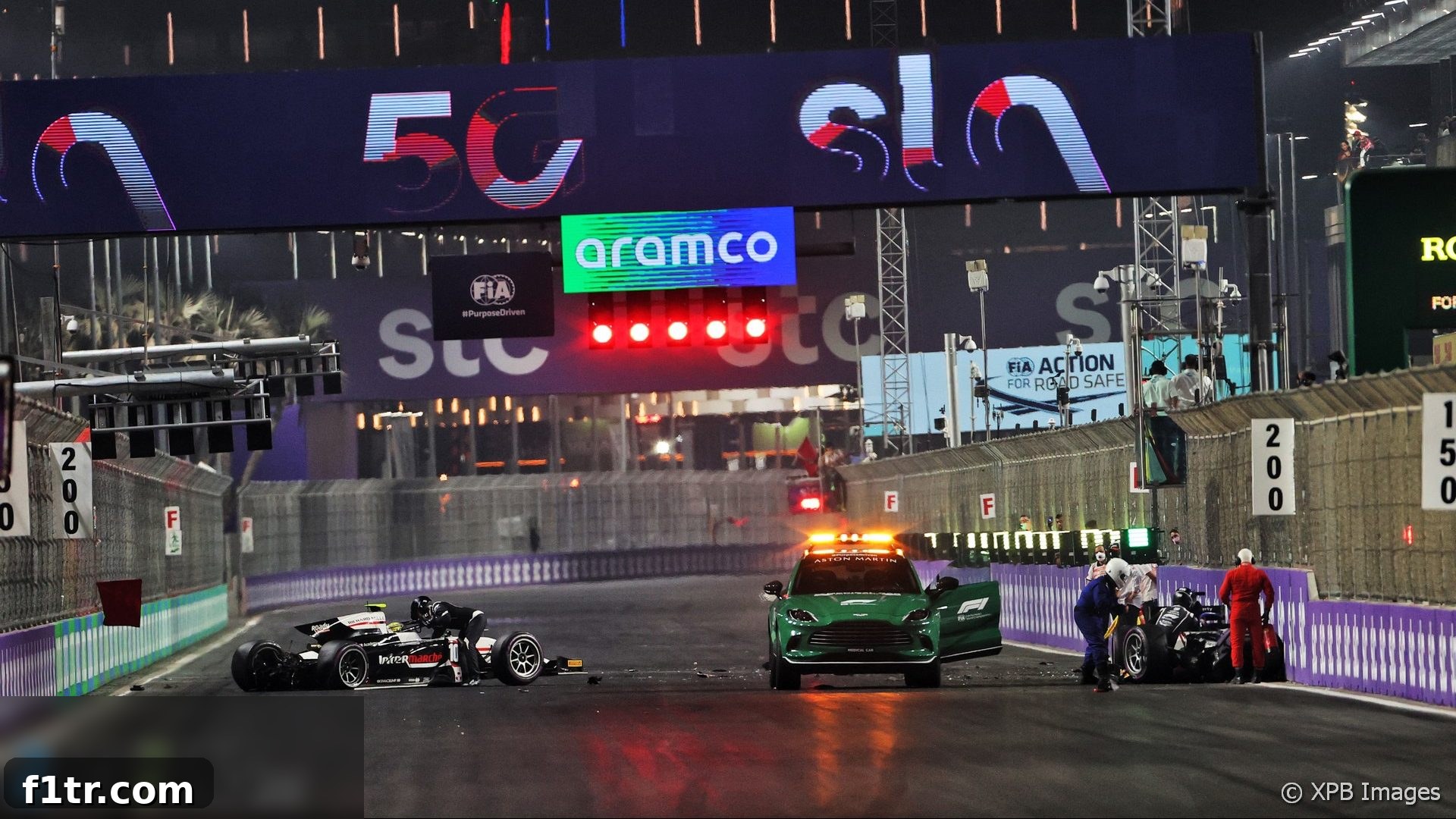
The incident etched into Pourchaire’s memory occurred just three months prior to the recent races, at the very same demanding Jeddah track. During the 2021 season’s dramatic feature race, Pourchaire, then starting from a promising third position on the grid, failed to get away cleanly. His stationary car became a terrifying hazard, leading to a horrific collision with Enzo Fittipaldi. The impact was recorded at a staggering 72G – a testament to the sheer violence of the crash and a stark reminder of the immense forces involved in motorsport accidents. Both drivers were subsequently rushed to hospital for thorough medical checks, with Pourchaire thankfully released without serious injuries, while Fittipaldi, unfortunately, sustained fractures. Such an experience would test the resilience of any individual, let alone a young driver still early in their professional career.
The Jeddah Street Circuit, notorious for its high-speed sections and unforgiving walls, is already a significant test of nerve. Returning to a venue where such a career-altering incident occurred adds an immense layer of psychological pressure. Drivers often speak of ‘muscle memory’ and ‘track knowledge’, but when that memory includes a devastating crash, the brain’s natural self-preservation instincts can conflict with the racer’s need for absolute commitment.
The Psychological Toll: An Invisible Adversary
Pourchaire’s recent performance clearly demonstrated this internal struggle. In last weekend’s feature race, his start was noticeably slower than ideal. Dropping to fourth place before the crucial first corner, it was evident that something was amiss. Following the race, the young Frenchman’s admission shed light on the deeper issue. “I struggled a bit,” he confessed, revealing the vulnerability beneath the helmet. “Since what happened in Jeddah last year, I’m not super, super confident at every start. I need to work a bit on that.”
This candid honesty underscores the often-overlooked mental aspect of racing. While physical recovery from injuries is measurable, the recovery from psychological trauma can be far more complex and enduring. Pourchaire’s words painted a vivid picture: “It’s not easy, I still have some images in my head of what happened. And it’s difficult. Mentally, it’s difficult. But I will work on that.” This isn’t merely about regaining confidence in a specific maneuver; it’s about confronting a deeply ingrained fear, a primal response to a life-threatening event. The memory of such a high-G impact, the helplessness, and the immediate aftermath can linger, manifesting as hesitation at critical moments, like the launch from the starting grid.
For a driver of Pourchaire’s calibre, whose career trajectory points towards Formula 1, overcoming such mental hurdles is as crucial as mastering car setup or race craft. The ability to compartmentalize, to push past fear, and to maintain absolute focus is a hallmark of elite athletes. His journey to conquer these “images” in his head is a testament to the immense psychological demands placed on young motorsport professionals. It requires introspection, specialized mental training, and an unwavering commitment to self-improvement – aspects that are as vital as physical fitness and technical skill.
Mastering the Start: A Foundation for Victory
Race starts in Formula 2 are notoriously challenging and often define the outcome of a race. Unlike Formula 1, where cars have more advanced anti-stall and launch control systems, F2 starts require exquisite timing, delicate throttle control, and precise clutch management from the driver. A fraction of a second’s hesitation or an overly aggressive throttle application can result in losing multiple positions, or worse, an incident on the grid. Given the competitive nature of the F2 championship, where every point is vital, a consistently strong start can be the difference between a podium finish and a mid-pack struggle.
Pourchaire’s acknowledgment of his struggles with starts is therefore not just a minor issue; it’s a critical area for improvement that directly impacts his championship aspirations. Despite his recent win, the underlying issue persists. He reflected on his Sunday start, stating it was “not very bad, I was P4 after the first lap, which was okay. But next time I will try to improve that and I will try to do better starts, better first laps and I know I can do it.” This declaration highlights his determination to tackle the issue head-on, recognizing its importance in his quest for success.
The process of “working on that” likely involves a combination of simulator practice, extensive data analysis with his team, and potentially working with a sports psychologist to develop specific mental strategies for overcoming anxiety and hesitation. It’s a multi-faceted approach to rebuilding a fundamental racing instinct that has been momentarily disrupted by trauma.
A Triumphant Return Amidst Lingering Concerns
Despite these personal battles, Pourchaire’s raw talent shone through in the very same race where his start was compromised. Pourchaire’s win in yesterday’s race, achieved through exceptional race pace and strategic driving, propelled him into the lead of the F2 championship. This victory is a powerful demonstration of his inherent skill and ability to perform under pressure, even when battling internal demons. It shows a champion’s resilience – the capacity to fight through adversity and still emerge victorious.
However, the psychological dimension remains a significant factor as the series returns to Jeddah this weekend. The circuit, with its high-speed corners and close proximity to barriers, will inevitably trigger memories. His ability to perform at his peak on a track where he experienced such a traumatic event will be a true test of his mental strength. The confidence gained from his recent victory will undoubtedly provide a boost, but the specific challenge of the race start will be a focal point for both Pourchaire and his ART Grand Prix team.
He reiterated his perspective on the crash: “It happened and I know the feeling of that now. And yeah, I would try to not do it again. I don’t have any mental issues or things like that but it’s not easy. It’s not easy to not think about that. But it’s okay.” This mature outlook suggests a self-awareness that is crucial for growth. While he downplays “mental issues,” he openly acknowledges the difficulty of processing such an event, which is the first step towards true recovery and enhanced performance. His resilience in the face of such adversity is a powerful narrative, offering inspiration not just to fellow drivers but to anyone facing significant personal challenges.
The Road Ahead: Formula 1 Aspirations and Mental Fortitude
As Theo Pourchaire continues to lead the F2 championship, his journey serves as a compelling case study in young driver development. The path to Formula 1 is not merely about lap times and race wins; it’s equally about demonstrating comprehensive psychological resilience and the capacity to overcome setbacks. His openness about his struggles, coupled with his determination to improve, paints the picture of a true competitor. Successfully navigating this mental hurdle could prove to be as significant a milestone in his career as any race victory.
The broader implications for motorsport safety and driver welfare are also important. While cars are safer than ever, the human element of fear and trauma remains. Pourchaire’s experience highlights the need for continued support systems, including access to sports psychology, to help drivers not just recover physically, but also mentally, from the inherent dangers of their sport. His journey at Jeddah, both last year and this season, encapsulates the complex interplay of human emotion, raw talent, and the relentless pursuit of speed in the high-stakes world of Formula 2.
Advert | Become a RaceFans supporter andgo ad-free
Formula 2 Insights & Related Articles
Explore more about the exciting world of Formula 2 and the careers of its rising stars:
- Formula 2 to debut in Miami and Montreal after Iran war cancellations
- Ex-McLaren junior Dunne’s move to Alpine finally confirmed
- Schumacher says his IndyCar feels like ‘an F2 car, just with better tyres’
- The Formula 2 team with an older driver line-up than almost half the F1 grid
- FIA to award more F1 superlicence points to IndyCar drivers from 2026
Browse all Formula 2 articles