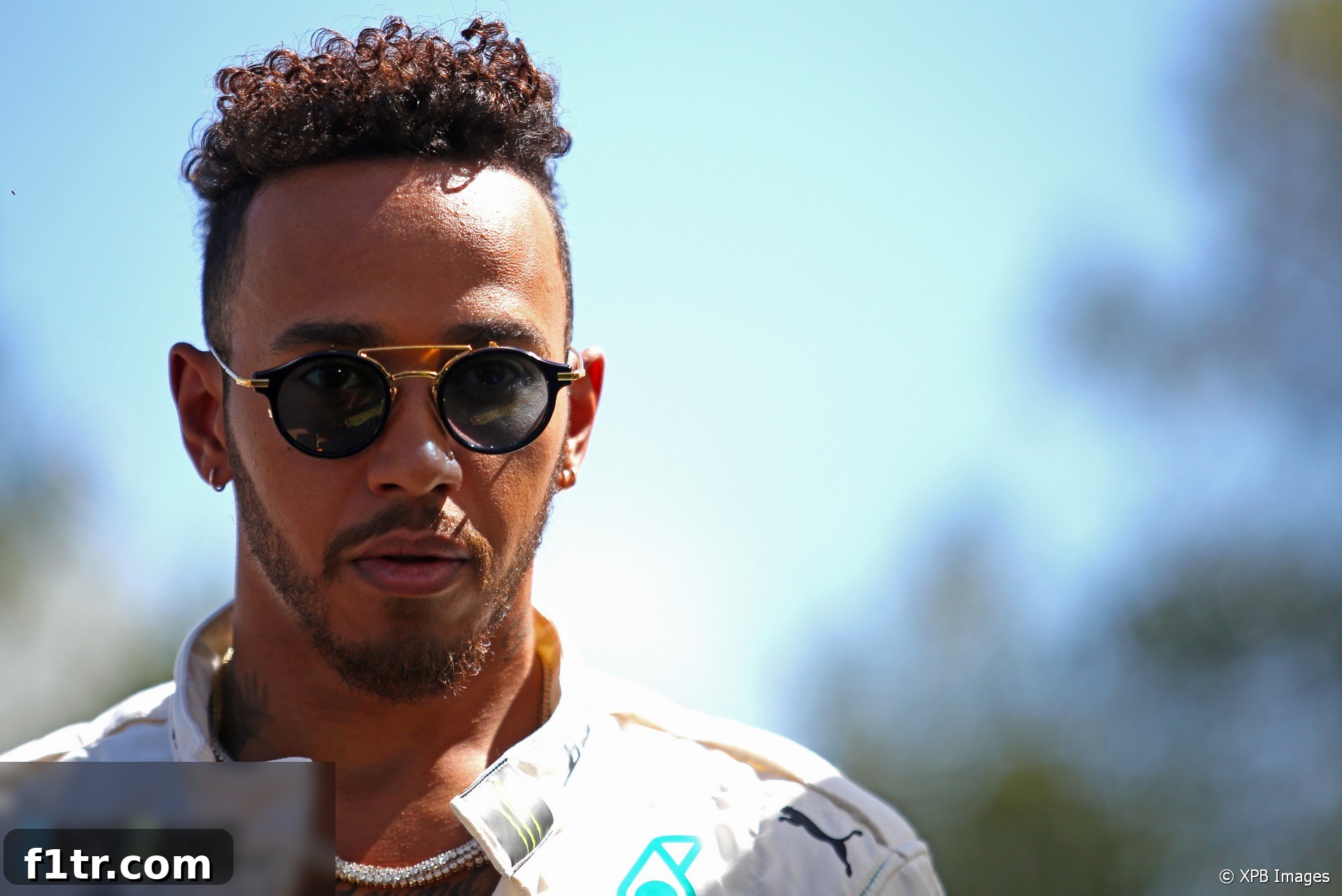
In the high-stakes world of Formula 1, every word is weighed, and every claim is met with scrutiny. Lewis Hamilton, the reigning world champion at the time, firmly dismissed a recent assertion from his former teammate and fierce rival, Nico Rosberg. Rosberg had controversially suggested that inconsistency was Hamilton’s primary weakness, a claim the Mercedes driver was quick to challenge, particularly while speaking to the media in Australia ahead of the new season.
Hamilton’s rebuttal was immediate and unequivocal, rooted in his most recent championship triumph. He confidently stated that his performance in the preceding year had already “proved that’s not the case.” Having secured his fourth F1 drivers’ title in 2017, Hamilton’s argument carried significant weight, highlighting a season where he demonstrated remarkable consistency and resilience to overcome strong competition. His emphatic win wasn’t merely about raw speed, but about a sustained level of performance that left no room for doubt regarding his steadfastness on track.
Addressing the underlying motivations behind such critical remarks, Hamilton adopted a pragmatic perspective. “I think there’s a lot of people that need to get headlines,” he observed, alluding to the constant media churn and the desire for sensational stories in the sport. This comment underscored his belief that some external criticisms might be driven more by the pursuit of attention than by objective analysis. For the upcoming season, Hamilton declared a clear objective: to elevate his consistency even further. He firmly reiterated that consistency was, in fact, the very bedrock upon which his previous world championship victory was built, a testament to his strategic approach and unwavering focus throughout the gruelling F1 calendar.
The history between Hamilton and Rosberg is well-documented, marked by an intense and at times volatile rivalry during their years as Mercedes teammates. Their battle reached its zenith in 2016, a season where Rosberg ultimately triumphed over Hamilton to clinch his maiden world championship. The German driver then sent shockwaves through the paddock by announcing his immediate retirement from the sport, just days after achieving his lifelong dream. This dramatic exit added another layer to their complex relationship, with Rosberg transitioning from active competitor to an occasional pundit, offering insights – and criticisms – from the sidelines. His comments on Hamilton’s consistency, therefore, resonated with the echoes of their past battles, reigniting a familiar narrative.
Despite the ongoing discussions about his performance and external pressures, Hamilton consistently expressed a profound appreciation for his position in Formula 1. With his Mercedes contract due for renewal that year, the British driver articulated his enduring sentiment that competing in the pinnacle of motorsport remained an unparalleled “privilege.” This perspective transcends mere contractual obligations or competitive drive; it speaks to a deeper connection with the sport itself and the unique opportunities it presents for elite athletes.
Expanding on this theme, Hamilton elaborated on the multifaceted nature of this privilege. He acknowledged the honour of racing for iconic teams like Mercedes, a marque steeped in rich motorsport heritage, and being an integral part of a sport that constantly evolves and adapts with the times. For Hamilton, it was not enough to simply participate; the true privilege lay in being at the forefront, competing against the absolute best drivers the world had to offer. He voiced a clear desire to reach the conclusion of his illustrious career knowing that he had faced and overcome the most formidable opponents. This sentiment subtly drew a contrast with drivers who might retire prematurely or those who win championships without encountering the highest calibre of competition, implicitly elevating the value of sustained, hard-fought victories.
This pursuit of racing against the elite naturally brought his attention to his contemporary rivals, particularly Sebastian Vettel. Hamilton openly acknowledged that it had been a “great experience” to race against Vettel, who, like him, boasted four world titles at the time, making him one of the most successful drivers in the sport’s history. This direct competition between two titans of the sport not only captivated fans but also pushed both drivers to continually elevate their game. The prospect of two four-time world champions engaging in another season-long duel was, for Hamilton, a significant source of excitement, underscoring the calibre of competition that truly motivates him.
Beyond his personal rivalries, Hamilton also offered a forward-looking assessment of the competitive landscape for the upcoming season, specifically tipping Red Bull Racing to emerge as a formidable contender for the championship. His observations were not merely speculative but seemed to be based on an acute awareness of the performance dynamics within the paddock. This prediction added another layer of anticipation to the season, suggesting that the battle for supremacy might not be a two-horse race between Mercedes and Ferrari.
Hamilton further fuelled this anticipation by commenting on the optimistic demeanour of Red Bull driver Daniel Ricciardo, who he noted had been “smiling a lot today.” This subtle observation from a seasoned competitor hinted at underlying confidence within the Red Bull camp, suggesting they might possess a stronger package than pre-season analysis had indicated. Hamilton went on to suggest that fans might be “surprised this weekend just how competitive Red Bull are,” creating an intriguing narrative ahead of the season opener. He also cautioned against over-interpreting the pre-season testing hype, particularly concerning his own team. He pointed out that the testing conditions, including variations in track surfaces and different fuel loads employed by teams, often distorted the true picture of competitive performance. With a clear understanding that definitive answers would only emerge once official practice sessions commenced, Hamilton expressed his eagerness “to see how we all fare up once we get into practice,” setting the stage for what promised to be a thrilling and unpredictable year in Formula 1.
2018 F1 season
- F1 feared “death knell” for Drive to Survive after Ferrari and Mercedes snub
- McLaren staff told us we were “totally crazy” to take Honda engines in 2018 – Tost
- ‘It doesn’t matter if we start last’: How Red Bull’s junior team aided Honda’s leap forward
- Honda’s jet division helped F1 engineers solve power unit problem
- McLaren Racing losses rise after Honda split
Browse all 2018 F1 season articles